

Research: Comprehensive Sexuality Education is not discussed, or the right wing opposes the right to Comprehensive Sexuality Education
The disinformation campaign against Comprehensive Sexuality Education (CSE) isn't limited to the words of electoral candidates. In Casilda (Santa Fe), a mother asked the City Council to ban it. This investigation reveals 10 things you need to know about CSE.


Share

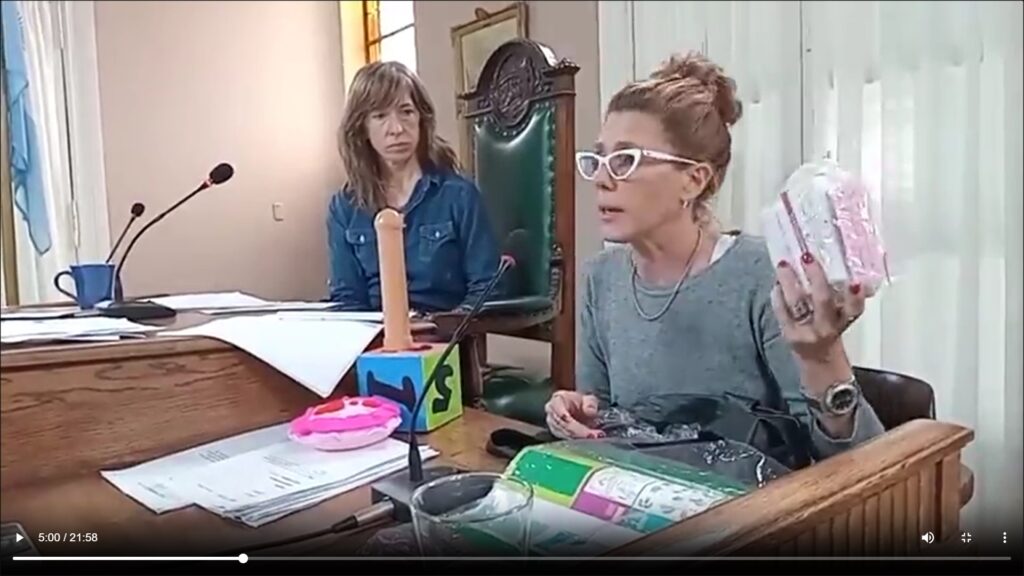
A woman who presented herself as “nothing more than a mother” occupied the citizen's seat in the Casilda (Santa Fe) City Council to make a false accusation, claiming that the municipality was giving wooden penises and misoprostol to 10-year-old children in schools. Just a few weeks ago, 16 kindergartens and schools in La Plata were vandalized with messages against comprehensive sex education (CSE). And in recent weeks, during the election campaign, candidates like Javier Milei of La Libertad Avanza have been making statements against its implementation. Once again, the most conservative sectors are advancing by spreading misinformation, distorting the truth, and attacking the rights of children and adolescents.
On August 17, at the City Council of this town 50 km from Rosario, for more than 15 minutes . She did so with the clear objective of confusing and misrepresenting their intended use. She emphasized that these materials were for working with 10-year-old children and that the purpose of the brochures and devices was to "traumatize" children.
The teaching community came forward to deny the claim. “I cannot allow it to be said that a public elementary school uses the kind of materials that were displayed at the City Council,” stated primary school supervisor Liliana Ruggeri in a radio interview. She emphasized “the enormous responsibility with which schools approach this teaching. This law is something to be celebrated.”
In an interview on TN , Javier Milei, leader of La Libertad Avanza, stated that Comprehensive Sexuality Education (CSE) "is part of the post-Marxist agenda, and that agenda is about destroying the most important social unit within society, which is the family." He added that its objective is "to exterminate the population" in the name of protecting the planet. While this may be just the opinion of this presidential candidate and his team, such statements grant a cloak of impunity that allows for the proliferation of fake news, such as that disseminated in the Casilda City Council.
“Fake news consists of deliberate (and often orchestrated) attempts to manipulate people by delivering dishonest information. Disinformation also seeks to influence the public and media agenda in order to weaken and condition people's opinions. It is particularly dangerous because fake news and disinformation strategies are frequently organized, involve significant financial investment, and are reinforced by automated technology ,” says Lucila Galkin, Director of Gender and Diversity at Amnesty International Argentina, an organization that has been raising concerns about this issue.
1. Comprehensive sexuality education is a human right
“For years, certain sectors have sought to question comprehensive sexuality education (CSE), claiming it is not scientific but ‘ideological’ and that its content aims to indoctrinate children and adolescents with a set of values contrary to tradition and family, values that threaten the very foundation of society. However, ample evidence discredits these myths,” explains Galkin. She explains that the right to comprehensive sexuality education is a human right in itself. “And it is an essential condition for ensuring that people enjoy other human rights , such as the right to health, the right to information, sexual and reproductive rights, as well as the prevention of child sexual abuse, unintended pregnancies in adolescence, and the transmission of sexually transmitted infections, among many other issues.”

2. What do scientific organizations say about CSE?
The concern is not only local; the World Health Organization (WHO), aware that between 2023 and 2024 there will be 70 national elections where conservative sectors have a chance of gaining ground , asked various scientific organizations to issue statements on the importance of comprehensive sexuality education (CSE).
The International Federation of Pediatric and Adolescent Gynecology (FIGIJ) issued a statement highlighting the value of comprehensive sexuality education and calling on governments to forge alliances to guarantee its implementation. The document emphasizes that “in countries where CSE has been introduced into the curriculum, it has been shown to delay the onset of sexual activity and has a generally positive influence on the sexual health and well-being of adolescents and young people .” FIGIJ President Marisa Labovsky told Presentes: “ Comprehensive sexuality education is a right that the State is responsible for guaranteeing. These progressives claim that children are being taught nonsense or that it will generate the opposite of what has been proven to happen. Because when you provide CSE, you teach children from kindergarten through high school that if someone touches them inappropriately, they should know it's wrong and be able to tell someone they trust, and many other things about how to take care of their bodies.”
Soledad Deza, a feminist lawyer and president of the MxM Foundation (Women for Women), argues that the real concern lies in the fact that, after so many years of implementing Comprehensive Sexuality Education (CSE) in Argentina, there is still a significant lack of understanding among conservative sectors regarding its content. In an interview with Presentes, she called for an ethical pact among educators to guarantee the full exercise of this right in all classrooms across the country.
“I think we need to stop relying on patrolling, control, and supervision and start being more honest in the way we perform our professions and trades, in how we relate to other human beings, and in the way we interact in our communities,” he says in a dialogue with Presentes.
3. Disinformation is on the campaign trail
In the Casilda City Council (Santa Fe), there is an ordinance that created the Citizens' Forum, a "space created so that the city's residents can present projects that qualitatively enrich the community." There, on August 17, Tati Restovich arrived with a bag full of materials about Comprehensive Sexuality Education (CSE) and began to spread false information about how it is used in the city's schools.
“It’s dangerous to confuse what’s natural with what’s ideological. It’s natural for children to discover their bodies, their functions, and how to take care of themselves before engaging in shared experiences with the active sex lives of adolescents or adults. Accelerating these processes and bombarding them with false or manipulated information leads children to states of confusion, phobias, an inability to build a secure and clear identity, psychosis, depersonalization, and even suicide,” said this woman in the City Council chamber. She constantly posts content on her social media accounts that questions “gender ideology,” and some of her posts have been restricted by Instagram for containing false information.
She also used the tactic of asking, “as a mother,” who in the municipality of Casilda “can condone a 10-year-old child handling a prototype made on a lathe in a public school, so that it reaches minors.” “If you don’t call this child abuse and corruption of minors, let me tell you, we live in a crazy world,” she added.
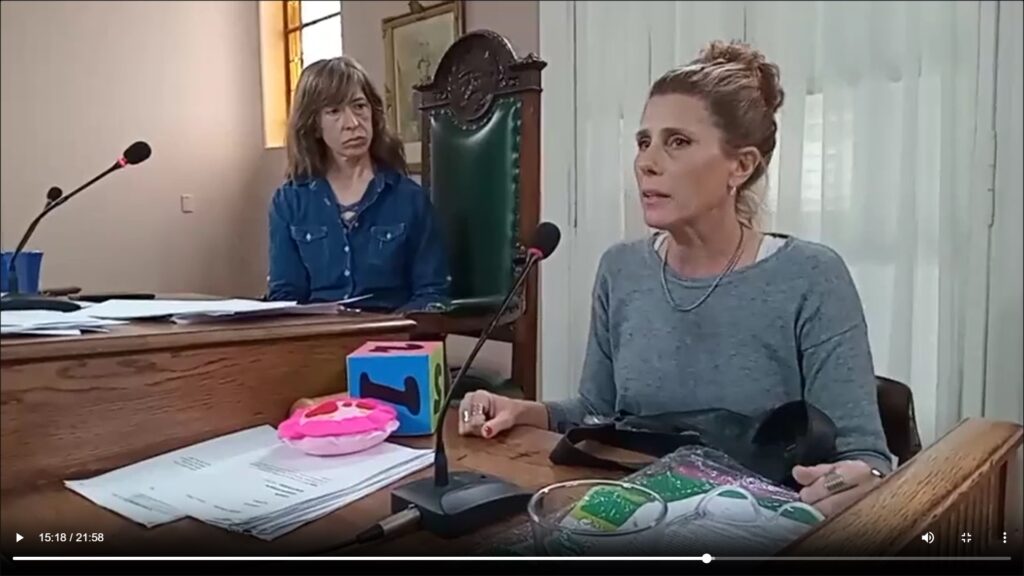
In response to reactions that were absent during her speech, she defended herself: “Don’t call me homophobic because I have millions of gay friends and millions of lesbian friends.” She clarified: “I’m not a lawyer and I don’t have to know the laws, but any lawyer can tell you that this is corruption of minors.”
4. What does the ESI kit include?
In his speech, Restovich seeks to misinform: to confuse, falsify, and distort the meaning of Comprehensive Sexuality Education (CSE). Furthermore, the kit he displayed was not produced by the Municipality but by a group of doctors from the San Carlos Provincial Hospital who requested the collaboration of other institutions such as the local government, the teachers' union Amsafé, and Technical School No. 283.
“From the Gender and Diversity Department, we made copies of all the brochures we have to include in the kit,” Vanina Bonavera, Secretary of Social Development, Sports, and Diversity for Casilda, explained to Presentes. She emphasized, “This came about because every time a school wanted to offer a Comprehensive Sexuality Education (CSE) class, they had to order a kit from Rosario. So, we thought it would be extremely helpful to create a kit for each school so they could have all the information they needed.”
The kits include materials for use in different grades and courses, always in accordance with the curriculum established by the Ministry of Education for Comprehensive Sexuality Education (CSE). They contain numerous brochures, a game, a wooden penis made in the workshops of the technical school, a fabric vulva, and a couple of additional items. “Of course, the content is organized according to age,” Bonavera emphasizes, clarifying that they do not include misoprostol.
5. What is and what is not ESI
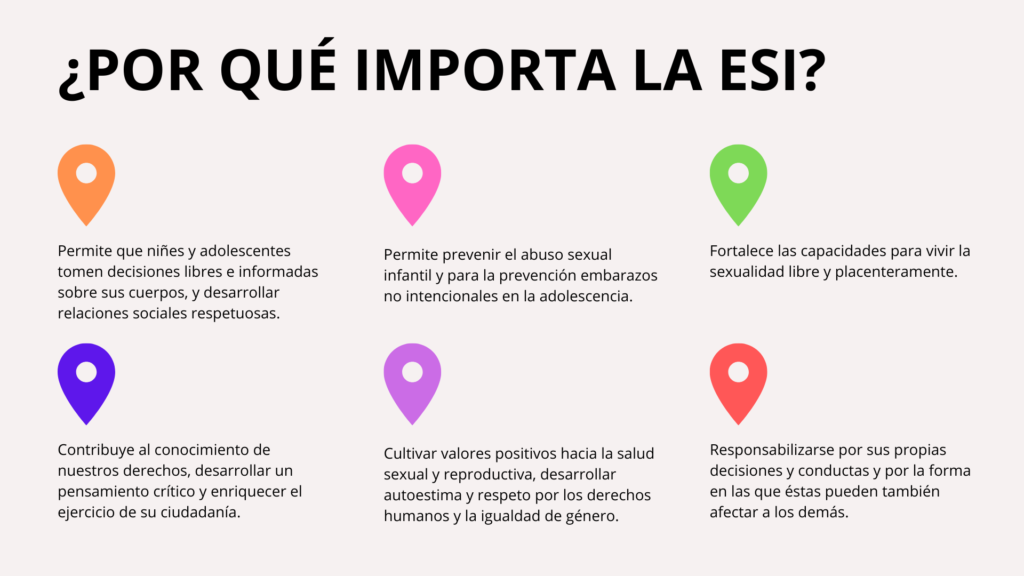
“What I noticed in this intervention was an intention to sexualize sex education without wanting to show what is really important ,” she emphasizes.
Soledad Deza adds: “ Disinformation is, precisely, a risk in itself. We live in a society where the immediacy of information often leads us to bias our understanding of the content and settle for a first impression that will ultimately have an intuitive impact or generate mistaken impressions .” Deza is concerned because “despite being a law that has been in effect for so many years, a portion of the population is unaware of the content of Comprehensive Sexuality Education (CSE). I think what we should be asking ourselves as societies is which conservative sectors benefit from disinformation .”
Upon learning of the case, the Comprehensive Sexuality Education (CSE) Front of Rafaela told Presentes that “the pandemic affected our connection with students. But what has been impactful even before is the lack of cross-curricular integration of CSE .” They added: “ The emergence of anti-rights groups is diametrically opposed to what CSE proposes: education that guarantees rights and a gender and diversity perspective, in contrast to instructions that indoctrinate children and young people with a single way of being and experiencing relationships within heteronormativity, without considering the emotional and mental health effects this can have on them.”
From Ni Una Menos Casilda, Sandra Michelón shares Bonavera's perspective. She highlights the value of the materials available to the schools in that city, designed and developed through an inter-institutional project. This gave them the opportunity to think about and build the materials collectively.
Concerned about the rise of discourses linked to “values” and how conservative sectors are infiltrating schools to influence how comprehensive sexuality education (CSE) content is delivered, she says: “CSE, unlike other rights we have achieved in recent years, reaches everyone, without distinction ,” she emphasizes. And that, she says, is precisely what puts it at the center of the debate.
6. Election campaign, taboos and evidence
The advance of these sectors this year is no coincidence. “It’s an election year, and sometimes certain members of the City Council exploit these kinds of situations. Unfortunately, there are increasing challenges to many fundamental rights that have been hard-won, including comprehensive sex education ,” Bonavena pointed out.
Ximena Frois, provincial coordinator of Comprehensive Sexuality Education (CSE) in Santa Fe, agreed with Bonavera's views on the implementation of Law 26.150 and emphasized that CSE is also "a victory for sexual rights. It represents a significant advance in public policy and in transforming the possibilities for equality; therefore, when progress is made in political terms, resistance is to be expected ."
At that point, she differentiated between resistance stemming from a lack of knowledge on the part of people about how ESI is implemented at different levels and “taboo” resistance , which “has to do with very deep moralistic educations where there are people who find it difficult to talk about sexuality.”
“When it comes to taboos, Comprehensive Sexuality Education (CSE) explains that sexuality is linked to historical processes. And taboos are related to moments in history when it was necessary to avoid talking about the topic because it was a way of not being able to have autonomy in one's own decisions. And then there are other types of situations in which resistance is related to political stances or to the possibility of revealing situations of gender-based violence and sexual abuse,” she concluded.
Comprehensive Sexuality Education (CSE) allows us to talk about beautiful aspects of sexuality and love, but it also allows us to see the other side, which is when rights are violated. “From a very young age, we teach children that when they feel any uncomfortable touch, they can/must say no, and that they have a place to say it, and often that place is school. Talking about all of this has certainly allowed us to uncover cases of child sexual abuse . So today we have statistics that say that out of 10 cases of abuse, 8 have been uncovered as a result of a comprehensive sexuality education class .”
7. What could happen to comprehensive sexuality education?
Various sectors currently vying for the presidency have already expressed their opposition to the implementation of Comprehensive Sexuality Education (CSE) in Argentina. When asked what would happen if the State ceased to guarantee CSE as a human right, Soledad Deza proposed: “If we all agree that there is an ethical framework for our relationships in the workplace, in education, within our families, and so on, we will see that we must stop using our positions of power to cause harm, to instill fear, to condone discrimination, to teach exclusion, to teach how to inflict harm; and we will live in a better society .”
And she emphasizes: “ If we leave all the work to oversight, criminal law, and control, what we're really doing is failing to strengthen full citizenship . Ultimately, we're delegating control to someone at the top, someone who will always be monitoring what those at the bottom are doing. I think we should try to live in a less harmful and more friendly society. How do we achieve that? I believe we all share that responsibility.”
8. Everyone is asking for more comprehensive sex education.
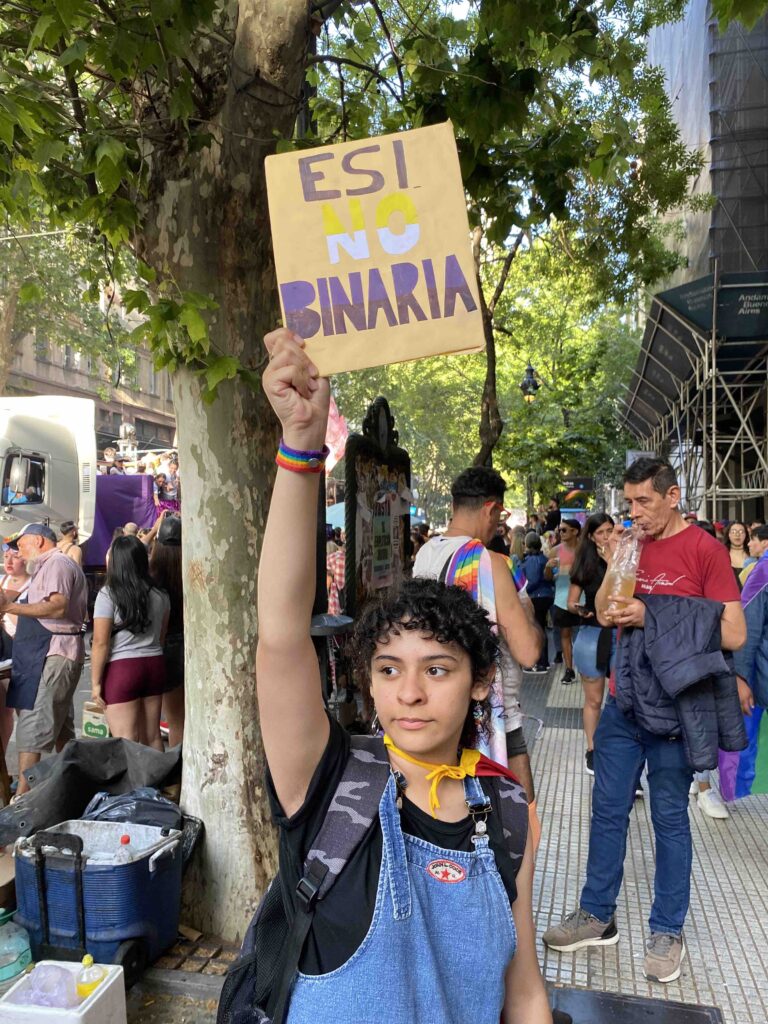
Despite the complex circumstances, the provincial coordinator of Comprehensive Sexuality Education (CSE) in Santa Fe remains hopeful. “We’ve been working for decades on expanding rights, making sexual rights visible, and empowering citizens to embrace their sexual rights; it’s not something easily erased.” She adds, “There are some situations that demonstrate this: there is a sexual consciousness. Families are recognizing their own sexual rights and want to guarantee increasingly democratic sex education. I see more of that than complaints about CSE being implemented; they’re asking for more CSE. But in addition to all this wonderful work happening with families, it seems to me that for some years now, the main political force behind CSE has been the student body .”
9. Comprehensive Sexuality Education (CSE) is based on scientific evidence.
She considered it essential to carry out information campaigns that demonstrate that CSE is based on rigorous scientific evidence, is appropriate to the age and stage of development of children and adolescents, fosters a safe, healthy and student-centered learning environment, and promotes equality.
In this regard, the FIGIJ document highlights: “These erroneous predictions include the idea that CSE will lead to an early onset of sexual activity. On the contrary, in countries where CSE has been introduced into the curriculum, it has been shown to delay the onset of sexual activity and has a generally positive influence on the sexual health and well-being of adolescents and young people.”
It also calls for “developing stakeholder coalitions in communities (…) to support the culturally sensitive implementation of comprehensive sexuality education and counter disinformation campaigns and misconceptions.” This includes parents, religious and government leaders, health professionals, educators, and young people.
When asked if it's possible to discuss and defend comprehensive sexuality education (CSE) alongside religious representatives, Labovsky responds: “Reaching an agreement on what information they are more or less in favor of providing, and how to provide it, seems much more productive to me than clashing and achieving nothing. In any case, the State is responsible for both education in general and comprehensive sexuality education. And we have good laws in this regard.”
“I think the great responsibility, in light of this fake news, is to open a collective debate , to raise awareness of the role we have as adults in telling our children and teenagers what is happening and what is at stake,” says Frois. And regarding the vandalized schools in La Plata, she adds: “Using school entrances to paint graffiti like teenagers, in a coordinated way, using the spaces we have built, spaces that are beautiful and supportive, to sow doubt and unease. I think fake news does harm at a communication level, forcing us to explain again what we have already explained. But those of us who are educators, especially in education, know the value of persistence, because we always take a long-term approach.”
10. What is happening with Comprehensive Sexuality Education (CSE) in Latin America ?
Amnesty International Argentina describes the situation regarding access to comprehensive sexuality education (CSE) as highly uneven across Latin America. While some countries, such as Argentina, Uruguay, and Colombia, have implemented public policies for CSE at the primary and secondary levels, others lack a regulatory framework or specific policies on the subject.
In 2017, Paraguay banned the use and dissemination of materials on sexual and reproductive education, gender equality, and non-discrimination. In 2019, it issued a resolution prohibiting the use of a teacher's guide on comprehensive sexuality education, alluding to sexual identity as "libertine."
In Guatemala, a bill seeking to prohibit comprehensive sexuality education (CSE) policies and programs in private and public educational institutions was debated in Congress in 2018.
Peru has shown regulatory progress in recent years. However, according to 2017 data, in cases where sex education is taught, its comprehensiveness is minimal: only 9% of students received instruction in all aspects of comprehensive sex education.
In Chile, 35% of students surveyed in 2019 as part of a comprehensive sex education study could not define sexuality, and approximately half were unfamiliar with the concept of sexual and reproductive rights. A significant number of them normalize violence in intimate relationships.
We are present
We are committed to journalism that delves into the territories and conducts thorough investigations, combined with new technologies and narrative formats. We want the protagonists, their stories, and their struggles to be present.
SUPPORT US

FOLLOW US
Related notes
We are present
This and other stories are not usually on the media agenda. Together we can bring them to light.