

Rafael Nahuel's murder: his cousin and another key witness recounted how he was shot in the back
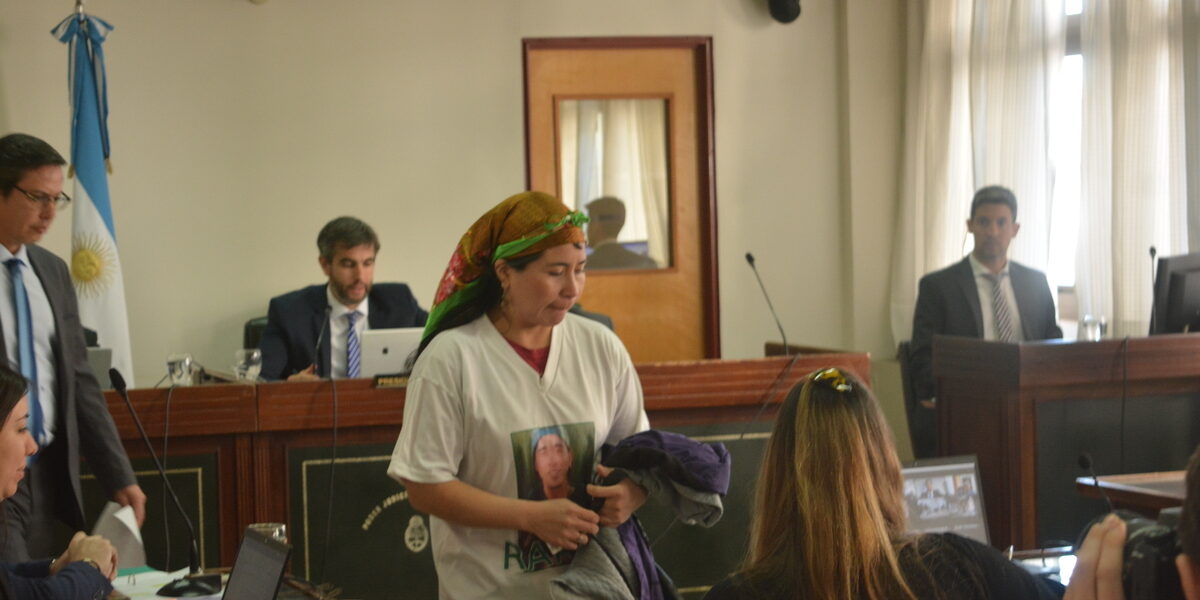
Direct witnesses to the 2017 murder of Rafael Nahuel—his cousin Johana and another young Mapuche man, Lautaro—and his aunt María, gave crucial and harrowing testimonies before the Fiske Menuco/General Roca Oral Court. “The State killed him from behind.”.


Share

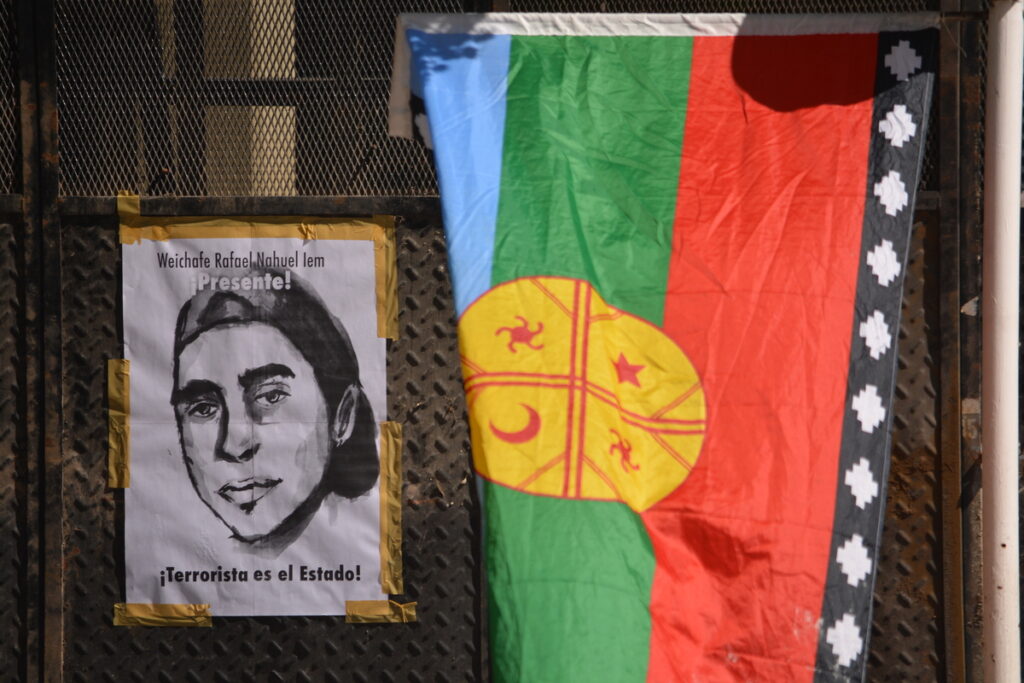
Key witnesses testified at the 13th hearing of the trial for the murder of Rafael Nahuel. The young Mapuche man was 22 years old on November 25, 2017, when he was shot in the reclaimed Mapuche territory of Villa Mascardi , Bariloche. Two others were also victims of gunfire from the Albatros Group of the Argentine Naval Prefecture.
María Nahuel, the victim's aunt, testified before the judges of the Federal Oral Court of General Roca: “That day we were informed that there was a death. I arrived at Route 40 in the second ambulance, and my nephew was already there, lifeless, on the downhill section we use to access the community. I was very nervous and couldn't recognize him because of his clothing, but Fausto (Jones Huala) and Lautaro (González Curruhuinca) told me it was my nephew. They kept me detained all day without letting me near him. It was very painful.”.
Then his daughter, Johana Colhuan, from the Lafken Winkul Mapu Mapuche community, testified. Johana resisted an attempted eviction from the land where they had settled in the Villa Mascardi area. On November 25, 2017, she was also shot in the back, the wound hitting her shoulder. The next witness was another young Mapuche man, Lautaro González Curruhuinca. He was also very close to Rafael Nahuel that day. Both provided important information, as they were direct witnesses and the last people to see Rafita .
“We are not terrorists”
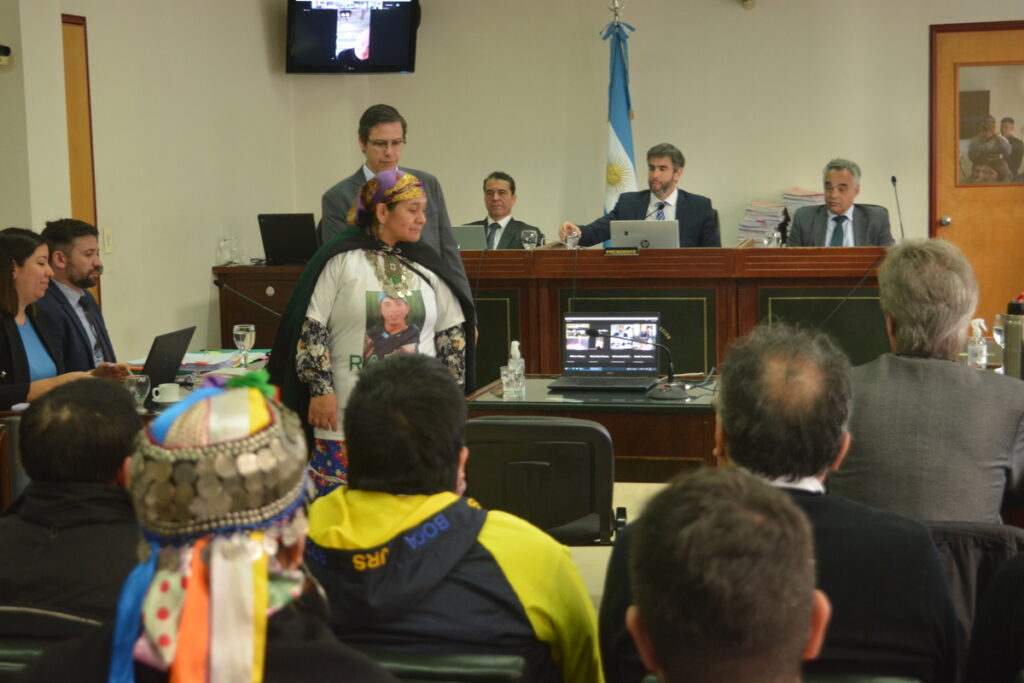
In the first part of today's hearing, there was a clash with the defense attorney for three of the five officers accused of shooting the young man in the back. The attorney requested a Mapuche because the witness began her testimony with a greeting, as is customary, but the court disregarded the request. Rafita's aunt continued recounting what she experienced six years ago. “At that moment, I thought of his mother. He was like a son to me. I still feel a lot of sadness to this day. Spiritually, he hasn't left; he's present, only his body is gone,” she said in response to questions from the lawyers representing the plaintiffs from the Permanent Assembly for Human Rights (APDH) and the National Secretariat for Human Rights.
“They kept me standing all day, they had to sedate me, the officers were particularly cruel to my nephew. They kept uncovering him, dragging him around, he had a belt that kept slipping down, until I didn't see him anymore,” said María Nahuel, his aunt.
In his description of the events, he commented: “The trucks and bags with weapons were being brought down from the former Mascardi Hotel. The National Parks official who filed the complaint says we are usurpers, we are part of a territory, we were dispossessed more than 100 years ago and we are returning because we don't have to ask anyone for permission .”
Before the attentive gaze of those present in the courtroom and those participating in the hearing via Zoom, the witness stated that her entire family “walked these lands. It is an ancestral right; my surname traces back to my ancestors, before all of you. Excuse me, Your Honor, we, the Mapuche Nation, were here on both sides of the Andes. We are always the ones who suffer the deaths; we are not terrorists, we have no weapons, we only want to be allowed to live as Mapuche .”
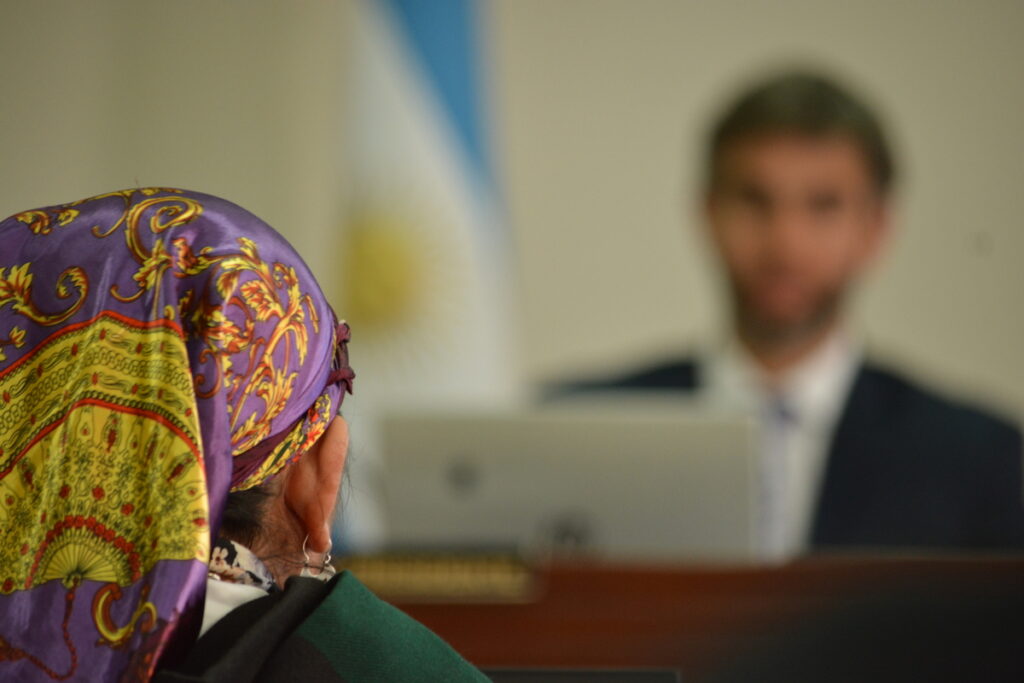
Rafael Nahuel's aunt recalled that when Judge Gustavo Villanueva arrived, her daughter Johana was injured. “He let me go up the mountain, I spoke through a loudspeaker, there were four of them. Then I came down. Always saddened, the Coast Guard and the Federal Police would come and uncover my nephew's wounds. And they would laugh. I don't know if that's part of their job,” she said.
Before the questioning began, the woman stated: “We are in pain over the murder of Rafael Nahuel. The State always kills our people, some of you. I don't know if it was Pintos, but they were shooting to kill, that's why they killed my nephew, wounded my daughter, and my sister white justice, but I hope there will be justice. Whoever deserves to be imprisoned for shooting my nephew in the back should go to jail.”
“We were attacked along with our children”
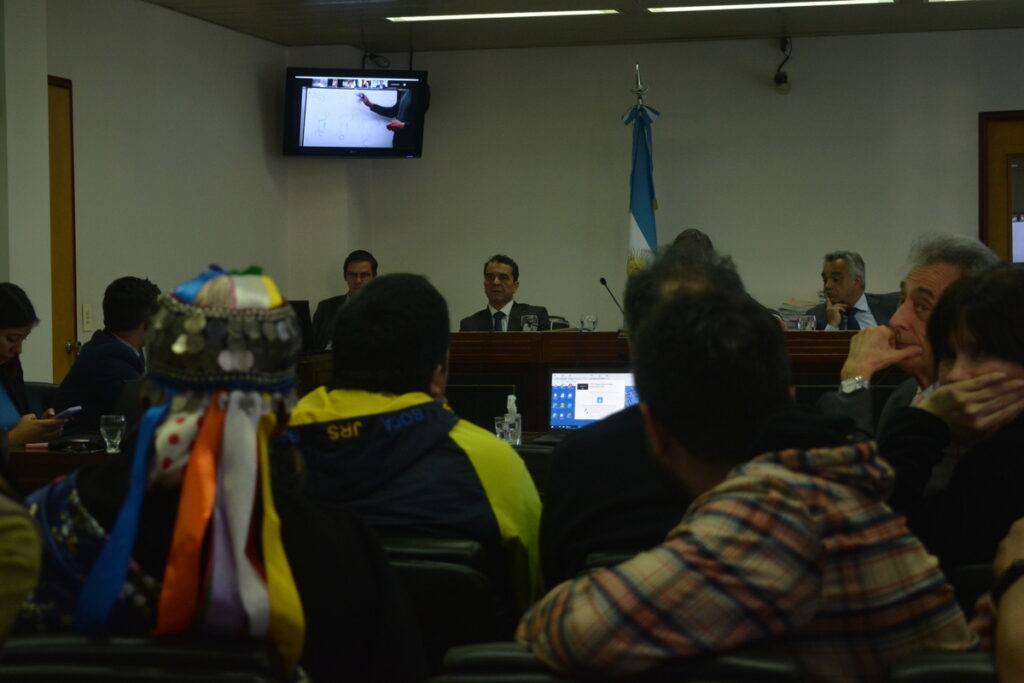
María Nahuel said that “ six years without justice . And both here and in Chile, the Mapuche people carry their dead with them, our children and women are beaten, and they are evicted. We are a pre-existing people, but we are always attacked by the State. We are here to make my nephew's voice heard . He was a good person with a kind heart; he wanted to settle in the countryside to raise sheep, rabbits, and horses.” She then demanded that “they stop lying. Two days ago, they evicted us; we were beaten along with our children . We are not guerrillas; we want to live freely, just as you raise your families and have your homes. Rafael Nahuel and Elías Garay are not the first; we have suffered many deaths.”
At that moment, Marcelo Rochetti, the Albatros' defense attorney, interrupted, stating that the witness was "making a statement that does not correspond to the facts." The presiding judge, Simón Bracco, responded that "the witness is testifying as a relative of a victim and has the rights granted to her by the Victims' Protection Law.".
Next, the plaintiff's lawyer, Rubén Marigo, continued his questioning. “When the judge arrived, he asked for me to be released. We talked for a while, and when I asked to go up the hill, he said, 'But do you want them to kill you?' I replied that I didn't because we didn't have weapons and people were suffering there, so he gave me a flashlight and let me go up,” said María Nahuel. In that same conversation, the magistrate told her that “he wasn't responsible for the eviction, that the order had been given by the prosecutor (Sylvia Little),” nor for the death of her nephew.
“The State killed him from behind”
When questioned by prosecutor Rafael Vehils Ruiz about her arrest, the witness said, “It was full of officers, they had me restrained, it was the Coast Guard, it wasn't my people, my hands were swollen.” Then attorney Rochetti resumed the questioning, intending to show her two photos that supposedly depicted Mapuche people with firearms.
The plaintiff's lawyer, Sebastián Feudal, intervened to remind everyone that those images had already been dismissed due to lack of clarity. The defense attorney persisted, and Nahuel replied, "No, I don't recognize anyone.".
When asked what happened that day, the Mapuche woman replied, “ The State killed him from behind. All the shell casings on the mountain belong to the State, to the Prefecture .” Before leaving, she questioned, “Those who killed Rafael aren’t here today; they’re only appearing on a screen. But we, who are poor, are here; we came by bus. The State should force them to be here and face the music. That’s what I was taught.”
“He grabbed my hand when he was shot”
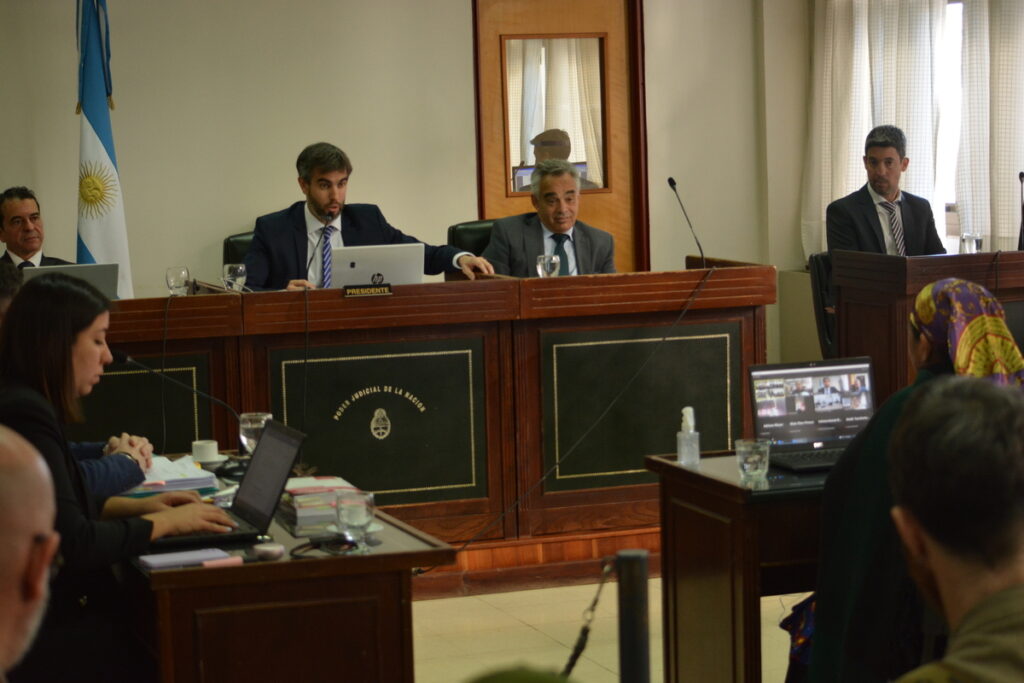
Around 11 a.m., Johana Micaela Colhuan, one of María's daughters and Rafael Nahuel's cousin, sat down to testify as a witness. She was wearing clothing similar to her mother's, and a colorful headscarf.
With a psychologist by her side, Johana testified that they had gathered on the 23rd because there had been an eviction. “We decided to go and take food and clothing to the Mapuche people who were on the hill. Fausto and I decided to accompany them. That night we went to the Winkul (Mapuche community), walked, and tried to sleep. The next day we continued, and after midday we found the Mapuche people,” she said. On the 24th, after midday, they ate and gave warm clothing to their companions. On the 25th, hearing no noise, they thought the security forces had left and decided to go down.
“We went 150 meters, I was at the back, it’s a small path, a trail full of vegetation. I started hearing gunshots, they started running, if they caught us they were going to kill us all, I told them to leave. Rafa told me to run, I told him to save himself, to keep running. He didn’t want to leave me alone. We reached a flat area with Fausto and Lautaro. Fausto was throwing some stones, at that moment they shot my cousin, he fell to the ground, they shot me in the arm,” the witness stated, and broke down in tears.
Colhuan described the scene after Nahuel was fatally shot. “My cousin fell. We saw that a bullet had entered through one of his buttocks. We lifted his shirt, and the bullet was lodged next to his rib; the area was swollen. He said he couldn't see, that he was having trouble breathing, that he was thirsty. I told him, ' Stay calm .' Someone made a stretcher out of wood, but he wanted to stay there. He got off two or three times. He didn't want us to take him down the hill. I held his hand to calm him down and told him that help was coming with a doctor.”
Rafael Nahuel did not reach Route 40 alive. He died while being taken off the bus. The Mapuche man Gonzalo Coña was also injured; he was with the group of nine people. “It all happened in just a few minutes,” Johana explained.
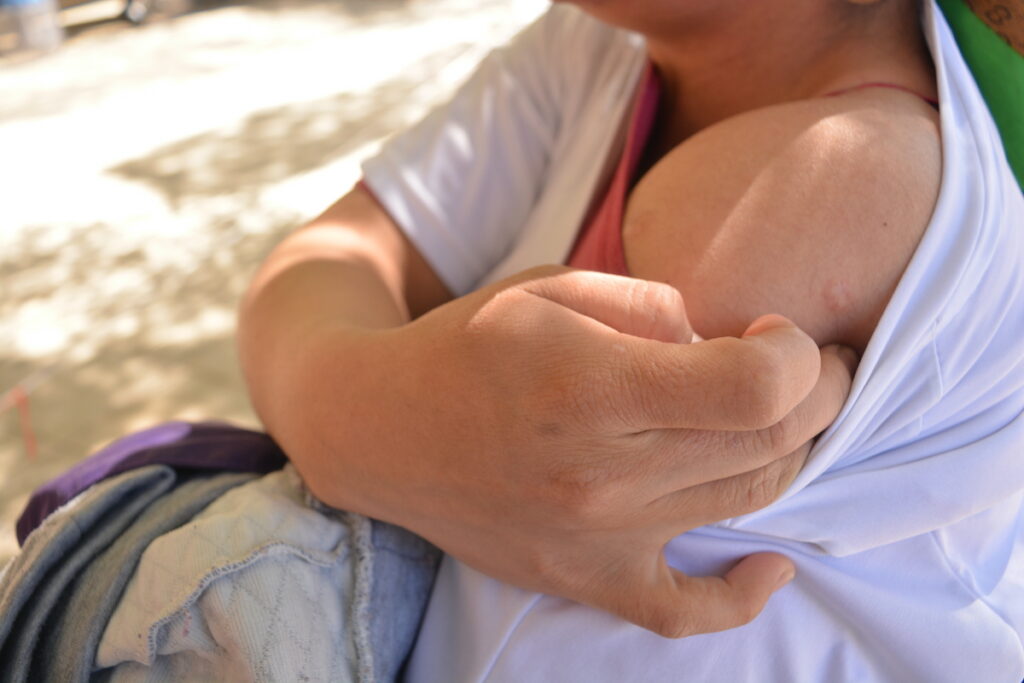
Under questioning from the prosecution and the defense, Colhuan explained that “to avoid being so visible, we went up to an area with more trees because when we were bringing Rafa down, we saw all the special forces, in case they fired again.” He also recounted that a local woman gave him antiseptic plants to prevent his wound from becoming infected. “I still have the scar,” he said, touching his left shoulder.
Despite the defense's objections, Colhuan described Rafa: “He lived in his little wooden house, he did workshops but it's hard to find work, he did blacksmithing. He was my cousin, I would visit him, we would chat, listen to music. In the winter, with the snow, sometimes he didn't have firewood, so we would share mate.”.
The witness added that her cousin “had a difficult life and wanted to get ahead, to live a better, healthier life in the countryside.” Between sobs, Colhuan continued: “We were almost the same age. He knew we were Mapuche, and we liked to participate in the ceremonies; it made him feel good. He wanted peace and quiet, to raise animals and escape the suffering of the cities, where it’s hard to survive. Everyone loved him; he was always an excellent person. We were together until the day he was killed. He made jokes, made me laugh, and made me feel good. He held my hand when he was shot. I loved him very much; I miss him.”
Attorney Rochetti wanted to know if Colhuan had belonged to a security or armed force. “I worked in the Army, I did two months of training and then I cleaned the cabins at the barracks as a maid,” she replied.
“I didn’t want to be arrested, but I couldn’t walk.”
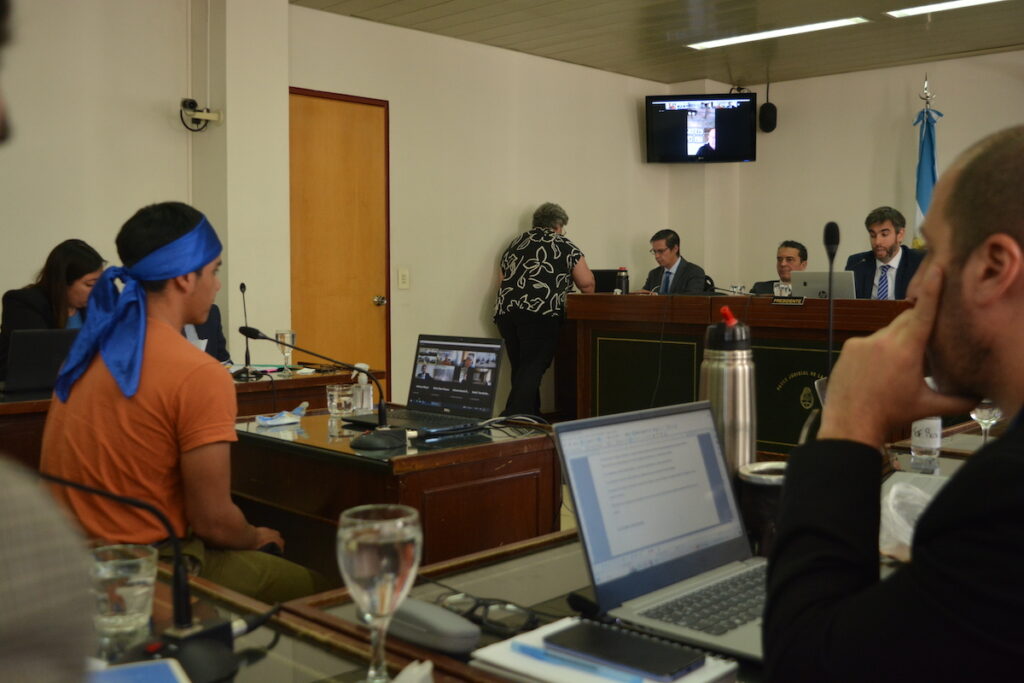
After a brief pause, Lautaro González Curruhuinca said, “ I’ve come so that Rafita’s parents can find out how he died.” The young man indicated that he had arrived in the community on November 22nd to see the machi (Mapuche medicine woman) for a kidney problem.
“In the early morning of the 23rd, there was an eviction. We couldn't do anything because there were so many officers and it was very dark. We had to run towards the mountain; there were only a few of us peñi (friends). There were more women and children than men. We were in the forest. The next day, the 24th, we found the rest of the peñi who had come to bring us food,” he recounted. As Colhuan had explained, on the 25th, after midday, they decided to go down to see what was happening below. “We heard gunshots, and we started running uphill. At that moment, we could hear gunfire all the time. Fausto and I reached a plateau, and we started defending ourselves with stones. There were a lot of shots, and they were coming uphill.”
Curruhuinca saw that his sister and Coña had been wounded, and then Rafael Nahuel fell. “We shouted that someone had fallen, and the officers withdrew. We looked at the man , who couldn't speak, writhing in pain. We saw the blood, and under his shirt, he had a lump under his armpit. We improvised a stretcher with some planks, but Rafael kept falling. He couldn't control his movements and told us to leave him there. He didn't want to be arrested, but he couldn't walk. When I took his hand, it was cold. I tied him to the stretcher with a strap.”
Together with Fausto Jones Huala, whose testimony will be heard at the next hearing, they began to lower the stretcher. “He was already dead down on the road. We were surrounded by Coast Guard officers, there were many of them. We told them we were bringing Rafita back dead, and not to shoot.” As soon as they placed the body on the road, they were cordoned off and taken to the front of the former hotel (Mascardi).
“We were there for an hour until the judge's secretary arrived. The zip ties were cutting into my hands, and I asked them to take them off. They handcuffed us. They threw us face down in the grass until they sat us in a van facing the lake, with Rafita next to us, covered with a vest. They would come, look at his face, and then cover him up again; they did that several times. Then they took us to a PSA van. The Río Negro police took samples from us, and then they took us to the airport.” He estimated that the whole thing lasted about five hours.
“When we were in the PSA van, they took samples from our hands, swabbed them, and told us it was to find traces of gunpowder. I didn't have any contact with a firearm at any time,” the witness said. González Curruhuinca added that a couple of members of the Coast Guard argued among themselves and, at the time of his arrest, they shook him roughly.
Justice for Rafael Nahuel
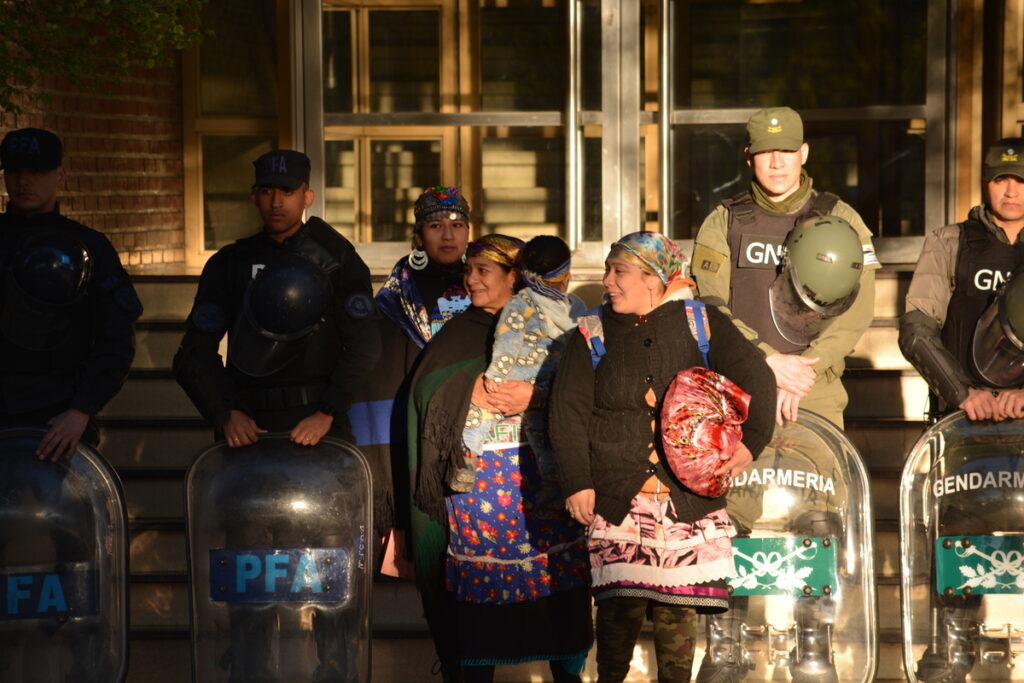
In the trial that began a month ago at the Federal Oral Court (TOF) in General Roca, five members of the Argentine Naval Prefecture's elite Albatros group tried: Sergio Guillermo Cavia, Juan Obregón, Sergio García, Carlos Sosa, and Francisco Javier Pintos. This week, two young Mapuche men who carried Nahuel's body down the mountain to Route 40 in search of medical help, Fausto Jones Huala and Lautaro González Curruhuinca, will testify as witnesses. Both were with the victim when he was shot. The trial, taking place in the city of General Roca (Fiske Menuco, according to the Mapuche name), is structured with two hearings per week, on Tuesdays and Wednesdays, and is only halfway through.
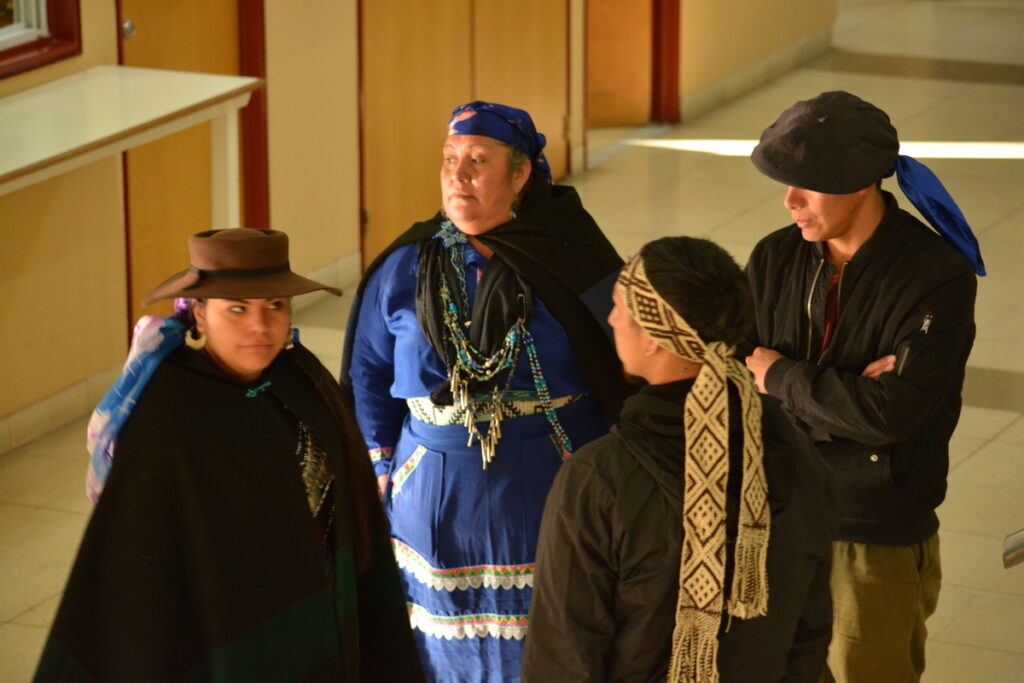
Outside the Fiske Menuco Courthouse (General Roca), solidarity organizations supporting Indigenous communities had gathered early to hold a rally. A communal meal was prepared to accompany the testimonies of these crucial witnesses of the Mapuche people.
We are present
We are committed to journalism that delves into the territories and conducts thorough investigations, combined with new technologies and narrative formats. We want the protagonists, their stories, and their struggles to be present.
SUPPORT US

FOLLOW US
Related notes


We are present
This and other stories are not usually on the media agenda. Together we can bring them to light.