

Why kicking trans people out of the bathroom is discriminatory and illegal
More than half of Mexico's trans and non-binary population experiences discrimination when using restrooms, as happened at the Cineteca Nacional. The dissemination of this news generated a wave of gender misinformation and transphobic rhetoric on social media.


Share

MEXICO CITY, Mexico . A witness reported the act of discrimination experienced by Laura, a trans woman who tried to use the restroom at the Cineteca Nacional, a cultural center in Mexico City, on September 12. She did so through a tweet on the X network, which went viral.
“Laura went to the bathroom, at that moment the policewoman kicked the door and yelled at her to come out and called her 'sir'. Laura couldn't even adjust her underwear properly, they took her out and she went to complain to an office in the facility, where another administrative employee told her the same thing, 'calm down, sir'.”
🇲🇽 #CDMX Police at the @CinetecaMexico removed a trans woman from the restroom and subjected her to gender misrepresentation.
— Presentes Agency (@PresentesLatam) September 13, 2023
‼️These situations of exclusion and discrimination have been repeated previously at the Cinemex at Reforma 222 https://t.co/yWA1QC9Plu
Situations like the one Laura experienced, where transgender people are removed from and prevented from entering public restrooms that correspond to their gender identity, are not isolated incidents. They are discriminatory acts that violate rights and transgress current laws.
In Mexico, 51% of transgender and non-binary people have experienced barriers to using restrooms based on their gender identity. This is documented in the National Survey on Discrimination Based on Sexual Orientation and Gender Identity ( ENDOSIG, 2018 ) conducted by the National Council to Prevent Discrimination (CONAPRED).
The case that awaits justice
In November 2015, Jessica, Lia, and Alessa (who was murdered in 2016) were denied entry to the women's restroom at the Cinemex movie theater in the Reforma 222 shopping mall. In 2020, the Supreme Court of Justice of the Nation ( SCJN) took up the case. It sought to analyze "whether assigning a gender in public restrooms is a justified distinction in terms of the right to equality and non-discrimination." To date, the SCJN has not issued a ruling on this analysis.
Discrimination is a crime
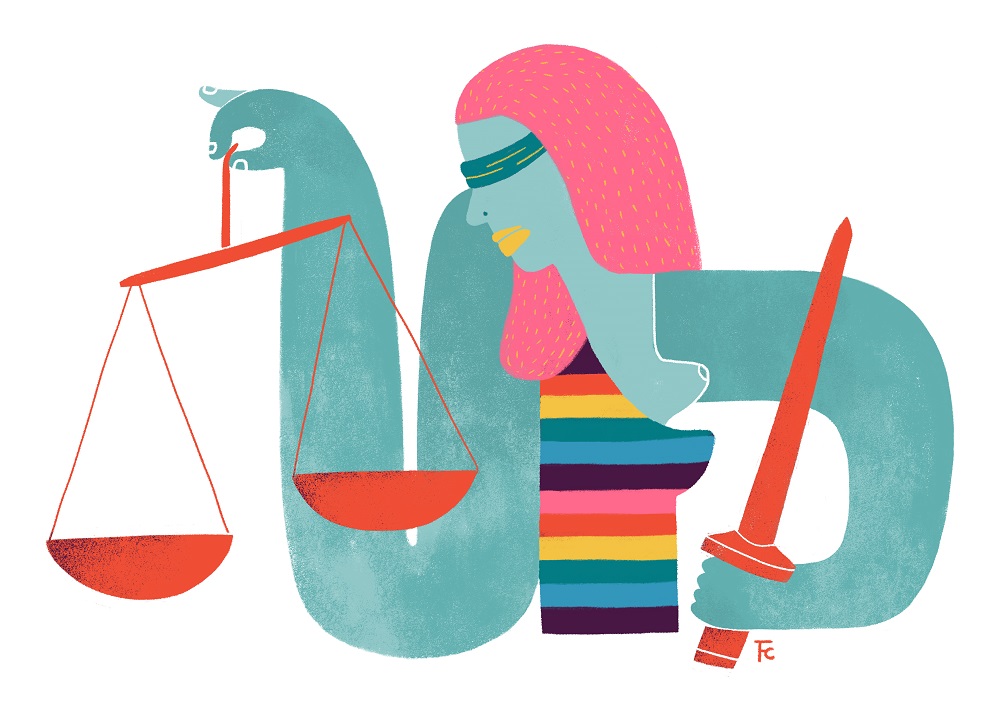
In Mexico, denying transgender people access to restrooms constitutes the crime of discrimination. Discrimination involves “ treating people differently, affecting some of their rights without valid justification, which reproduces social inequality and can have collective effects ,” according to the Council to Prevent and Eliminate Discrimination in Mexico City ( COPRED ).
The Political Constitution of the United Mexican States establishes in the fifth paragraph of its first article that “ any action that threatens dignity is prohibited
human rights, nullify or diminish the rights and freedoms of individuals, motivated by their ethnic origin, gender, social condition, sexual preferences (sexual orientation, gender expression and identity).”
In turn, this prohibition of discrimination is based on the Federal Law to Prevent and Eliminate Discrimination , on 30 local laws against discrimination, and on the General Law on Women's Access to a Life Free of Violence and its 32 local laws.
“Discrimination is any distinction, exclusion or restriction suffered by women on the grounds of gender, age, physical characteristics (…) sexual identity or orientation, or any other that violates their human dignity, which aims to undermine or nullify the enjoyment or exercise of their rights ,” states the Law on Women’s Access to a Life Free of Violence in Mexico City.
Exclusion and discrimination in public restrooms can affect not only trans women, but anyone who does not conform to hegemonic standards of femininity and uses the restroom designated for women . It is important to clarify that these same dynamics are also experienced by transmasculine and non-binary people.
Transphobia amplified by congressmen and media
After reporting the act of discrimination at the National Film Archive, Laura was subjected to a wave of online harassment on Twitter (X). This included a surge of threats against Laura and the trans community, particularly trans women.
The phrase "she's not a woman" and the words "trans," "bathrooms," "women," and "men" were trending topics. The dominant narrative was transphobia, which contributed to a portrayal of trans women as "dangerous." These trends accumulated, by September 15, more than 389,000 transphobic tweets related to trans women and the use of public restrooms . And they reached beyond Mexico. For example, they appeared on television channels in Central America, many of which continued to promote stigmatizing approaches without recognizing gender identities. This is something enshrined, among other regional tools, in the Inter-American Court of Human Rights ruling that recognizes that the rights of trans people are protected by the European Convention on Human Rights.
Furthermore, public officials like Lilly Tellez and individuals close to political parties (both opposition and government) used the video of the complaint that circulated online. They used it on their social media accounts to spread hate speech against trans women.
At the same time, national media outlets seized upon the statements made by federal senator Lilly Tellez to amplify this transphobic message. Regarding the danger of these communication dynamics, Raúl Cruz , a journalist and media analyst, explains:
“The problem we face is that the media writes these stories not to inform, but to generate clicks and attention on social media or news programs. They aren't designed to provide a critical perspective on the violence experienced by vulnerable groups.” She also notes with concern “ a context of violence being structured digitally and by those who are creating public legislation, specifically against Indigenous groups, trans people, and Afro-Mexican groups . This is dangerous because it negates our agency and our righteous anger about the violence we live with.”
Where to report it?

Nationwide, individuals who experience any act of discrimination (committed by private citizens or public officials) can file a complaint with the National Council to Prevent Discrimination (CONAPRED). They can do so through various channels, including online complaints ( at this link ); by phone at 800 543 0033 and (55) 5262 1490; and by email at quejas@conapred.org.mx
We are present
We are committed to journalism that delves into the territories and conducts thorough investigations, combined with new technologies and narrative formats. We want the protagonists, their stories, and their struggles to be present.
SUPPORT US

FOLLOW US
Related notes


We are present
This and other stories are not usually on the media agenda. Together we can bring them to light.