

Tomas de Lima: the marches against racism and classism in Peru
The government of Dina Boluarte remains mired in a web of violence and repression against the indigenous peoples of Peru.


Share

LIMA, Peru. One thing Peruvians were proud of was their ability to remove their presidents when they lost the public's trust. It could be costly; lives could be lost, people could be injured and arrested, and several days of riots and clashes could ensue, but they always succeeded.
This is how Alberto Fujimori, Pedro Pablo Kuczynski, and Manuel Merino fell, amidst massive protests. Therefore, it wasn't difficult to assume that a president considered illegitimate could leave in the same way. But they were met with one of the most brutal crackdowns ordered by a government in Peru since the return of democracy.
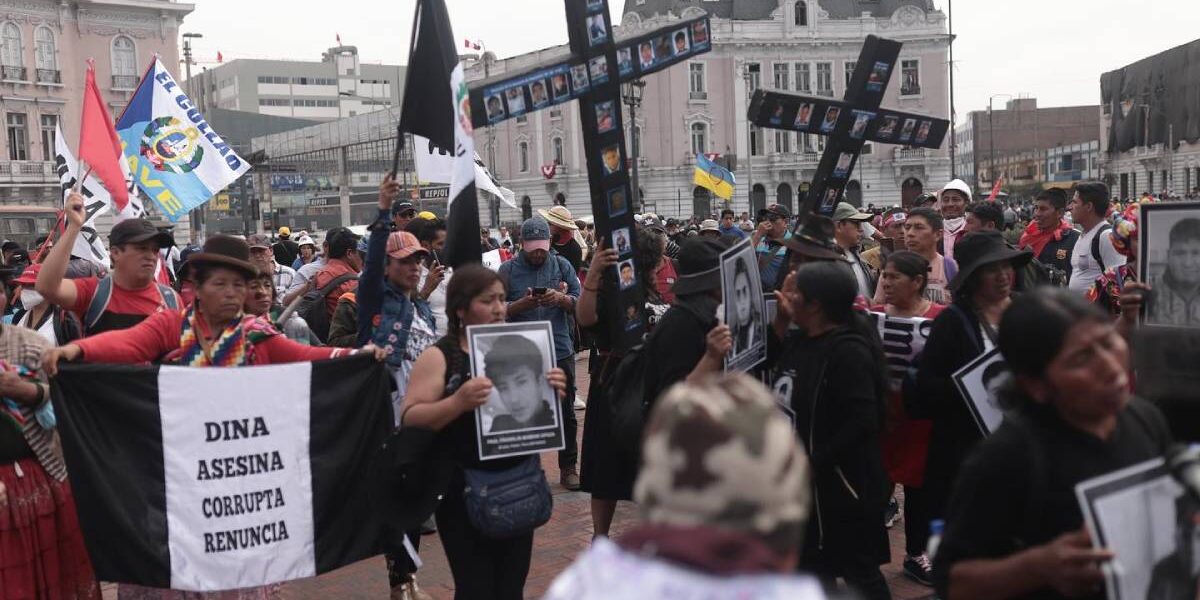
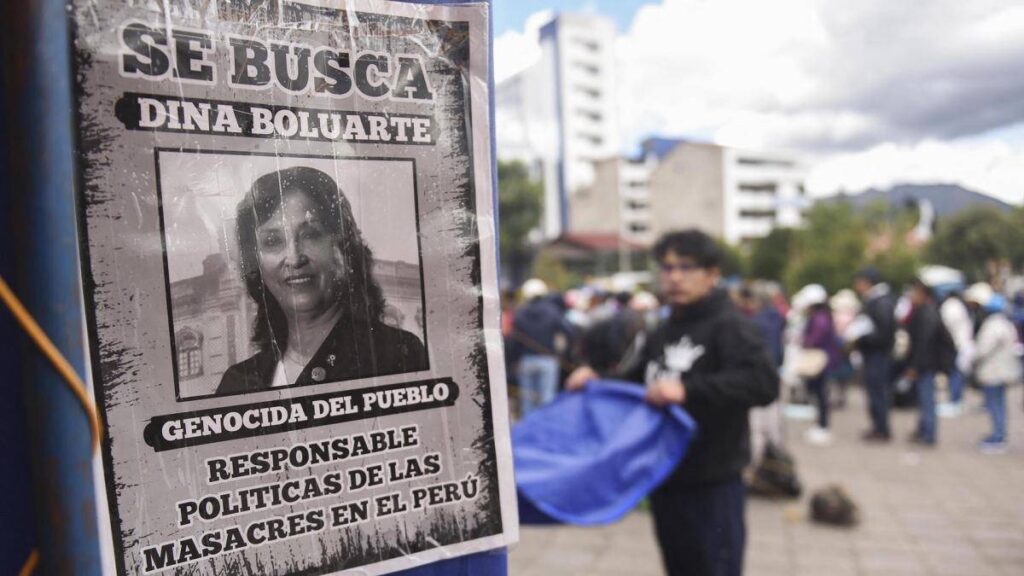
With 49 dead, 47 from gunshot wounds and two from tear gas canisters, several of them minors such as Christopher Ramos (15), David Atequipa (15), and Jonathan Tello (17), students, bystanders, people helping the wounded, or peaceful protesters. All were attacked by the regime of Dina Boluarte and her right-hand man, Alberto Otárola. Both remain in power, defending the police and military forces who fired the shots and blaming the victims for their deaths.
The racism that sustains the Boluarte regime and Peru
Pedro Castillo was considered by a large part of the population—those who did not vote for him—to be practically an illiterate president , despite his long career as a rural teacher and later as a union leader. Neither as a candidate nor as president was he considered suitable for the position. Even those who lost tried to fraudulently prevent him from becoming president, accusing him of having orchestrated a fraud to win. The contempt for his background and the lack of respect for the office he held were visible, effective, and systematic every day.
Amidst ridicule, humiliation, and constant accusations, Castillo led a government in which he failed to fulfill most of his promises . He was also plagued by accusations of corruption and incompetence leveled against every official he appointed, following his break with the party that brought him to power and the left that supported him.
His government was representative of people who, like Castillo, had suffered the same racist abuses throughout their lives. People from rural areas, peasants, Indigenous people, marginalized and living in precarious conditions since birth, who felt that no other government had represented them. When his attempted coup failed, and his vice president, Dina Boluarte, took over, millions of Peruvians felt this as a betrayal of their vote, of the popular will, of Castillo himself, and of themselves.
Centralism and classism
Irma Pflucker, from the political organization En Movimiento , “ the demonstrations that began in December reflect the frustration and rejection of the population towards a political class perceived as distant from the needs of the majority. They also raise the need to change a system that is considered discriminatory, exclusionary, classist, centralist, and corrupt.”
Thus began the first protests in Puno , Apurímac, and Ayacucho , with the fatal results we already know and which, to this day, remain unpunished. The scant support these protests received from Lima confirmed a state of centralism, racism, and classism that persists . Many believed that if the deaths had occurred in Lima, Boluarte's regime would have already ended . But they happened in southern Peru, where, it seems, the state can kill with impunity.
Carlos García, vocalist of the punk rock band Diazepunk , comments that “ there were silences that will hardly be forgotten. Especially from people in Lima who have made music with the culture we inherited from the regions that were massacred by the Bolivarian regime.”
“ What more is needed to understand the structural racism on which this country is built? Andean cultures are exploited, money is made from them, but when they are massacred by the State, they remain silent and their smiles don't even waver as they continue the party as if nothing happened. That's why I celebrate the courage of the art and culture workers who haven't hesitated to raise their voices in their shows, joining activities or putting their creativity at the service of the protest,” she says.
Women and indigenous people at the forefront
For lawyer and lesbian activist María Ysabel Cedano, the constituent process “has the face of peasant women and men, Andean indigenous people and Aymara people from the South. It also bears the face of young people, community members, artists, university students, feminist collectives and LGBTQ+ people.
“The dictatorship has only been able to stop the protest with bullets, state terrorism, extrajudicial execution, torture, forced nudity, arbitrary detentions, among other crimes against humanity,” says María Ysabel.
Regarding feminist and LGBTQ+ participation, she explains that a movement began to take shape on December 7th, eventually coalescing into a unanimous rejection of the dictatorship and a demand for early elections and a new Constitution.
“This participation is decentralized, pluralistic, and diverse,” the activist explains. “From the front lines and through social media, in the northern, central, and southern regions, in all the mobilizations, everyone has been present, and there are also anonymous victims.”
Regarding whether they had achieved their goals as a movement, she stated that they hadn't yet, but that they still had time. “We're far from achieving them, but no one is giving up. The Marika bloc for a new Constitution, the constituent dialogues, and the decentralized feminist gatherings that are being prepared are coming in full force.”
To take over a racist and classist Lima
More than 500 demonstrations took place across Peru from December to July. Each one was met with increasing military repression, states of emergency, and accusations of terrorism used to control the protesters. These demonstrations were supported in Congress by right-wing political forces and media outlets concentrated in Lima. They did not hesitate to accuse anyone who criticized the Boluarte-Otárola government of terrorism.
“ Here in Lima, a city heavily influenced by concentrated media outlets, the response wasn't as forceful in the streets . That left a void that had to be filled from the regions. Hence the need to converge on Lima to demand the resignation,” Pflucker told Agencia Presentes .
This insanity against people from the regions sparked a wave of anger and grief that led them to march towards Lima. But there was no widespread response from the population.
Three shots for equality
The first “Taking of Lima” took place on January 19, 2023 and lasted three days . On January 21, military forces broke down the walls of the National University of San Marcos and illegally detained dozens of students and protesters who had come from other regions.
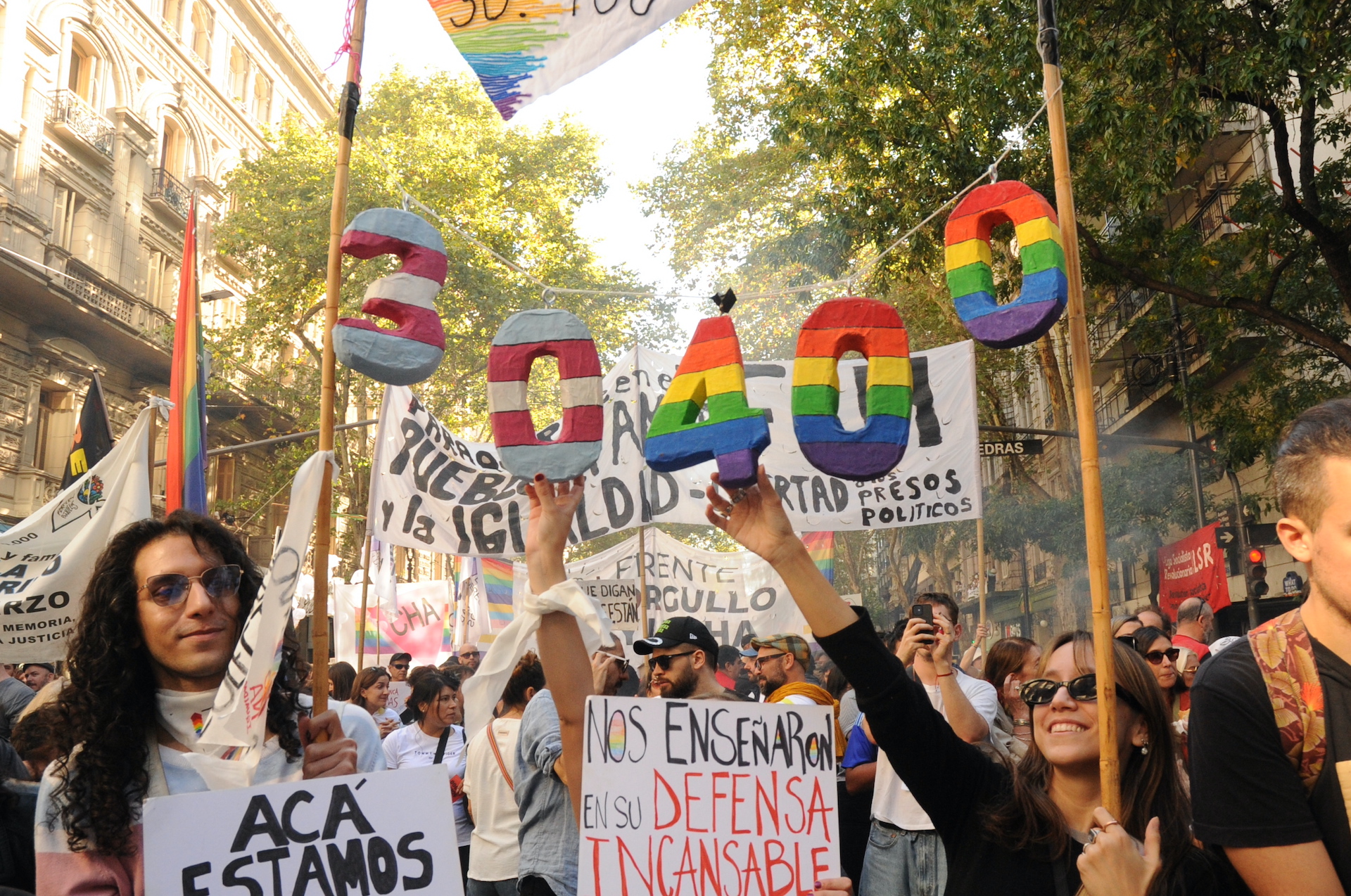
The second "Takeover of Lima" took place on March 1, 2023, with a large contingent of protesters marching to Lima. Their path was obstructed by the police, despite protest being a constitutional right. The third takeover of Lima occurred on July 19, with the participation of labor unions, feminist and LGBTQ+ networks, cultural workers, students, and representatives of progressive political parties . However, it did not have the same impact as the previous ones.
Regarding these mobilizations, Pflucker states: “The marches in December and February managed to bring together a large number of people and proposals. But the necessary legitimacy did not materialize. Spaces of dispute and power struggles arose over who would take the reins. These disputes spread to the regions, leaving many frustrated at not achieving their goal.”
The authoritarian drift
Each "Taking of Lima" was met with large deployments of police and military personnel in the streets. Interrogations and the detention of buses traveling to Lima on the highways were also carried out. In addition, there was intimidation of those providing financial support for travel and food expenses, preliminary arrests, and some people were held in pretrial detention.
The economic incentives offered by the government to the police increased, as did the violent and discriminatory treatment of protesters. Women in Puno, who led several marches, were the most targeted.
In García's words, "beyond not having yet managed to remove Dina from power, the success of these mobilizations lies in the way they challenge us. And in the opportunity to build differently, in which Lima-based organizations are no longer the protagonists."
The Boluarte-Otárola government maintains its alliance with the Armed Forces, the Public Prosecutor's Office, the Constitutional Court, and Congress , which, in turn, seeks to seize control of the National Board of Justice and the National Elections Board . They want to control the former to prevent it from investigating judges and prosecutors who act in their favor, and the latter so that, should they lose again, they can be declared the winners in 2026. They are paving the way for that year at the cost of blood and death.
Photos: Wayra.pe
We are present
We are committed to journalism that delves into the territories and conducts thorough investigations, combined with new technologies and narrative formats. We want the protagonists, their stories, and their struggles to be present.
SUPPORT US

FOLLOW US
Related notes


We are present
This and other stories are not usually on the media agenda. Together we can bring them to light.