

Les Desertores: Trans and non-binary children and youth make first-person documentary theatre
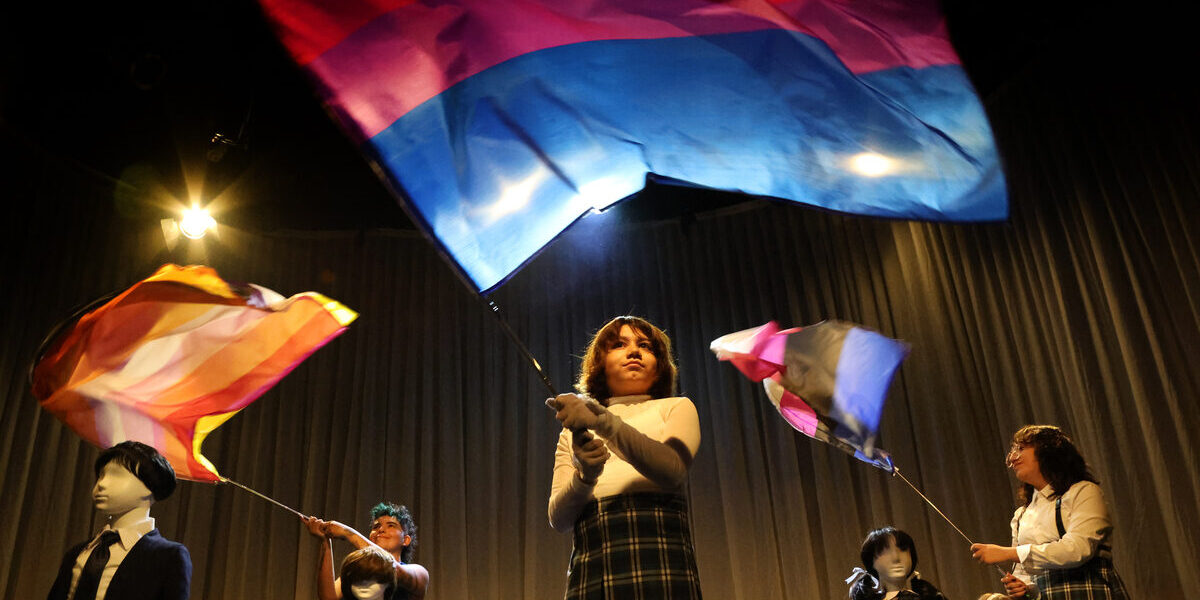
Les Desertores is a documentary theater piece that shifts the adult-centric perspective on trans issues. It stars trans and non-binary children and young people. "We like to call it useful theater. In two hours, we can tell you these stories, open up possibilities for empathy, and question the binary systems of representation that have screwed up our lives."


Share

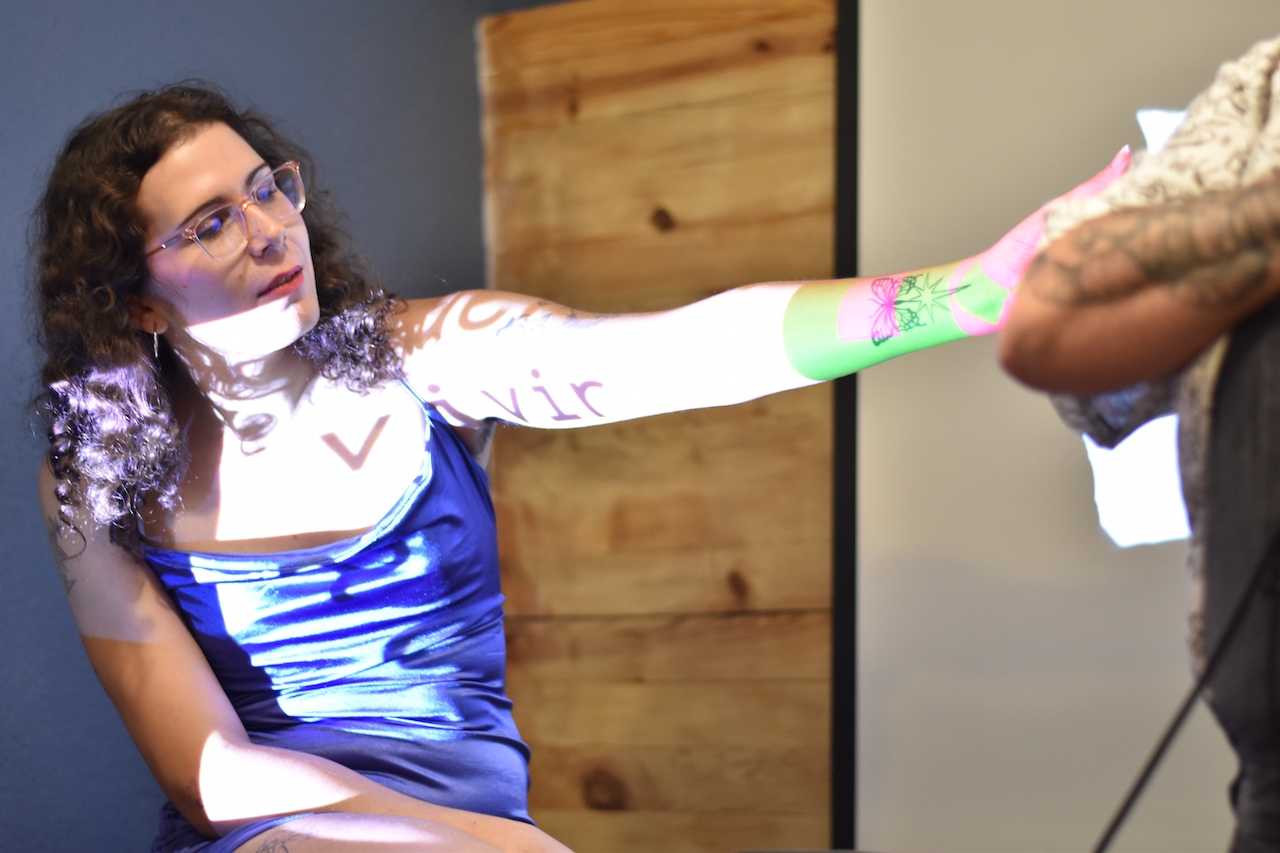
Mexico City, Mexico. “Les Desertores” is a non-fiction theatrical work that shifts the adult-centric perspective on trans issues and features trans and non-binary children and youth as protagonists. They speak openly about their gender identity, the joy of living as trans people, and the violence they experience. They also discuss the road ahead for their rights to be recognized.
This queer documentary theater piece features actresses Stephany Chanel (10 years old) and Andrea (14 years old), actor Nicolás (17 years old), and actor Dan (27 years old). It is directed and produced by Laura Uribe and Sabina Aldana, respectively, who are part of the Sustainable Artists Laboratory (LAS), a research and creation company founded in 2018.
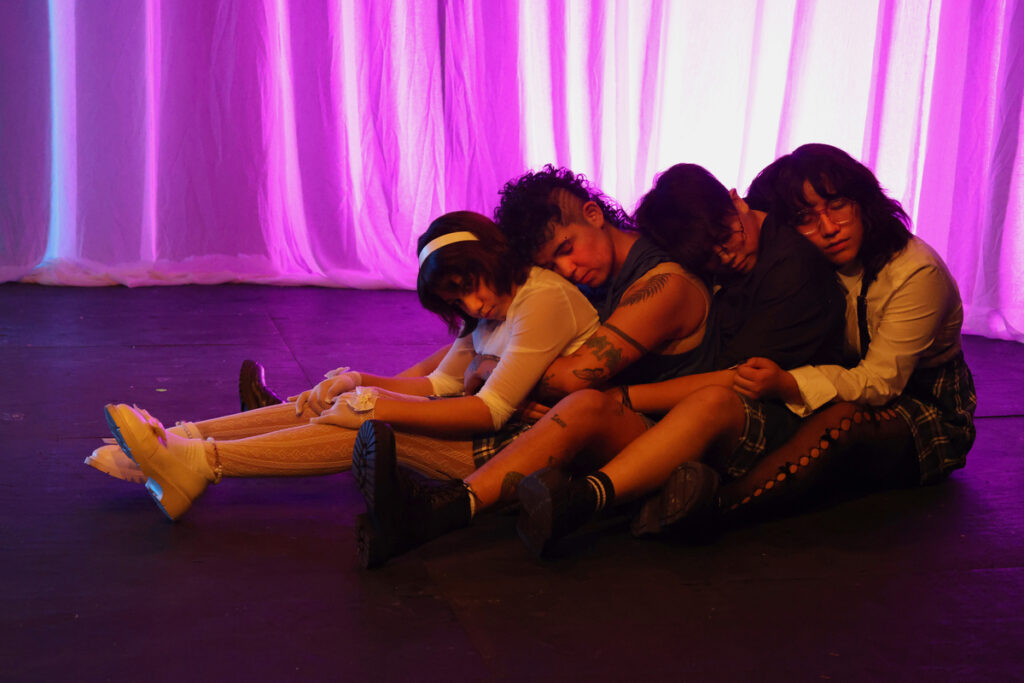
Documentary theatre: witnesses and testimonies
“Theater has almost always been conceived from a fictional perspective. In that sense, documentary theater seeks to tell the stories of those who are both witnesses and testimonies . We work from autobiography to construct the work. From the company's perspective, it is a political stance that they themselves tell their own stories on stage, because cultural systems are absolutely overloaded with adultcentrism where children and young people are very rarely heard ; and even less so when they are part of dissident groups ,” Laura Uribe explains to Presentes .
Les Desertores received support and guidance from the Association for Trans Children , and the talent behind the play was part of the creative laboratory “This Body That Re-exists .” There, trans children and youth interested in participating in a documentary theater workshop were invited.
Why tell our own stories?
We spoke with Stephany Chanel, Andrea, Nicolás, Dan, and the director of the play to learn why the representation of trans children and youth matters. We also asked them what messages this piece conveys in a context where there are so many misleading narratives about the experiences of trans children and youth.
“Being able to tell people I don’t even know that I’m trans is very powerful. But I think it’s also very valuable because it can help other people to no longer be afraid of being who they are and, in turn, to tell their stories. Telling our stories is also a way of raising our voices to say that we are not a joke, we exist, we are here, and we are something strong that is present,” Nicolás commented in an interview.
For Andrea, the idea of telling her own story is a complete “revolution.” “I think our voice is louder, and I feel that can make it more widely heard. I also think this is a kind of revolution for those who come to see the play, especially for people who don't know what it's like to be trans or who think there isn't a trans person in their life. I think that's good; it's like a little nudge to their perspective.”
“Connecting from the wound also helps us to heal”
In addition to the importance of representation, Steph, Andrea, Nico, and Dan say that the experience of theater as an activity that involves the voice and the body is giving them self-confidence and the opportunity to create community.
“Out there, it’s very tiring to fake my voice. Doing this play with my classmates completely takes me to another world where my body doesn’t exist. I don’t feel dysphoria when the play ends and I go out on the street. Now I feel more confident and less afraid to be myself,” says 10-year-old Stephany Chanel.
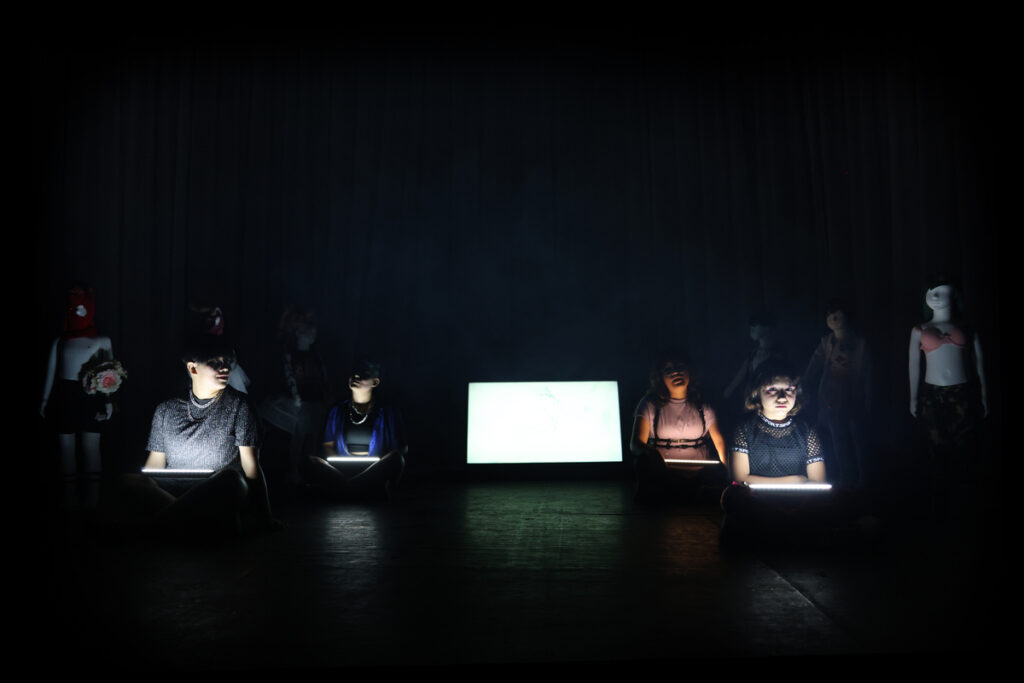
“The experiences that the four of us talk about, while not identical, are not entirely unrelated. We start from a common ground, and I think that has allowed us to forge deep bonds. I don't know if it has to do with the fact that we often connect from a place of pain, but I do think that connecting from that place also helps us to heal and build relationships ,” Dan adds during the interview.
“To be a snow leopard, to love pink, and to be an anarchist of the binary system”
During the play, Steph, Andrea, Nicolás and Dan raise situations of enjoyment about being trans but also about the violence they face in their family, school and everyday environments.
They talk about how exhausting it is to wear binders (a garment that compresses the chest); the euphoria of wearing the school uniform skirt for the first time; the struggle of the families who accompany the children so that they hear their name and pronoun during roll call; the adults who have difficulty understanding and the friendships among peers that make the journey easier.
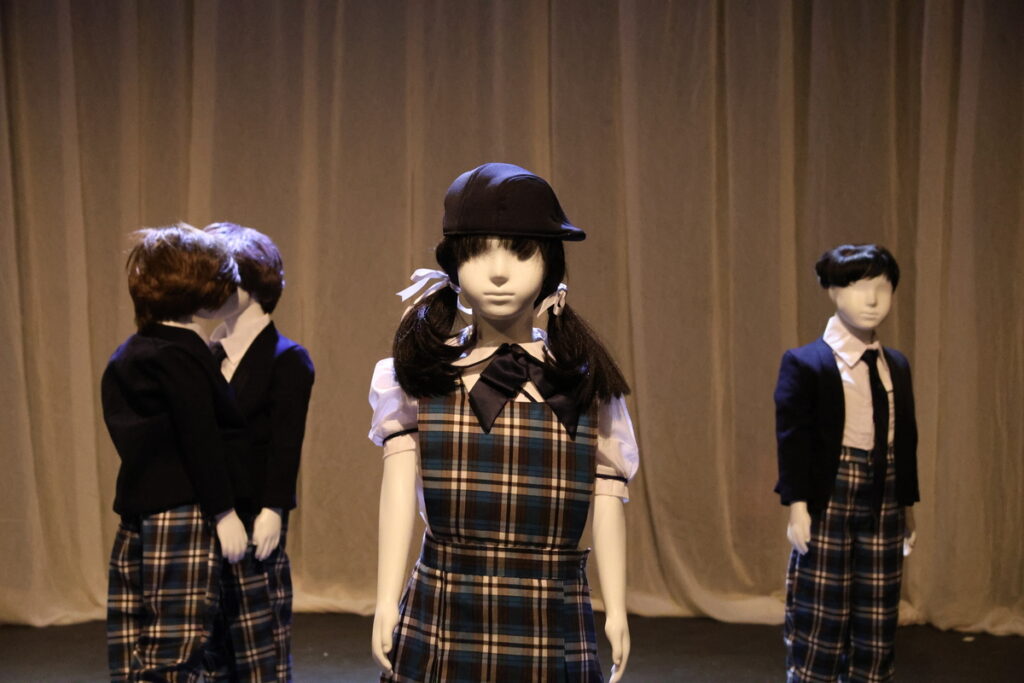
To tell this story, metaphors, music, mannequins, and school uniforms that become characters are used. The use of audiovisual archives as a kind of memory is also very powerful, taking us into a childhood where the child discovers they are neither male nor female.
They also state, “We are more than just trans or non-binary.” And they dream aloud of wanting to be fashion designers, artists, filmmakers.
“Theater useful for empathy”
In an hour and a half, this work also provides a kind of counter-narrative to the hate speech and disinformation used by anti-rights groups around trans children and youth , denying their agency and seeking to obstruct the recognition of their rights, as is happening in the United States , for example, and in so many other countries.
“I believe that the function of art is also to create counter-narratives to hate, right? That is, revealing what is hidden is the guide to follow, especially what they want to keep hidden in the sense that these are topics that no one wants to name, that no one wants to hear about. So I think that bringing this to the table using theater as a vehicle is a very powerful strategy and tool,” explains Laura Uribe, director of Les Desertores .
This performance serves as a vehicle to foster empathy through lived experiences. It also allows for the experiential explanation of concepts such as gender identity and expression, sexual orientation, sex, and gender, while demonstrating that trans experiences don't begin after the age of 18.
“ Let them tell their own stories, their confusion, their fear, their confidence, their resilience; it creates a range of possibilities for empathy, for understanding . We like to call it useful theater because we believe that in two hours we can tell you these stories, open up possibilities for empathy and question the binary systems of representation that have screwed up our existence ,” Uribe concludes.
Les Desertores will be performing Fridays, Saturdays, and Sundays until September 17 at the Foro La Gruta in the Centro Cultural Helénico, in southwest Mexico City. Tickets can be purchased directly at the box office or at this link .
We are present
We are committed to journalism that delves into the territories and conducts thorough investigations, combined with new technologies and narrative formats. We want the protagonists, their stories, and their struggles to be present.
SUPPORT US

FOLLOW US
Related notes


We are present
This and other stories are not usually on the media agenda. Together we can bring them to light.