

16 schools and kindergartens in La Plata vandalized with misinformation against Comprehensive Sexuality Education (CSE)
In La Plata, sixteen educational institutions were vandalized with messages against Comprehensive Sexual Education (CSE).


Share

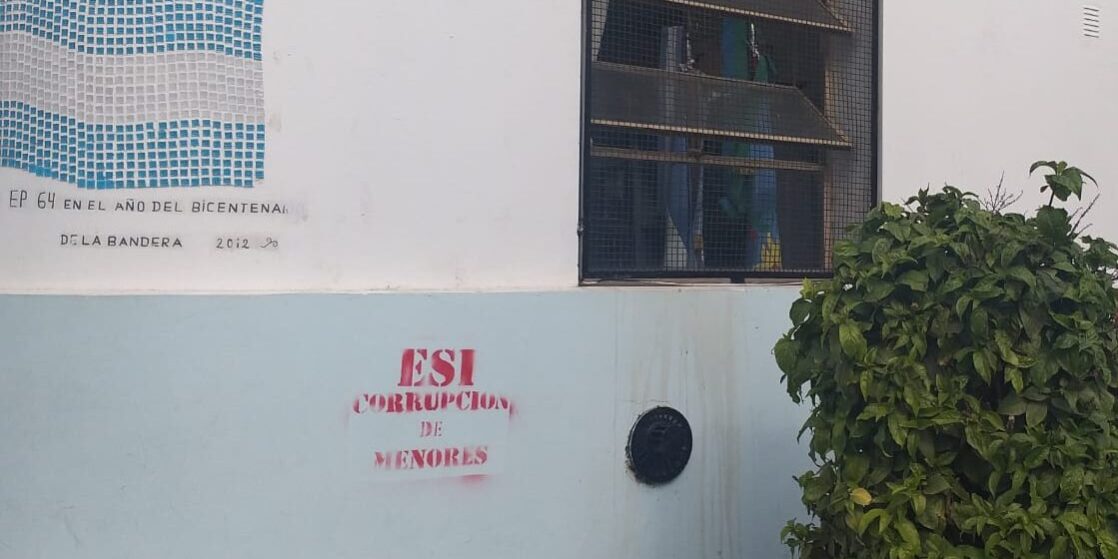
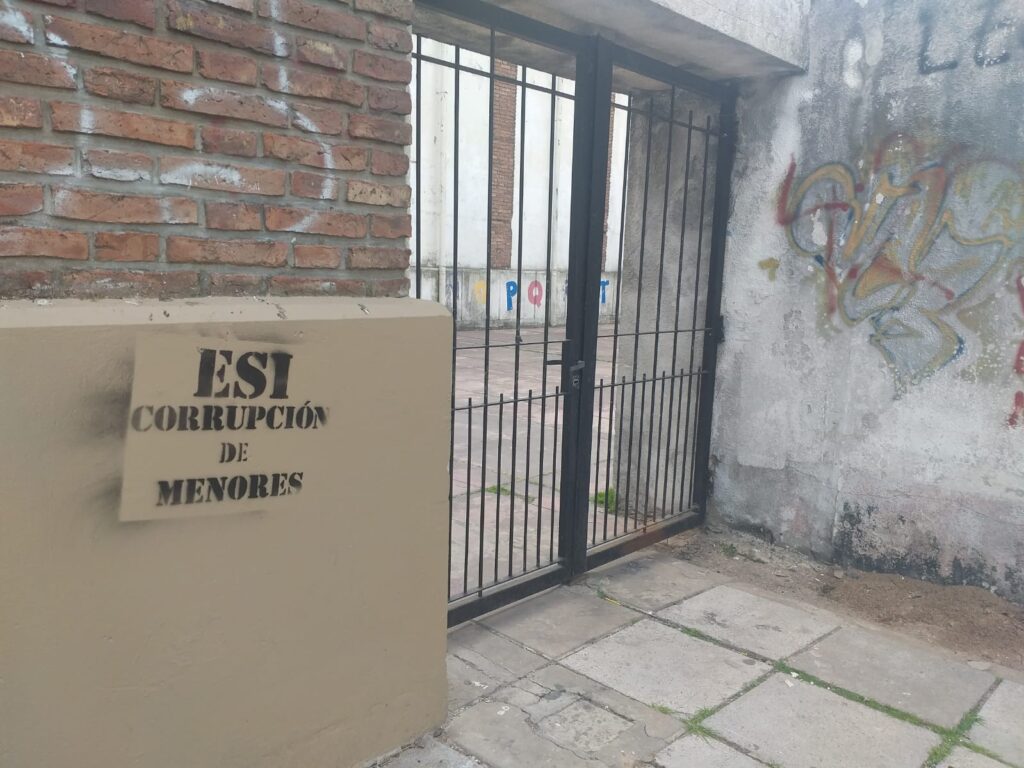
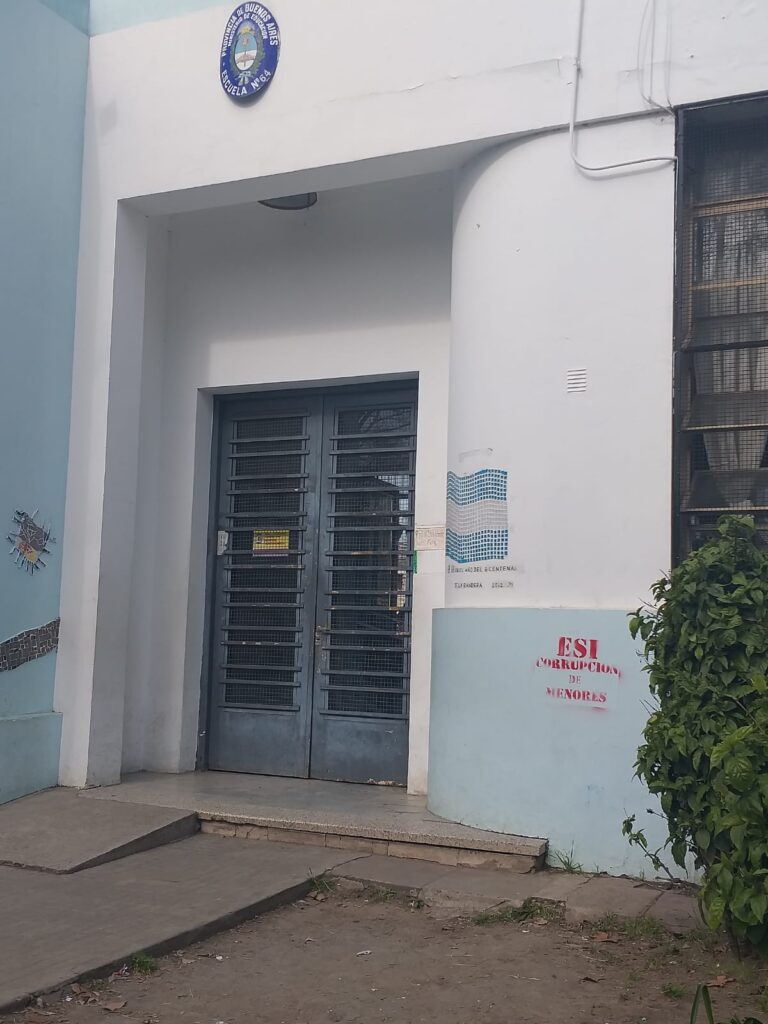
LA PLATA, Buenos Aires Province . On Thursday, August 31, schools and kindergartens in La Plata were vandalized in a coordinated and planned manner with graffiti that read: “ESI is corruption of minors” and “ESI is pedophilia.” This attack occurred just after Comprehensive Sex Education Week—August 21-25—a period dedicated to deepening understanding of the content stipulated by National Law No. 26150. The law, passed by Congress, mandates Comprehensive Sex Education at all educational levels and in all jurisdictions, based on a series of principles: exercising rights; caring for the body and health; valuing affection; recognizing the gender perspective; and respecting diversity.
The Buenos Aires Province Ministry of Education is considering whether to launch an investigation. Many schools have security cameras, which could help identify those responsible.
Why Comprehensive Sexuality Education (CSE) is a tool for care and protection
“What they’re saying is outrageous and deceitful. The lack of comprehensive sex education leaves young people vulnerable to abuse and mistreatment. This campaign is deplorable,” Estela Díaz, Minister of Women, Gender Policies and Sexual Diversity of the province of Buenos Aires, told Presentes.
The Buenos Aires official explained that almost 80% of cases of violence and abuse against children occur in the home. In this context, schools and comprehensive sexuality education (CSE) become vital spaces for supporting those who suffer from it. “They are tools for protecting children and young people.”
A study by the Public Guardianship Ministry (MPT) of the Judicial Branch of the City of Buenos Aires revealed that between 70 and 80 percent of children and adolescents between 12 and 14 years old who went through the Specialized Interview Room of the agency, after receiving Comprehensive Sexual Education (CSE) classes were able to understand that they were abused.
“Comprehensive Sexuality Education (CSE) is a tool that young people value and even demand,” Díaz explained. She added that in recent opinion polls, support for CSE reaches 80% of the population. “These opposing positions are very extreme and come from minority groups.”
A report monitoring the implementation of Comprehensive Sexuality Education (CSE) in the province of Buenos Aires reveals that the challenges schools face in designing and implementing CSE are primarily related to their relationship with families (almost 30%) and coordination with government agencies (25.6%). To a much lesser extent, the report mentions the relationship with students (15%) and coordination with social networks (14.5%). Finally, resistance from the teaching staff (8%) and the institution's perspective (6.8%) were also cited.
Virulent speech and gender
The Minister believes the graffiti could be related to the virulent rhetoric being spread by one of the presidential candidates, Javier Milei, of La Libertad Avanza. “ We have a candidate who has repeatedly stated that he will end comprehensive sex education . He says this with great aggression. This message to society encourages violent behavior and generates misinformation,” the official said.
Daniela Rosa teaches health and adolescence classes, implementing Comprehensive Sexuality Education (CSE) in City Bell, a town in the La Plata district. She also participates in a non-formal education program at the Max Nordau Secular Jewish Club. “Many people think that CSE is just about talking about contraception and self-care in high school, and nothing more. It’s important to highlight that CSE is cross-cutting: it starts in the earliest educational settings and extends to all curricular areas. It teaches respectful awareness of one’s own body, how to understand boundaries with others, and how to talk about consensus, consent, and respect ,” she explained.
Carolina Rosenberg is a biologist and has been a teacher for ten years at the National University of La Plata, the School of Fine Arts, and the National College. When preparing her classes, she does so from the perspective of Comprehensive Sexuality Education (CSE). “I began incorporating CSE into my teaching because I felt that there were many things in the classroom that weren't being addressed, that were being hidden, that there were myths and taboos. I felt my teaching was incomplete because I was leaving people out,” she says. She adds, “I try to approach most of the content I teach not from a purely biological perspective, but from a holistic view, considering the complex and social construction of sexuality.”
She is concerned about certain discourses that seem dormant and suddenly resurface. “I’m worried about our future, the rights of our generation and future generations. It would be very unfortunate if rights were lost,” she says.
Calls to defend comprehensive sexuality education from unfounded attacks
In response to the graffiti, feminist and teachers' groups called for a gathering on Saturday, September 2nd in Plaza San Martín to promote awareness of the importance of Comprehensive Sexuality Education in education.
“At this time, when we are faced with anti-rights rhetoric, the educational communities and the various spaces that work on Comprehensive Sexuality Education (CSE) must join forces and defend this political tool,” says Daniela, who, along with the political group she belongs to, Socialist Left-Isadora, will participate in the march.
On Monday at 7 p.m., at the Faculty of Social Work of the National University of La Plata, an open meeting will also be held, organized by the National Campaign for the Right to Legal, Safe and Free Abortion of La Plata, to discuss, among other things, the advance against Comprehensive Sexuality Education (CSE).
Institutions under attack
The 16 institutions that suffered attacks are primary and secondary schools, as well as kindergartens and teacher training institutes, both public and private. The attacked institutions are Secondary School No. 1 “Manuel Belgrano”, Primary School No. 10 and Secondary School No. 70, Secondary School No. 92, Secondary School No. 14, Secondary School No. 46, Primary School No. 11 and Teacher Training Institute No. 17, San Vicente de Paul School, Kindergarten No. 903, Kindergarten No. 918, Misericordia Kindergarten, Primary School No. 8, Primary School No. 64, Secondary School No. 11, Secondary School No. 32, Secondary School No. 93, Technical School No. 1, and Primary School No. 37.
We are present
We are committed to journalism that delves into the territories and conducts thorough investigations, combined with new technologies and narrative formats. We want the protagonists, their stories, and their struggles to be present.
SUPPORT US

FOLLOW US
Related notes

We are present
This and other stories are not usually on the media agenda. Together we can bring them to light.