

Transfeminisms and antiracisms in Central America: two sister struggles
Let us all unite, all bodies and all dissidents, to wage the feminist, anti-patriarchal, anti-capitalist, and of course, anti-racist battle, erasing the borders imposed by gender binarism and the global North. That is the essence of the transfeminist proposal from a Central American perspective.

Share

TEGUCIGALPA, Honduras. Let all bodies and all dissidents unite to wage the feminist, anti-patriarchal, anti-capitalist, and, of course, anti-racist battle, erasing the borders imposed by gender binarism and the global North. This is the essence of the transfeminist proposal from a Central American perspective and from this reflective dimension, which took place in the first virtual dialogue of the FCAM , promoted within the framework of its 20th anniversary.
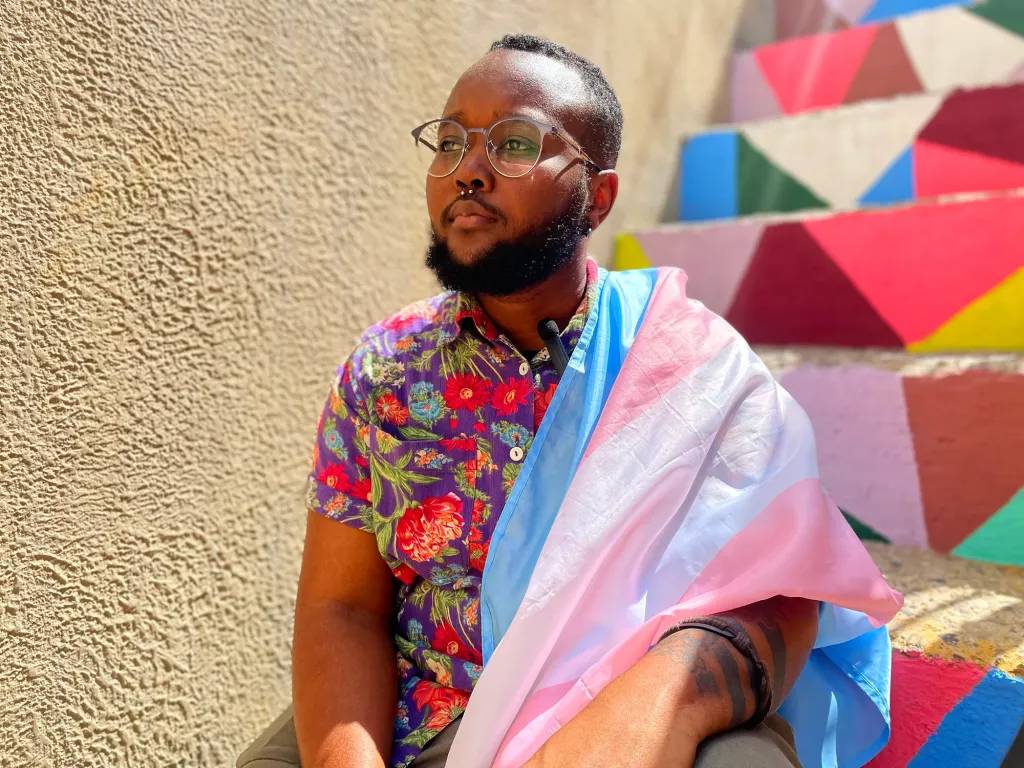
The transfeminist struggle is connected to the antiracist struggle. This was the topic of discussion between activists Obrayan Robinson (Honduras) and Bianka Rodríguez (El Salvador), moderated by Viviane Vergueiro , a Brazilian researcher specializing in gender, transfeminism, coloniality, and economics.
Throughout this entry you will find some notes on transfeminisms, their meanings —both in Central and South America— the tensions and the stakes, but, above all, reflections from the speakers' own experiences.
Transfeminisms: a plural and street-level history
The concept of trans feminism has been a source of much questioning for me, and as Bell Hook said: Who is the subject of feminism? That question is key. And the answer is that feminism is for everyone. And that "everyone" must include trans women, Black women, Indigenous women, and poor women, Robinson stated at the beginning of the dialogue.
During 2021, the Colombian organization Sentiido conducted research on the meaning and current state of transfeminisms in Latin America. Among the main findings is the fact that it is a heterogeneous and complex concept. This leads us to speak of transfeminisms in the plural, recognizing that it is not a homogeneous or unified movement, but rather a movement under construction with different nuances across different regions.
The research summarizes that the expression transfeminism has been used to designate a series of feminist principles and practices developed mainly—though not exclusively—by trans women and transvestites who, from an intersectional perspective, are deeply critical of gender essentialism, transphobia within feminism, and the precarization of migrant, racialized, impoverished, and gender-diverse bodies.
Obrayan confirms this view. She asserts that: “First, we had to learn the history of feminism as such, which, as we know, has been led by upper-class white women who did not recognize other bodies as part of their struggle. Then transfeminisms emerged, which came to recognize us and to address aspects of the autonomy of our trans bodies, what we want to be, how we want to be, how we want to live our identities and sexualities, and that is also important. So, for us, all these processes have been processes of construction, where we are feeling, identifying, and naming our identities and the bodies we inhabit.”.
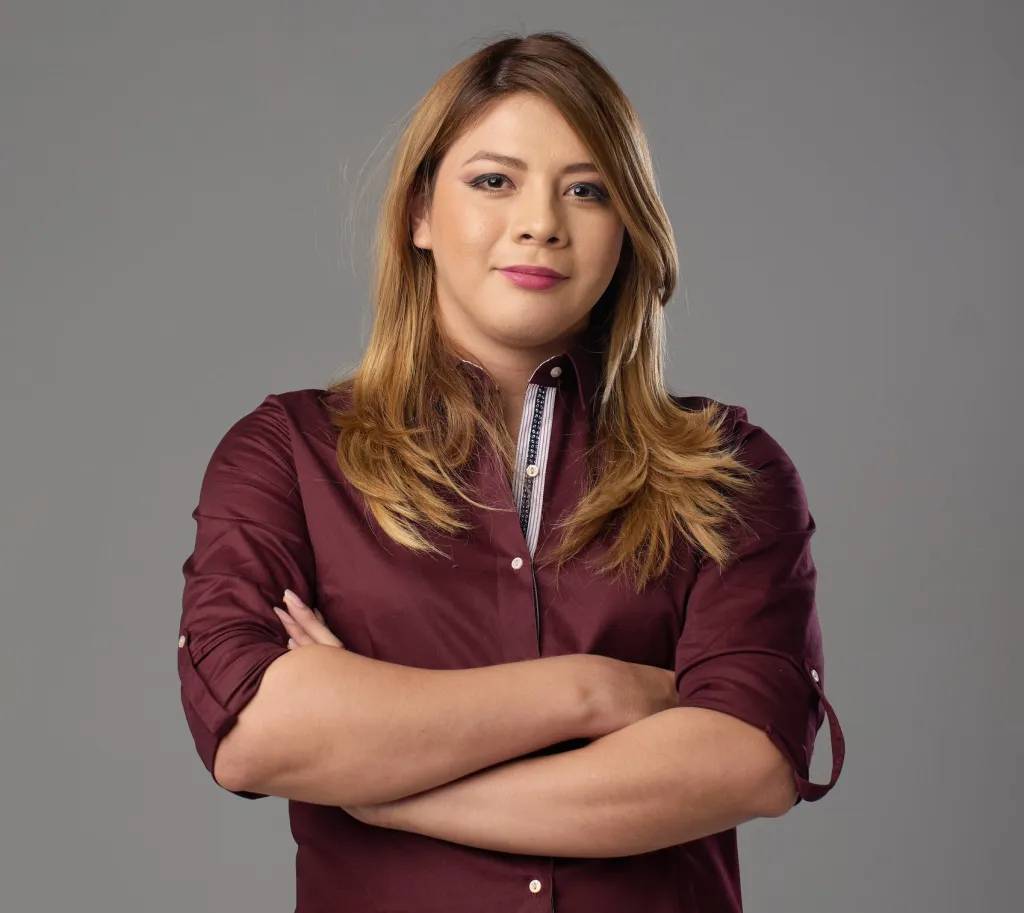
Photo: Comcavis Trans.
Trans feminisms are a feminist branch that centers the voices, experiences, practices, and knowledge of trans women and transvestites as fundamental to the liberation of all women and to an equitable distribution of rights, opportunities, and resources among all people. To this end, trans feminisms take into account other categories of oppression such as racialization and class. This is where both struggles connect, especially in regions like ours.
Along these lines, Bianka points out that violence is amplified when intersectionalities are intertwined, due to being trans and racialized. The Honduran activist argues that “we cannot wage separate struggles because we are both trans and Black. Sometimes we don't name our struggles by those names, but in many ways we are fighting because we have been displaced, discriminated against, subjected to violence, and marginalized.”.
Transfeminisms
The term transfeminism was used in Spain in the 1980s and in the United States in the 1990s. Although there are some transfeminist manifestos such as that of the Asian author Emi Koyama published in 2001, not all people who identify as transfeminists speak from the same place or to the same audiences.
The research conducted by the Colombian organization suggests that transfeminisms are conceived as grassroots, community-based, and deeply committed to social mobilization. For decades, street activism, protest, and local community organizing have been some of the main tools used by trans women and transvestites to advocate for their rights and needs. These transfeminist practices are recognized as the genesis of transfeminisms and as a vital part of them today.
Sentiido explains that some people consider trans feminisms to be movements by and for trans women and transvestites. Others maintain that trans feminisms should be centered on trans women and transvestites, but that they can and should also include trans men and have alliances with cisgender people. Finally, there are also those who conceive of trans feminisms in a broader sense, breaking with Western subjectivities to become a movement of the masses, which includes, but is not limited to, subjects who are “in transit” in various ways, such as migrants, among others.
To this diversity of positions, we must add the fact that transfeminisms are deeply situated, which implies significant points of convergence and divergence, as is the case between transfeminisms in the Global North and those in the Global South. But even within the same region, especially in Central America, we find different emphases and priorities. Despite this diversity, research within transfeminisms reveals a profound convergence of concerns, such as 1) the need for recognition of the rights and an end to violence against transvestite, trans, and non-binary people, and 2) the pursuit of better living conditions for racialized and impoverished people, many of whom are also transvestite, trans, and non-binary.
Obrayan emphasizes this when he says: “Our journey has not been easy at all, since we have been excluded in different spaces, but there is also an approach from our struggle, where we can say that we are also contributing, since in addition to forging our identity as trans and non-binary, we are black people who come from Afro-descendant communities and have a history of resistance.”.
Tensions and powers in movements
Transfeminisms have been established as spaces of struggle, resistance and questioning of the systems of oppression and exclusion produced by cisnormativity that challenges the system, present even in branches of feminism or better known as trans-exclusionary feminisms.
Bianka explains that: “There are also many disadvantages within the movements themselves, where a third party has to endorse you as such: feminist and trans woman. That's why I believe that the movements also replicate binary thinking and fundamentalist practices, even those employed by right-wing parties. We need to deconstruct the concept of feminism, because the concept remains white, and a Black woman, for example, is not considered a feminist. That's why I think changes need to be made both within feminism and within society.”.
Obrayan adds that: “The fight against heteropatriarchy and against capitalism is not a fight of some, it is a fight of all and because of the fact that we have been excluded and marginalized, this fight continues because we continue fighting to be taken into account as subjects of rights.”.
The intersection of gender and racialization also includes the situation of Indigenous peoples. A Nicaraguan activist who participated in the Sentiido investigation stated: “There can be no queer, gay, trans-feminist liberation without recognizing Indigenous peoples.”
Among the most relevant intersections of Latin American transfeminisms are those of racialization and class. Almost all the people interviewed by Sentiido, regardless of their geographic location, mention that the majority of trans women and transvestites in the region live in precarious conditions related not only to their gender identity, but also to their ethnoracial identity and socioeconomic status.
Bianka confirms that there is oppression within social movements themselves. “Black people are often not part of those movements; they are in the streets or in the factories, but not within the social movement.”.
Inspired by the transfeminist manifesto – transborderism , we conclude by recalling that: transfeminisms are concrete political strategies against violence, repression and exclusion of dissident, ambiguous, mixed bodies… from a feminist perspective.
We hope to continue mobilizing reflections, to create, from the plurality of existences, counter-narratives that challenge the CIStema and contribute from there to the construction of more inclusive movements and societies.
This article was published in Reportar sin miedo and was an investigation by the Central American Women's Fund (Fecam)
We are present
We are committed to journalism that delves into the territories and conducts thorough investigations, combined with new technologies and narrative formats. We want the protagonists, their stories, and their struggles to be present.
SUPPORT US

FOLLOW US
Related notes



We are present
This and other stories are not usually on the media agenda. Together we can bring them to light.