

Following a record number of complaints, the indigenous couple met with INADI and the Ombudsman's Office: they are analyzing measures
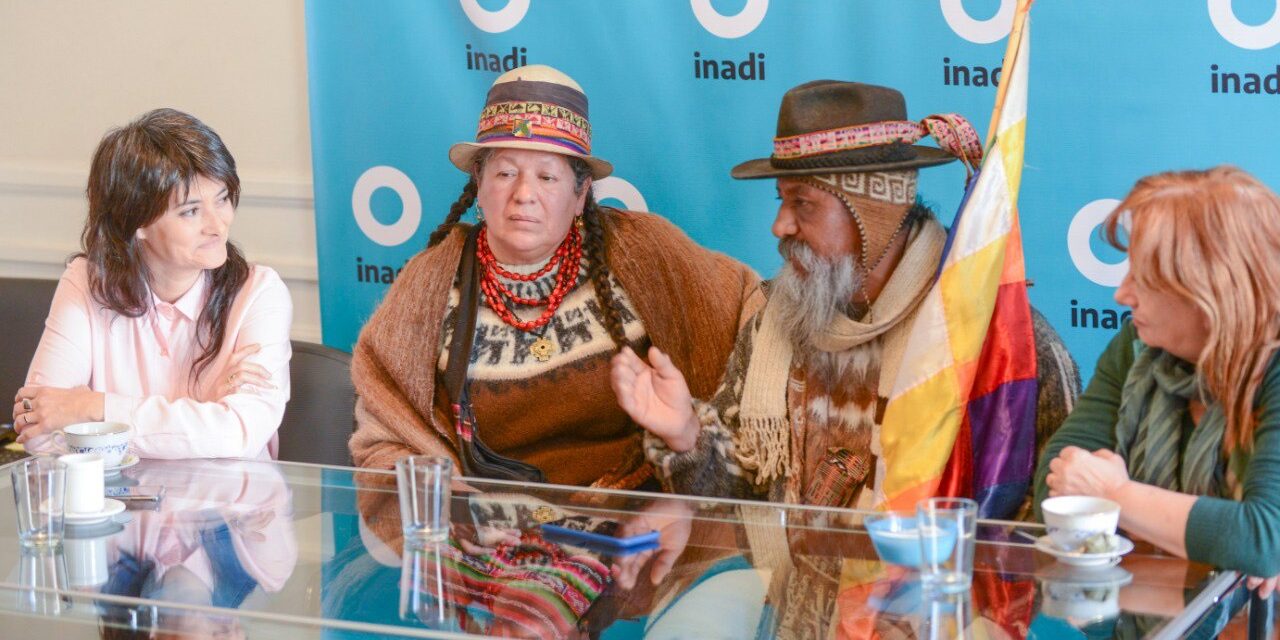
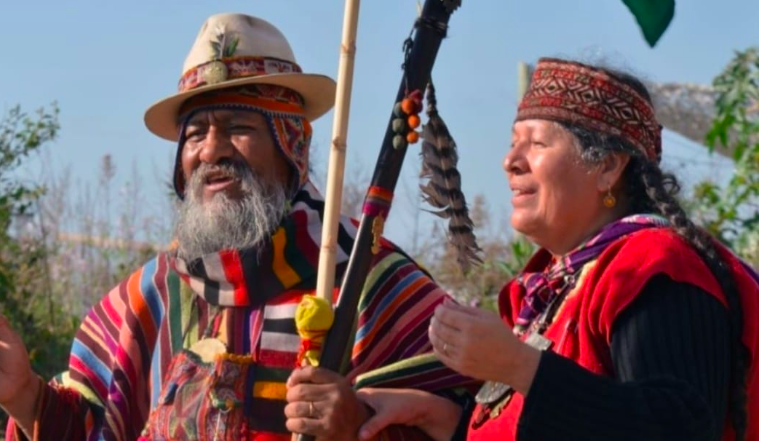
Following the record number of complaints, Kantuta Killa and Wari Rimachi, the indigenous couple from the Ayllu Mayo Was Community who were mistreated on Doman's program, met with INADI and the Ombudsman for the Public.


Share

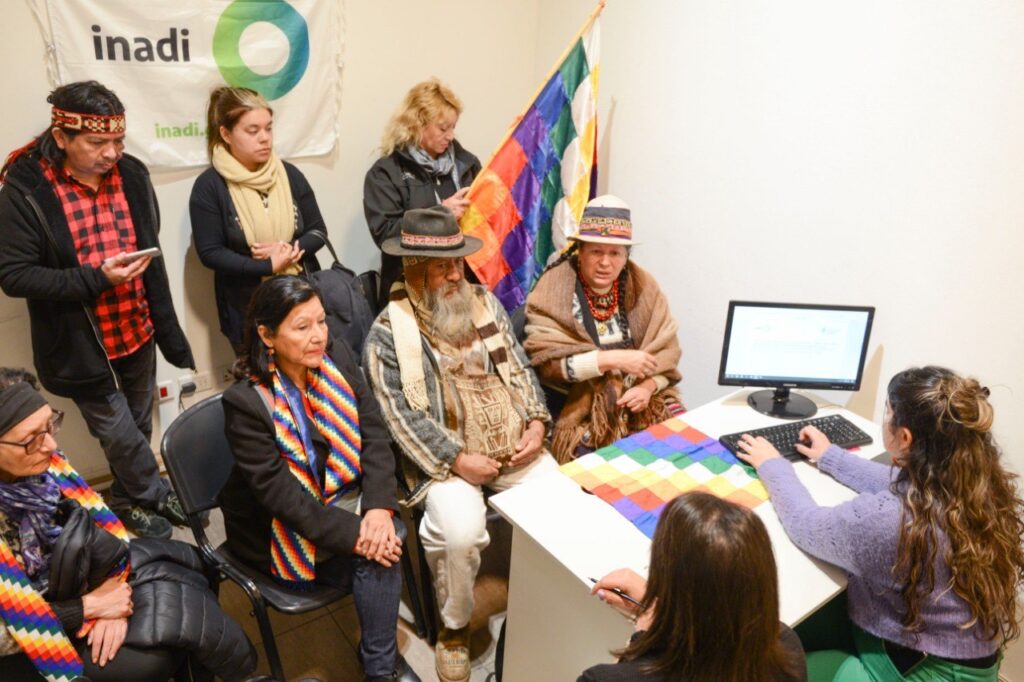
The Indigenous couple, stigmatized and mocked in an interview on Fabián Doman's television program, filed a discrimination complaint today with INADI (National Institute Against Discrimination, Xenophobia, and Racism). They also met with authorities from that agency and the Ombudsman's Office, where they explained the type of redress they are seeking following the episode broadcast on Channel 13 on Thursday, August 24, which generated a record of over 2,000 complaints from the public to those agencies.
What will the reparations measures be?
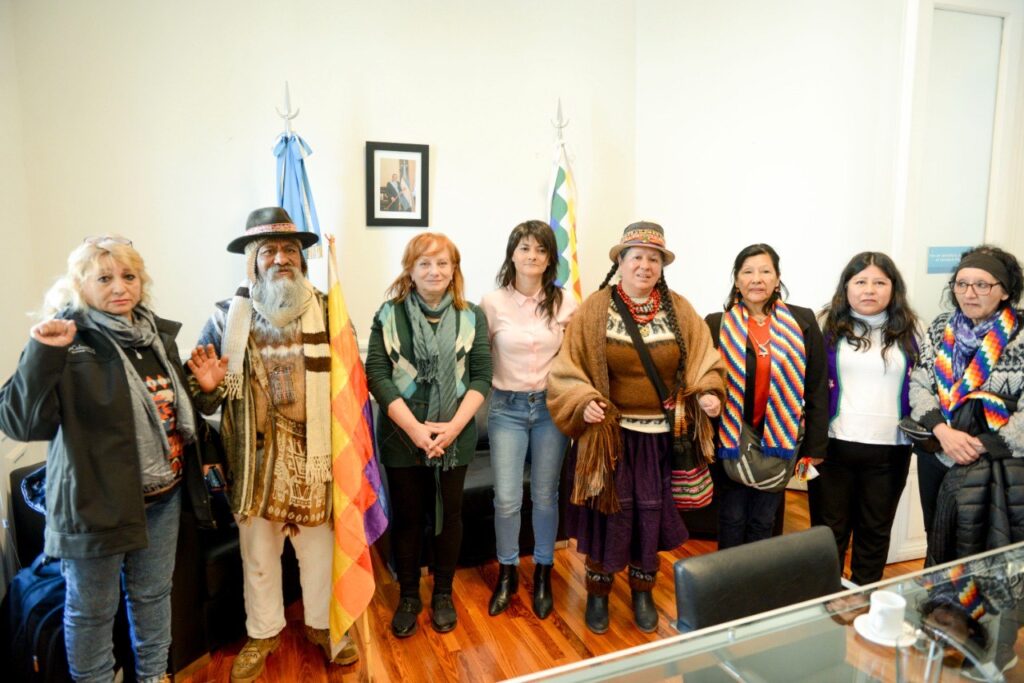
Kantuta Killa and Wari Rimachi, members of the Ayllu Mayo Wasi Community who were harassed by a reporter and the team from the program Bien de mañana last Thursday, held a meeting this afternoon with Greta Pena, head of INADI, Miriam Lewin, Public Defender; Darío Arias, director of Policies and Practices against Discrimination (INADI), Carmen Burgos, lawyer in charge of the indigenous peoples area of the same organization, and representatives of other native communities.
The Indigenous couple, in addition to formally filing a complaint in person—which INADI had already initiated ex officio—informed the officials present about the measures they believe could have a reparative effect. “They expressed their desire for this reparation to be through education, providing training and skills development, and not through highly punitive sanctions,” Greta Pena, head of the agency, explained to Presentes after the meeting. She added, “It was an enriching encounter. Hearing their analysis, diagnosis, and proposed solutions directly from them was very valuable.”
“We are seeing a symptom in society that we analyze as very positive. A symptom where we can see the indignation generated by this attempt to belittle, ridicule, and mock things that are not to be trifled with, like identity. I think it is very important to work responsibly for the new generations and how each of us, from our own place, from institutions, from the struggles of the people, and so on, can change the course of events,” said Miriam Lewin.
Freedom with multiculturalism
The spokesperson for the meeting reported that Wari Rimachi shared with those present what they experienced after that interview: “ This discrimination, these acts of mockery have occurred throughout our lives; we are familiar with them. Perhaps in this time we can say that Argentine society is maturing enough to be able to issue social condemnations. And you are taking this up and doing so institutionally .”
At the meeting, Mamay Kantuta Killa stated: “This is a time of change, and that is why we have come to make this denunciation firsthand, accompanied by our brothers and sisters, whom we thank, because we want this to be a source of strength for future generations, so they know, so they don't just consume this hateful discourse disguised as freedom, when it is not freedom, but oppression. Freedom comes with integration, with plurinationality and pluriculturalism .” They want to set a precedent so they can take the complaint to the Commission for the Eradication of Racism. “If we envision a different Argentina, racism and discrimination should no longer exist, or at least there should be more and more of us condemning these situations ,” she said. The couple from the Villa Martelli community in the province of Buenos Aires also expressed the need for the Argentine State to recognize the historical and structural inequality suffered by Indigenous peoples.
They will assess whether a fine is warranted.
Following the meeting, Pena told Presentes: “ We want to request a similar amount of time from the program to discuss Indigenous issues .” She also explained that ENACOM – the National Communications Agency – must now evaluate the legal opinions issued by INADI in conjunction with the Ombudsman for the Public, “to determine whether a fine or other sanctions should be applied ,” the head of INADI told Presentes. She added: “We are working with the production company on training and development programs for the team. We believe that this incident, beyond the structural racism and the mocking and ridiculous atmosphere, reveals a profound lack of understanding of the issue.”
Pena said that INADI will work to amplify these voices. They will demand spaces to discuss Indigenous issues, call for greater support for community media, and advocate for the inclusion of Indigenous women communicators, all in order to combat discrimination and prejudice-based violence through public policy.
Massive condemnation
“Faced with the rise of hate speech, this incident has emerged, sparking massive public condemnation,” Pena emphasized. This was evident in the record number of complaints received by various agencies. It was also reflected in the way the issue resonated on social media and within institutions, with extremely high levels of engagement from audiences and communities, as was the case on Presentes' social media platforms.
“The fact that people have massively identified it as a violation of rights breaks the normalization of this situation. And the most important thing for changing these practices is for society to deconstruct this normalization and recognize that this situation is violent because it stigmatizes and demeans. Furthermore, the respect and poise with which the couple answered the interview under unequal conditions, despite the mockery and provocations, is striking. Finally, I find it paradigmatic that this interview took place while they were on the subway on their way to the Joaquín V. González Teacher Training Institute to give a free talk in a course on environmental editing,” said Pena.
Media violence against indigenous peoples
Media violence against Indigenous peoples is not an isolated incident. This was also discussed at today's meeting. They themselves expressed that they experience these situations constantly. They also spoke about their worldview, where August is a month of both change and opportunity. "They are very grateful for the support of other Indigenous communities and peoples, and of society in general. People even stop them in the street to express their solidarity and thank them."
Beyond filing a complaint with INADI, the couple can initiate legal action if they wish.
Disrespectful, mocking and ridiculing
This morning, the National Institute Against Discrimination, Xenophobia, and Racism (INADI) and the Ombudsman for the Public issued a joint statement expressing their opinions on the mockery and stigmatization of the Indigenous couple by the Channel 13 program "Bien de Mañana," hosted by Fabián Domán. Both organizations considered Domán's apology yesterday insufficient. "It contains no critical review" of what occurred and does not redress the harmful nature of the on-air dialogue, which trivialized and disparaged the Indigenous language and culture.

The Ombudsman's Office's Analysis, Research, and Monitoring Department described the journalists' approach to the program as " disrespectful, mocking, and ridiculing ." It also stated that it had contacted the production company to explore possible avenues for redress.
Before meeting with the couple to follow up on their complaint, Greta Pena said today on the radio program "La patria de las moscas" (The Land of Flies) that the couple was treated as something exotic, as something foreign. "It's necessary to apologize and say 'I'm going to make amends.' As journalists, they missed a wonderful opportunity to do an enriching story." Regarding her expectations for today's meeting, Pena noted that INADI (National Institute Against Discrimination, Xenophobia and Racism) does not issue sanctions, but she hopes it will leave a "strong symbolic image that our society sets limits. Anything goes is not allowed."
Tools: respectful coverage
In the joint statement, the Ombudsman's Office for the Public recalled that " Law 26.522 on Audiovisual Communication Services establishes that the media have, among other objectives, the duty to preserve and promote the identity and cultural values of Indigenous Peoples (Article 3), and that the cultural dimension of the right to communication includes due respect for the right to participation and cultural diversity." The Ombudsman's Office also reiterated its "Recommendations for Media Coverage of Indigenous Peoples." These are guidelines for developing good journalistic practices, created in collaboration with Indigenous peoples and communities.
We are present
We are committed to journalism that delves into the territories and conducts thorough investigations, combined with new technologies and narrative formats. We want the protagonists, their stories, and their struggles to be present.
SUPPORT US

FOLLOW US
Related notes


We are present
This and other stories are not usually on the media agenda. Together we can bring them to light.