

Popular and peasant feminisms embraced in Jujuy to defend Pachamama
The international meeting organized by the Quilla Network took place from August 18 to 20 and was a way to show support for the Jujuy resistance to the constitutional reform.


Share

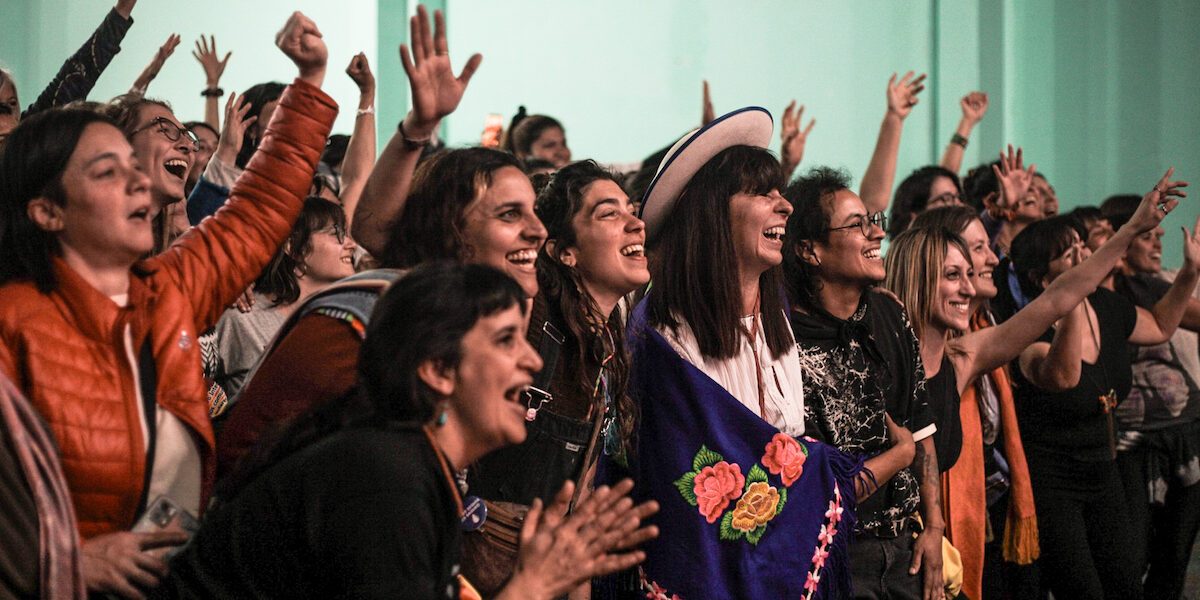
The 2nd International Gathering of Community, Peasant, and Popular Feminisms of Abya Yala was, through its many activities, guests, and participants, a grand celebration of Pachamama . It was also a way to strengthen feminist networks for the defense of Mother Earth, ancestral knowledge, and ways of organizing resistance in Jujuy and in so many other corners of Latin America.
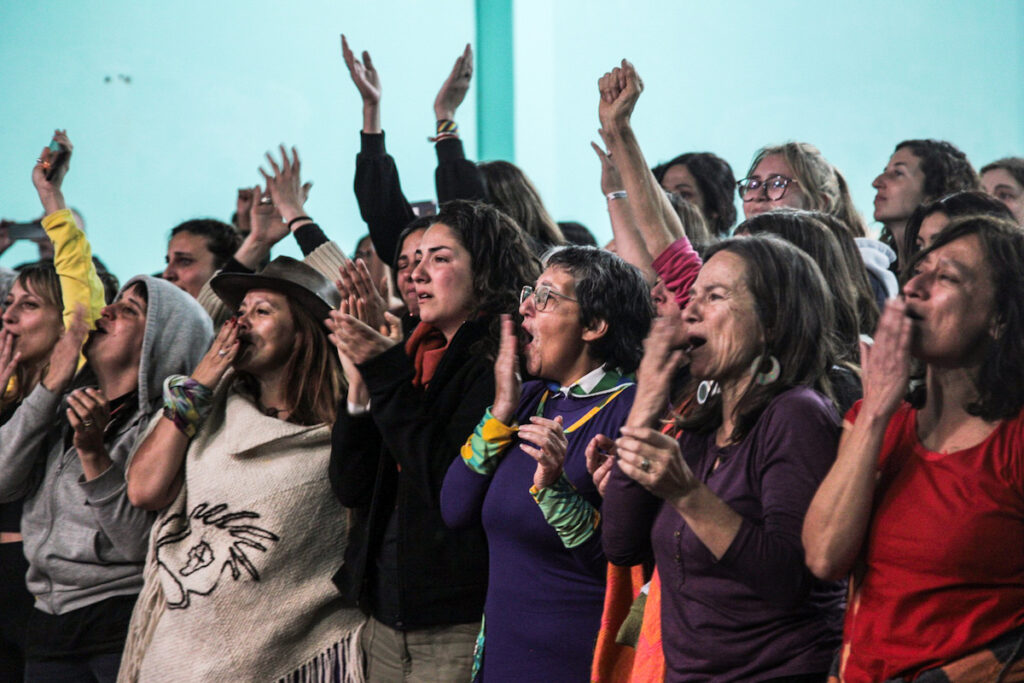
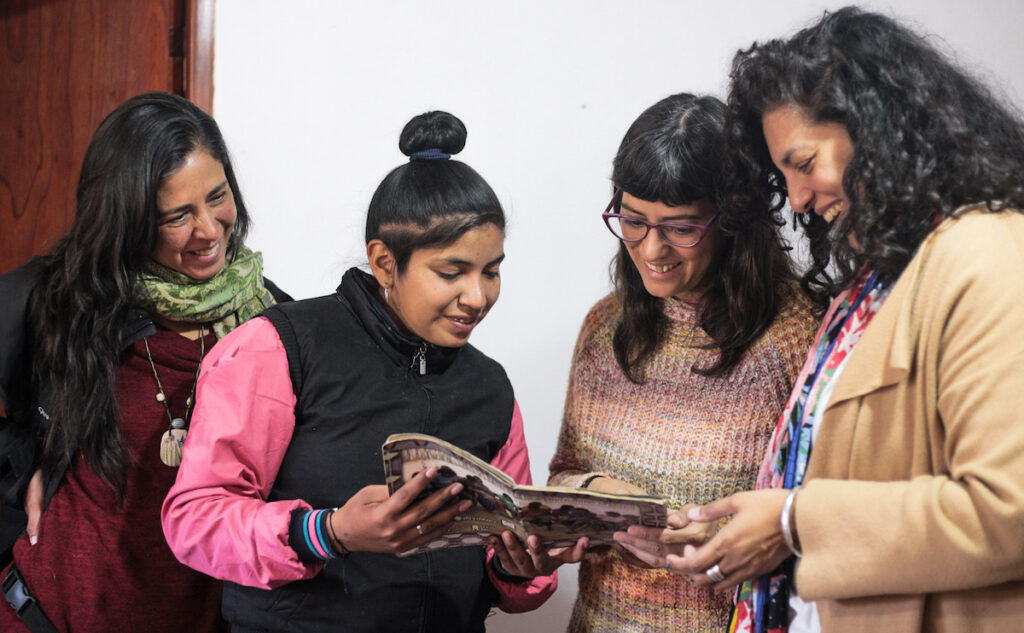
The gathering, organized by the Quilla Network, comprised of Casa Mama Quilla—a self-managed project of women, lesbians, transvestites, trans people, bisexuals, and non-binary individuals—and the Rodolfo Kush Institute, based in Tilcara, took place from August 18 to 20 and was extended by one day. This extension was to support the encampment resisting along the roadside in Purmamarca, from where they were violently and brutally evicted a few days prior. Among those present was Machi Betiana Colhuan —the Mapuche medicine woman who spent eight months imprisoned in Bariloche along with other women. The gathering also served as an opportunity for the coordinator, Adriana González Burgos , to present Elvira, one of the Kolla elders resisting there as part of the Third Malón de la Paz (Peace March), with two wiphalas (Mapuche flags) woven and sewn collectively by participants.
In repudiation of the Morales government
One of the key themes that shaped this gathering, and motivated many to travel there, was supporting the fight to repeal the reform of the provincial constitution, which was hastily approved and denounced for the unconstitutionality of its legislative procedures. These procedures were explained in one of the activities, led by lawyers Alicia Chalabe and Sandra Ceballos. "Out with Morales," "Down with the Reform," and "Long live the Wiphala" erupted spontaneously in almost every activity.
“ Those of us in the organization have openly and publicly expressed our repudiation of this repressive, authoritarian, dictatorial provincial government that has trampled on the rights of our indigenous peoples ,” said Adriana González Burgos, coordinator of the International Meeting of Community, Peasant and Popular Feminisms in Abya Yala.
“We, the Indigenous peoples, are political actors; we have a position, and we will defend our Pachamama,” Natalia Cachaca, a member of the Third Malón, stated during one of the talks. “I couldn’t go to Buenos Aires because they put a travel restriction on me, and I can’t leave the province. Morales can’t believe how we were able to organize ourselves. The government knows that women make themselves heard, and sometimes in our communities, we are the ones who set the tone,” she said.
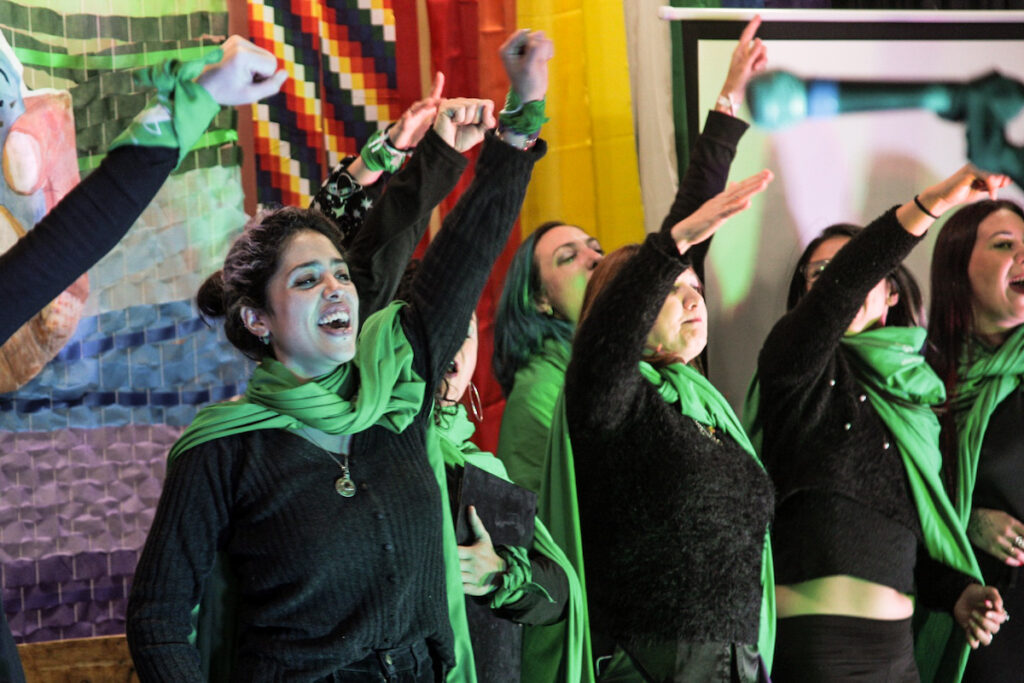
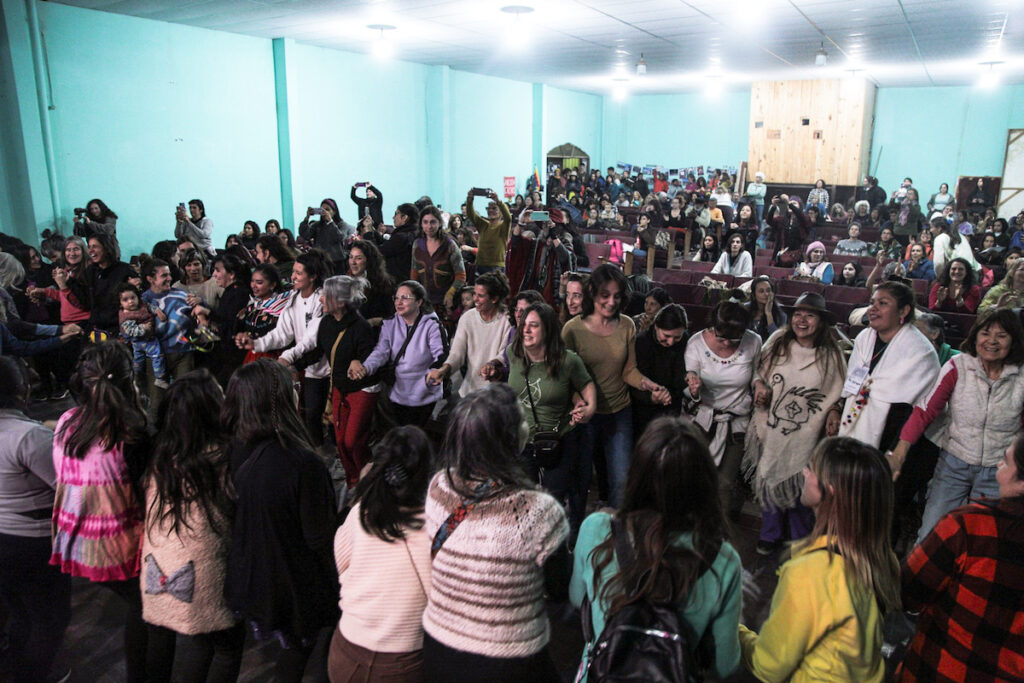
And she demanded: “The justices of the Supreme Court of Justice of the Nation, listen to the Third Malón (protest group) that remains in Buenos Aires. They have ignored us for more than 18 days. Why aren't these judges, whom we all pay, doing their jobs?” she asked the audience, which was packed with more than 300 people in the Municipal Hall, across from the central plaza. Natalia and many others resisting from different sectors in Jujuy repeated the same idea throughout these days: “We have never felt alone. Thank you to everyone who supports and accompanies our struggle.” And she closed her remarks with a verse and a phrase that referenced Rita Segato: “Coloniality steals our mirror and our memory.”
“When we are not organized, we become prey for the empire.”
With its epicenter in Tilcara, the activities unfolded in different venues, under the blazing sun of the ravine and with the mineral hills embracing the presence of women, lesbians, transvestites, trans people, non-binary people who came from very diverse countries, to share their experiences of anti-patriarchal activism from politics, art, activism, health, the body, working with the land, among other fields.
Flora Aguilar, former executive of the National Confederation of Peasant and Indigenous Women of Bolivia, arrived from Bolivia. Flora shared her experience since the formation of the political organization Bartolina Sisa. “When we are not organized, we become prey for the empire,” Flora emphasized.
“I want to express our solidarity with the people of Jujuy, with the teachers and our Indigenous brothers and sisters. We condemn the racial hatred and the lies of an authority that supported the coup d'état in Bolivia. We were fighting and achieving nothing. One day we said: we need to have our own political arm, and we will come to power. That slogan was ours, and that political arm emerged from the social organizations. Bartolina Sisa is a political instrument for the sovereignty of the people. In Bolivia, we are anti-racist, anti-capitalist, anti-imperialist, and also anti-patriarchal,” she said.
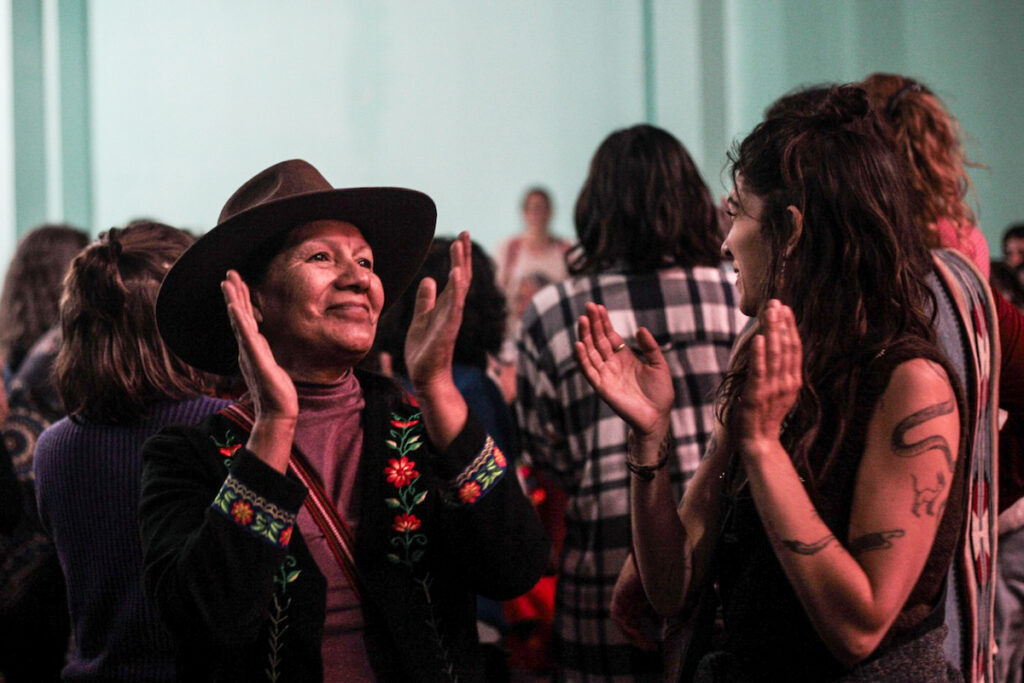
“Women, Indigenous peoples, and youth are now part of a new Constitution. And thanks to the struggle of Bolivian women, we have revolutionary legislation. This year has been declared the year of de-patriarchalization, but the policies for it have not yet been implemented. But when you know how to suffer, you know how to respond.” Flora expressed solidarity with Milagro Sala and called for her freedom, spoke about the racism behind her political persecution, and also condemned the assassination attempt against Cristina Kirchner.
“The first challenge is not to leave anyone out”
Muxe activist Amaranta Gómez Regalado arrived from Oaxaca. “I come at a very difficult time in Mexico, with its violence, to an Argentina with the complexities of a plundered Latin America, but also with much resistance throughout the region,” she said. Amaranta raised the need to move toward an ethnography of diverse gender identities. She called for new perspectives and discourses that do not favor rights, an understanding of the historical origins of sexual diversity in the world, intersectionality, and strategic alliances of peasant women, Indigenous people, migrants, and unions. “It is said in many forums that no one should be left out. The first challenge is to leave no one out so that we are no longer denied and so that history does not deny us.”
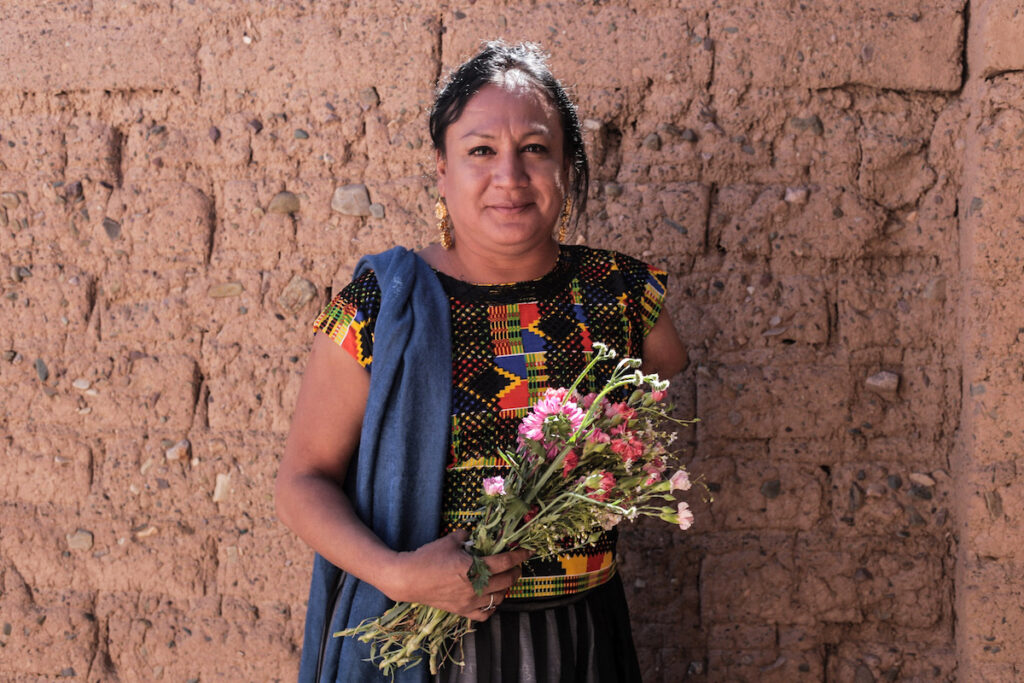
She also highlighted the role of Zapatista women. “It was in the Zapatista movement that Indigenous women gave us a face, even though they wore hoods,” she said. “The role of women has been instructive in Latin America, and these gatherings strengthen it,” she concluded.
At the start of the meeting, presentations and papers were shared. Agencia Presentes participated in this session, speaking about communication related to gender, diversity, and human rights.
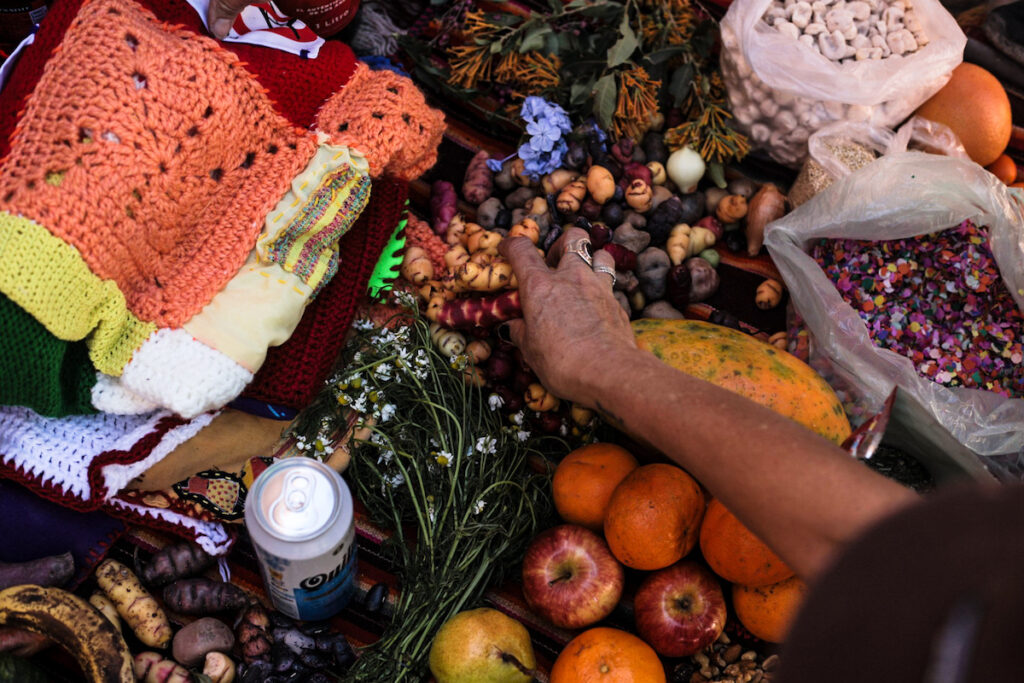
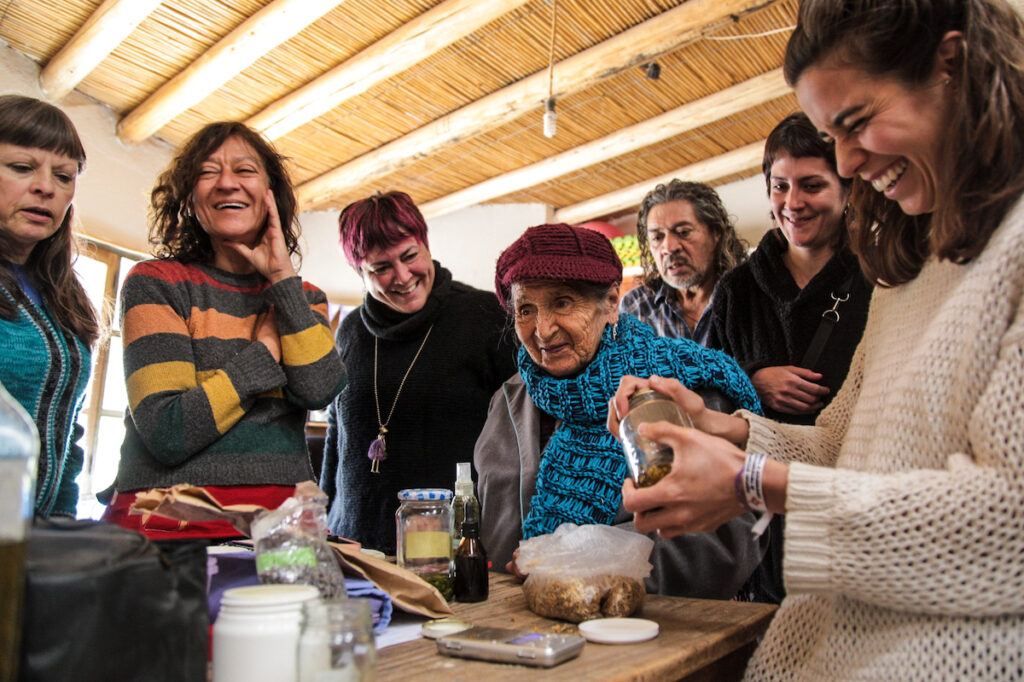
On the second day of the Encounter, there were more than a dozen anti-patriarchal workshops: from Memory of the Seed, to ceremony and dance of the cacao, workshop of medicinal preparations of the Quebrada with participation of the Cauqueva peasant cooperative.
Gladys Tzul Tzul, a K'iche' Maya woman from Guatemala, spoke about community politics and women's struggle for land. There was also a film discussion featuring "Dust No Longer Clouds Our Eyes" by Colectivo Silencio (Peru) and "History of Water in Mendoza" by Bernardo Blanco (Argentina), which analyzes one of the great victories in the fight for water.
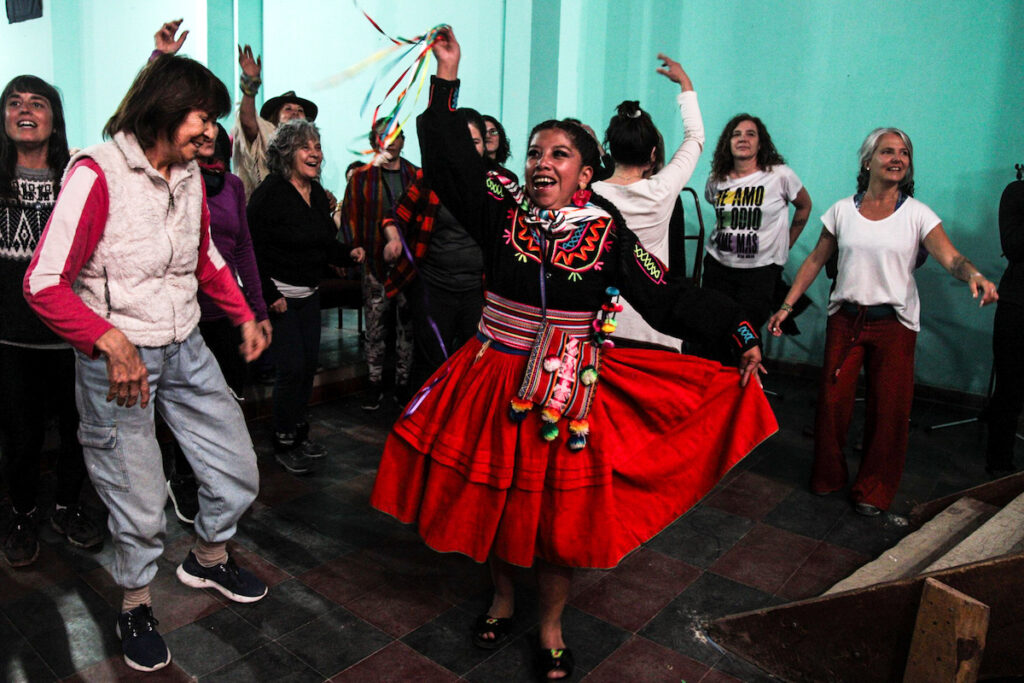
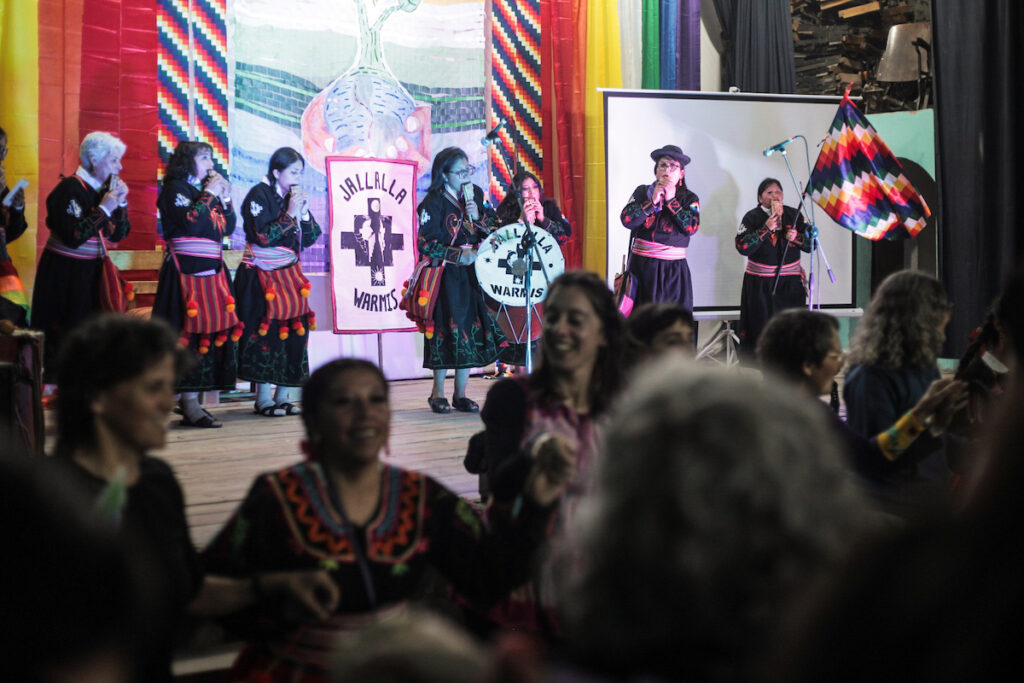
Throughout the three days, there were spaces dedicated to music and art. Marianella Saavedra gave a performance of "fat poetry," which received a standing ovation from the participants and was later reflected upon by Amaranta. Lorena Calpanchay sang her trans songs on stage and at the peña (folk music gathering), where she shared the evening with singers Eugenia Mur and Añawita. Añawita dedicated the cueca "La Caraqueña" to Camila Muller, a teacher and artist harassed by the Morales government. Jallalla Warmi, the sikuri group founded by lesbians, arrived from Peru and energized the feminist spirit with wind instruments and dance. The feminist choir from Córdoba shared songs denouncing gender-based violence and got everyone dancing with their cumbia versions. Throughout the event, there was also a feminist fair featuring artisanal and agroecological products, seed exchanges, and bartering.
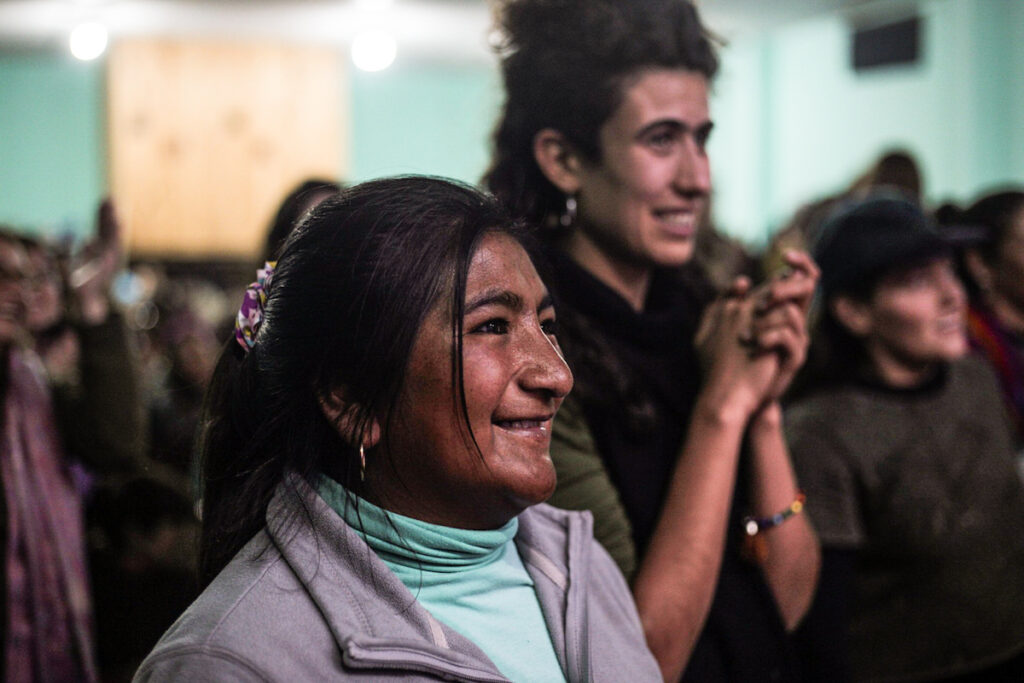
Closing of the Pachamama celebration
On Sunday, following the awarding of diplomas to those completing the Diploma in Community, Peasant and Popular Feminisms in Abya Yala: Feminist Aesthetics, Bodies and the Peasant Women's Movement (National University of Jujuy), a Pachamama ceremony was held at the Rodolfo Kusch Institute.
Due to flight delays, Machi Betiana arrived for the closing ceremony, accompanied by her mother, María, and her baby. After the opening, Natalia Machaca, a member of the Third Malón, and Betiana knelt and embraced before Pachamama to make their offerings. It was a moving and highly symbolic moment, embodying the struggles of the Mapuche and Kolla peoples in two women who resist through their bodies and territories. “There is no better way to close this gathering than with this loving embrace before our Pachamama,” said the coordinator of the Gathering.
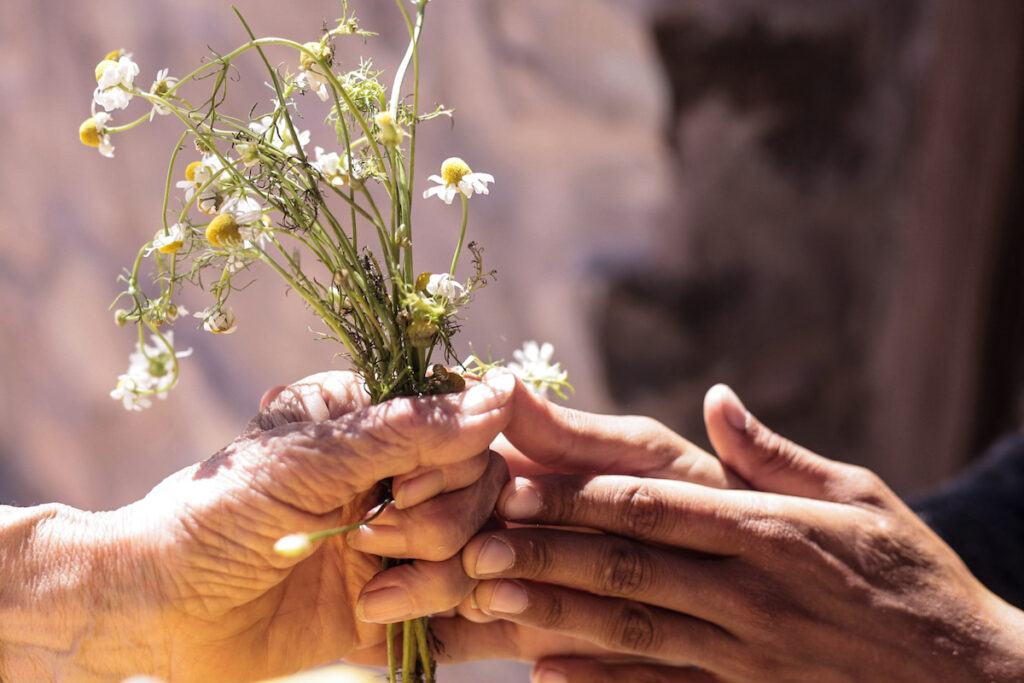
The following day, Betiana, accompanied by her mother, Adriana Burgos, and the organizing committee of the gathering, visited the Third Malon resistance camp along the road in Purmamarca. Around the fire, in that setting of beauty and dispossession, the machi, who had spent eight months imprisoned in Bariloche along with other women and their children, said, “I come to thank you for your struggle.” She added, “We are all children of nature, and it is necessary that we all fight for the land.”
We are present
We are committed to journalism that delves into the territories and conducts thorough investigations, combined with new technologies and narrative formats. We want the protagonists, their stories, and their struggles to be present.
SUPPORT US

FOLLOW US
Related notes


We are present
This and other stories are not usually on the media agenda. Together we can bring them to light.