

Women's World Cup: Another kind of football is possible with trans people
MEXICO CITY, Mexico. The Women's World Cup qualifying rounds begin this weekend. Canada, a team currently fighting for equal pay, was eliminated in this stage. Their starting eleven includes Quinn, a midfielder and non-binary person. For me, that…


Share

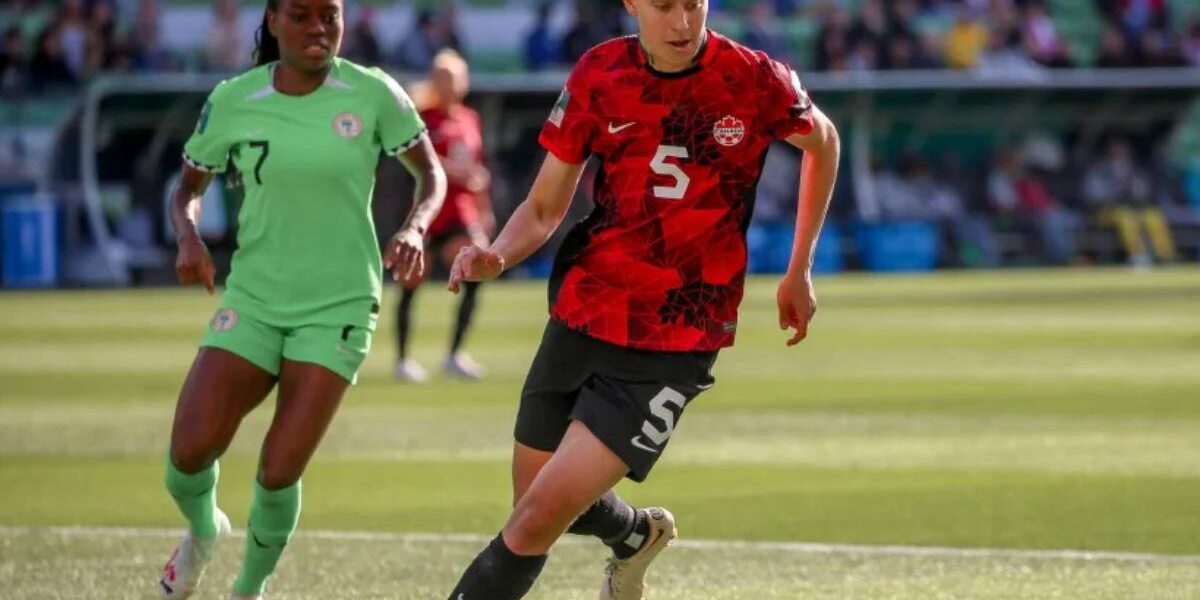
MEXICO CITY, Mexico. The Women's World Cup qualifying rounds begin this weekend. Canada, a team currently fighting for equal pay, was eliminated in this stage. Their starting eleven includes Quinn, a midfielder and non-binary person.
For me, who spent my childhood kicking a ball around and dreaming of making a living playing soccer, Quinn's participation is powerful . Not only because of what it represents in these times when there are attempts to exclude trans people from sports , but because it demonstrates that trans and non-binary people belong and have the right to enjoy sports.
When I was five, I asked the Three Wise Men for a soccer ball. I remember my letter. I drew a classic, beautiful ball with its black and white pentagons. When I woke up that magical night, my ball was in my living room. I took care of that ball for more than 10 years, and with it, I dreamed up a thousand scenarios. I also practiced and practiced Zidane's roulette , wall passes, free kicks, and everything else I could.
When I was 13, my football role models stopped being just men. It happened when I saw the penalty shootout between the United States and China in the 1999 Women's World Cup final on television. And there was no going back.
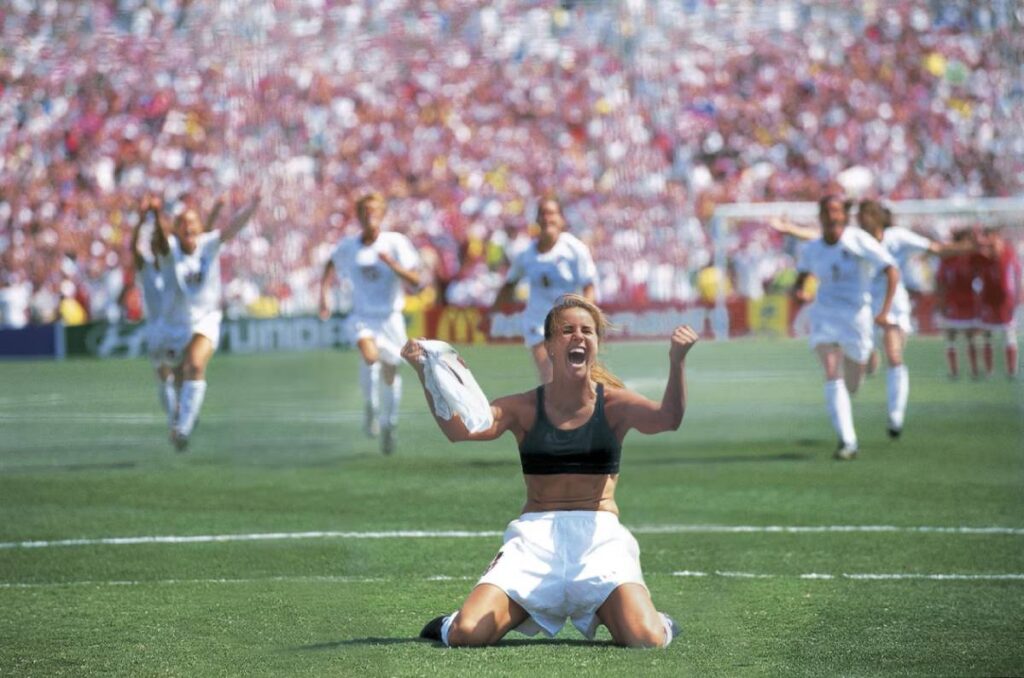
I couldn't get this image out of my head: Brandi Chastain celebrating the winning goal. The ecstasy of being champions made her knees buckle and fall to the grass; she took off her shirt, revealing her sports bra and toned muscles, and raised her arms to the sky. Iconic.
That was the first time I thought and felt that another kind of football was possible.
Football helped me explore my identity
The stereotypes surrounding football kept me away from the pitches.
The first time I was called a tomboy was while playing soccer at my elementary school . It was other kids who yelled it, and even men in my family who weren't my dad. They told me, "You look like a tomboy," just for playing soccer. The way they said it never made me feel good. It made me feel wrong, loathed, and like playing soccer wasn't for me.
What helped me navigate those feelings from a different perspective was the image of Brandi Chastain celebrating, which was still fresh in my mind. Also, my mom, who always encouraged me to keep playing soccer, and what the sport made me feel on a personal and physical level.
Playing soccer and swimming competitively until my mid-teens allowed me to explore my gender expression and gender identity, even though I hadn't yet articulated it. My experience with these sports gave me a personal freedom deeply rooted in my body.
Playing sports, not looking physically like the rest of my classmates, having the freedom to express who I am through how I dressed, and being very passionate about my sporting interests created a breeding ground for harassment, first subtle, then violent.
Hearing the word "tomboy" became synonymous with lesbian, used as an insult and a way to denigrate my physical appearance, which I considered "too masculine." Playing soccer stopped being fun, and I quit in my teens; not because I lost interest in soccer, but because the violence exhausted me.

Trans people in sports
In Latin America, there is a lack of data on the perceptions and experiences of LGBT children and youth in sports . A 2022 UK study
- 79% feel their gender identity has affected their participation in sports. The main barriers are sports uniforms and their association with gender dysphoria, and the binary gender categorization of sports.
- 55% said that news with alarmist and negative narratives about the participation of trans athletes has influenced them not to feel part of practicing the sport they like.
Anti-rights groups in US legislatures are passing laws that prohibit transgender people from participating in school sports competitions based on their gender identity. Due to the level of scrutiny these policies exert, they place girls, young women, and women (both transgender and cisgender) at greater risk.
“Excluding trans women harms all women. It invites gender policing that could subject any woman to invasive testing or accusations of being ‘too masculine’ or ‘too good’ at her sport to be a ‘real’ woman,” explains Chase Strangio, deputy director of Trans Justice at the American Civil Liberties Union (ACLU).
Permanent discrimination
Since 2021, at least 22 states in the United States have banned transgender athletes from participating in sports competitions at the school level, from elementary school to university.
Furthermore, since 2018, international sports federations, particularly those for athletics , swimming, and cycling , have deemed transgender women "ineligible." Intersex women and those who naturally have high testosterone levels are subjected to medication to regulate their testosterone levels. Their argument, in both cases, is that this "protects the female category."
Human Rights Watch has documented that since 1940, athletics federations, in particular, have conducted "sex verification tests," which the UN considers "unnecessary, humiliating, and harmful discriminatory mechanisms." Swedish soccer players reported being subjected to "sex verification tests" in 2011, and Zambian national team captain Barbra Banda faced scrutiny from her federation and was withdrawn from the African competition leading up to the World Cup.
FIFA is perhaps the best-known sports federation in the world. In 2017, it inaugurated a human rights department and has touted this as the only sports federation to have one. However, it hasn't updated its regulations since 2011. These regulations still state that only men are eligible to play in men's competitions, and the same applies to women's.
FIFA regulations state that each country's football federation "shall ensure that the correct gender of all players is considered, actively investigating any perceived deviations in secondary sexual characteristics."
***
I stopped playing soccer and became a spectator of the feats, the magic of the female soccer players. A fan of certain playing styles, I was amazed by their technique and began to store data, plays, goals, and saves in my memory.
But then I started wondering, where are the trans people in football?
The pandemic arrived, and in 2020 Quinn joined the list of my football references. That year I also kicked a football again on the marble floor of the Palace of Fine Arts, during the March 8th strike in Mexico City .
Trans people belong in sports
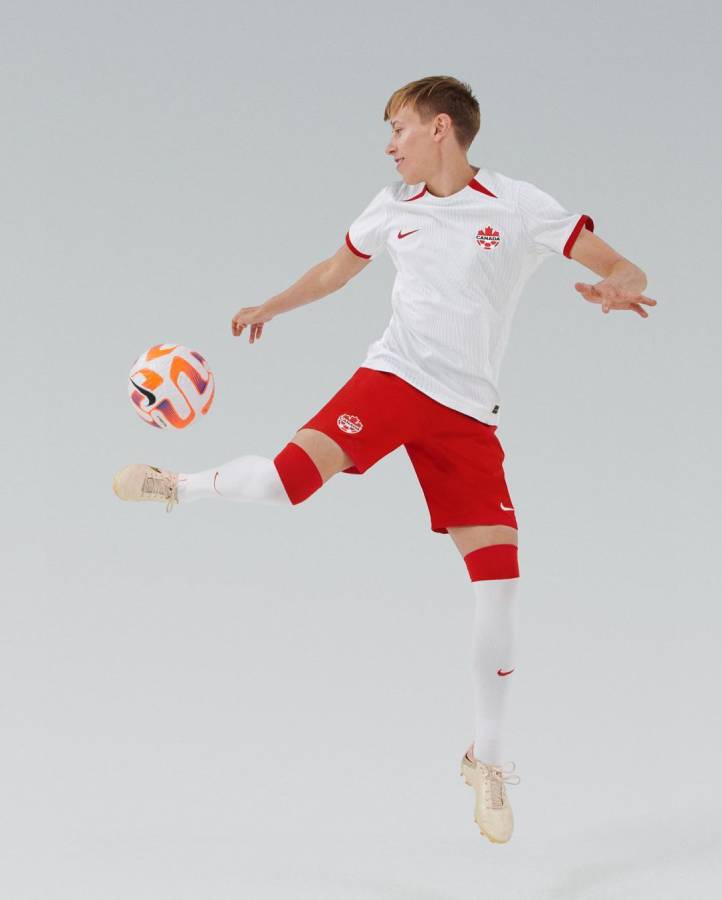
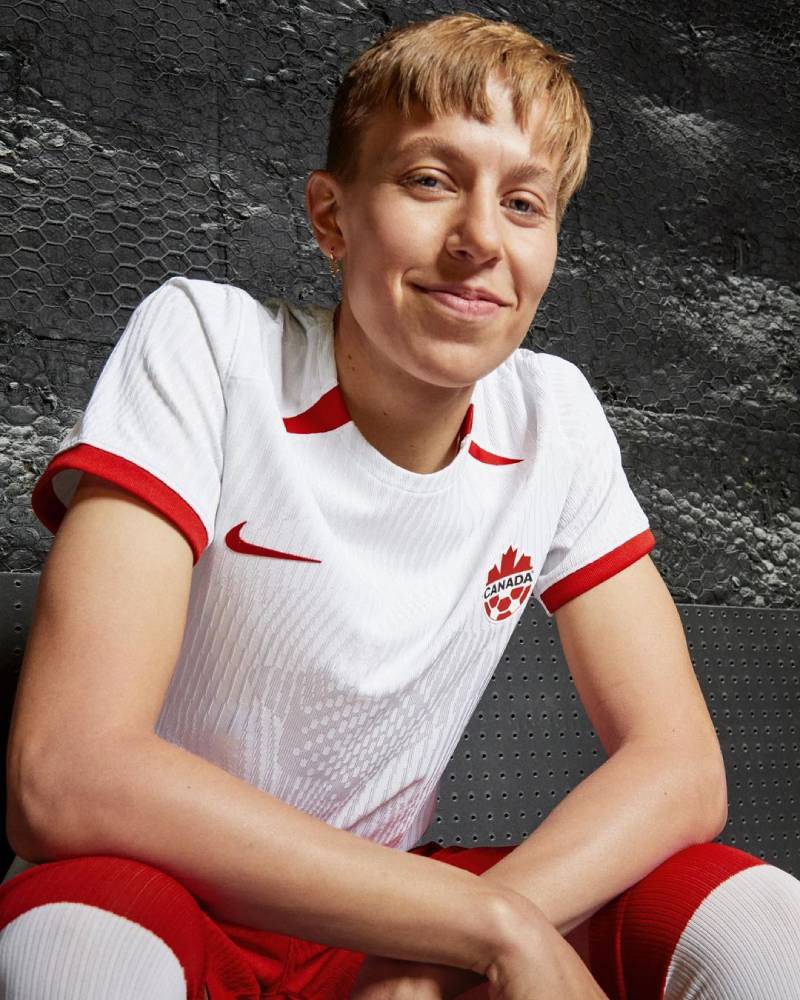
Quinn is a midfielder, a member of the Canadian national team, and a player for OL Reign in the United States' professional soccer league . In 2020, she came out as a non-binary trans person in an post . In 2021, she participated in the Tokyo Olympics with the Canadian women's national soccer team. The headlines at the time read: "Quinn, first non-binary trans person to win Olympic gold."
At this World Cup, which is being held in Australia and New Zealand, Quinn also earned the distinction : "first non-binary trans person at a World Cup."
Canada's national team didn't advance to the knockout stage. But Quinn's participation is inspiring and keeps alive the importance of representation, participation, and inclusion of trans and non-binary people in sports.
And yes, I'm no longer that kid playing soccer in his backyard. I'm over 30, but having the opportunity to live this moment and see Quinn fighting for the ball and driving the game forward is inspiring.
And it makes me want to keep playing.
We are present
We are committed to journalism that delves into the territories and conducts thorough investigations, combined with new technologies and narrative formats. We want the protagonists, their stories, and their struggles to be present.
SUPPORT US

FOLLOW US
Related notes


We are present
This and other stories are not usually on the media agenda. Together we can bring them to light.