

What is the Malón de la Paz and why is it in Buenos Aires?
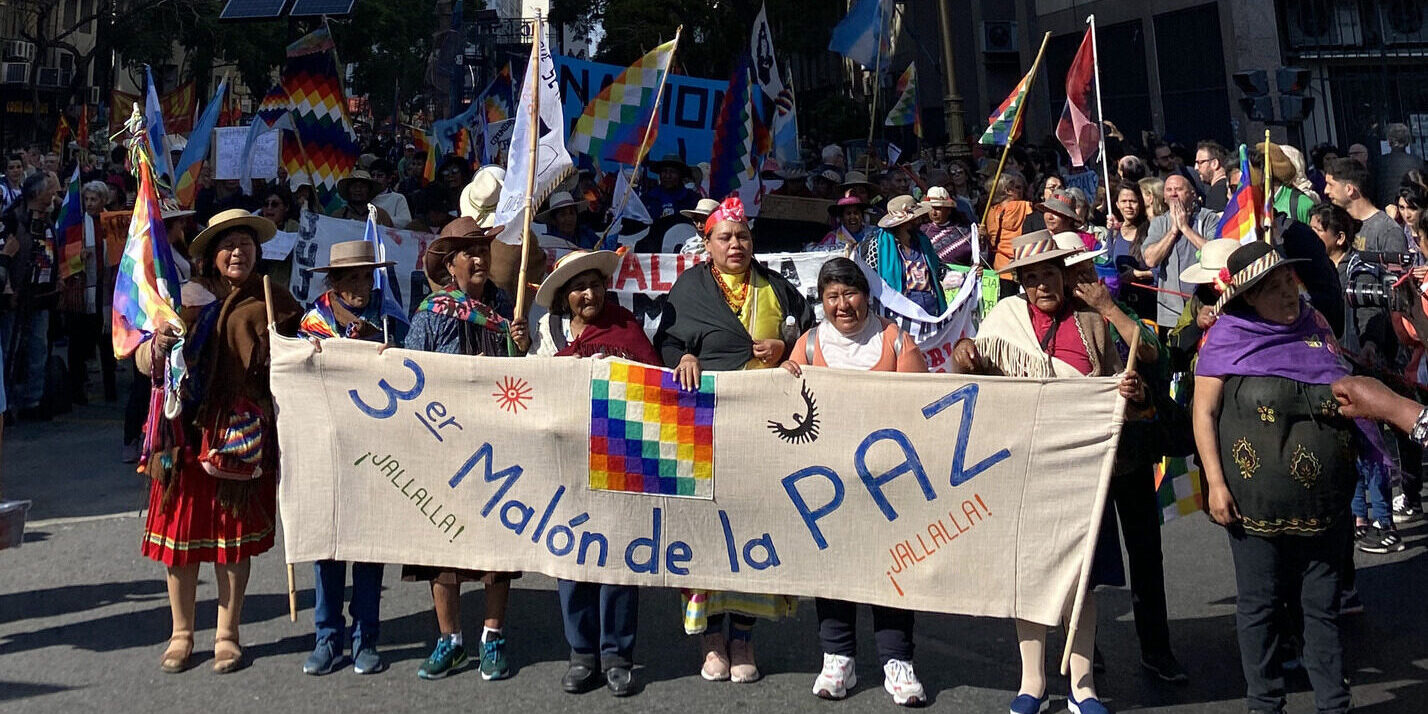
Led by women from different indigenous communities, the Third Peace March stood in front of the Courts with a demand that brings together more than 400 communities from Jujuy.


Share

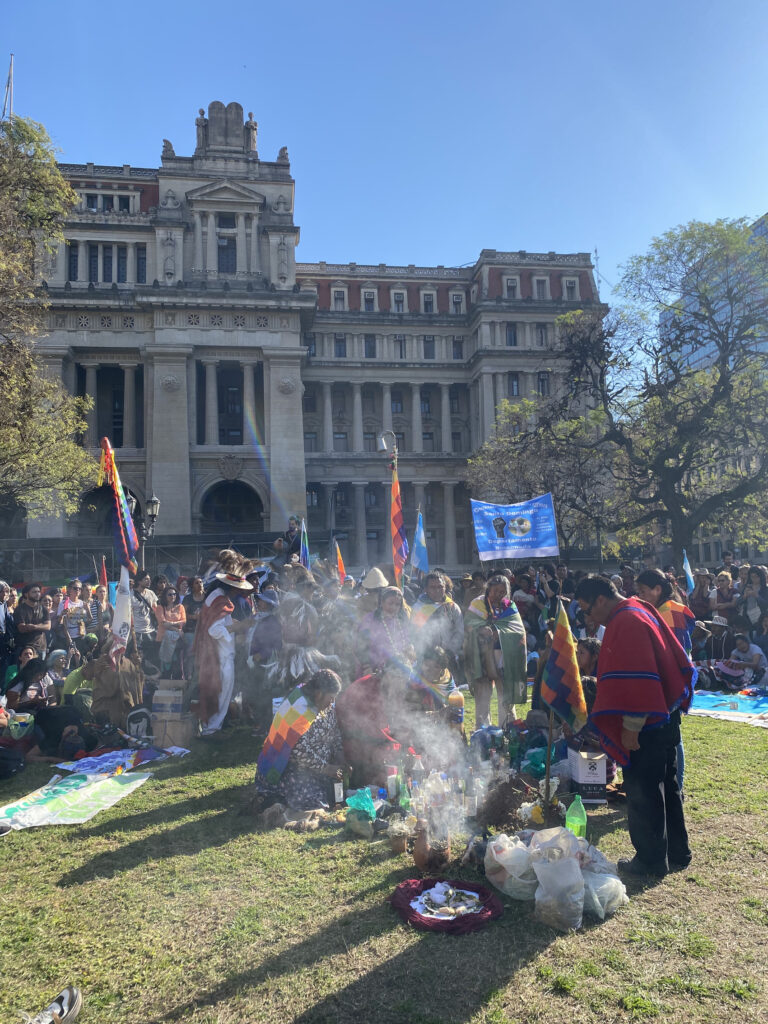
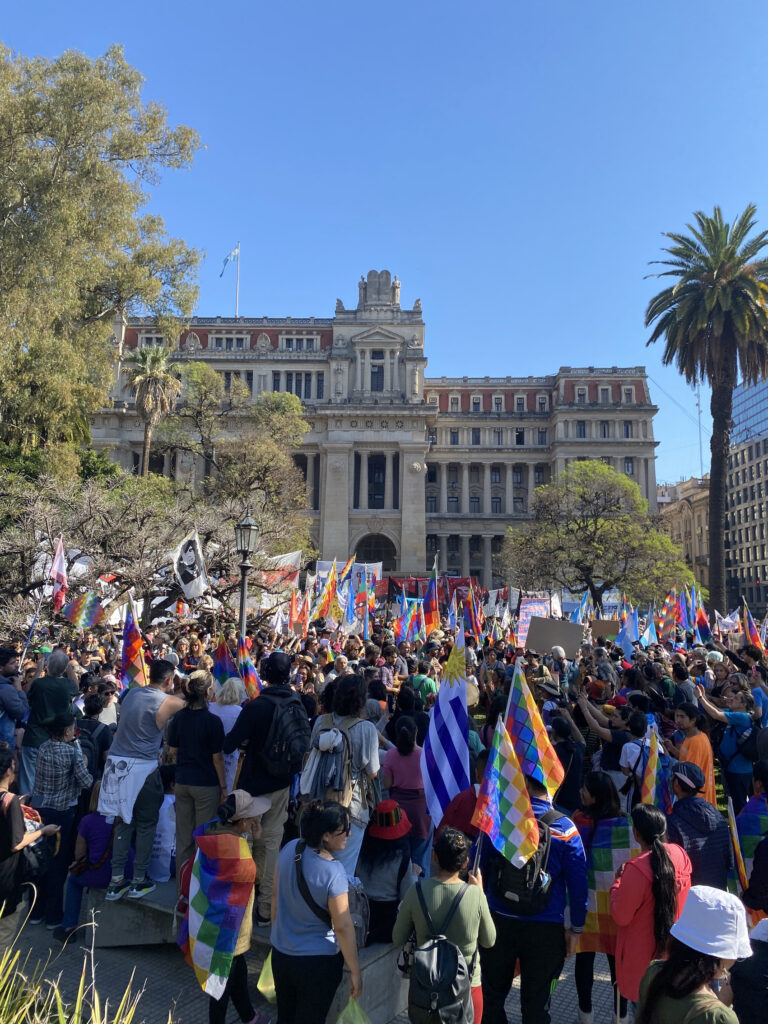
BUENOS AIRES, Argentina . Led by women from various Indigenous communities, the Third Peace March arrived in Buenos Aires, as planned, on Pachamama Day. The extensive march they undertook on August 1st through the city, from Plaza Miserere to the Courts, passing by the National Congress and the Obelisk, transformed the colors and sounds of the city, where never before had so many wiphala flags flown.
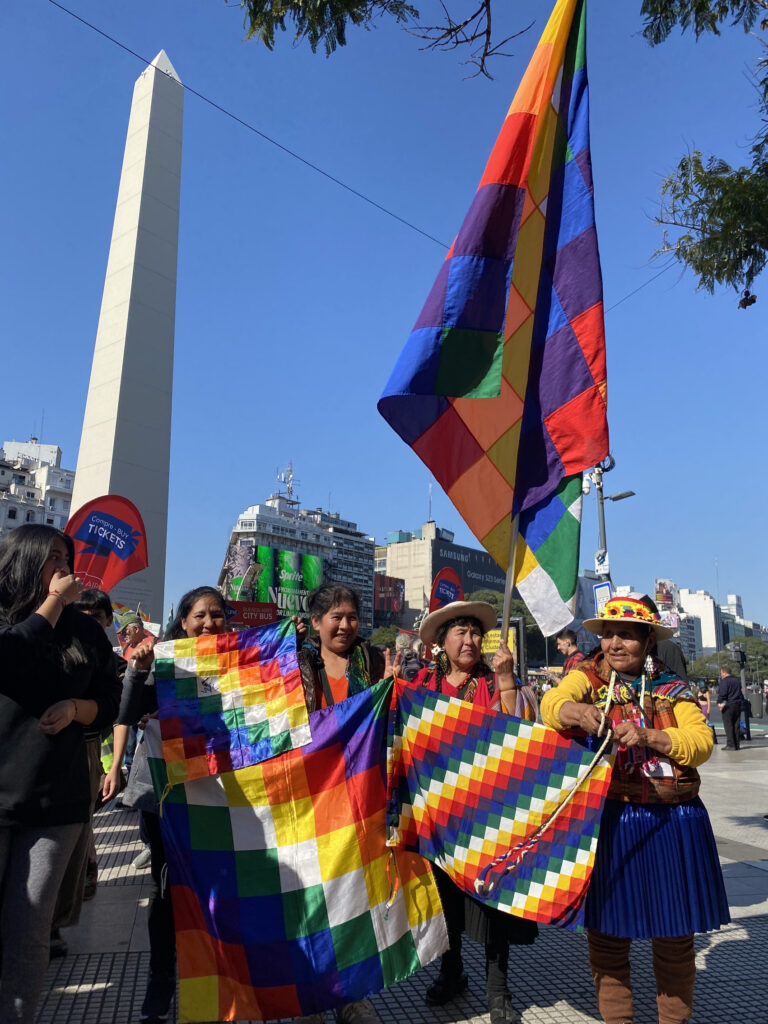
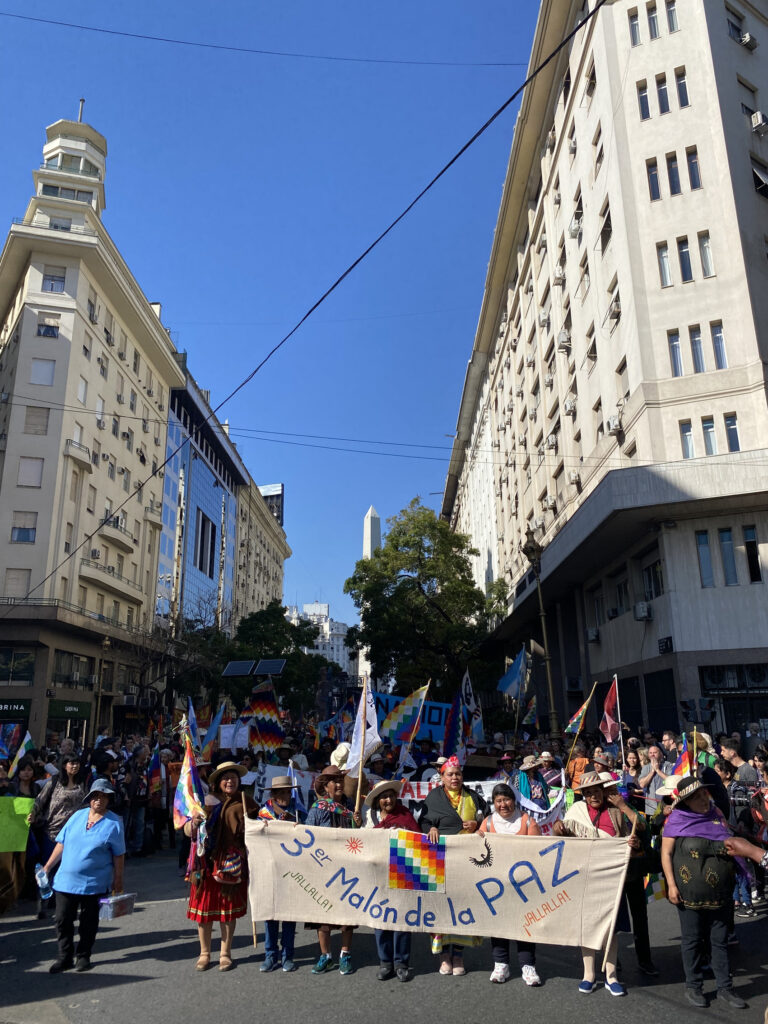
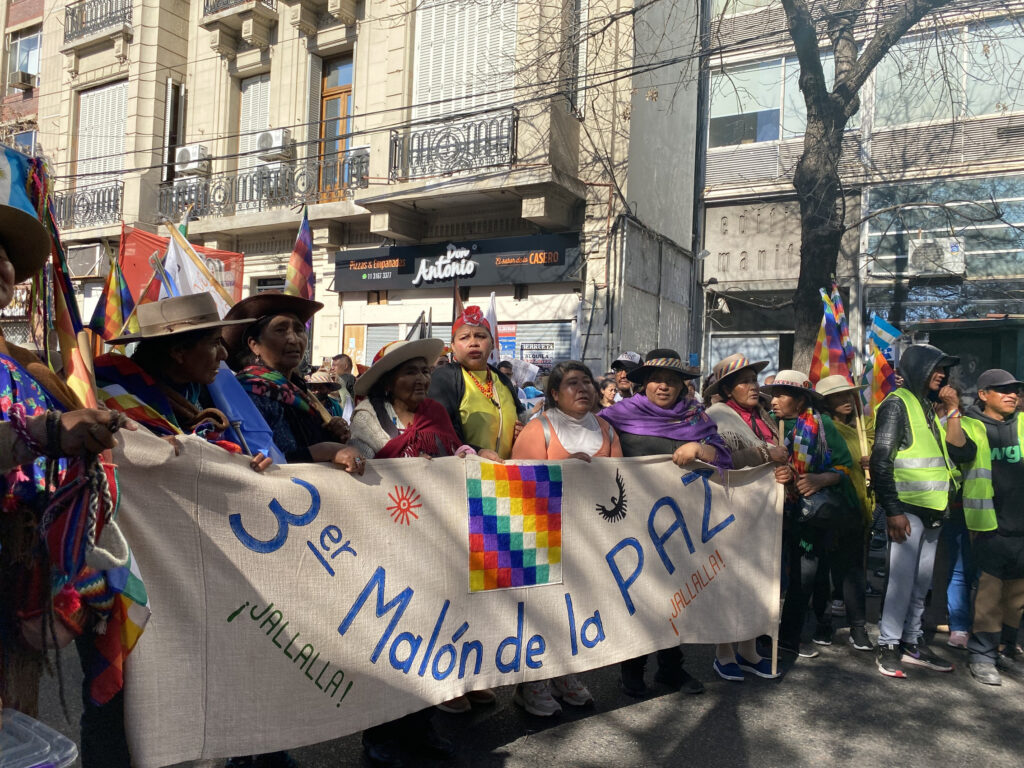
After traveling more than 1,800 kilometers through various provinces and cities that embraced their cause, the march that departed from La Quiaca on July 25th arrived at Plaza Miserere, the starting point of their walk in Buenos Aires. From morning until afternoon, they marched through streets and avenues until reaching the Palace of Justice. There, in front of the courthouse, they made an offering to Pachamama (Mother Earth) and also made time for protest, dancing, and music.
What are the claims?
The Malón movement unites the demands of more than 400 Indigenous communities in Jujuy and is comprised of their members. While road blockades continue in Jujuy against the constitutional reform, in Buenos Aires they are demanding three basic points:
-That the Supreme Court of Justice declare unconstitutional the reform of the provincial constitution promoted by Gerardo Morales -governor of Jujuy and vice-presidential candidate for Together for Change-.
-That Congress pass a law on indigenous community property.
-That measures be taken to intervene in the province and stop the repression, the criminalization of protest, the harassment and arbitrary arrests that activists and militants have been suffering in Jujuy.
“We are here to stand with the resistance, the dignity of the Malón de la Paz (Peace March). We, the peoples of Abya Yala, are here supporting Jujuy, from Bolivia, Argentina, Ecuador, and Peru. We stand for the dignity of our peoples' existence, for the land, for the territory, for the water, for the lithium, for the riches that Mother Earth bestows upon us. We stand against the wealthiest, against the large transnational corporations that steal the lives of our peoples. This isn't just for Jujuy; it's for Argentina, for the region, and for planet Earth. It's for our Pachamama, because this civilizational crisis affects us all worldwide,” said one of the groups of marching women as they entered the Plaza de Tribunales (Courthouse Square).
Noelia Naporichi, from the Qom community in the city of Rosario, joined the protest from that city. Noelia is a communicator for Agencia Telúrica , an Indigenous, anti-colonial, and anti-patriarchal news agency, #Terricide is practiced every day .”
Mothers of the Plaza and a prayer to Pachamama for Justice and Peace
Taty Almeida, of Mothers of Plaza de Mayo Founding Line, was also in front of the courthouse yesterday, embracing the struggle with the same demand: "Justice and peace." She reminded everyone: "The only fight that is lost is the one that is abandoned."
History of the Malón
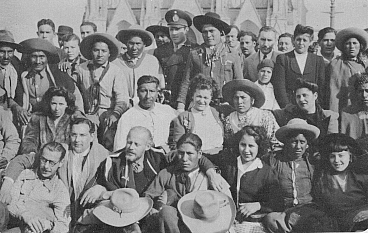
The first Malón de la Paz (Peace March) departed from Abra Pampa , Jujuy, on May 15, 1946, during Perón's first presidency, and marched on foot to Buenos Aires to demand the return of their ancestral lands. They passed through several towns where columns joined them, some on mules and others on foot. They traveled through Salta and Tucumán, Córdoba and Rosario. Along the way, committees were formed to welcome them, and barbecues and gatherings were held to provide them with donations of food and clothing. They arrived in Buenos Aires in July. But despite being received by the authorities and photographed, the marchers were housed in the Immigrants' Hotel and returned to Jujuy by train.
The second Malón de Paz (Peace March) set out 60 years later, on August 7, 2006, for the provincial capital—Jujuy was then governed by Eduardo Fellner—to demand compliance with a court ruling ordering the restitution of lands to the Kolla and Guaraní communities. Composed of community members from various departments and towns in Jujuy, they demanded that the court decision be enforced.
The Third Malón announced that it will remain in the Plaza de Tribunales until the three points of its demands are met.
We are present
We are committed to journalism that delves into the territories and conducts thorough investigations, combined with new technologies and narrative formats. We want the protagonists, their stories, and their struggles to be present.
SUPPORT US

FOLLOW US
Related notes
We are present
This and other stories are not usually on the media agenda. Together we can bring them to light.
1 Comment