

They acknowledge that Caster Semenya was discriminated against, but she still cannot compete
The International Association of Athletics Federation banned him from competing because he had high testosterone levels.


Share

MEXICO CITY, Mexico . The European Court of Human Rights ruled on July 11 that World Athletics violated the rights of Caster Semenya. The governing body had banned the two-time champion from competing internationally in the women's category unless she reduced her naturally occurring testosterone levels through unnecessary medical interventions.
Human Rights Watch experts warn that this ruling is “technical” because they say that Semenya “won her case but not the right to compete.”
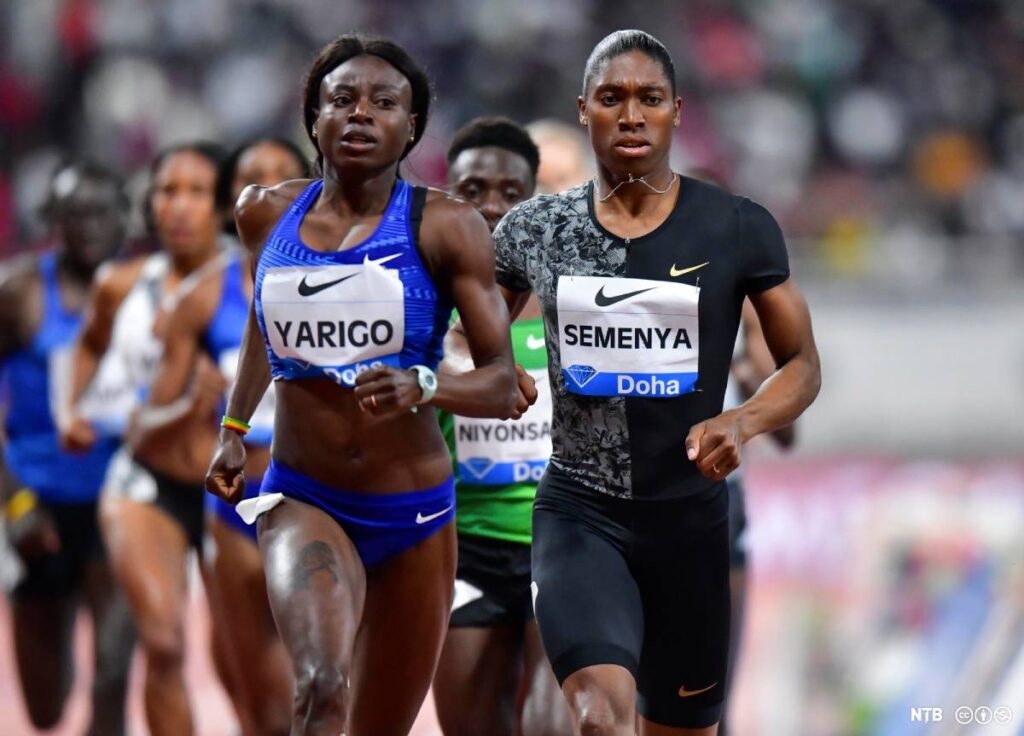
Caster Semenya is a South African athlete. She was a two-time Olympic champion and three-time world champion in the 800 meters, considered an elite event. From 2009 to 2017, she amassed 30 consecutive victories in her signature event. However, since 2018, athletics authorities have barred her from competing internationally in the women's category.
“I am euphoric about the outcome of the verdict. It has been a long time coming. I have fought and will continue to fight to end discrimination in sports. I have suffered greatly at the hands of powerful figures who have mistreated me. They have questioned the work I have done to become the athlete I am. My rights have been violated. My career has been affected. Everything has been so damaging—mentally, emotionally, physically, and financially,” Caster Semenya said in a statement .
A case to review
The ruling comes after Semenya challenged the regulation before the Court of Arbitration for Sport (CAS) , but lost. CAS argued that World Athletics' rules "are a necessary and reasonable measure to ensure fair competition in the women's category."
Since the CAS is a Swiss body, Semenya took her case to the Swiss Federal Court , but it dismissed it because World Athletics is a private association based in Monaco. However, it did conclude that the rules violated Semenya's human rights.
Semenya finally asked the European Court of Human Rights to review her case.
The judgment Semenya v. Switzerland – 10934/214-3 issued on July 11 by the European Court of Human Rights determined that the “female eligibility regulations” of World Athletics —which prevented her from competing since 2018 and living under scrutiny for at least fifteen years—, violated her right to non-discrimination, the prohibition of inhuman treatment, the right to respect for private life and the right to an effective remedy (these remedies include the right to justice, the truth and adequate reparation).
The ruling determined that the Swiss Federal Court 'failed' to uphold human rights standards, even though it acknowledged that Semenya had experienced discrimination. However, the decision does not change the regulations that prevent Semenya and other athletes like her from competing at the highest level.
Fifteen years of scrutiny
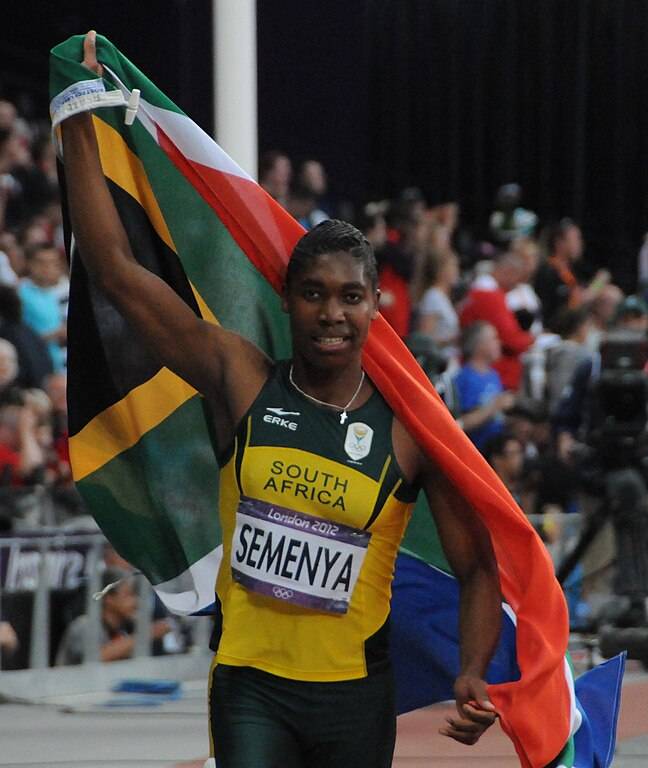
When Semenya was 18, she won first place in the 800 meters at the 2009 World Athletics Championships . Following her victory, the International Association of Athletics Federations (now called World Athletics) informed her that she would need to lower her testosterone levels if she wished to continue competing in that event in the women's category at international competitions.
The condition imposed on Semenya by World Athletics in 2009 stemmed from her improving her own times—by 8 seconds in the 800 meters. At the time, WA suspected doping, but the tests came back negative. Later, concerns arose that Semenya had a "rare medical condition" that could give her an "unfair advantage .
Semenya, who didn't want to stop competing, began hormone therapy to lower her testosterone levels. But she was also forced by World Athletics to undergo a "sex verification." There, reportedly subjected to invasive body photography and degrading tests in endocrinology, gynecology, genetics, and psychology.
Following that test, World Athletics and the International Olympic Committee (IOC) determined that Semenya is “hyperandrogenic.” That is, her body naturally expresses high levels of testosterone.
Privacy was also violated
WA leaked the results of the “sex verification test” she underwent, and The Daily Telegraph published it in a story lacking a human rights perspective regarding intersex people.
The leak of that information violated Semenya's privacy and led to public, media, and scientific scrutiny of her body, gender identity, and athletic performance.
Semenya refused to continue taking medication to lower her testosterone levels. In 2018, she took her fight to the courts to stop the surveillance, persecution, and invasive gender testing—a violation of human rights—of women with powerful physiques and gender expressions that do not conform to Western standards of femininity, and to prevent them from being forced to take medication to reduce their natural testosterone.
Court acknowledges that the “eligibility rules” lack scientific certainty
The ruling by the European Court of Human Rights only determined that World Athletics violated Semenya's human rights, but did not annul the regulations of the " Regulations for the Eligibility for the Classification of Female Athletes with Differences of Sex Development" , known as the " DSD Regulations ".
This rule, updated last March, regulates the participation of intersex athletes and those whose bodies naturally express high levels of testosterone. To compete, they are required to undergo hormone treatment to reduce their testosterone levels below 2.5 nanomoles per liter of blood.
In that sense, achieving substantial changes to the DSD Regulations could take more time. But Semenya says she is hopeful.
“Justice has spoken, but this is only the beginning. (…) This decision will continue to be important for all female athletes by raising questions about the future of all similar regulations. My hope is that World Athletics, and indeed all sports bodies, will reflect on the statements made by the European Court of Human Rights and ensure that they respect the dignity and human rights of the athletes they work with,” she concluded in her statement.
For a final resolution
Although the European Court of Human Rights did not annul the DSD Regulations, it determined that there is “scientific uncertainty regarding their justification.” It added that “there is scant evidence that female athletes with differences in sex development have any ‘real significant athletic advantage in racing’.”
For its part, World Athletics responded to the ruling that it will seek to appeal the case before the Grand Chamber of the European Court of Human Rights “for a final and definitive decision,” and continues to maintain that its female eligibility regulations remain in place because they claim “they are a necessary, reasonable and proportionate means to protect fair competition in the women’s category.”
Since 2019, World Athletics has disclaimed any responsibility for the protection of human rights. It argues that it is a private organization and therefore not subject to international human rights instruments.
In 2020, the UN described these regulations as “unnecessary, humiliating, and harmful exclusionary mechanisms .” It recognizes that they constitute a particular form of discrimination in sports against Black women and girls, including intersex women and girls, from the Global South.
“I am a woman and I am fast”
Semenya has not publicly stated whether she identifies as an intersex woman. But she has said : “I am a woman and I am fast.”
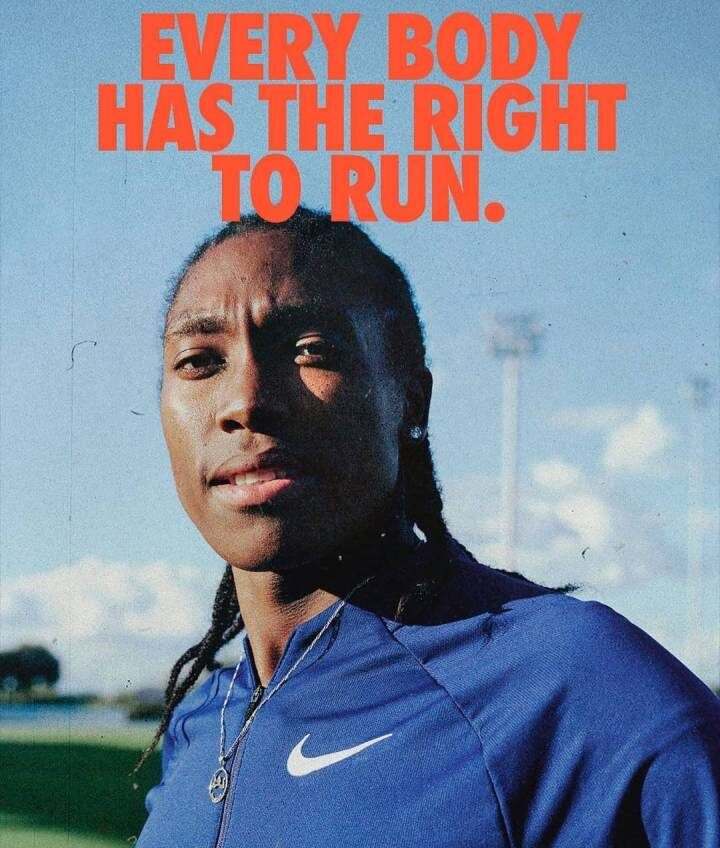
In interviews and campaigns highlighting her athletic prowess in the face of exclusion from World Athletics, she has commented : “It’s not fair that they tell me I have to change. It’s not fair that people question who I am.”
However, in the face of the wave of misinformation and morbid curiosity surrounding Semenya's sexual characteristics and gender identity, it is important to clarify that intersexuality is a natural variation in human beings, and there are many different ways of being intersex . Therefore, intersexuality is not a pathology, a gender identity, a sexual orientation, or a "third gender."
A racist and sexist regulation
Female eligibility regulations haven't only affected Semenya. Restricting female athletes through surveillance of their bodies dates back to the 1940s. Since then, World Athletics, and at one time the International Olympic Committee (IOC), have determined which women can compete by subjecting them to "gender verification tests."
This is documented in the Human Rights Watch (HRW) investigation, “ They’re driving us out of sport: human rights violations in sex testing of elite female athletes ” The report states that these practices cause physical and psychological harm, as well as financial hardship, for female athletes. Success in athletics often means an improvement in their living conditions and, sometimes, an escape from the poverty in which they and their families grew up.
“Identifying female athletes through observation and suspicion is a way of controlling women’s bodies based on arbitrary definitions of femininity and racial stereotypes,” HRW notes.
Rights for all
Since Semenya began her fight for the right of all women to run freely, the DSD Regulations have been systematically enforced against at least 10 racialized athletes from the Global South.
Furthermore, since March of this year, World Athletics' female eligibility regulations prohibit the participation of trans athletes .
For World Athletics, the regulations that allow the exclusion of athletes who do not fit their standards of what it means to "be a woman" are "legal and a necessary, reasonable and proportionate means " to achieve their objective: "fair and meaningful competition in women's athletics."
We are present
We are committed to journalism that delves into the territories and conducts thorough investigations, combined with new technologies and narrative formats. We want the protagonists, their stories, and their struggles to be present.
SUPPORT US

FOLLOW US
Related notes


We are present
This and other stories are not usually on the media agenda. Together we can bring them to light.