

Telúrica Agency, a journalistic outlet created from the territories by indigenous women and diverse groups
A plurinational news agency created by indigenous women and diverse people from different towns in Argentina and Uruguay.


Share

In response to information blackouts and a lack of visibility for Indigenous peoples in the media, Agencia Telúrica . This journalistic outlet was created by Indigenous women and diverse groups from various communities in Argentina and Uruguay.
“May the voices of Indigenous Peoples be as strong as the movements of the Earth,” says Mariana Millanao, a writer and editor, about the objective of the agency she belongs to. The 33-year-old is also a bilingual intercultural teacher, lives in the province of Río Negro, and belongs to the Mapuche-Tehuelche people.
Both she and the other sisters who work at the agency are part of the Indigenous Women and Diversity Movement for Good Living . From there arose the need and desire to strengthen their voices and those of their communities. In this sense, their work incorporates experiences from various nations, including the Quechua, Wichí, Charrúa, Qom, and Mapuche Tehuelche, among others.
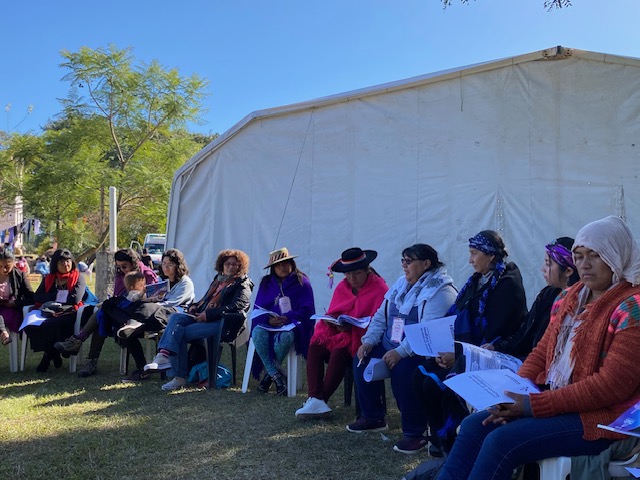
This learning and development process was supported by Agencia Presentes as part of a communication project for Indigenous community media in Argentina and Paraguay, backed by the Leading from the South . For over a year, weekly and bi-weekly workshops were held to exchange knowledge and strategies. The Plurinational Parliament of Indigenous Women and Diversities in Chicoana, Salta , provided an opportunity to meet in person, learn about other Indigenous communication initiatives, such as the community radio station La Voz Indígena in Tartagal , and begin charting a course.
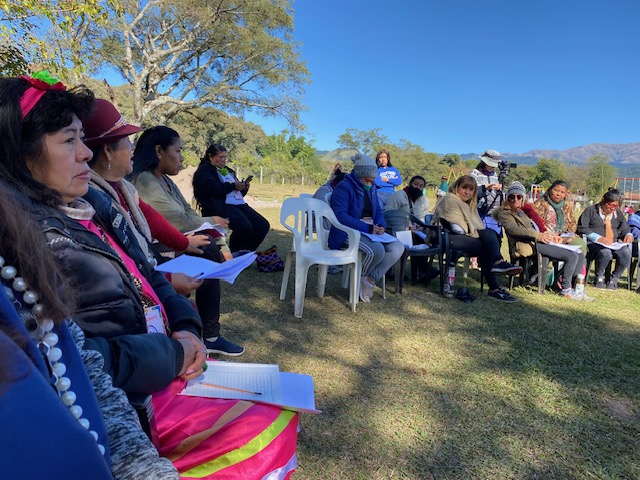

Communication workshop together with Agencia Presentes, Plurinational Parliament of Women and Indigenous Diversities in Salta, 2022.
Telúrica was launched on January 10th of this year and features a website hosting news from various regions, opinion pieces, the agency's history , micro-stories, and videos. They also have a presence on Instagram , Twitter , and Facebook .
“The name Telúrica emerged from a general assembly of the Movement. We discussed several names, and this one stuck because it represents the strength and movement of the Earth,” Millanao shared. She also emphasized that everyone “is part of the Earth,” according to the worldview of Indigenous peoples. And this agency seeks “to make the voices of the silenced territories heard, those that defend and protect all life.”
Earth News
Every August 1st, Pachamama Day ; Andean communities, mainly from the Quechua and Aymara nations, celebrate Mother Earth.
"When we talk about Pachamama, we talk about Earth, love, gratitude, strength, and all of that is reflected in our Telluric Agency," says Millanao.
In Argentina, there are 39 officially recognized Indigenous peoples and more than 1,700 Indigenous communities with a rich cultural and linguistic diversity. It is estimated that there are currently 13 active Indigenous languages, 9 undergoing revitalization, and another 12 considered extinct. The University Language Center created a map of Indigenous languages in 2019, based on these figures, as part of the International Year of Indigenous Languages , which was recently updated .
Indigenous community media
In 2022, 96 projects related to Indigenous media were submitted in the country to access state funding. This was done through the Indigenous Peoples Development Line (Line D/2022) of the Competitive Fund for Audiovisual Media ( Fomeca ). Of these, 82 projects were selected , representing 85% of the total, and were awarded 77.2 million pesos.
Of all the winning communities, 73% have young people, women, and LGBTQ+ people on their teams.
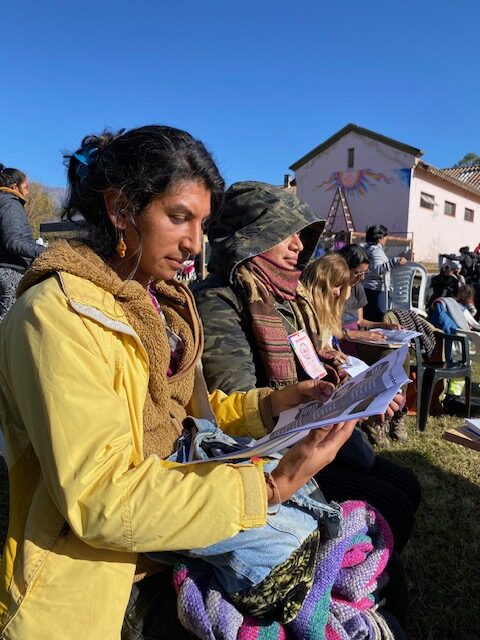
Why create an agency for indigenous women and diverse groups?
One of the reasons the Telúrica agency emerged was the need to give visibility to Indigenous issues and to create alternative narratives to mainstream media. They aim to make Indigenous people the primary sources of journalistic information.
“It was created to make the facts visible directly from each person’s territory, which allows us to be completely truthful when reporting the news, told by the people who lived it,” Fany Argentina Llanque (57), editor of Telúrica, told this agency. Fany lives in Sierra Colorada, Río Negro , belongs to the Mapuche Tehuelche Nation, and is a member of the Lof Inchen Ciwew Folil urban community.
Millanao adds to these words: "We want to make a difference in the way we report and, of course, challenge the hegemonic media that have a racist view of us."
An agency to inform and care
Karumanta Escalada, 48, is from Orán, Salta, but currently lives in La Pampa. She belongs to the Ajayhu pawha (free spirit) community. She is Quechua Ava Guaraní and a mama talla (a wise person who guides the community).
At the Telúrica Karumanta agency, she's there for whatever is needed. Lately, she says things have been complicated because she's taking care of three children. Pachamama is the most important thing in her life, she says, and she thanks her every year because she is the "giver of life."
“For us, Pachamama is the entire month of August. It’s no longer just the first one. On that day, we get up early to bathe, drink tea made from different herbs, smudge the whole house, and protect ourselves against illnesses, winds, and all the things that August brings. During the entire month, we can’t heal, smudge, or plant anything until it’s over because it’s a month in which we let our Mother Earth rest,” she says.
Karumanta celebrates Pachamama with its community by gathering “as a family, as an ayllu, to honor our mother in a circular way, in ceremony.”
“We cleanse and smudge ourselves to open the mouth of the pacha (a hole dug by hand) to offer fruits, seeds, vegetables, food, and everything the heart feels. And strengthened by the ajayhu (spirit), we share a communal meal, songs, and teachings,” he shares.
For her, “Telúrica is part of Pachamama and as such, she assumes this commitment to disseminate, care, alert, and inform.”
Major challenges
When it comes to reporting, women encounter various obstacles. "The biggest difficulty in communicating is the great distances, lack of internet access, and insufficient equipment. Also, since these are relatively new initiatives, we need training to use the tools we have," Llanque explains.
The sisters highlighted the collaborative work with the Presentes in the creation process of Telúrica.
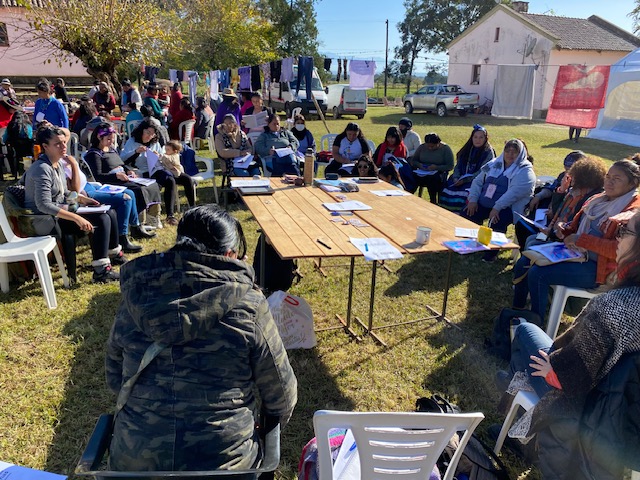
“We owe our success in launching our Agency largely to our colleagues at the Presentes agency who, for a year, were very helpful, willing, and patient in advising us, and they still do so when we need them,” says Llanque.
“It gives me great satisfaction to know that by working together we can change some things and value others, that there are others who want to accompany you on your journey by sharing knowledge is very beautiful,” Millanao concludes.
We are present
We are committed to journalism that delves into the territories and conducts thorough investigations, combined with new technologies and narrative formats. We want the protagonists, their stories, and their struggles to be present.
SUPPORT US

FOLLOW US
Related notes
We are present
This and other stories are not usually on the media agenda. Together we can bring them to light.