

Interview with Marcela Tobaldi: “For years, transvestites only saw themselves as prostitutes”
Trans activist Marcela Tobaldi reflects on the living conditions of her companions, the practice of prostitution, and the debts owed by the State in a country like Argentina where progress has been made in laws and policies, but the reality remains genocidal for this population.


Share

The silence that follows each death deepens the same wound. After the transfemicide of Liliana “La Chaqueña” Varoni in Buenos Aires Province, trans activist Marcela Tobaldi reflects on the conditions of her comrades—and her own as a survivor—and the cruelty of patriarchy. She currently works for the government and from there continues to demand public policies for a sector of the population that survives however it can.
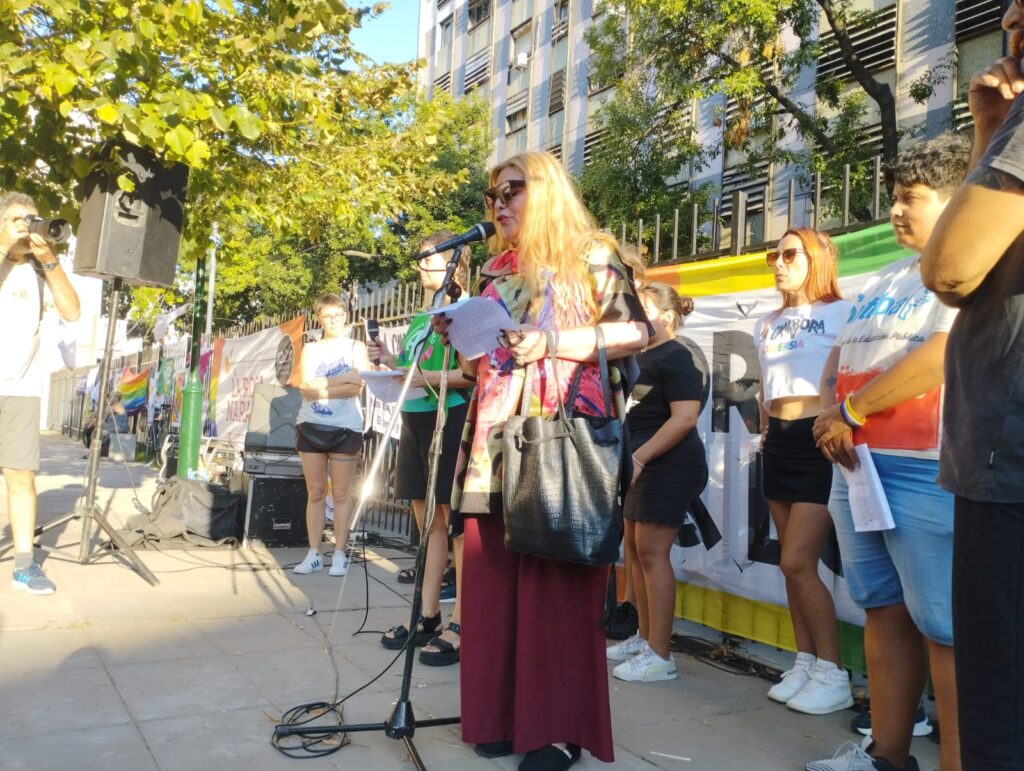
“I just turned 57, and I don’t know why, maybe it was fate, maybe it was luck,” the leader of the Rosa Naranja . Her organization opened a classroom in 2017 so that her colleagues could access education, with the support of Paebyt , the Literacy, Basic Education and Work Program of the Province of Buenos Aires.
There, they offer official primary and secondary education. Until the pandemic, they operated in a space loaned by the Public Defender's Office of the City of Buenos Aires, where Marcela worked. "We've already had three graduating classes from primary school," she says proudly. Now they operate in a space called Compadres del Horizonte, in an old building with many windows, across from the Garrahan Hospital.
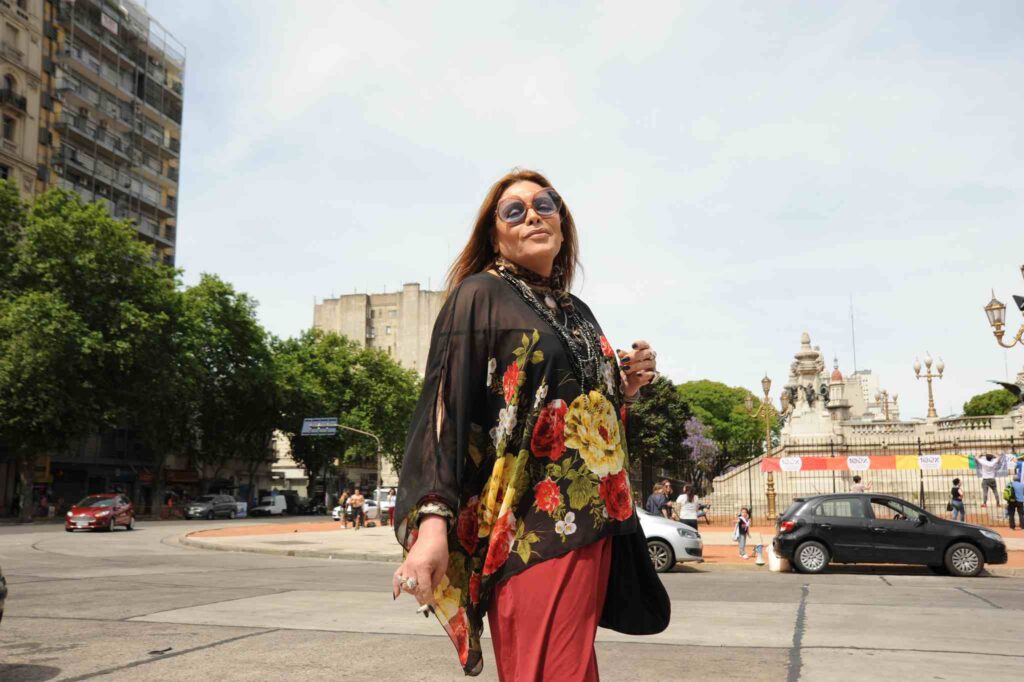
Marcela is an advocate for education. She began her university studies thanks to her family's support, but in 2001 she left to forge her own identity. She migrated to Europe when Argentina was experiencing a profound crisis, with record numbers of young people leaving for economic exile .
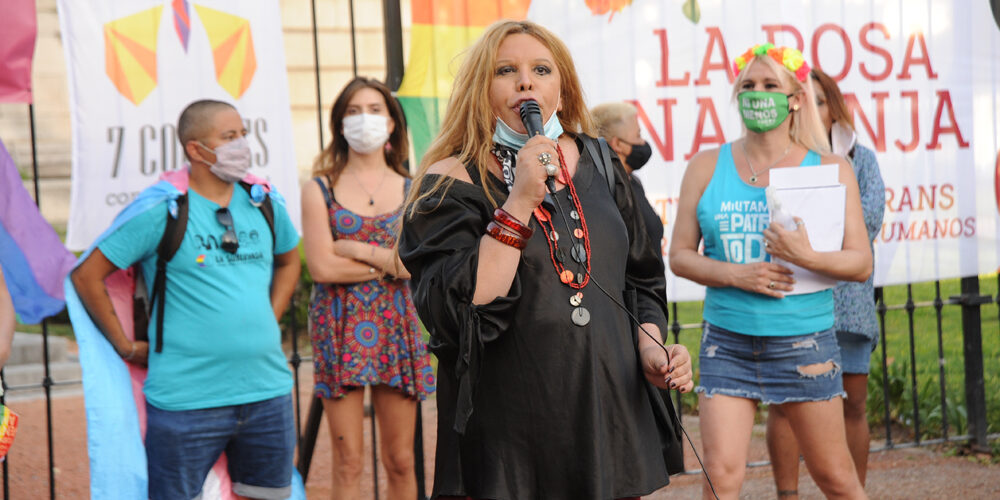
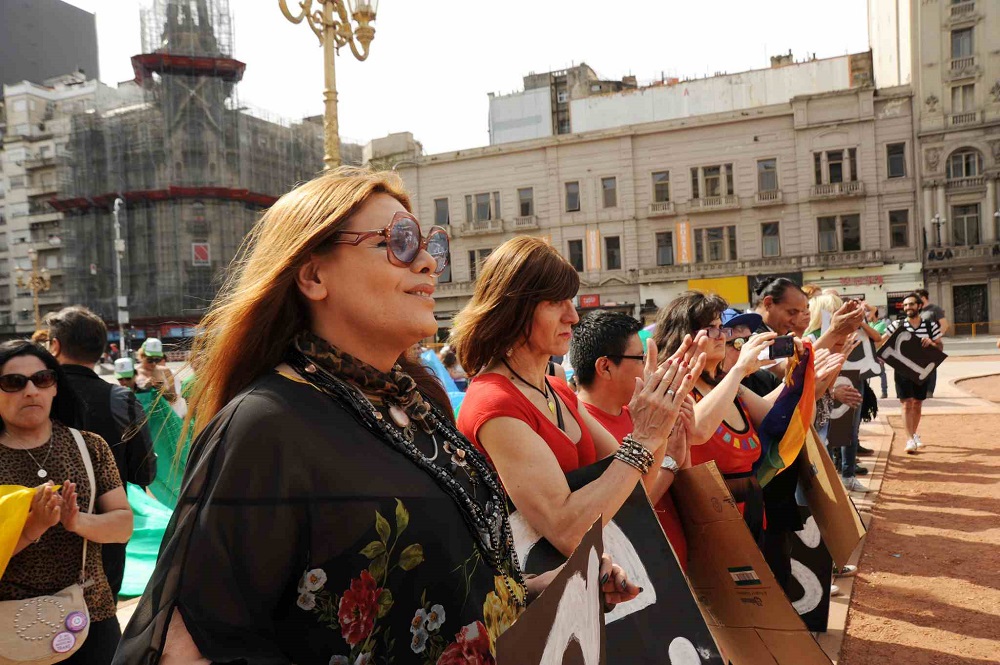
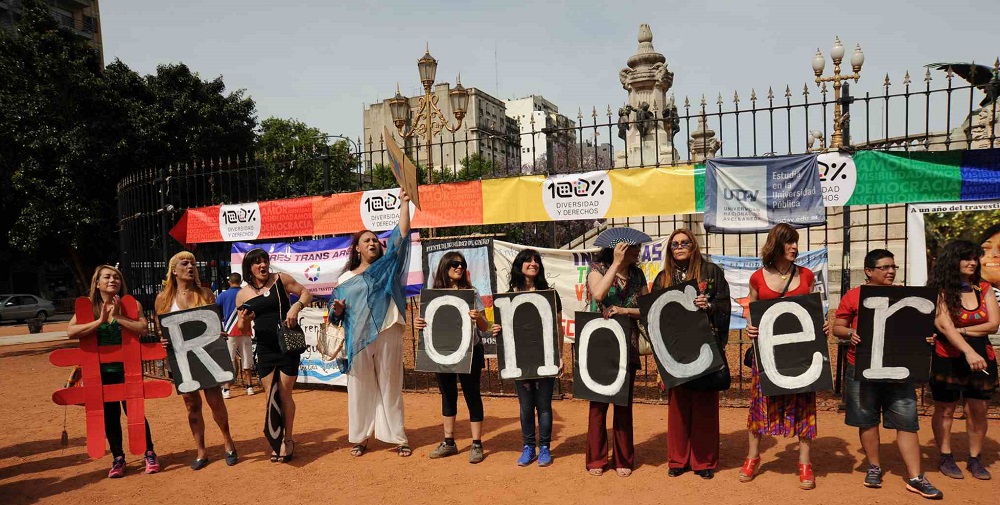
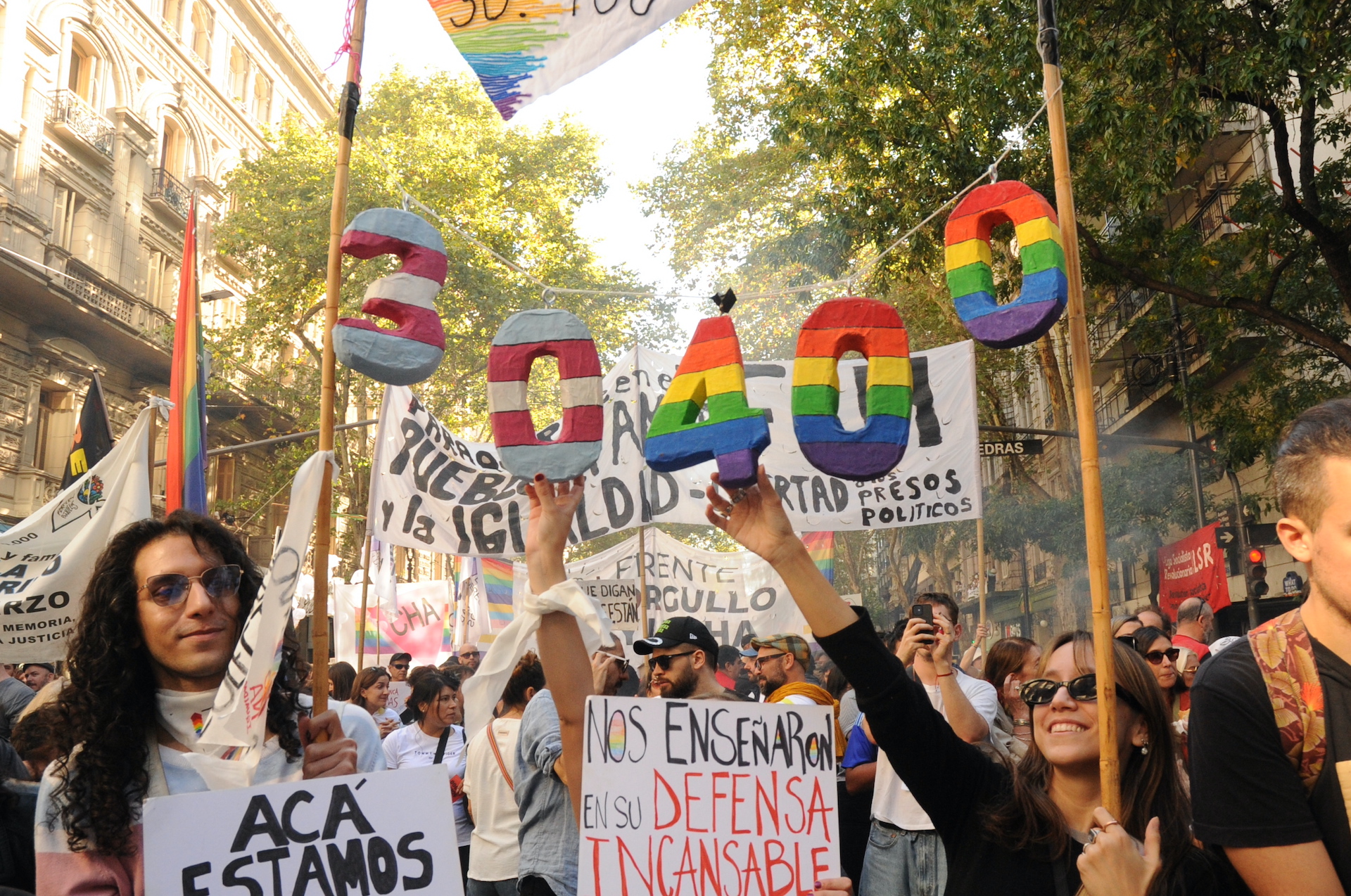
“Politicians need to understand that we need access to rights like education and housing,” Marcela said at the June 28th march against transvesticide, transfemicide, and transhomicide, which brought together more than 5,000 people who marched through the main streets of downtown Buenos Aires. “Stop pushing us into the abyss and subjecting us to all the violence we have endured!” she added.
The numbers of injustice
It is estimated that there are 40,000 transgender people in Argentina, although fewer than 10,000 have a national identity document (DNI). According to the Women's Office of the Supreme Court of Justice of the Nation , between 2016 and 2021 at least 32 legal cases of transphobic murder/transfemicide were initiated in Argentina, involving 32 victims.
The average age is 32, and a third of them are migrants. 59% were sex workers. 22% were murdered by their partners or ex-partners. This is why some speak of a genocide and demand reparative policies, such as the proposed law for a monthly pension for trans and travesti people over 40 who have been victims of institutional violence based on their gender identity .
– What is the point we need to evaluate in these transvesticides?
– It's the responsibility of the national government, the provincial government, the municipalities, and all organizations with a presence in the community. Because the government thinks that the LGBTIQ+ community is responsible for occupying all these spaces, and we're overwhelmed, sister . Yesterday was crazy; I went to the supermarket, packed bags of groceries, went back to the classroom to hand them out—I mean, I don't have time for everything.
– What should the State do?
– What's missing is investment, a fairer distribution of the pie; it's shameful. We've had a policy for people over 50 for who knows how long, and it's not being paid out.
– are supposed to be the most advanced country in Latin America in terms of achieving human rights for the LGBTIQ+ community.
“Well, yes, because they’re drafted, approved by the National Congress, and they’re law. But the reality is different.” More material and human resources are needed. The Ministry of Women —where Marcela works—which is a victory for the entire LGBTQ+ movement, has very few trans and travesti staff. There are only five of us in the entire ministry; you can’t run all the nation’s policies! Do you understand?
– This year there are elections at all levels in Argentina, is there any other alternative?
– We're really wondering what we're going to say every time we raise our voices. Are we going to keep supporting this? Yes, because we have to keep moving forward. But we're seeing that it's not enough because we need a bigger government: ministries with more people working. In the province of Buenos Aires, the reparations project, " Recognizing is Repairing," , while it's slower at the national level. I'm very involved in this.
– The right wing offers no better alternatives.
“To stop them from killing us, we have to give trans people jobs, we have to improve their quality of life. They can’t keep relying on prostitution as their only means of survival,” she says, moved by the latest transphobic murder, that of Liliana “La Chaqueña” Varoni, which occurred in the Buenos Aires district of Almirante Brown on July 3rd.
The same pain, the same wound
“Liliana’s life unfolded in prostitution, which has all the hallmarks of marginalization. It doesn’t fix anyone’s life. And besides, you have a short lifespan, and that’s what happened to all of us. It was a different, bad experience, and when I realized it, I quit. One night, seeing 21 guys, I used a ton of drugs. It went on for several years; talking about all this drives me crazy. I was in Amsterdam, I traveled all over Europe, and I couldn’t find anything different anywhere .” She challenges a powerful capitalism that continues to leave trans people on the margins of the benefits of the welfare state.
Marcela returned to Argentina in 2011, completely certain that she wanted to fight for the rights of the trans community. She spent three months with her parents after 10 years abroad . European society had proven to be neither more cultured nor more open. Prostitution was the only path for trans people . “That’s hard to understand. When I realized that, the damage it was doing to my sense of self, I kept reading in the newspapers that there was a political process here with a lot of progress. The equal marriage law had already been passed, and there was all the work being done to create a trans job quota . Although that’s a failure because we only have 720 people included, and there are more than 10,000 of us,” she says.
Typical scenes of patriarchy
“The guy who arrived on a bicycle where Liliana La Chaqueña was was part of the prostitution system. He dealt drugs. This guy told her at six in the morning, ‘Come suck my dick.’ And she said, ‘No, I’m working.’ The lines between trafficking and prostitution are blurry,” says Marcela, filling in details a scene that took so many transvestite and trans lives.
“The guy got angry, grabbed her by the hair, threw her to the ground, and finished her off in that pit. And since she couldn't fight him, because he was a strong guy, she's the one who ended up dead. So obviously all the organizations came out to mourn. Despite the State and the level of activism and social work we've undertaken, we still haven't reached all the transvestite and trans women in the country,” she laments.
– These are preventable deaths.
Liliana could have been saved. Nothing justifies this death, and we should all be grieved as a society that we couldn't save her. At 64, you can't be standing on the street corner with prostitutes!
– The family was trying hard and helping her, mind you.
– But it didn't have the basic necessities. A disability pension plus a Potenciar Trabajo (a government employment program) adds up to 80,000 pesos. You can't live on that! The gender perspective in diversity isn't being implemented. Victoria Tolosa Paz takes over at the Ministry of Social Development and decides that a trans person can't benefit from these two public policies. Our comrades were living on that 80,000 pesos, more or less, and doing odd jobs. That had stopped trans women from going out onto the streets. It hit all of us very hard. Many comrades in our organization were affected. It hurt them a lot. We were constantly attacked. It delegitimizes all of us leaders who are at the forefront of the struggle, it takes away our power, because the State is taking away a public policy and they're blaming us.

– There is perhaps a point where something about their identity leads them to expose themselves in the same way.
"It's what we've always done. For so many years we prostituted ourselves and identified as prostitutes. That's why there's this war between abolitionism and regulation. We might be skilled at making cakes, but when it comes to enjoying life, I'm out on the street. We haven't had stable jobs, different kinds of work. We've always been prostitutes. It's very painful because we don't know any other reality."
– There is something about identity that relates to the commodification of trans bodies. What public policy can transform this?
– The perversity of a man wanting a woman with a penis, that's what it's about. Completely. In Holland, a guy aroused by a penis, breasts, and everything a transvestite represents is the ultimate.
– And what happens to a woman with that kind of excitement?
"We go crazy," she says, and laughs.
– Well, I say this to vindicate Liliana's enjoyment, beautiful, with painted lips, joyful.
– That's the point, La Chaqueña respected her pleasure. And she respected that she didn't have a penny to her name to enjoy food. It's the whole package. Who are responsible for this whole massacre? Look, the Inter-American Court of Human Rights said that what's happening to the trans community is genocide. The same thing is happening in the United States, in almost the entire world. Europe is different. In the Netherlands, during the years I was there, the deaths of very few trans women had been officially recognized, unlike here in Argentina where we've already had 50 or 60 this year.

– And the countless situations of cruelty and perversity of the patriarchy that, without leading to death, are innumerable.
"I'm scared with everything that's happening politically, with the shift to the right. But we have to start fighting the hypocrisy, despite the good gestures of those hypocrites. Because Daniela Castro, a trans woman official at the Ministry of Women of the Province of Buenos Aires, promoted the historical reparations bill, and it failed twice. But now she's revived it. She presented it to Kicillof and told him, 'Sign this, tough guy,' because we trans women can't keep prostituting ourselves on the streets."
– Because the population isn't that large, and it's about saving one generation so that the next ones, who are now young, already know other ways to earn a living.
– And these are tools so that if you want to be a prostitute, you can do it through a website so you don't expose yourself to violence on the street. Even within those websites, situations of violence occur that are later hidden. The last time I was in Amsterdam, I spent a year and a half working on a website. I was locked up in an apartment, and things happened to me with the guys. I lived a splendid life, with an immaculate house.
They gave me a lot of satisfaction in terms of pleasure, and in that thing where a guy would come in, give me 2,500 euros, and say, "I want to be with you all night." I surrendered to passion. And I was famous for my surrender to passion. And then, when I got home, or when the client or the guy left, I'd say, "Is this 2,500 worth it for everything I did?" The experience of working as a prostitute left a mark on me, and I couldn't get over it. When things like Liliana's death happen, which could have been avoided.
– Because it is not a crime of power either, it is the lumpenproletariat of the world of marginality, where the State does not regulate and the law of the strongest prevails.
– We're all affected; there isn't a single trans woman who hasn't been affected by everything we've been through. And some of us have boarded planes, but I haven't had any luck. The Swedes looked at me badly, they made me feel like crap, and I came back and I'm here, and I'm going to keep fighting.
We are present
We are committed to journalism that delves into the territories and conducts thorough investigations, combined with new technologies and narrative formats. We want the protagonists, their stories, and their struggles to be present.
SUPPORT US

FOLLOW US
Related notes


We are present
This and other stories are not usually on the media agenda. Together we can bring them to light.