

Illegal raids and arrests in Jujuy: "They're trying to instill fear"
Today they arrested the well-known lawyer Alberto Nallar, in addition to continuing with raids.


Share

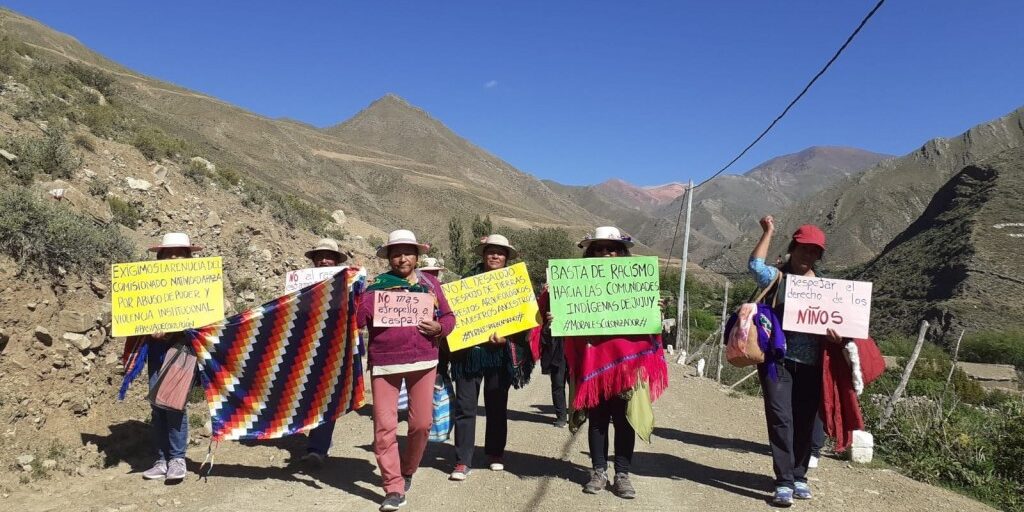
Jujuy is experiencing tense hours as police operations target protesters in Humahuaca who oppose the proposed reform of the provincial constitution. The latest wave of state violence, instigated by Governor Gerardo Morales, began yesterday afternoon. Raids were carried out at various residences after the Jujuy Public Prosecutor's Office requested the arrest of 22 protesters who participated in a demonstration on June 30. The proposed constitutional reform, among other violations, authorizes encroachment on indigenous territory and criminalizes social protest.
Today, well-known lawyer Alberto Nallar was arrested. His opposition to the constitutional reform is public in Jujuy. He traveled throughout the province explaining why the modifications promoted by the Jujuy ruling party are unconstitutional. Adding to the tension, rumors are circulating that more lawyers will be arrested. The unofficial list circulating on social media mentions lawyers recognized for their opposition to the new Constitution and their advocacy for indigenous communities.
No official information
According to various sources, five of the 22 people arrested have been detained so far. The actual number of detainees is uncertain due to the scarcity of official information. The Public Prosecutor's Office told Presentes that only three people were arrested yesterday, but declined to provide their identities at this time. Information provided by family members and acquaintances indicates that Agustín Zamboni, Rolando Tapia, and Renzo Braian Laguna were arrested yesterday evening when they went to Police Station No. 15 in Humahuaca . They were there in response to a summons they had received at their homes. Laguna's mother told local media that they were taken to the provincial capital, San Salvador de Jujuy, but their final destination was unknown.
Furthermore, a group of provincial police officers violated university autonomy by entering the National University of Jujuy while the Higher Council was in session. The Socialist Left Youth group reported the arrest of university professor Iván Blacutt. “Yesterday, the police entered the university where the rejection of the reform was being discussed. Violating university autonomy and recalling the worst events in our history, they went to his home to arrest him,” the organization stated.
Crimes of sedition and unlawful deprivation of liberty
As for Alberto Nallar, it was learned that he was being held at the police station in the town of El Carmen and that he was to be transferred to the Central Police Department located in San Salvador. Like the other detained protesters, he is accused of very serious crimes, such as sedition, and in the case of the protesters from Humahuaca, of unlawful deprivation of liberty. According to the accusation, they were preventing members of the City Council from leaving.
The road closures and protests continue
Despite the repression, which continues with practices unprecedented in 40 years of democracy, the people of Jujuy remain steadfast in their struggle. A 24-hour general strike is taking place today, and a large demonstration was held this morning in the capital city.
Throughout the rest of the province, roadblocks remain in place on major highways, particularly National Routes 52 and 9, near Purmamarca, Tilcara, Abra Pampa, and La Quiaca, among other locations. In La Quiaca, “three fronts of struggle” are currently active. This is how journalist Sylvia Martínez described the situation, referring to the blockades at the southern entrance to the city, the mayor's office, and the City Council building.
In what is being interpreted as an attempt to weaken the protest, unknown individuals tried to set fire to the municipal building, which is governed by an opposition party to Gerardo Morales. Meanwhile, council members loyal to the provincial government are trying to remove the mayor from office.
"They're trying to scare people."
Of all these roadblocks, the one in Purmamarca is perhaps the most strategic, because it's the point where the two national routes, 52 and 9, intersect. These routes run through the Quebrada and the Puna regions of Jujuy and connect with Chile and Bolivia. It's also the route used by trucks transporting lithium. At this location, where the protest is primarily led by Indigenous communities, Wednesday's raids found them in the middle of a meeting. The news of the new arrests caused fear, Salustiana Gerónimo, from the Los Manantiales de Barrios Community in the Yavi department, told Presentes.
“Here we are, still fighting,” Salustiana greeted us, answering the question from the roadblock in Purmamarca. “There are few of us left, but we keep resisting. Our spirits are getting lower and lower,” she said. She explained: they're getting news that there will be more arrests and they believe the police operations will be moving down from Humahuaca to Tilcara, and from there to Purmamarca.
“They're trying to scare us” with these operations, she asserted. And on top of that, in a situation where “nobody is helping us, there's nobody to help you. I wonder why the national government isn't doing anything,” not necessarily intervening, “but it could do something else to stop this, at least put some kind of pressure on this genocidal maniac, because what he's doing is very serious.”
We are present
We are committed to journalism that delves into the territories and conducts thorough investigations, combined with new technologies and narrative formats. We want the protagonists, their stories, and their struggles to be present.
SUPPORT US

FOLLOW US
Related notes


We are present
This and other stories are not usually on the media agenda. Together we can bring them to light.