

Torture, disinformation and terror campaigns: this is how military power works in Honduras
LGBT individuals were victims of torture and other violations committed by the military at the Támara men's prison. Journalists and human rights defenders were attacked on social media through bots.


Share

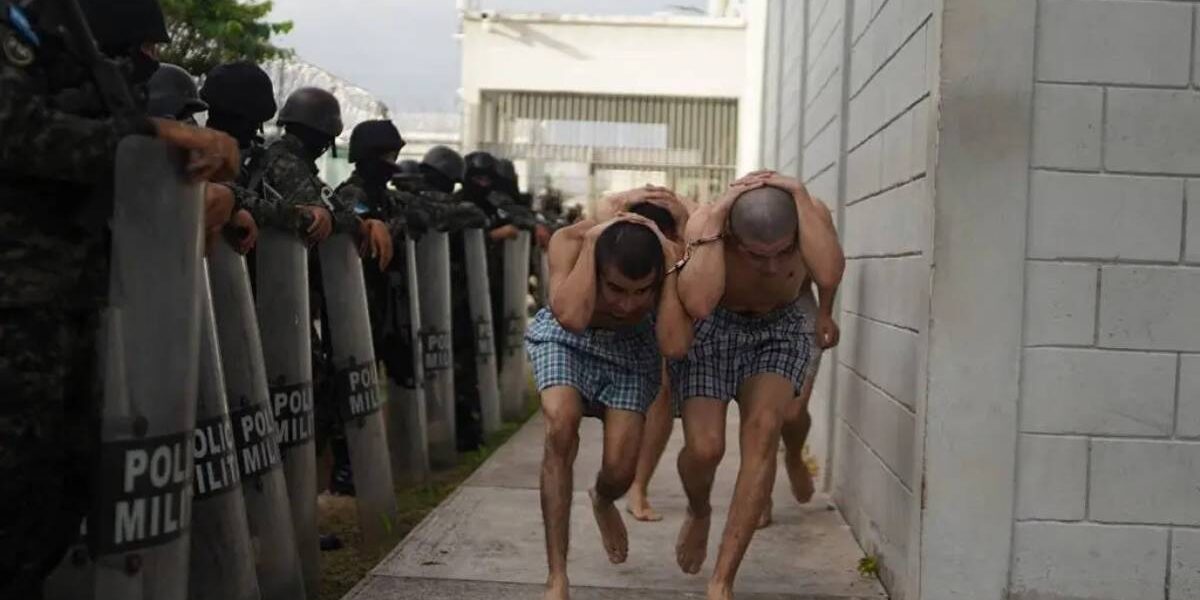
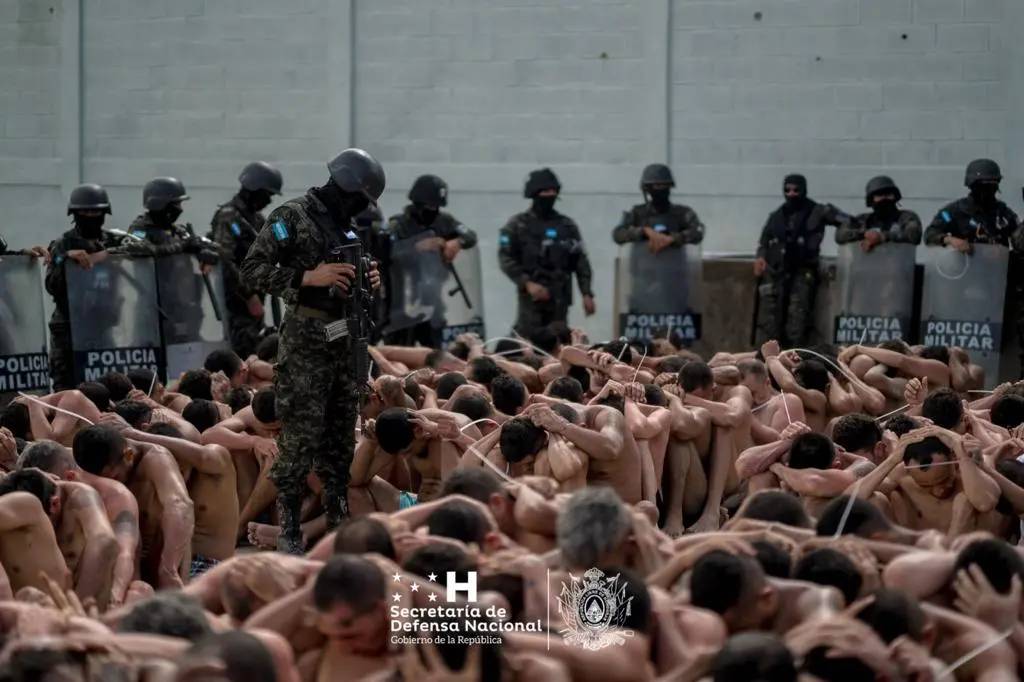
TEGUCIGALPA, Honduras. Beatings and beatings have been raining down on the inmates crammed into the Támara prison , 30 kilometers from Tegucigalpa, since June 26. These beatings at the prison in central Honduras are one of the human rights violations by the Military Police of Public Order (PMOP) after taking control of the prisons in the last week of June.
The militarization decree issued by President Xiomara Castro on June 22, 2023 exposed people deprived of their liberty to public humiliation.
The decree turned the prison population into victims of torture. The physical abuses against them mirror those implemented by President Nayib Bukele in El Salvador. This is according to reports from family members and human rights advocates, documented by Investigative Reporters and Report Without Fear .
Attacks on trans, bisexual and gay people in Támara
Very few escaped the beatings of June 26. The PMOP, created by decree of former president Juan Orlando Hernández in 2013, began mistreating three trans women, as well as gay, bisexual, and heterosexual people.
The photographs showed the results of the physical and psychological abuse in the prison. The inmates had their skin crisscrossed with bruises, as well as deep and serious wounds on their arms and backs.
“This is how the bodies of inmates were left,” posted Hugo Maldonado of the Human Rights Defense Committee . “We cannot remain silent and become complicit in these irregular actions,” Maldonado wrote on his Twitter account. He shared images taken of inmates at the Siria prison in El Porvenir, Francisco Morazán .
“Some photos have already surfaced where our officers allegedly abused certain criminals. We would have to see if they themselves are committing these acts of abuse,” José Jorge Fortín, Chief of the Joint Chiefs of Staff , told the program Frente a Frente .
Punished for speaking out
In response to human rights defenders' complaints of torture and human rights violations, judges from the Judicial Branch announced they had conducted inspections in prisons across the country. They are seeking to implement the corrective habeas corpus measures promoted by the Constitutional Chamber. At the Siria prison, surveys were administered to inmates to assess their living conditions.


Human rights defenders did not remain silent about the torture and inhumane acts in Támara, especially against the LGBTIQ+ population.
“It’s not a crime to be trans, gay, or bisexual. If the military doesn’t accept us, they should go join the cartels,” demanded a human rights advocate for people deprived of their liberty.
However, the campaigns of terror in Honduras harm not only those deprived of their liberty, but also those who defend them.
While the mistreatment reported by Hugo Maldonado is multiplying behind prison walls, human rights defenders are the target of slander and disinformation campaigns.
Women human rights defenders targeted for attacks
The destruction of reputations and the smear campaign have been particularly vicious in recent days against those who demand respect for the human rights of people deprived of their liberty. This violence has extended to renowned journalists who have championed the cause of human rights.
One of the attempts to tarnish the image of human rights defenders circulated on social media in recent days.
The publication attributed to the Infobae website claimed on July 3 that an alleged report from the international research center InSight Crime links human rights defenders and journalists to the MS 13 gang .
Under the heading “Mara MS13 and links with human rights organizations in Honduras”, the publication mentions an “intelligence report from the renowned magazine InSight Crime ”.
The alleged document reveals, according to the post, "how the fearsome MS13 gang in Honduras has various human rights organizations in Honduras among its ranks."
Furthermore, the publication notes that the defenders "pressure the government" to give "privileges to those deprived of their liberty."
“This is false,” InSight Crime asserted. “InSight Crime has not published such information nor does it have any evidence to support it. We condemn these false attacks,” the crime research center added.
Slander and defamation
One of the human rights defenders slandered by the publication attributed to Infobae is Hedme Castro, executive director of ACI Participa . Her photograph, along with those of Wendy Funes of Investigative Reporters , Rihanna Ferrera of Cozumel Trans , Hugo Maldonado and Blanca Izaguirre of Conadeh , and Delma Ordóñez of Asocide PP, appeared under the publication's headline.
The human rights organization quickly issued a statement on July 4th, calling the post "unfounded" and rejecting it "categorically and unequivocally."
ACI Participa then accused the authors of the publication of acting “from the shadows, as cowards do, with the aim of defaming and discrediting.”
According to the human rights organization, the intention of the post is "to promote attacks against human rights organizations or to justify repressive actions by state bodies."
He added: “No one in Honduras or abroad is unaware of the links between organized crime and Honduras. If anyone has any doubts, they should ask at the Southern District Court of New York.”
“Let them investigate me,” said human rights defender Rihanna Ferrera in response to statements from military leaders alleging that several organizations have links to organized crime and gangs.
In response to attacks on female journalists and human rights defenders, the digital media outlet Pasos de Animal Grande today published a statement from the Human Rights Roundtable.
In the document, the Board deemed the post attributed to Infobae to be “fake news.” They stated that it “intends to place the faces of the affected individuals at the forefront of potential attacks against their lives.”
Furthermore, the statement denounced the presidential silence regarding the publication, which was considered slanderous by several organizations.
“We are extremely concerned about the silence of President Xiomara Castro on such a delicate issue as the lives of the people against whom this smear campaign has been waged,” the statement from the Roundtable indicated.
The committee also called for an investigation into statements made by Commander Ramiro Muñoz, head of the PMOP (Military Police of Public Order). A few days ago, he stated that "human rights defenders are paid and they have to produce results." These are stigmatizing remarks against human rights work. Suspiciously, these statements were made public before this social media campaign was launched.
“There are voices that, when silenced, will bring about changes forever.”
Wendy Funes joined the chorus of indignation. The award-winning journalist pointed out in several publications how the Armed Forces and the Military Police of Public Order “seize control of security and guarantee impunity.”
“Criminals in the Armed Forces and the Military Police are in a second phase of a plot to seize control of security and guarantee the impunity they have enjoyed, using gangs and organized crime groups to silence us,” Funes posted. “They should reconsider that silencing these voices will bring about lasting change.”
The director of the independent digital media outlet Investigative Reporters lamented that “elite hitmen” continue to silence those who defend human rights in the country.
“Criminals like you who wanted to silence Manuel Buendía, Guillermo Cano, Berta… only succeeded in amplifying their voices… your bullets are fast… voices are slower… murderers!… Berta multiplied and told the world that you are elite hitmen,” Funes wrote.
Funes's demands come amid a climate of violence that not only threatens the rights of prisoners and journalists. With the state of emergency and curfews decreed by the government, even ordinary citizens have not escaped having their basic rights violated.
In addition to Funes, other journalists from the independent digital media outlets Reporteros de Investigación and Reportar sin Miedo have suffered a series of direct threats with bot attacks through social media.
Employees of both media outlets have also received phone calls from unknown numbers. They have also been harassed and subjected to attempted hacking of their social media accounts and websites.
It is important to note that Investigative Reporters and Report Without Fear have made a series of reports about the situation in prisons and the power networks behind them.
The government took “disproportionate measures”
Despite constant reports of torture in prisons and the persecution of human rights defenders and journalists, the State has not acted as expected to counteract them. On the contrary, it has only intensified its actions against the right to freedom of expression.
Regarding the situation in prisons, Isabel Albaladejo, representative of the Office of the UN High Commissioner for Human Rights (OHCHR), called for reform of the prison system. According to Albaladejo, it is necessary to move from a punitive model to one of rehabilitation and to guarantee the integrity of those deprived of their liberty.
According to the Office of the UN High Commissioner for Human Rights (OHCHR), two of the major challenges facing the Honduran prison system are overcrowding and judicial delays. In December 2022, it reported that the system has an overcrowding rate of 34.2%. Meanwhile, at least 51.6% of the prison population has not received a final sentence.
Militarization is not the answer
Amnesty International (AI) compared in a statement the state measures in Honduras against people deprived of their liberty and the general public with the “human rights violation policies of the government of (Salvadoran President Nayib) Bukele”.
The militarization of the country in response to the recent violence is a worrying development for the global organization. In addition to granting more power to the Military Police, President Xiomara Castro imposed a state of emergency and then a curfew.
Castro declared a state of emergency on December 3, 2022, supposedly to combat extortion and other crimes in the country. However, the measure has not been effective, according to government critics.
“The use of militarized security forces and the suspension of rights has led to human rights violations,” AI stated.
Among the violations noted by AI are arbitrary arrests, ill-treatment, discrimination, restrictions on freedom of expression, torture and enforced disappearances.
The curfew decreed by Castro went into effect on July 4, 2023 in San Pedro Sula and Choloma from 11:00 pm to 4 am
The measure is supposedly aimed at controlling the rapid increase in criminal activity in recent weeks.
Through these initiatives, the government not only sought to reduce violent incidents such as the riot at the Tamara women's prison on June 2 that left 46 dead.
In addition, Castro pushed for a curfew in an alleged attempt to curb the multiple murders recorded in several cities in Honduras during the second half of June.
Violence with more violence
The multiple murders culminated in the one that ended the lives of 13 people in a billiards hall in the city of Choloma, 16 kilometers from San Pedro Sula, northern Honduras.
Amnesty International stated that in its attempt to stop “the serious violence of organized crime”, the Honduran government has taken “disproportionate measures that suspend constitutional guarantees”.
The Castro government's initiatives to stop the violence have culminated up to May 31 in some 193 complaints related to the state of exception, according to the National Commissioner for Human Rights in Honduras (Conadeh).
The reported violent actions include disproportionate use of force, intimidation and threats, including shootings to frighten the population.
Controversies and prayer
Due to a lack of autonomy, integrity and ethics during the emergency in the prison system, the National Committee for the Prevention of Torture, Cruel, Inhuman or Degrading Treatment (Conaprev) has been harshly criticized in a statement from civil society organizations (CSOs).
Among the signatory CSOs were the Center for Women's Studies , the Association of Relatives of Prisoners, the Center for Human Development, the Center for Prevention, Treatment and Rehabilitation of Victims of Torture and their Relatives, the Civil Association of People Deprived of Liberty, ACI Participa, the Association for a Better Life and Cozumel Trans.
Days later, on July 3, Conaprev expressed regret in another statement that civil society organizations had criticized its management. “We regret that they have stated that the National Preventive Mechanism (MNP) Conaprev lacks integrity and ethics in its actions,” the institution stated.
Conaprev asked the military authorities to ensure respect for the human rights of people deprived of their liberty.
The image of Fernando Muñoz, commander of the Military Police of Public Order, kneeling and praying on the front page of the government newspaper Poder Popular, caused controversy. Many people criticize the official for his close ties to former president Juan Orlando Hernández, who is detained in New York awaiting trial in January 2024.
“Father, for the good of this Honduras that you love so much and that you created and gave us as a country, today we make a pact with you. Help us never to be corrupt again. Help us not to touch the cursed money of criminal organizations, which buy off authorities with the blood of our people,” Muñoz said.
We are present
We are committed to journalism that delves into the territories and conducts thorough investigations, combined with new technologies and narrative formats. We want the protagonists, their stories, and their struggles to be present.
SUPPORT US

FOLLOW US
Related notes

We are present
This and other stories are not usually on the media agenda. Together we can bring them to light.