

Cecilia Strzyzowski: Once again, journalism is using trans people to spread misinformation
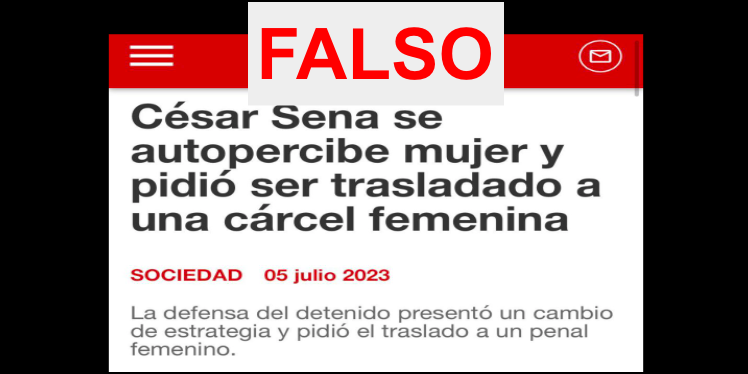
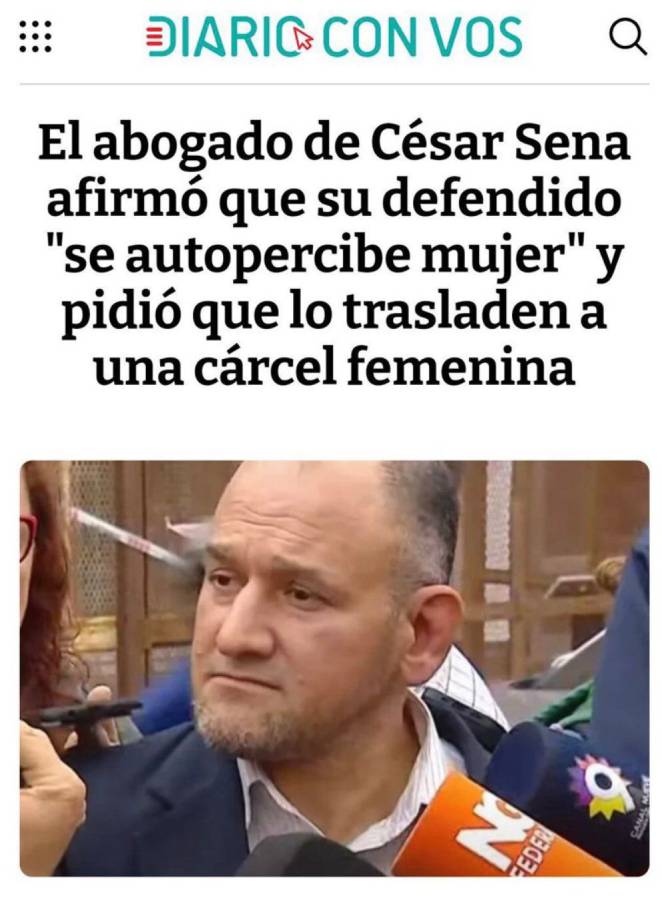
Dozens of news outlets reported as fact that the main suspect in Cecilia's femicide "identified as a woman".


Share

BUENOS AIRES, Argentina. The disappearance and presumed femicide of Cecilia Strzyzowski, a 28-year-old woman from the city of Resistencia, Chaco, has generated countless fake news stories and misinformation in just one month.
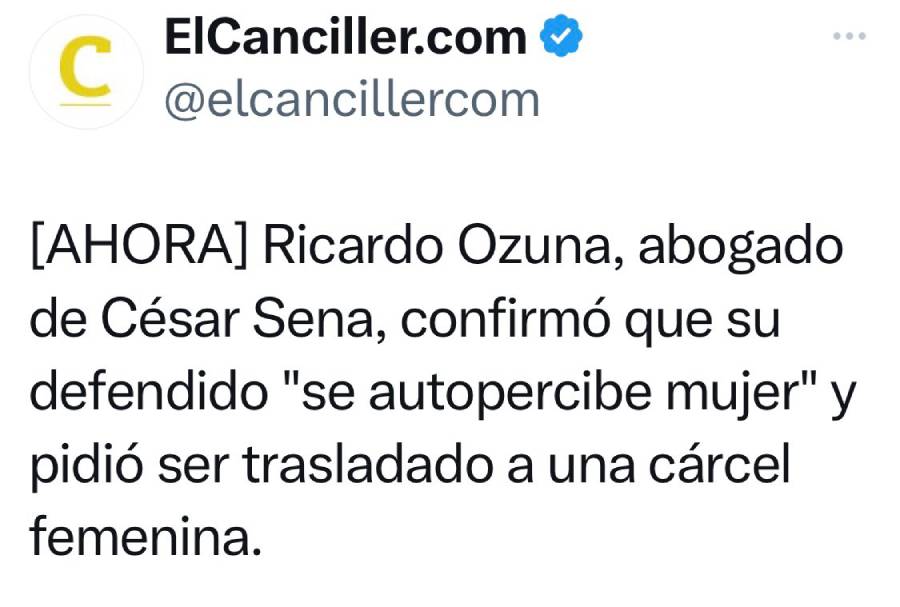
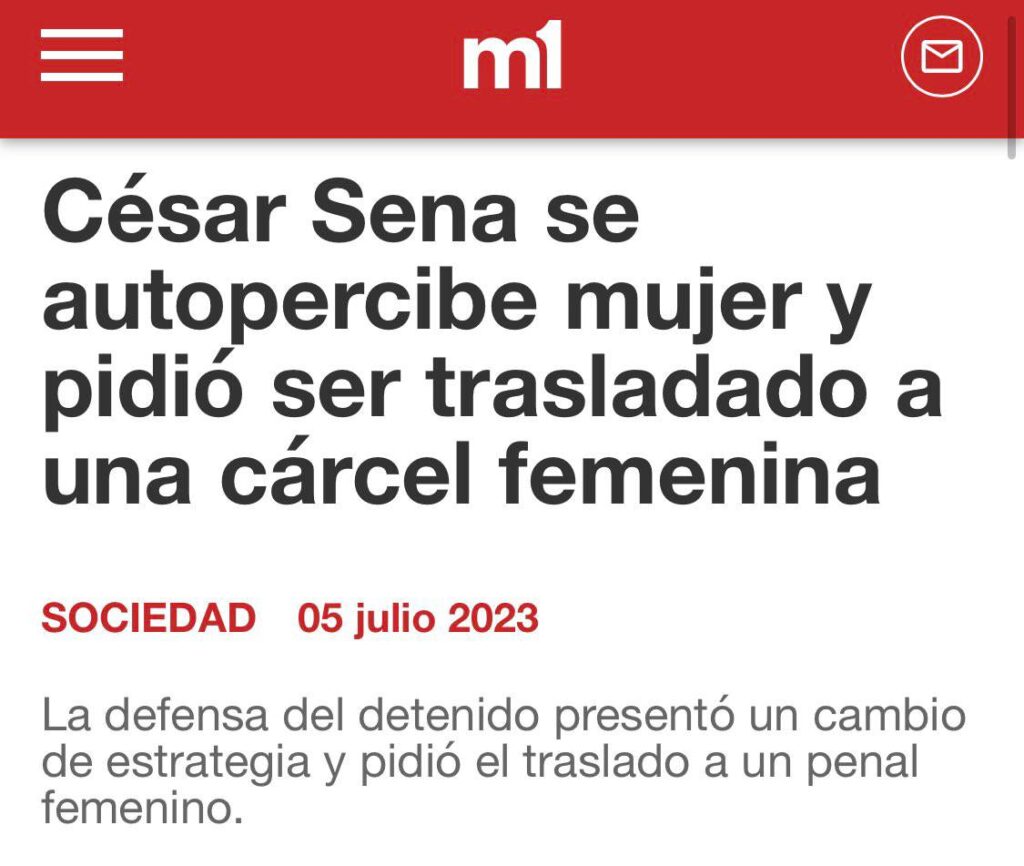
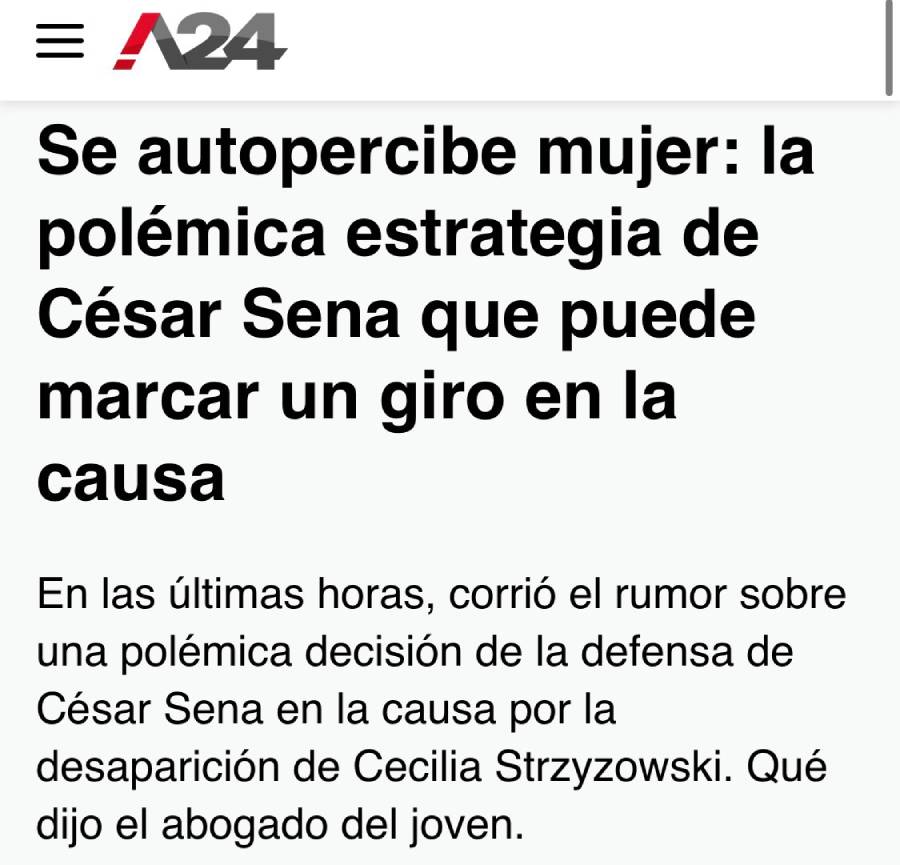
The latest incident occurred on Wednesday, July 5, when dozens of news outlets reported as fact that the main suspect in Cecilia's femicide "identified as a woman." For this reason, the defense had supposedly requested a transfer to a police station that matched their self-identified gender. Experts argued that this was a "defense strategy" to avoid a femicide conviction.
After the news spread through all media outlets, it was denied by Ricardo Osuna, Sena's lawyer . Agencia Presentes contacted Nelia Velázquez, the prosecutor in the case, who denied the report before noon. "That's not true; there's absolutely no record of that in the case file, nor was there any such request," the prosecutor said.
Only in the late afternoon did some media outlets deny the news.
Malice and lack of journalistic rigor
The lack of fact-checking by the various media outlets that took the lawyer's alleged request as fact is compounded, first and foremost, by a lack of knowledge about the Gender Identity Law.
Approved in 2012, Law 26.743 defines self-perception as follows: “the internal and individual experience of gender as each person feels it, which may or may not correspond to the sex assigned at birth, including the personal experience of the body.”
This self-perception and its articulation is a process. Activist and member of the Gender Observatory in Justice , Violeta Alegre, tells Presentes that she finds it striking that "whenever self-perception is discussed, it always refers to trans people" and the concept is not considered in a broader sense.
None of these analyses were heard during Wednesday's session. Even the victim's mother made statements about it.
A rule for interpreting
When consulted by Presentes , lawyer Cristina Montserrat Hendrickse recalled the case of Eduarda in Bariloche. There, the man who murdered the Brazilian woman stated in court that it was not femicide because he identified as a woman.
Montserrat Hendrickse clarifies that these are two distinct laws. On the one hand, there is Law 26.743, which protects the human right to identity. This is not related to the aggravating circumstance in Article 80, paragraph 11 of the Penal Code, which imposes a life sentence for femicide. “Paragraph 11 is what imposes this penalty: anyone who kills a woman when the act is perpetrated by a man and gender-based violence is involved—two requirements.”
“These requirements shouldn't be interpreted literally. When it says 'one man,' we can't exclude situations where the crime is committed by two, three, or more men. We can't limit ourselves to just the letter of the law, but must also consider its spirit. And when it refers to 'man,' it doesn't specify whether it means biological man, registered man (as recorded on his ID or birth certificate), or whether, when it refers to men, it means patriarchal behavior,” the lawyer stated.
In all cases, Montserrat Hendrickse recommends determining whether the person was acting in a context of gender violence, that is, verifying the "aspect of guilt".
In that regard, according to the prosecution team, Cecilia Strzyzowski was a victim of gender-based violence. “She suffered economic violence, psychological violence, and even physical violence,” said gender-based violence prosecutor Nelia Velázquez in an interview
“Self-perception” to circumvent the law?
María Pía Ceballos is an Afro-Indigenous trans activist. She is also a member of Mujeres Trans Argentinas (Argentine Trans Women ). She explains that identity formation is a process and doesn't happen "overnight."
“Some of us start at an early age, others in adolescence, youth, or adulthood. There is no starting age, but we do talk about a process because we are building that identity,” she says.
She adds, “When we make the decision to transition, we face a cruel world where discrimination and violence are present from the moment we express our identity. That is why the law refers to gender identity as the individual's internal experience of gender, as each person feels it. ”
It is in this construction of identity that violence, discrimination, and death appear. “Our identity is a threat to that binary system ,” she says.
The activist adds that the registration rectification for the modification of the documentation is done safeguarding the principle of confidentiality and not violating the law.
A media discourse that criminalizes
Behind news stories like those that were repeated in the media, and which the person involved later denies, there are, according to Pía, hate speeches against the transvestite and trans community.
“We have been labeled as 'criminals,' 'drug addicts,' or 'narco-transvestites.' That's how the media saw us. Since the 1990s, they have subtly contributed to a negative, pejorative, and intentional narrative against our trans identities. They portray us as 'the bad guys in society,' ” says Pía.
He points out that “they circulate this news, but they don't apologize to our community. It remains in the comments. But in everyday life, it contributes to a breeding ground that generates stigma, criminalization, discrimination, and violence.”
The constructed narratives
After the information was denied by both the lawyer and the prosecution, some media outlets issued corrections, but did not remove the story. “The media must acknowledge these errors and apologize. They must rectify this entire construction of discourses and narratives about our identity. And they must do so respecting our identities and protecting the right to gender identity.”
“ Far from receiving benefits, transvestite and trans people are subjected to multiple forms of violence. We continue fighting for the human rights we still lack. Reversing the situation of having a life expectancy of 38 to 40 years will continue to be a great challenge for states, but also for our society.”
“Inclusion in all areas must be real for the transformation of our society. And so that our community doesn't have those labels or those narratives that were imposed by the mainstream media in the 90s about our community as criminals,” Pia concludes.
The case
Cecilia Strzyzowski was last seen on June 2nd. Her mother reported her disappearance three days later. Her then-partner, César Sena, later confirmed her disappearance. The prosecutor's investigation determined days later that there was ample evidence that Cecilia had been the victim of femicide.
Based on these leads, the Special Prosecutor Team assigned to this case arrested seven people, including César Sena, his parents Ermeneciano Sena and Marcela Acuña, and two assistants.
The couple Sena and Acuña led the Unemployed Workers' Movement in Chaco. They were also on the Chaco Front list headed by the current governor.
Following searches and based on testimonies, the prosecution collected evidence, including bone fragments that are being analyzed in Córdoba; the results will be known in 30 days.
What is gender misinformation?
Gender disinformation consists of spreading false, misleading, or inaccurate information and images that perpetuate stereotypes and reinforce gender biases against politicians, activists, journalists, and public figures. This campaign typically intensifies during election periods and is often accompanied by online harassment. These attacks disproportionately target women politicians and candidates from LGBTQ+ and feminist groups.
Those who call themselves “pro-life and pro-family” often base their accusations against gender equality and LGBTQ+ rights movements on a “global agenda” that threatens the traditional family structure and national identity. These actors attack any progress in human rights and sexual diversity, and they are increasingly organized and transnationally funded.
These are some examples of gender misinformation that we at Agencia Presentes have identified. To report others, please write to us at contacto@agenciapresentes.org
We are present
We are committed to journalism that delves into the territories and conducts thorough investigations, combined with new technologies and narrative formats. We want the protagonists, their stories, and their struggles to be present.
SUPPORT US

FOLLOW US
Related notes

We are present
This and other stories are not usually on the media agenda. Together we can bring them to light.