

Presentes and Abofem Workshop: Journalism and Feminist Judicial Reform
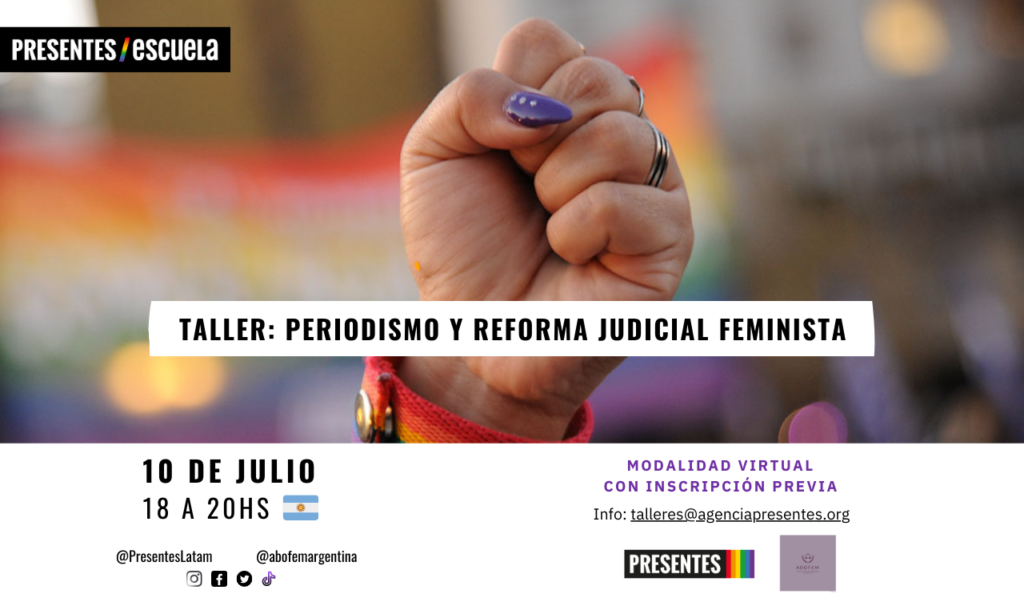
From Escuela Presentes and with Abofem we are convening the Workshop on Journalism and Feminist Judicial Reform, aimed at communicators, students, lawyers and researchers from Argentina.



Share

Presentes, in collaboration with the Association of Feminist Lawyers (Abofem), is organizing a workshop on journalism and feminist judicial reform . It is intended for communicators, students, lawyers, and researchers in Argentina .
It will be a two-hour virtual session, on Monday, July 10, from 6 to 8 pm .
The workshop is open and free , but prior registration is required. Registration can be done through this form.
Objectives of the workshop on Journalism and feminist judicial reform

- To contribute to the development of good journalistic practices for communicating justice issues.
- Reflecting on the links between communication and justice from a gender and sexual and cultural diversity approach, with a human rights perspective.
- To provide tools to facilitate effective access to justice through the understanding of basic concepts and the visibility of pending agendas.
Workshop Contents
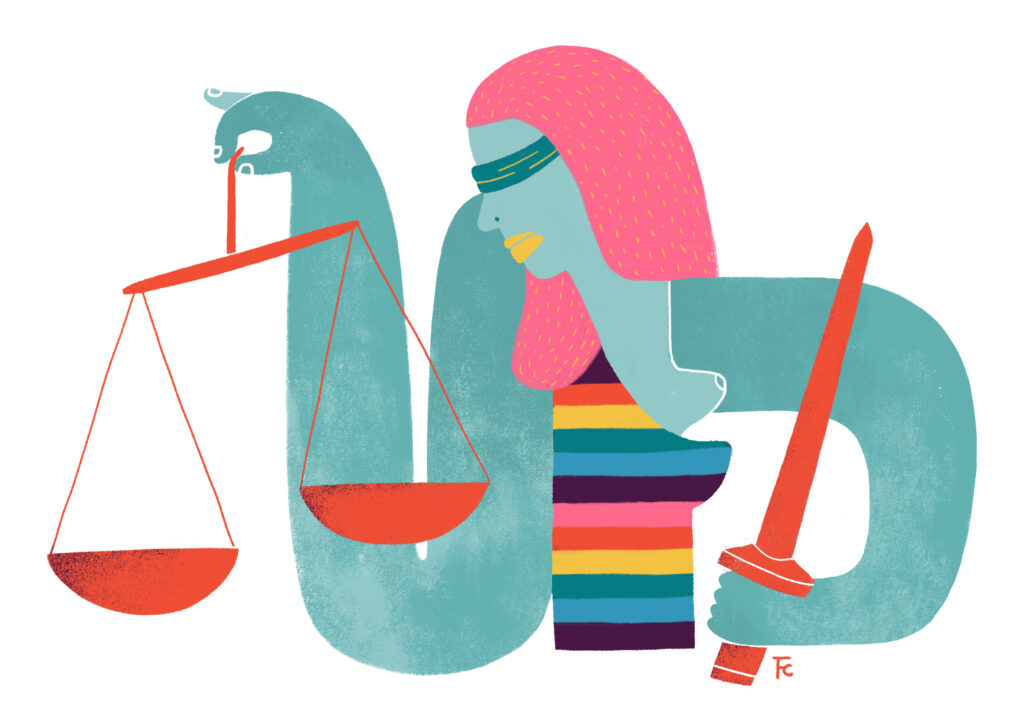
-Why a feminist judicial reform?
-Introduction to basic concepts on mechanisms and practices of the justice administration system.
-Gender perspective in processes and judgments.
-Case analysis.
-Justice and the media. Good practices beyond journalism.
-Language and access.
-Building good communication practices against sexist, racist and patriarchal justice.
MELISA GARCÍA
Lawyer (University of Buenos Aires, UBA), with a postgraduate degree in Gender and Law. She teaches at the secondary level, specializing in legislation. In this setting, she is a Comprehensive Sexuality Education (CSE) coordinator. She is an activist working within the legal field, providing training, workshops, and advice on issues of violence and gender-sensitive approaches.
She is the founder of Abofem Argentina, an association of feminist lawyers dedicated to gender equality and the deconstruction of sexist and androcentric practices in the judicial system.
ANA FORNARO
Journalist specializing in culture, gender and human rights. Holds a degree in Literature and a master's degree in Comparative Literature (University of Lille, France).
Journalism workshop instructor.
Co-founder and co-director of Agencia Presentes.
MARIA EUGENIA LUDUEÑA
Journalist specializing in gender and human rights. Degree in Communication Sciences (UBA).
Professor of Narratives in Human Rights in the Master's Program in Communication and Human Rights at the Faculty of Journalism of the National University of La Plata (UNLP) and of Media Management at the Metropolitan University for Education and Work (UMET).
Co-founder and co-director of Agencia Presentes.
PRESENT AGENCY
AGENCIA PRESENTES is a regional digital media outlet specializing in gender, diversity, and human rights. We cover news, stories, and human rights violations against LGBTI+ people, human rights defenders, Indigenous women, and migrants from an intersectional perspective. We report on these struggles and seek to influence public opinion, combating discrimination and disinformation. We strive to improve journalistic practices. We do this by fighting discrimination and contributing to the construction of pluralistic and democratic communication.
ABofem
ABOFEM ARGENTINA is an association of feminist lawyers. Its social commitment is to promote a gender-sensitive approach to law. It does this by making visible and addressing, in an interdisciplinary manner, the problems that arise in the patriarchal society in which we live.
Share
We are present
We are committed to journalism that delves into the territories and conducts thorough investigations, combined with new technologies and narrative formats. We want the protagonists, their stories, and their struggles to be present.
SUPPORT US

FOLLOW US
Related notes

We are present
This and other stories are not usually on the media agenda. Together we can bring them to light.