

Paraguay: After 11 years of peasant demands, they recovered the lands of Marina Kue
The struggle for those lands, after the massacre committed 11 years ago, was emblematic for the Paraguayan peasantry.


Share

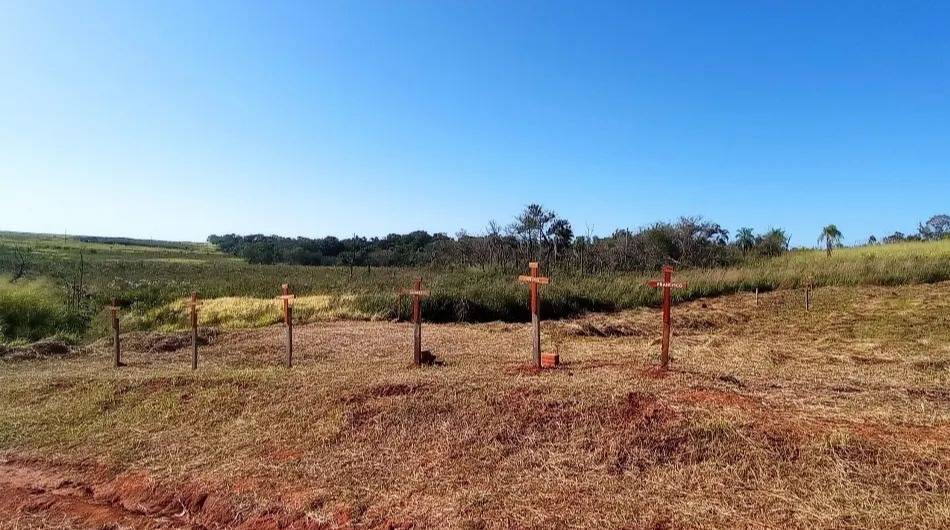
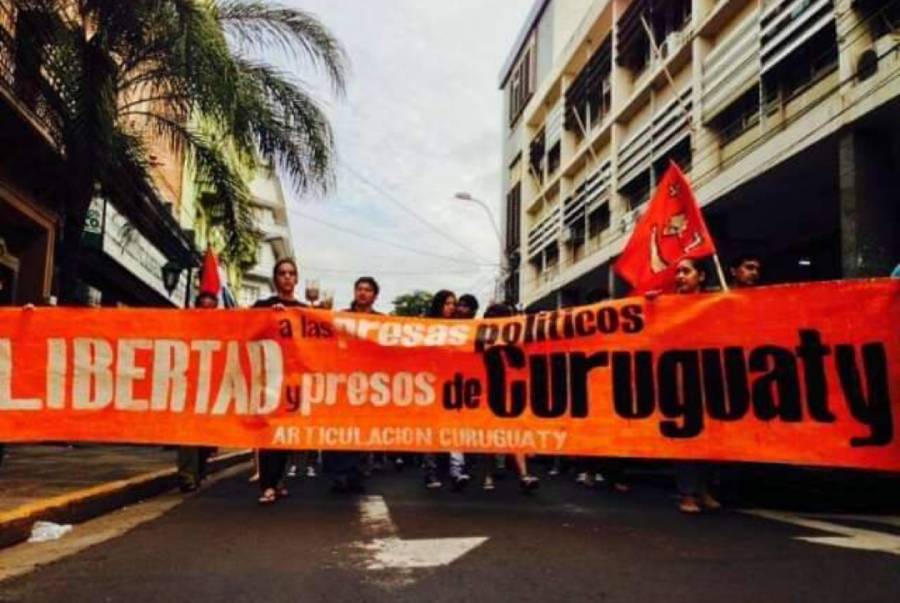
ASUNCIÓN, Paraguay. June 15, 2012, marked a turning point in the history of the struggle for land in Paraguay. That morning, the Marina Kue massacre in Curuguaty, in the department of Canindeyú, where 11 farmers and 6 police officers were killed. This case was used as justification for the parliamentary coup and became one of the most terrible and tragic injustices in Paraguay. After 11 years of struggle, land regularization was achieved. Now, the process of obtaining titles through the National Institute for Rural and Land Development (INDERT) .
The case of Marina Kue, with the question, "What happened in Curuguaty?", was the focus of a campaign supported by various Paraguayan organizations under the slogans of Justice, Land, and Liberty. Following the coup d'état—which ousted Fernando Lugo from the presidency and ended the only democratic process in Paraguay not governed by the Colorado Party after the Stroessner dictatorship—and since 2012, Colorado Party governments have been in power, along with a narco-state headed by the significantly corrupt Horacio Cartes .
Why are families demanding the lands of Marina Kue?
The Naranjaty Commission occupied the lands. In 2004, they negotiated the acquisition of the lands known as Marina Kue. At that time, former President Nicanor Duarte Frutos stipulated that they be allocated for Agrarian Reform. Specifically, they were designated for the National Institute for Rural and Land Development (INDERT). However, these negotiations stalled. Despite the commission's denunciation of the encroachment by the Campos Morombi company, which cultivates genetically modified monocultures, the company was also interested in expanding its holdings onto the very lands claimed by the peasant families.
The Campos Morombi company belongs to the late Colorado politician Blas N. Riquelme, who in 2005 initiated a lawsuit for adverse possession, a legal battle.
The disputed land
The disputed land comprises approximately 2,000 hectares. It was allegedly transferred by La Industrial Paraguaya to the Paraguayan state in 1967 as partial payment of a debt.
Later the Navy would occupy them, which is why it received the name Ex Marina but in Jopara, a mixture of Guaraní and Spanish.
In June 2012, the agricultural company Campos Morombi requested the eviction of the families of the Naranjaty Commission from the Paraguayan courts, despite not possessing the property title. In other words, there was no legal basis for the prosecutor's office to grant the request.
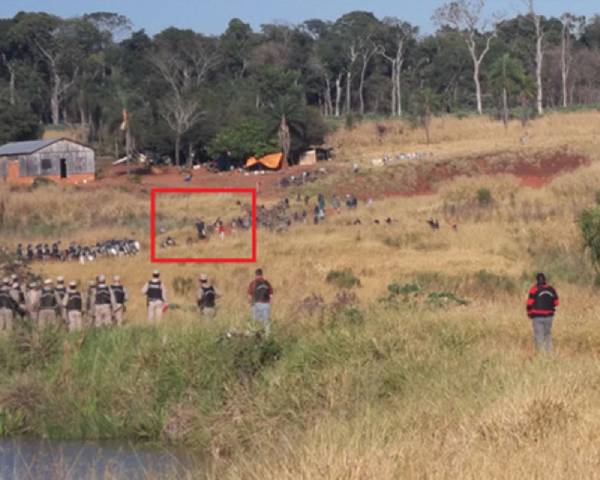
On the morning of June 15, more than 300 armed police officers arrived, along with a helicopter equipped with a camera that recorded the entire massacre (which supposedly disappeared), to evict approximately 70 people, including children. Of the 17 people who died that day, 11 were farmers and 6 were police officers. In the case of the farmers, several were extrajudicially killed, their bodies were handed over in black garbage bags, and no autopsies were ever performed to determine the cause of death. One of them even managed to call his wife before being executed.
The Chokokue Report documented 115 executions and disappearances of peasant leaders between 1989 and 2013.
Justice, Land and Liberty
The slogans of struggle raised by the Commission of Relatives and Victims of Marina Kue and accompanied by various rural and urban organizations in Paraguay and other countries.
Following the massacre and the coup, 11 people were imprisoned for political reasons, including 3 peasant women, who were released after numerous protests and pressure from various organizations. They endured a trial riddled with irregularities, led by prosecutor Jalil Rachid, whose main evidence consisted of hoes, machetes, toilet paper, nail clippers, and caps. Such was the flimsy evidence that sustained an unjust trial for over four years.
The regularization of Marina Kue, a dream of the peasantry
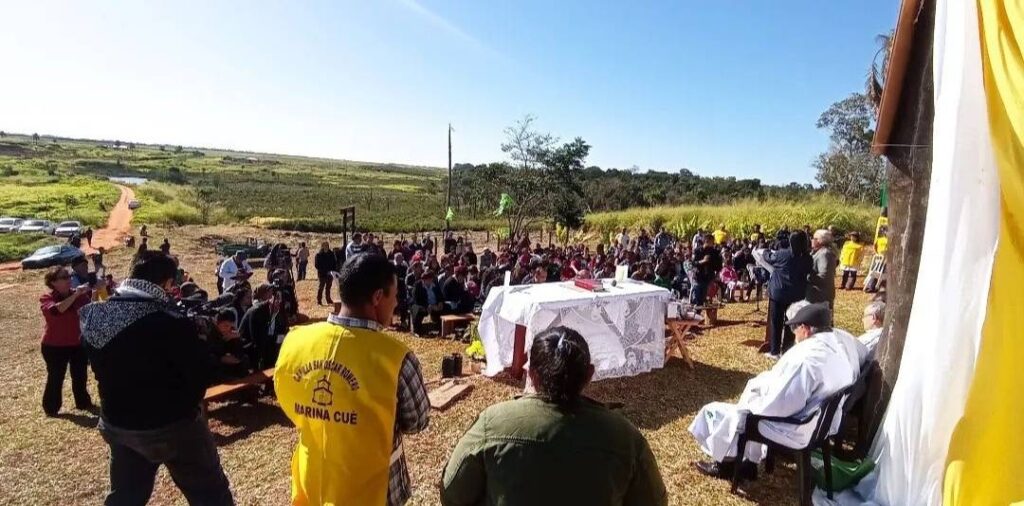
Martina Paredes is a peasant woman. A sister who lost two of her brothers during the Marina Kue massacre, she is one of the leading figures in the Commission of Relatives and Victims who continue their fight. With just under two months left in President Mario Abdo Benitez's term, he finally signed the land regularization agreement for Marina Kue, and Martina's joy was evident on her face.
“Eleven years later, on June 22, 2023, at approximately 11:30 a.m., we received the good news that the president of the republic had finally enacted the regularization law that we had been seeking for over eleven years. Our central demands rest on three points: justice, freedom, and land, and little by little, we are winning this struggle. We thank everyone who supported the cause of Marina Kue from the very beginning. What happened in Curuguaty? To this day, that remains a mystery . We don't know, but we believe it was a staged event, orchestrated to oust the then-president of the republic, Fernando Lugo,” Martina said, her voice filled with emotion.
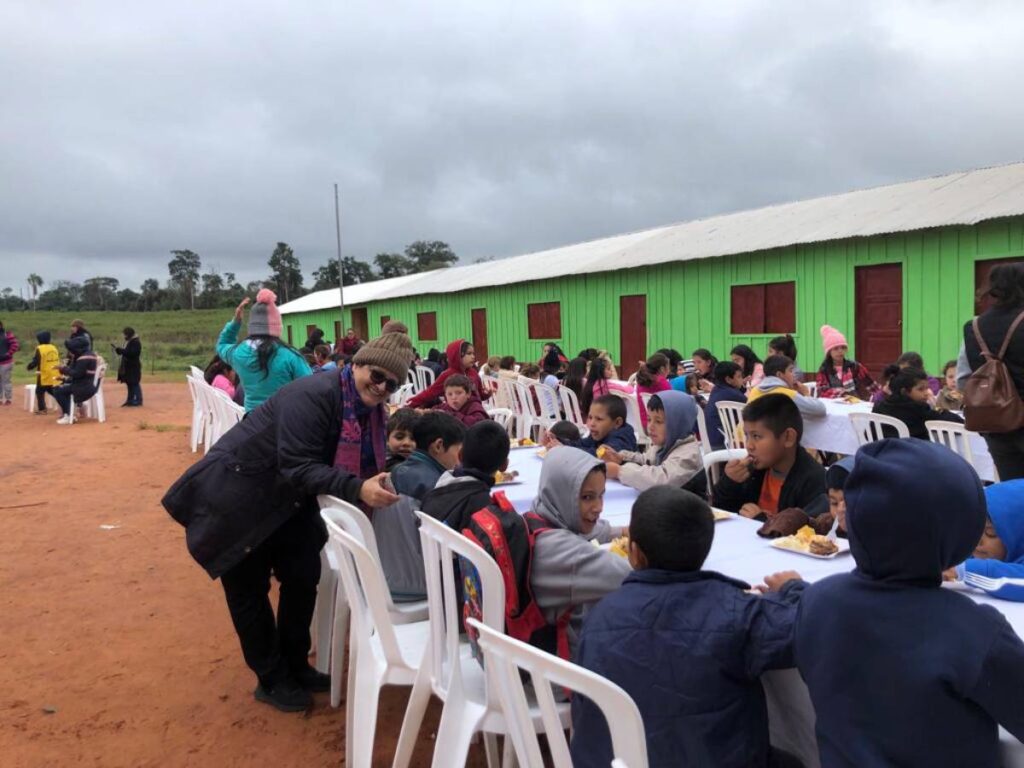
Conamuri is one of the organizations that supported the cause from its beginnings and received the families on several occasions during the trial, in addition to carrying out the campaign "What happened in Curuguaty?"
Alicia Amarilla, a member of that organization, says: “ Our heart is in Marina Kue, and it's important for Conamuri. It gives us hope for the recovery of our territory, and if we organize, fight, and mobilize, we can continue to exist in this land. We can force legalization, of course, but we shouldn't resort to a massacre to regularize the land. But it's necessary for our sector to recover the illegally acquired lands, as recommended by the Truth and Justice Commission report. We must continue to insist that Agrarian Reform is the path to agroecology and food sovereignty. We have the answer to this capitalist model, and we have many proposals to address this situation of social development and the dignity of peasants and Indigenous people,” she stated.
Marina Kue's struggle continues
While land regularization represents another victory, it's true that among the slogans of Justice, Land, and Liberty, justice remains elusive. In a context of persecution against peasant and Indigenous families fighting for a piece of land, land regularization offers a measure of justice after 11 years. The process will continue with INDERT to finalize the delivery of land titles to the families.
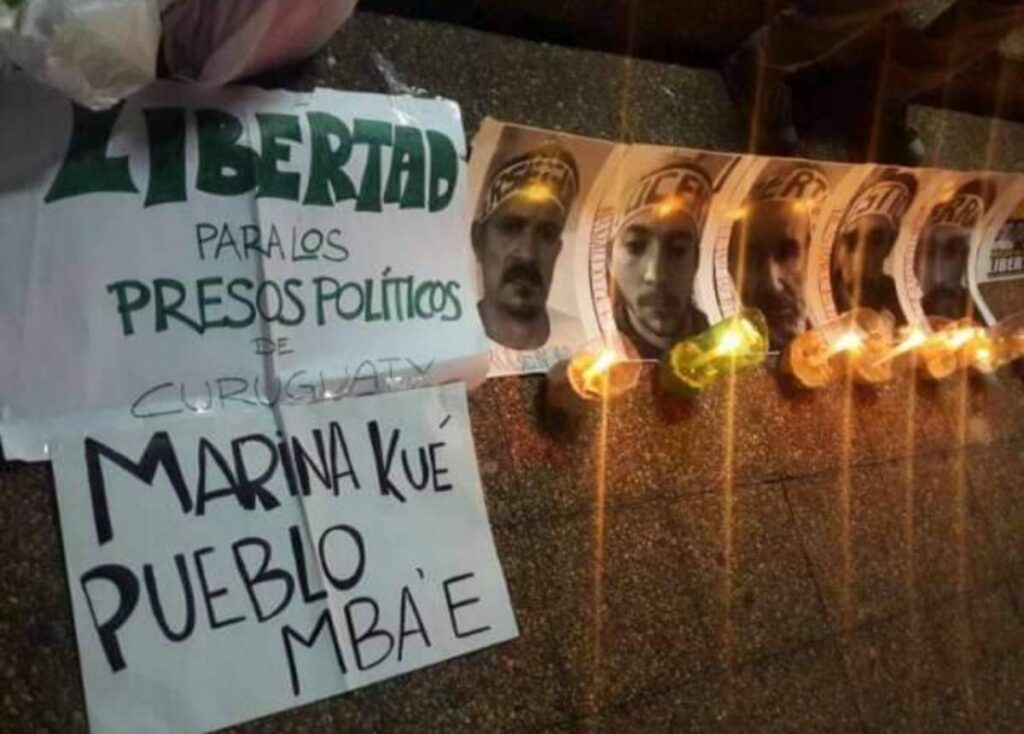
“For us, the conquest means that as peasants, we want to live better, eat well, and have a decent roof over our heads. That’s exactly what it means to us, because that’s what we’ve always sought,” the peasant leader explained.
For 11 years, the families organized themselves to advance in the recovery of the land and continue building their settlement, despite the limitations they encountered. During these years, they repeatedly recounted that the State's presence was nonexistent. This was mainly because the institutions blamed them for the massacre of six police officers.
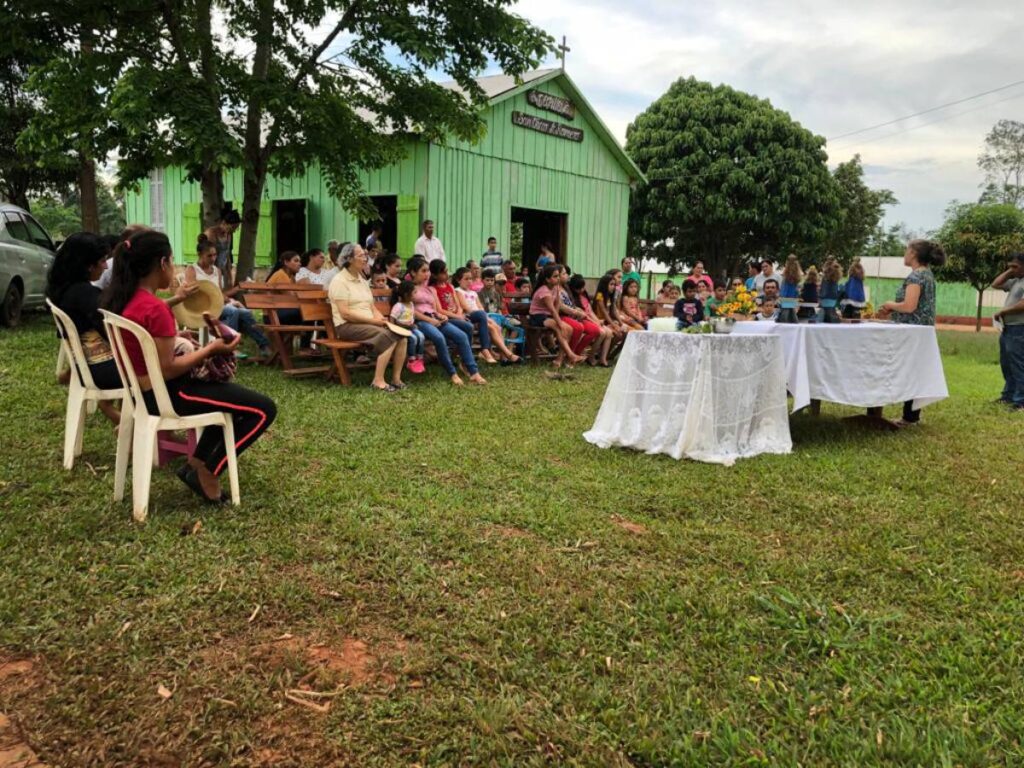
Currently, around 600 people live in the Marina Kue community, including families who approached the community seeking a piece of land and who are not related to the victims. With the support of individuals and organizations, they have built a chapel, a school, and produce goods for their own consumption and for sale. The goal is to build a model settlement that respects and protects the environment.
“For three years now, the price of cassava has been rising; we've managed to sell it for up to 3,000 guaraníes per kilo. That gives hope to our fellow farmers because we've started working again. Before, we couldn't work because the land was declared a scientific reserve by law, and so, respecting the law to avoid prosecution, we tried to comply and seek to regularize our land titles. As time went on, we planted more, and now there are more than 300 hectares of cassava. We've also planted corn, peanuts, beans, and sweet potatoes in the fields,” Martina emphasized regarding the process of working the land again.
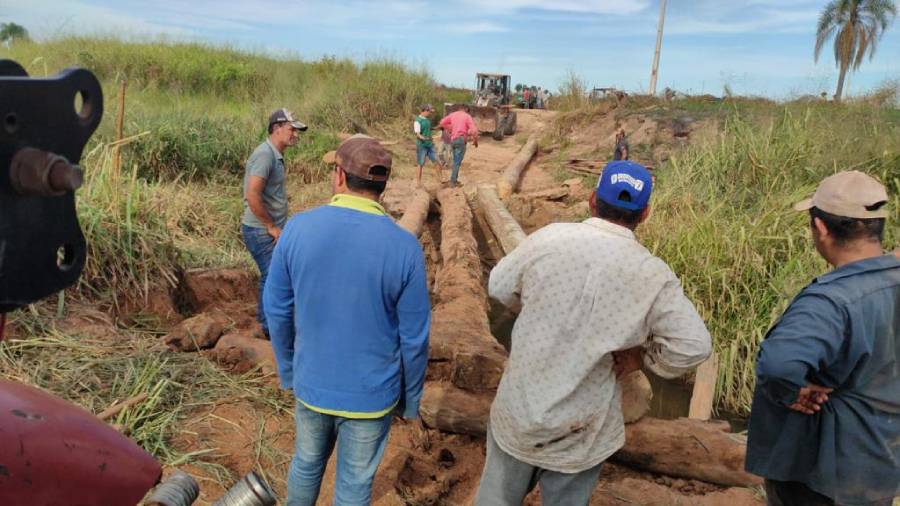
The most profitable product for the community is cassava, but the road is still not in good enough condition to transport what they sell. Because they have small streams, they need bridges, and due to the absence of government support, they are trying to build them. In other cases, they use tractors to transport the cassava, but this entire process negatively impacts them because it reduces the price of their product.
The role of women
“Most of us who resisted in the struggle were women; there are men, but they are few. Women were the majority in the chaining of the buildings and in the resistance at Marina Kue. Every Saturday it's women. And all the community work that was carried out is mostly done by women. They are happy and feel part of the victory,” Martina stated, highlighting it as a great achievement.
She recalled that before they were submissive, but now many of them lead the fight, in what is known in Paraguay as kuña guapa (beautiful woman). The leader from Curuguaty also emphasized that the achievements of the struggle are due to the active and committed participation of women.
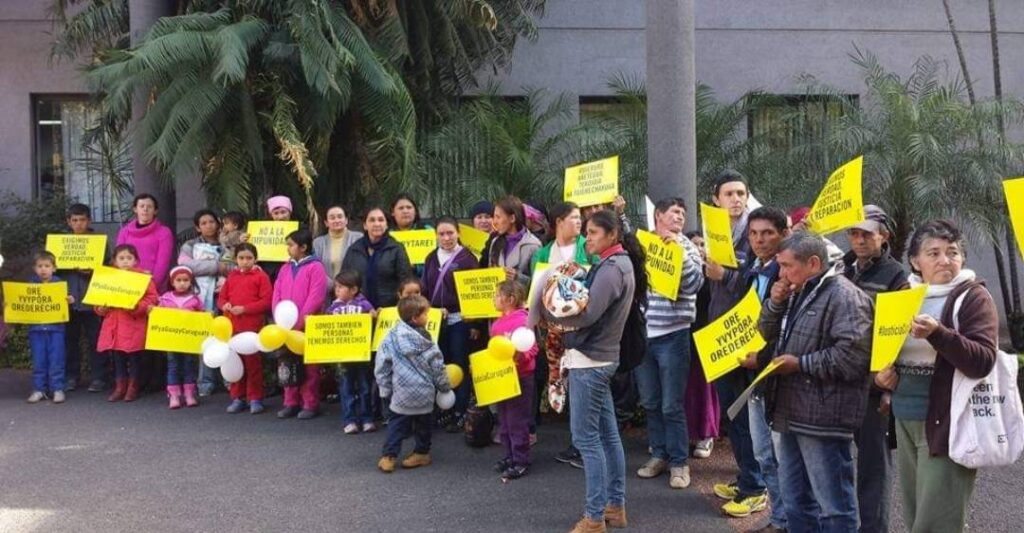
Thank you for your solidarity and support.
“For me, gratitude is the memory of the heart. I want to thank everyone who supported the cause; it lasted 11 years, and it wasn't easy. I want to thank everyone who contributed logistically and the press. I want to tell everyone who feels involved to join the celebration on October 14th to embrace and give thanks. There are people who are no longer with us, like Father Oliva, who fought so hard. We want to convey our sincere gratitude to him. We didn't do this alone; it was done through the help of many people,” Martina concluded.
We are present
We are committed to journalism that delves into the territories and conducts thorough investigations, combined with new technologies and narrative formats. We want the protagonists, their stories, and their struggles to be present.
SUPPORT US

FOLLOW US
Related notes


We are present
This and other stories are not usually on the media agenda. Together we can bring them to light.