

The life stories of transvestites and trans people at the Hotel Gondolín come to the national theater
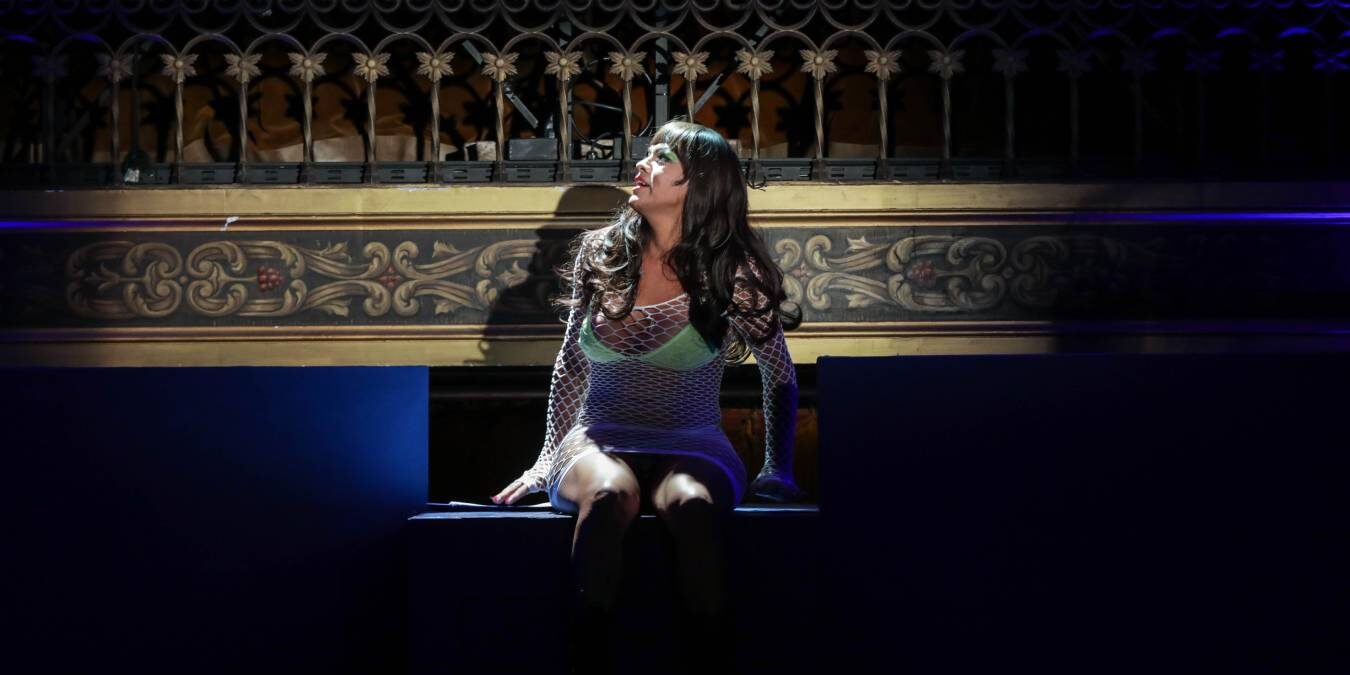
The play "The hotel is a body. Transvestite/trans stories" is based on the experiences of three trans girls who lived in the Gondolín.


Share

BUENOS AIRES, Argentina. The Hotel Gondolín is a trans and brown body. "It's like another trans person: a sister, a friend, a daughter, a niece, a companion." "It's a place of support." "It's like the cradle of trans women." This is how Zoe López, a leader and member of the Gondolín organization, and Daniela Ruiz, an actress and regular at the hotel, describe it to Presentes . Today, a play revives the testimonies of transvestites and trans people who have lived in or frequented the space.
Daniela Ruiz never imagined herself starring in a play at the iconic Teatro Nacional Cervantes . Her trans, brown, northern, and Indigenous body moves alone on stage to perform the play Divina , written and directed by Ana María Bovo. It is part of the series The Hotel Is a Body: Three Transvestite/Trans Stories.
“Many of us, the racialized Indigenous trans women from the north, who mostly fight from our place in the trenches, are not in cultural spaces because of an elitist, classist, and white process. We have thought that those spaces are for certain people,” Daniela shared with Presentes .
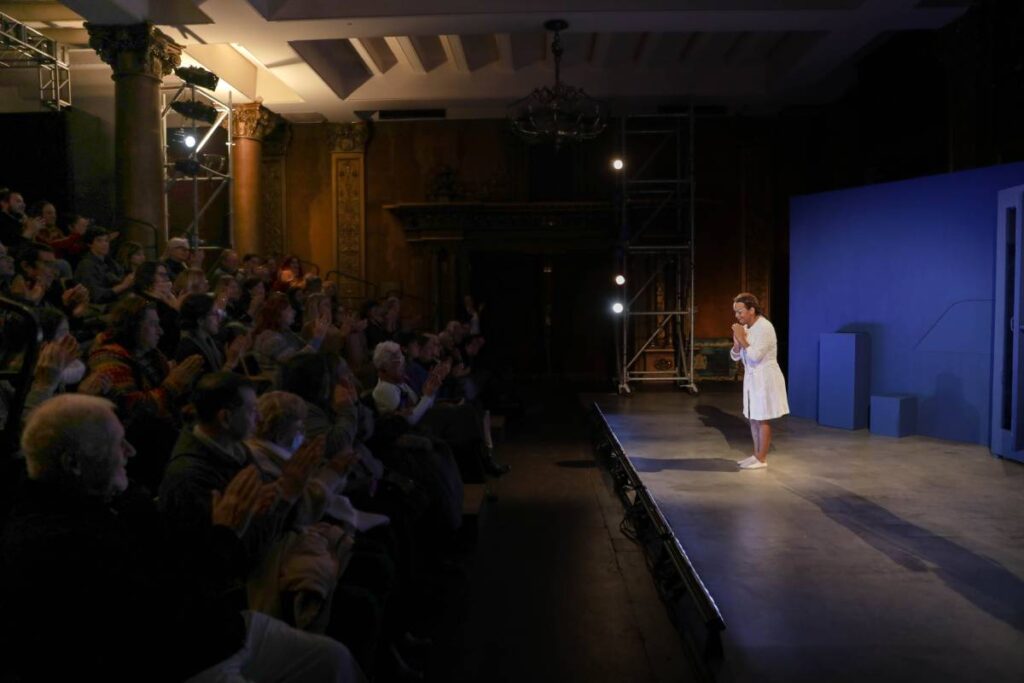
Photo: Ailén Garelli.
The theatre, a place for everyone
For her, "that a person of color, an Indigenous person, enters the Cervantes Theatre not to observe Eurocentrism, but to revalue our bodies in that place and in that space is a gateway to begin a debate within the culture." She emphasized that her presence on stage is not only "a vindication of trans women," but also of "mothers, grandmothers, and the entire generation who were killed in the Indigenous genocide."
The book "The Hotel Is a Body" was conceived from the book " Reunion: Four Legendary Women in the Gondolin ," in which Dani Zelko transcribed the words of Marlene Wayar, Marisa Acevedo, Zoe López, and Viviana Borges. For several days, they met at the hotel and talked, while Zelko transcribed their conversations. The process was collective: after writing the final dialogue, they met, read it aloud, and edited it collaboratively. The book is available free of charge. It has a digital version, an audiobook narrated by Camila Sosa Villada and Susy Shock , and a print edition.
The series features three plays running from Thursday to Sunday at 6 p.m. Divina , starring Ruiz, will run until July 2nd. Next, Lorena , starring Payuca and written by Felicitas Kamien and Federico Liss, will be presented from July 13th to 30th. Finally, ReInA , starring Maiamar Abrodos and written and directed by Natalia Villamil, will run until August 27th.
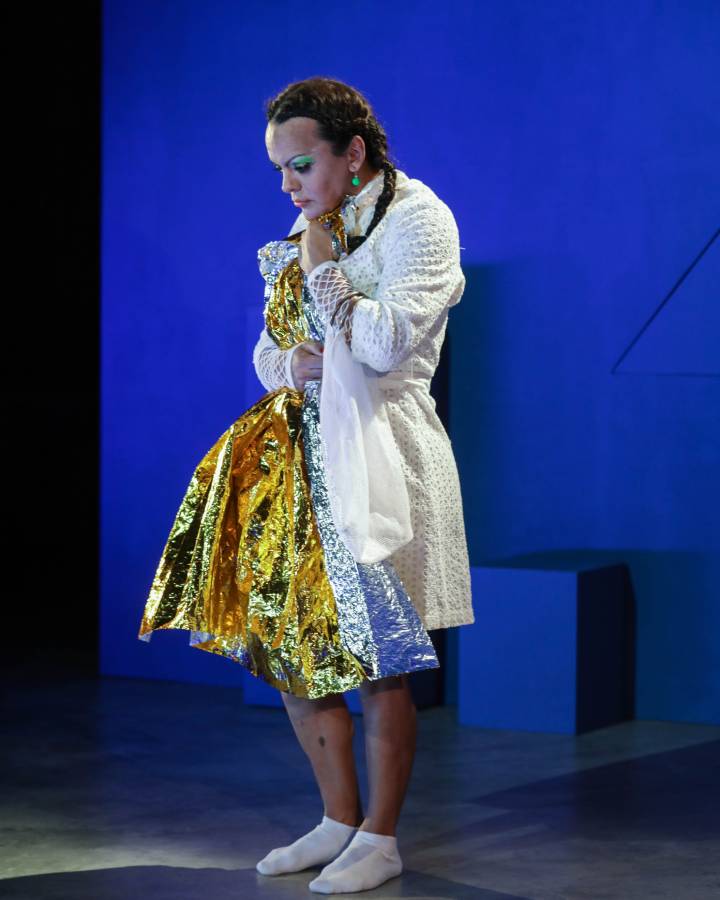
Photo: Ailén Garelli.
That political act called Gondolin
The Hotel Gondolín, also known as "El Gondo," is a housing cooperative for transgender and transvestite women , located at 900 Araoz Street in the Villa Crespo neighborhood of Buenos Aires. It arose in response to the exorbitant prices charged to this sector of the population due to their gender identity. After numerous complaints and inspections, the hotel was closed, and since 1998 it has been reclaimed by transgender and transvestite people.
The place was and is a refuge and home for women who come from different provinces of the country and also from other countries, who migrate to find spaces more welcoming to their identities. Today it is organized as a civil association and, in addition to providing lodging, it is a space that offers cultural activities and training.
There, gatherings, meetings, and discussions took place: it is an active memory of the transvestite and trans community. "For me, the hotel represents a political act where many of my comrades have given their lives to make everything much more inspiring for the community and diversity," Ruiz expressed.
Of the three actresses in the series, Daniela is the one who knows the Hotel Gondolín firsthand. "It has been a part of me, essential to my life. When I was arrested or detained because we were in the red-light district, it was a refuge. When the police came and we didn't know where to turn, we went to the hotel. I am part of a whole movement of exclusion and violence that has been systematic at the hands of the police towards us," she said.
"Almost 90% of my colleagues at Gondolín are like me: from Salta, northern Argentina, Tucumán, Jujuy. Talking about Gondolín is talking about my story and the story of many of us," she added.
Being trans, representing trans lives
Zoe López, a representative of the Gondolín group, was present on the opening night of the series and told Presentes that she loved the play. "I'm so happy that Daniela Ruiz performed the monologue, since she's a friend, a sister I've known my whole life. There couldn't be a better person than her, a trans woman speaking for us," she shared. She explained, "Generally, they use our bodies, our words, our life stories, and it's not trans people who are representing us."
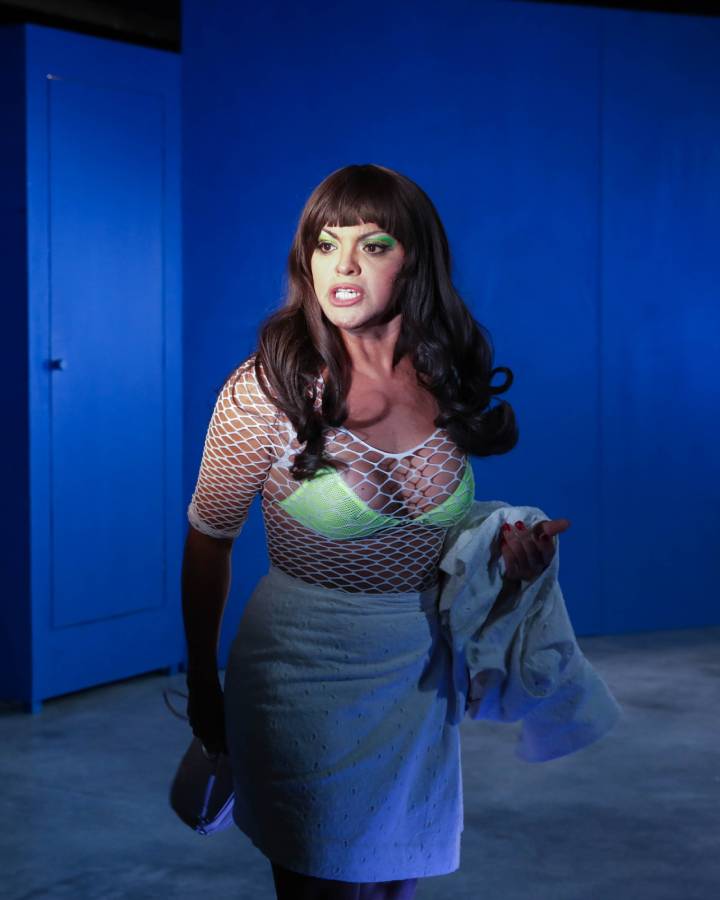
Photo: Ailén Garelli.
When Ana María Bovo, the director of Divina , learned that Daniela was part of the Gondolín group, she wanted the play's text to reflect her personal story. "One life can tell the story of many. That individual experience has a depth that projects itself onto the collective. Turning personal experience into literature or drama is a way of rewriting the life you lived as you would like to narrate or live it: choosing a way of telling it," she shared with Presentes .
To put the script together, Ana María and Daniela had long conversations where Ruiz recounted a life that was unknown to the director. "I wasn't aware that in the 90s, in the early 2000s, they were still living under a dictatorship because the police persecution was relentless. Of course, I knew something about it, but I didn't know the intensity or the severity," said Bovo, her voice breaking.
The process of creating the work was "very enriching" for both of them. "It's not the same when one director comes and says 'this is your text,' as when another has a perspective of speaking about transvestite and trans people and rethinking and reformulating it in a more communal way. I think it has been a great opportunity for both of us to open up and reflect," Daniela expressed.
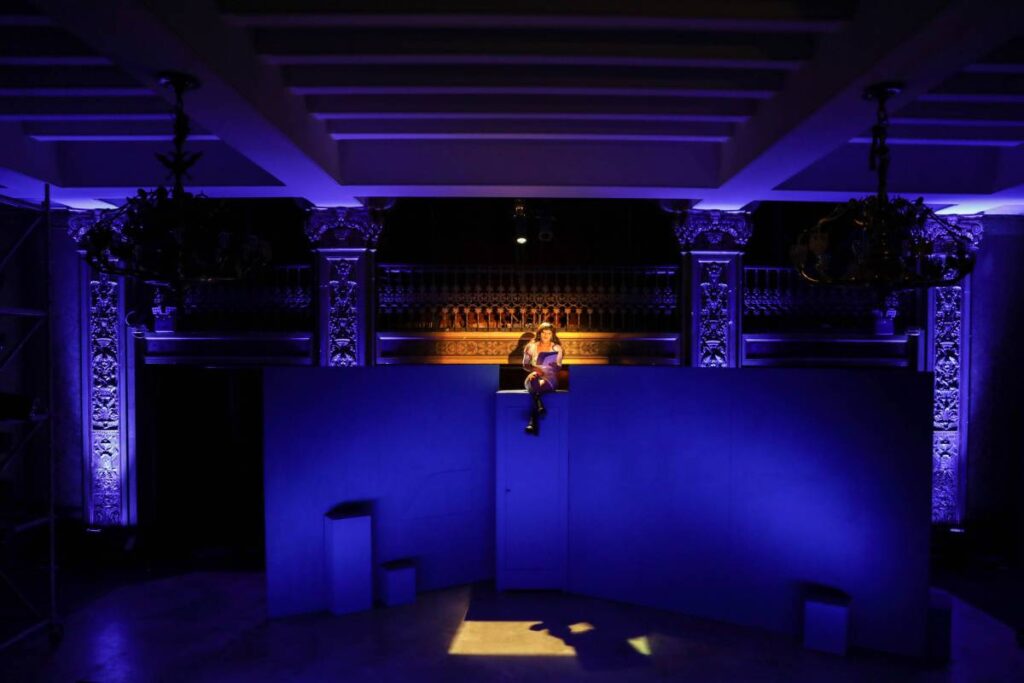
Photo: Ailén Garelli.
"We want to start telling other stories."
The idea for the series based on the book was proposed by the Palais de Glace to the Teatro Nacional Cervantes. Its director, Gradis Contreras, and her team were captivated by the material. "We want to start telling other stories," Contreras shared with this agency. To create the series, they felt that "it wasn't right for all the participants to be from the trans community or all heterosexual." "I don't want this to be a closed group of people who all think and want the same things. We want to open up and integrate the community," she stated.
During the play's premiere, there was an implacable silence. There were also people with handkerchiefs, dabbing away tears. "In the silence of the theater, I realized that both the audience members and I, during rehearsals and interviews, were becoming aware of a reality that, despite everything, has not yet fully come to light," Bovo concluded.
"The Hotel is a Body" is showing from Thursday to Sunday at 6 pm, until August 27, at the Cervantes Theatre, Libertad 815. This weekend will be the last performances of the first story: Divina .
Photos: Ailén Garelli, press office of the Cervantes National Theatre.
We are present
We are committed to journalism that delves into the territories and conducts thorough investigations, combined with new technologies and narrative formats. We want the protagonists, their stories, and their struggles to be present.
SUPPORT US

FOLLOW US
Related notes
We are present
This and other stories are not usually on the media agenda. Together we can bring them to light.