

Repression in Jujuy: This is how the arrests of women and young people with disabilities unfolded
While the persecution and surveillance of family members and leaders continues, testimonies from those who were freed and more reports of human rights violations are beginning to emerge.


Share

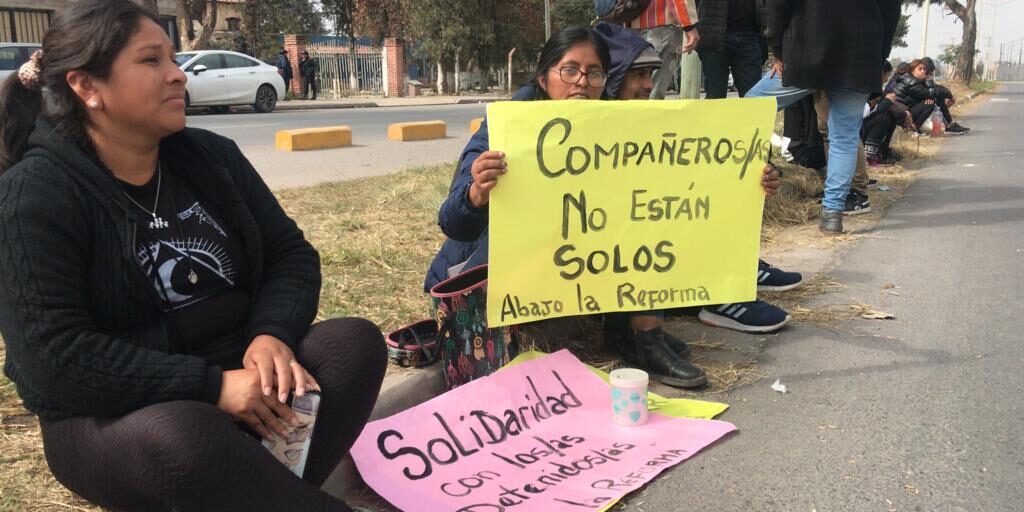
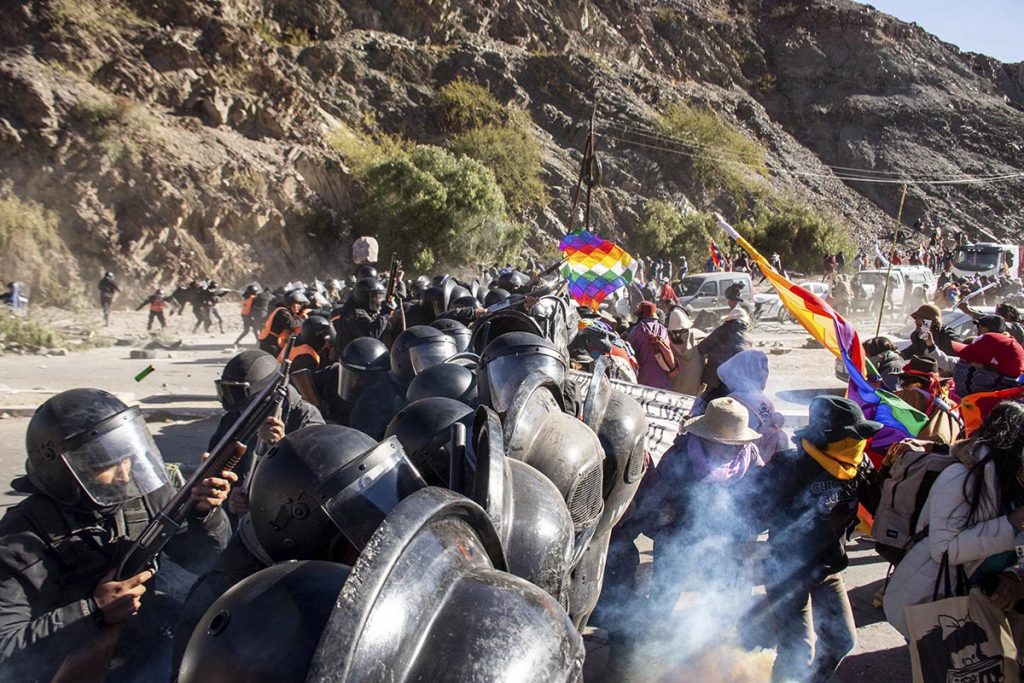
The situation in Jujuy remains alarming, according to human rights organizations that traveled to the province following the brutal repression on Tuesday the 20th. Those still detained are being pressured to incriminate themselves. They are being forced to sign documents provided by lawyers from the government of Gerardo Morales, Mariana Katz, a lawyer with the Peace and Justice Service (Serpaj), told Presentes. This agency has learned that the detainees are not receiving food or shelter.
Based on the testimony of recently released individuals , it is known that some of them were told, “We’re going to make you disappear.” As of the writing of this report, on the morning of June 23, 40 of the 56 people detained in the prison—the same prison that once held Milagro Sala, a leader of the Tupac Amaru organization—had been released. However, the number of arrests is believed to have reached 70, and some of those detainees were held in the Old Train Station.
“I’m receiving calls from relatives of the detainees. They say they’re being pressured to sign statements admitting criminal liability (for damages and resisting arrest). The government has also sent lawyers to the gates of the prison (Alto Comedero) to try to represent those deprived of their freedom on the condition that they take responsibility. But they refuse because they haven’t committed any crime; they were just marching,” Mariana Katz, who was traveling from San Salvador to Purmamarca, explained to Presentes.
“I had to explain to one of the family members that the province of Jujuy is part of the Argentine Republic. And that exercising the right to free expression is not a crime, even though the provincial government considers it to be, but rather should abide by the National Constitution,” the lawyer added. One of the forms of pressure is depriving detainees of food and shelter, while at the same time preventing their families from assisting them with these basic needs.
Surveillance of family members and persecution of indigenous communities
In addition, plainclothes officers from the Jujuy police are conducting surveillance on the families. And in recent hours, they have been entering Indigenous communities to search for community leaders. Meanwhile, in San Salvador, a police chief ordered the detention of anyone riding a motorcycle, asking for their identification and arresting those deemed suspicious. At the time of this report, one woman remained in custody out of the 18 who had been arrested.
Katz added: “People are very afraid. They are following family members. One of the relatives told me that to get to the prison she had to disguise herself because there are so many plainclothes police officers. We also received calls from people in the Indigenous communities saying that the police have started going in to look for their leaders.”
Katz, a member of the Inter-University Human Rights Network, reported that an audio recording circulated yesterday of a police chief ordering officers on the street to stop anyone riding a motorcycle and ask for their papers, and to impound the motorcycle and arrest anyone they deemed suspicious. “What would be the criteria for that suspicion? It’s not explained in those orders,” she pointed out.
Women arrested
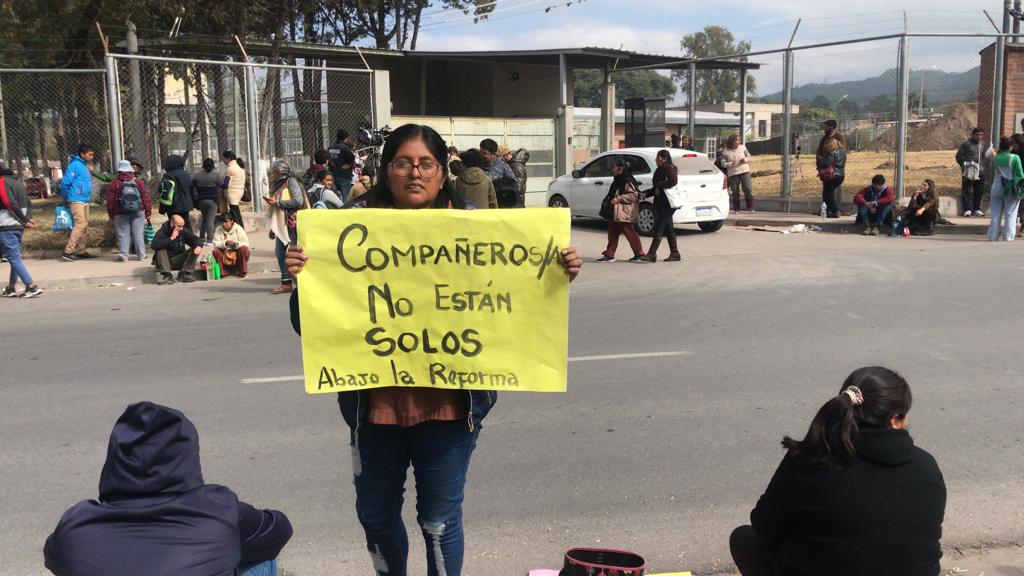
An interdisciplinary team from the Ministry of Women, Gender and Diversity has been working in the province of Jujuy since Sunday to assess the situation and provide support and guidance to women and LGBTQ+ individuals who suffered repression during the protests against the constitutional reform. Lawyer Julia Albarracín, coordinator of Prevention and Addressing Institutional Violence at the ministry's Undersecretariat of Diversity, explained to Presentes that as early as the 17th, many women, including minors and some adults, were detained; almost all of them were from Indigenous communities .
“The tourist who was arrested was from the group, but it’s very difficult to know about the others because the arrests were massive,” she stated. Albarracín, who is from Jujuy, submitted a letter to Judge Jorge Zureta of Control Court 2, who was on duty, and another to the acting prosecutor, Walter Rondón. This official then traveled to Jujuy with Aymara Choque, coordinator of the Gender Violence Approach for Indigenous Peoples, to meet with the detainees and their families. Psychological support, legal assistance, and communication with their families were the cornerstones of a battle against the provincial prison service, given the complete absence of judicial officials.
“It’s a different logic than in cities, where we talk about mothers or fathers. When one person in a community is affected, the entire community is affected in its sensibilities and way of life,” he explained. Between the 17th and 20th, nearly 100 people were arrested. “It was a demand from society, from the Indigenous communities. Indigenous peoples need to be heard and consulted about their natural resources ,” he added.
The official explained that together with the people from the Acercar Derechos program, they were able to make contact with the families and inform them of the access to assistance from psychologists and lawyers, both in the provincial capital and in Tilcara and Purmamarca.
After the crackdown, the situation became desperate, she said. They had to wait seven hours to see the detainees, who were alone. They were able to verify various irregularities in the arrest procedures, such as the reading of arrest records and rights without the presence of a legal representative and the lack of communication with family members . They also observed the "lack of medical attention, provision of food and medicine, even to people with gunshot wounds, head injuries, chronic conditions, and critical mental health situations requiring urgent assistance," the Ministry detailed.
“One woman had a colonoscopy bag. There were very young women, very distressed, with bouts of depression and anxiety. In Jujuy, most people identify as Indigenous. Outside, there were also women, who are always the ones providing assistance, along with human rights lawyers,” Albarracín stated. Among the 18 women who were detained for two days, Eva Arroyo, the daughter of disappeared persons, a long-time activist and leader of HIJOS Jujuy, became a source of support for her fellow detainees during those hours.
Women arrested for trying to help
“Each individual situation will come to light when they are released, but yes, there were beatings and violence . They all stated that they only wanted to help other women or men; they were nurses or social workers and wanted to assist someone who was being beaten. They were running errands or at the supermarket and went out because of the need, and they were arrested at that moment ,” she summarized to Presentes, while looking at her phone awaiting the announcement of the release of all those detained.
In the women's wing of the Alto Comedero prison, doctors saw them, but according to the same source, it was necessary to insist and monitor the situation to ensure they were actually being seen. Furthermore, the lack of a clearly defined legal status caused them enormous uncertainty. "They thought they would be released immediately, which is why they didn't express their needs ," the official noted. Albarracín estimated that there will likely be reports of the violence they suffered. In that regard, she said that victims can contact the Acercar Derecho program in San Salvador, located at Alvear 1243.
Members of the Provincial Committee for the Prevention of Torture met with the Attorney General of Jujuy, Sergio Lello Sánchez, who told them he would order the “immediate release of all individuals without a criminal record.” After 24 hours, the Penitentiary Service becomes responsible, and these detentions become illegal.
Arrests of young people with disabilities
Judith Domínguez is the mother of Raúl Adrián, a young man with autism spectrum disorder. Judith says her son's head was "smashed in." "No police doctor attended to him, and even after he was unconscious, they kept kicking him." She thanked "the human rights doctor" for the release of Raúl and Marco Antonio, her other son, who has a physical disability in his legs.

“ The saddest thing about all this is that my son, who came out with his crutch, was released with a cause. They beat him to force him to sign a paper taking responsibility for the criminal case. If he hadn't signed, he might not be alive right now,” Judith told Presentes . “The intention of the hooded, motorcycle-riding police officers was to kill him; that's what they said, that they were going to kill him, that they were going to make him disappear. If it hadn't been for a woman filming them with her cell phone while they were being beaten, I think they would be dead,” she added.
@andreazambrano230 ♬ Original sound – Andrea Zambrano
Judith likes to chew coca leaves, and last Tuesday she happened to have sent them to buy her a small bag of coca leaves. “They wanted to take advantage of the opportunity to go and watch. And while they were buying coca, the police came along beating the protesters. There was a woman with a cart full of vegetables, and my children started helping her,” she described.
Marco got scared and tried to run into the house of a relative, his mother's daughter-in-law, which was just a few meters away, but he couldn't go any further and threw himself to the ground. He thought they were going to help him, but the police surrounded him and started beating him on the gravel street. The Domínguez family are self-employed, and the children study as much as they can. Raúl is 21 years old, is finishing high school, and plays sports.

“They went out hunting. They were celebrating while beating people. My son, who has autism, ran to help his brother, who has broken bones, and was hit with a rifle butt that fractured his skull,” she said. Judith recounts that Raúl began to bleed profusely and, already unconscious, was run over by motorcycle police with their vehicles. “They picked him up like a dirty rag, kicked him in the face and body. My daughter-in-law screamed that they weren't doing anything, but they pulled her away at gunpoint. Raúl told me he thought they were going to kill him because they threatened to make him disappear ,” she added.
Only when they realized they were being filmed did they stop the beating and take them to the grounds of the Old Bus Terminal. Several residents of Alto Gorriti witnessed what happened and tried to stop them, shouting, “You idiots, what are you doing here trying to repress people?” Horrified by the brutality against the Domínguez brothers, they walked away hurling insults. “I’m with my baby, you can’t enter private property, you’re shooting, I’m going to file a criminal complaint,” another neighbor shouted.
Judith learned what had happened to her two children through social media and then news reports. When he was finally released, Marco recounted that four minors and a pregnant woman in a wheelchair were still inside. He also said they were warned not to speak to the press. “They made me kneel for six hours,” he recalled, his voice breaking. Those who had come to get him hugged and applauded him.
We are present
We are committed to journalism that delves into the territories and conducts thorough investigations, combined with new technologies and narrative formats. We want the protagonists, their stories, and their struggles to be present.
SUPPORT US

FOLLOW US
Related notes

We are present
This and other stories are not usually on the media agenda. Together we can bring them to light.