

Jujuy: Indigenous communities resist at road blockades; mobilizations continue in the capital
In the Puna and Quebrada regions, ceremonies were held on Wednesday to celebrate the Andean year Inti Raymi, in honor of the Sun God. In the capital, the Torchlight March took place.


Share

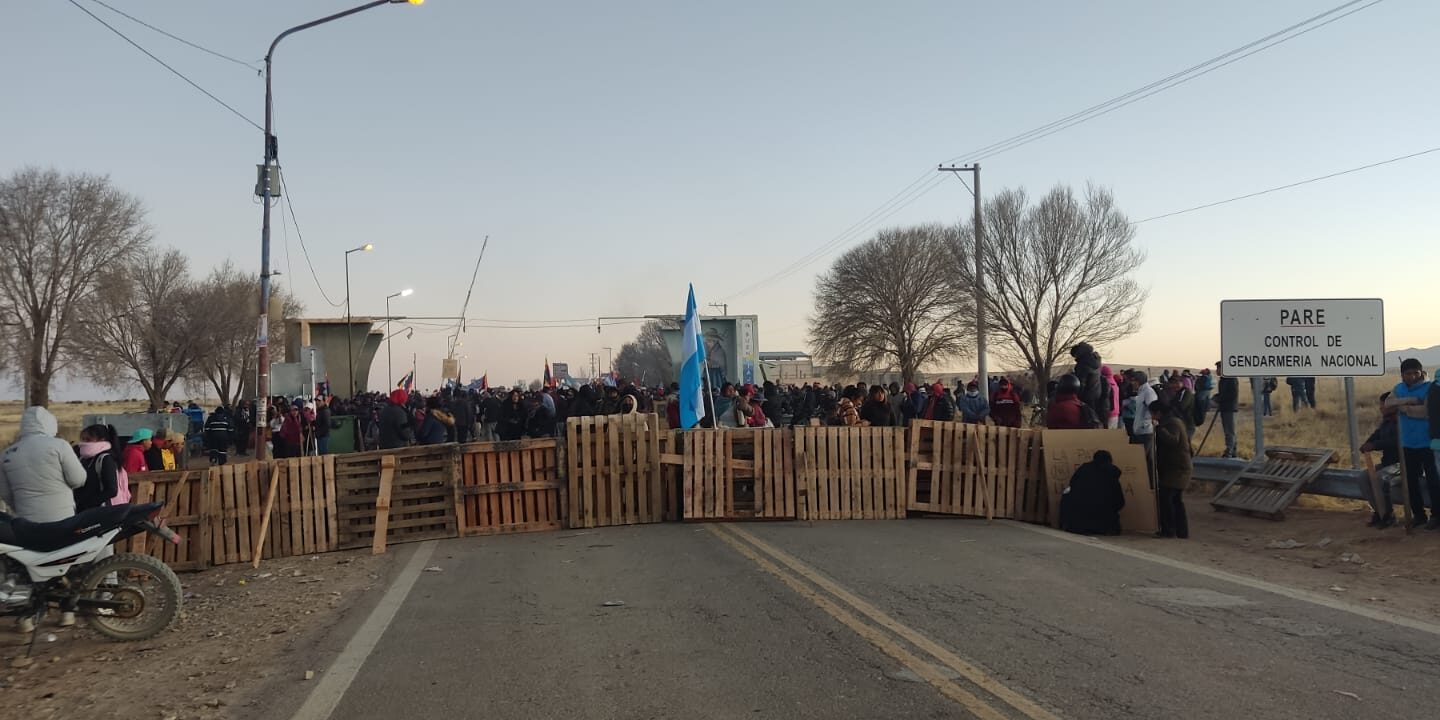
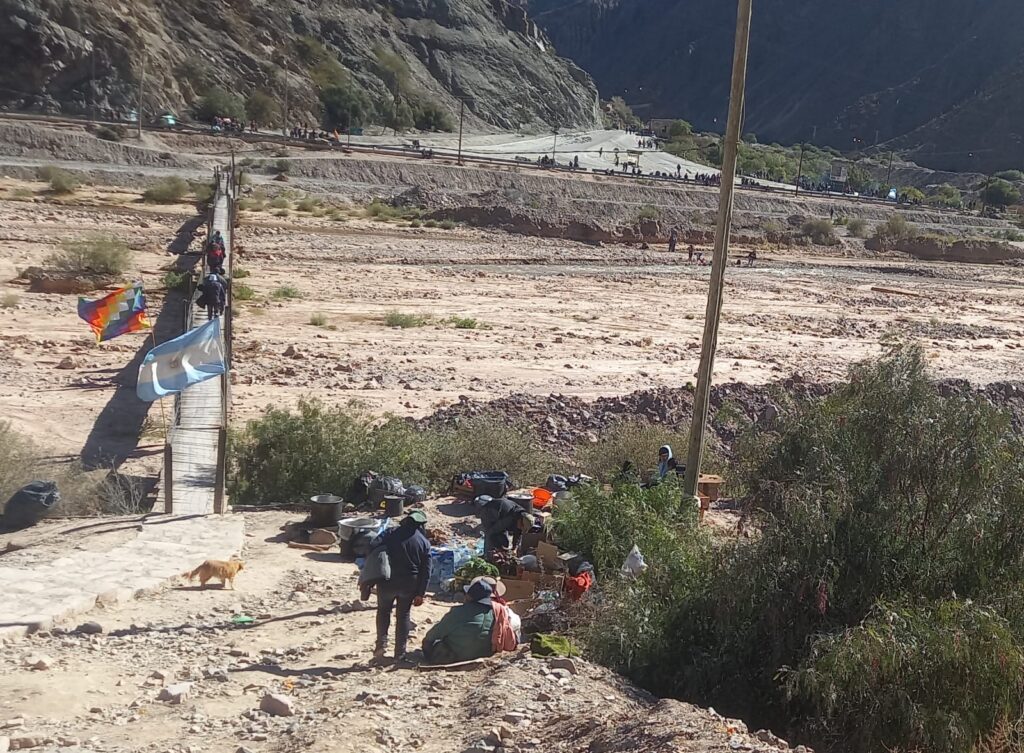
The Indigenous communities of Jujuy strengthened their resolve on June 21st with the Andean New Year ceremony, Inti Raymi, honoring Father Sun. The solstice celebration took place amidst protests and road blockades against the constitutional reform. The main ceremony was held in Purmamarca, where the most strategic road blockade is being maintained. More groups from the Puna region, Indigenous community members, and miners arrived there to offer their support. In the provincial capital, San Salvador, the Torchlight March was held that evening in front of the Legislature. Dozens of people remain detained. The exact number is unknown due to a lack of official information. Estimates range from 45 to 65. According to reports from healthcare workers, protesters, and various organizations, the repression on June 20th in the capital of Jujuy left 170 people injured.
Third Malón Assembly
In Purmamarca , 65 kilometers north of the provincial capital, the Third Peace March (Malón de la Paz) assembly was held. A traffic blockade remains in place at the intersection of National Routes 52 and 9. The March issued its demands: “Repeal of the Constitutional Reform due to the lack of consultation regarding ILO Convention 169. Immediate release of all detainees without charges, and justice for injuries and damages suffered. Delivery of Community Land Titles and the granting of legal status, which has been pending for several years. An end to the repression, persecution, and harassment of community members, leaders, and their families. And the resignation of the Governor of the Province of Jujuy, Gerardo Morales.”
The communities are making efforts to maintain the protests in each location. This is shown by the experience of the inhabitants of Congrejillos, 40 kilometers from La Quiaca, whose protests were divided between their community, La Quiaca, and San Salvador de Jujuy.
For the protection of water and land
In La Quiaca, the last Argentine city before the international border crossing to Villazón, Bolivia, the road blockade is one of the most intense. Located 283 kilometers from San Salvador, the road was completely blocked for several days, until Wednesday at 3 p.m., when passage was finally allowed. More than 25 Indigenous communities, social organizations, and teachers' unions are participating in this protest. In an assembly, they decided that the blockade of National Route 9 will remain total. Here, too, the slogan is "Down with the reform." They are also making other specific demands: the protection of water sources and the granting of community land titles.
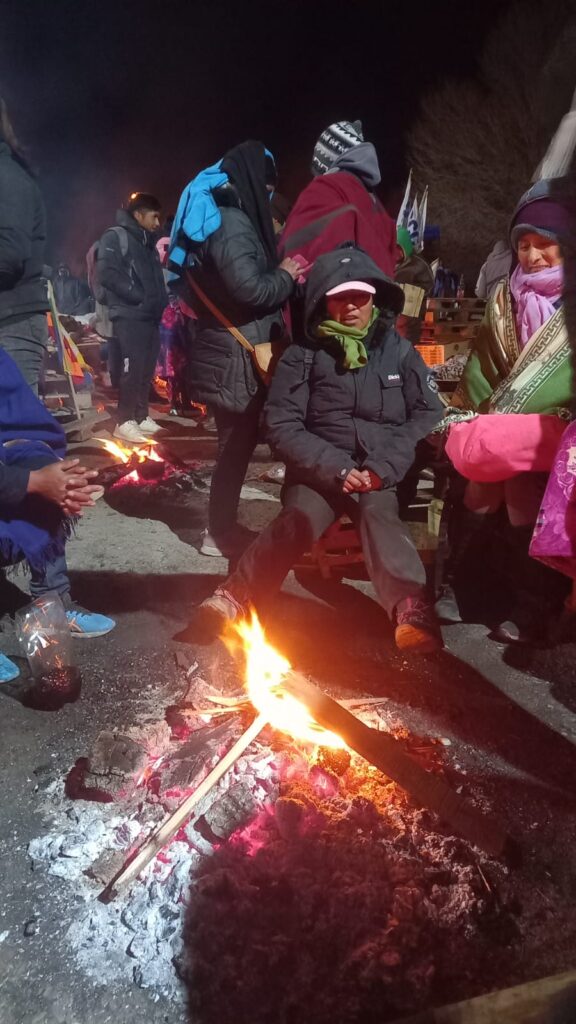
“With the reform, we see that the land issue is going to become even more difficult. So the people decided to participate for that reason, and also to show their support. Because the communities are connected; many have relatives in other places,” Anabela Martínez, a member of the Cangrejillos community, told Presentes. She added, “We requested the communal land title a long time ago, and years ago there was a mining permit application. It’s currently stalled due to an injunction. There are many problems that are sometimes shared across the entire territory. These particular ones are related to the mining permit application. It’s about the use of the only source of drinking water we have,” she explained.
“The reason we joined this fight is for the complete repeal of the reform and the immediate resignation of the governor,” said María Eugenia Toconás. She is the president of the El Tolar indigenous community, a resident of Cangrejillos, and participated in the protest in La Quiaca. Today she is in San Salvador.
Torchlight march and arrests
At night, the Torchlight March took place through the streets of San Salvador.It was a mobilization of thousands of people and it took place The same demands as days ago: the annulment of the constitutional reform that limits rights, the resignation of Governor Gerardo Morales, and a salary increase for state workers.
There are no official figures regarding the arrests of the last three days. On Wednesday night, the National Secretary of Human Rights, Horacio Pietragalla, traveled to the Alto Comedero prison in San Salvador, accompanied by a delegation.
Ariadna Espíndola, the institutional director of the Jujuy office of the Andhes organization, told Presentes that they confirmed that 45 men were housed in the Alto Comedero prison, in the city of San Salvador; that 18 women were in the respective area and that there were five minors detained.
Espíndola also reported that they finally managed to get the detainees medical attention, something that had been a concern because some of them, mostly men, were badly beaten. The detainees are currently under arrest and have not yet been assigned defense attorneys.
The organization Andhes filed a preventive habeas corpus petition, adding names each time a new arrest was confirmed, “and we reached a total of 55 people,” said Ariadna Espíndola. The habeas corpus petition requested “information on any complaints, charges, or coercive measures against or in favor of these individuals, and that information be provided, for example, regarding their places of detention if they are being held in custody.”
We are present
We are committed to journalism that delves into the territories and conducts thorough investigations, combined with new technologies and narrative formats. We want the protagonists, their stories, and their struggles to be present.
SUPPORT US

FOLLOW US
Related notes

We are present
This and other stories are not usually on the media agenda. Together we can bring them to light.