

Dani Umpi: "My music is like a lesbian drama full of esoteric references"
The multifaceted Uruguayan artist released "Guazatumba", his fourth album, now available on streaming platforms.


Share

Dani Umpi ’s new album was long and precise. A multidisciplinary artist – he is a visual artist, performer, writer, and musician – Dani had been releasing various musical materials such as remixes and B-sides, but this is his fourth official album.
The Nor-Uruguayan , as he likes to define himself (he was born in Tacuarembó, in northern Uruguay, in 1974), continues to refine here an electropop that is enriched in nuances, moods, timbres and concepts but differs from the previous “Lechiguanas” in that this one has “more stability, containment and understanding. Something like a shelter and a caress,” Dani tells Presentes.
Less arrow, more bow. There is a continuation from the break with its predecessor, where Dani posed semi-naked, ready for a night of partying.
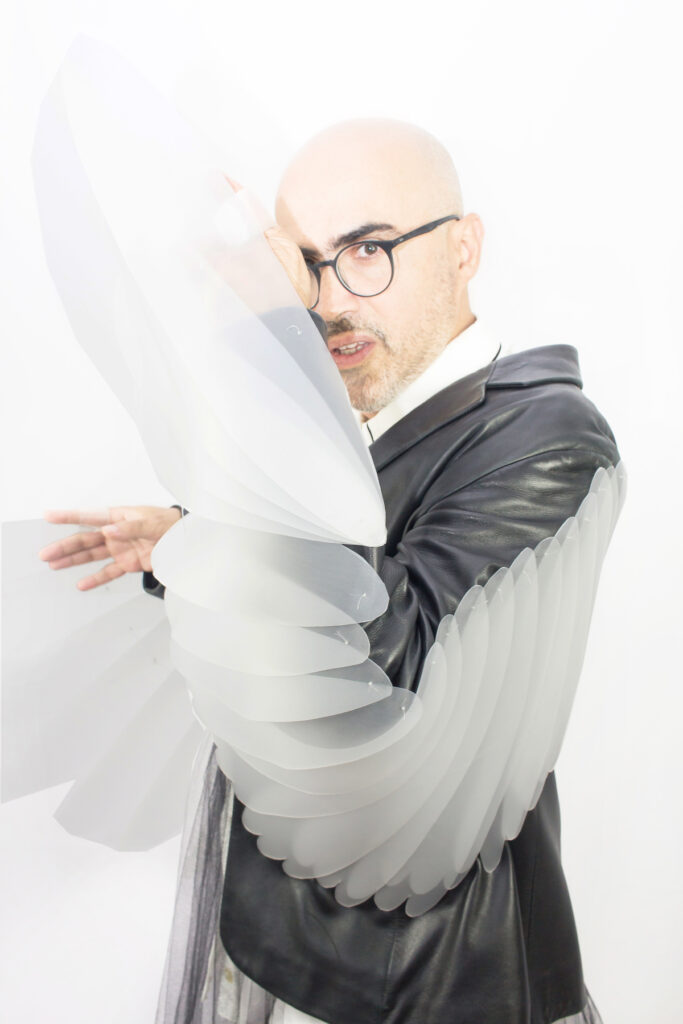
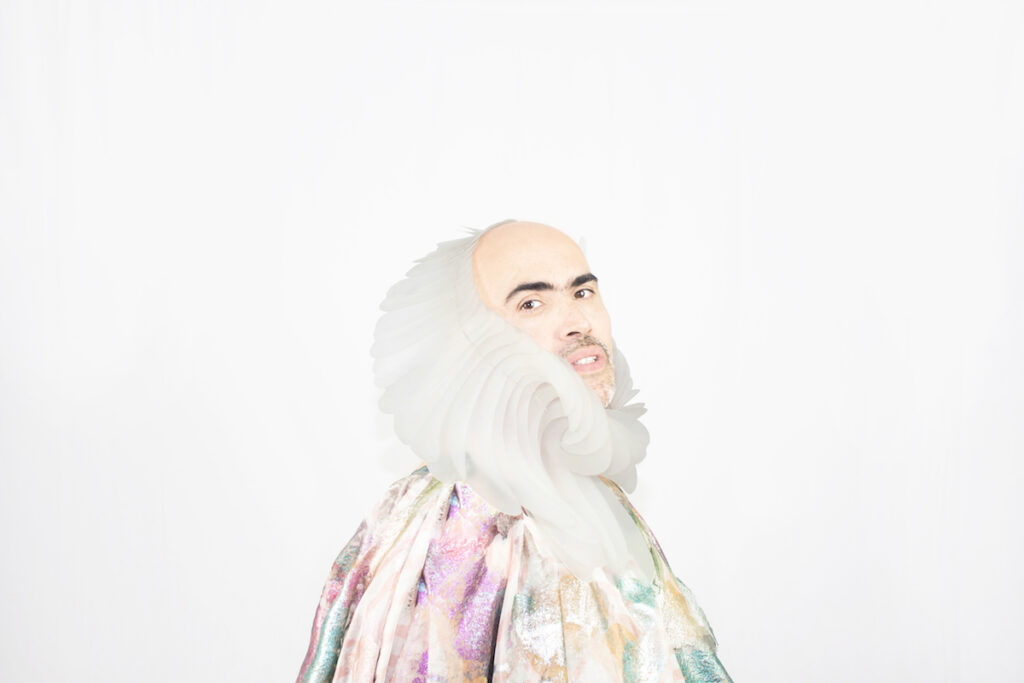
In contrast, Guazatumba dresses Dani in white, adorned with feathers, with a title that alludes to a native tree from his homeland, known for its healing, disinfectant, and even antivenom properties for venomous snake bites. The danceable atmosphere is no longer that of night but of dawn. What's certain is that on this album, Dani sheds her skin.
Produced by Dr. Taba and released by the Banda del VIP label, Guazatumba reveals another facet of their sound. The album features nine tracks, ranging from the playful electropop of “Gente loca” and “Altar” to the fusion of Uruguayan folk music with synthesizers in “Saturno.”
– ¿What makes Guazatumba different from your previous albums?
"I think it's the most introspective and, at the same time, the kindest because of the way I sing. It has a conciliatory tone, not so combative or melodramatic. A lot of it was written when I moved back to Uruguay, and, being older and in therapy, I tried not to harbor any resentment toward Uruguayan music. It's like I'm coming out of the singer-songwriter closet. In its lyricism and even in the way it's sung, even though my voice is quite high-pitched, it has a Uruguayan singer-songwriter feel that at another point in my life would have surprised me, or that I wouldn't have pursued."
–While you always make a bet on the dance floor, in relation to your previous album, Lechiguanas, there seems to be now an even more "luminous" and relaxed treatment of that space, almost spiritual.
– It must be an age thing. The dance floor is a space I always return to because that's where I come from, that's how I see myself, very much a part of the drag tradition and the gay club scene. Sometimes I don't even perform anymore, but I still write songs for Dani Umpi as if I were someone else, an alter ego. The characteristics vary, but one place I love to inhabit is that of the trashy diva who sings in a basement club, very cringeworthy, very creepy… I love that. It has a witchy quality. That's why my music is so popular with witches, because it's like a lesbian drama full of esoteric references. I love hermetic allegory; I always include something. That must be the spiritual aspect you're talking about. Because if you play with symbolism of that kind, it permeates everything, it infuses the song, and that kind of initiatory, somewhat ritualistic imagery that I love. It always means consciously entering a new state, a new way of seeing things, a new world.
–The language of social media, the space of virtuality, serves as a backdrop, a common thread in the album's poetics. How do you feel about the current context, including the pandemic, in relation to the development of your multifaceted artistic creativity and your emotional relationships—in both positive and negative aspects?
I have a very common contradiction among my generation: being that kind of old fogey with a remote control and, at the same time, being very enthusiastic about new technology, even if I don't understand it. Not understanding it and allying myself with people who do. My generation is incredible; we're living through a process of technological change that leads to a logic of "why learn something if it's going to be surpassed in two months?" The same goes for gadgets. I remember like it was yesterday a conversation with Fernanda Laguna where we were wondering when the day would come when we wouldn't have to download music because the files always had something wrong with them. It wasn't that long ago. I had Fotolog, MySpace, all that stuff, and I'm more than grateful for it because otherwise I wouldn't even be singing. Artificial intelligence excites me a lot, and I have a friend who talks about it a lot. In practice, I haven't used it that much, although, yes, sometimes I don't even type; I talk to the voice recognition software, like a lot of people do . I don't think at all that artificial intelligence will replace us. I think it's nonsense. Something always comes along that forces you to adapt. With the pandemic, it was widespread and catastrophic, but somehow you find a way around it. Dissent is expert at that, and people of my generation even more so. I was fascinated by the NFT moment, by what it challenged. It was like a glimmer of hope. There will always be one. At my age, something decisive happens among fellow artists: the mid-career artist crisis. What happens? They stop producing. There's a disillusionment, a shift in priorities, I don't know… it's hard to get excited, to have an open mind, and to accept that everything changes. The best thing, as with everything, is artistic collaboration to arrive at something new.
– Regarding the latter, how was the treatment with the different guests who are on the album?
"These are artists I adore. Most of the guests have voices that really resonate with me. I think Faraónika is spectacular; she has a very sensual voice. I admire her musical work and her stage presence. Masoniería fits perfectly on 'Gente loca' because she achieved a very secret agent-like voice, being Spanish... anyway, I've always liked her work: her band Papa Topo, her solo project, her videos, everything; she's very discerning. We met by chance at an Elsa de Alfonso concert in Madrid, and that played a big part in inviting her to the song. I love Joaquin Vitola's voice, and it was Taba's idea to invite him for 'Saturno.' I've always been a fan of Elli Medeiros; we met a few years ago, and we're always looking to collaborate on something, so it was the perfect excuse. 'Santo' is a song that went through many versions before arriving at that party spirit with which the album ends. A kind of invitation to go out dancing." There's also the song "Altar," which I composed with Quintelman, a Uruguayan friend I reconnected with after many years, and who now lives quite close to me. The string arrangements for "Picarón" were done by Agustín della Croce, another producer I admire and know from his band "Ahora."
– What other artists who have released albums recently caught your attention?
I'm your typical gay guy, fascinated by the new music from Sophie Ellis-Bextor and Alison Goldfrapp, who dances to "Padam Padam" and waits for Róisín Murphy's new album. I like everything released by La Banda del VIP, the label that released this album. I'm a fan of all their artists. I loved Sofía Oportot's latest album, and from my own country, the one by a musician named Tallo.
-Often, both colleagues and the public use words like "role model," "influence," and "iconic" to describe you. Now, with a long career that easily supports these and other adjectives, do you feel that way?
"It's hard for me to take on that responsibility. It's a lot of it. But it's wonderful too. Besides, you have no idea what my fans are like! They're amazing. They make me proud."
– What other projects (or ideas) are on Dani Umpi's mind today besides Guazutumb a?
-Now I'm getting back to writing projects like a children's book, a short story for a magazine, and some old novel ideas that are half-finished. I'm juggling projects. You have to be organized.
We are present
We are committed to journalism that delves into the territories and conducts thorough investigations, combined with new technologies and narrative formats. We want the protagonists, their stories, and their struggles to be present.
SUPPORT US

FOLLOW US
Related notes



We are present
This and other stories are not usually on the media agenda. Together we can bring them to light.