

Agreement between the State and the Mapuche people: Indigenous women detained, closer to freedom
"We are satisfied, but there is no sense of victory until we see our lamngen free.".


Share

(Updated news: release of one of the detainees)
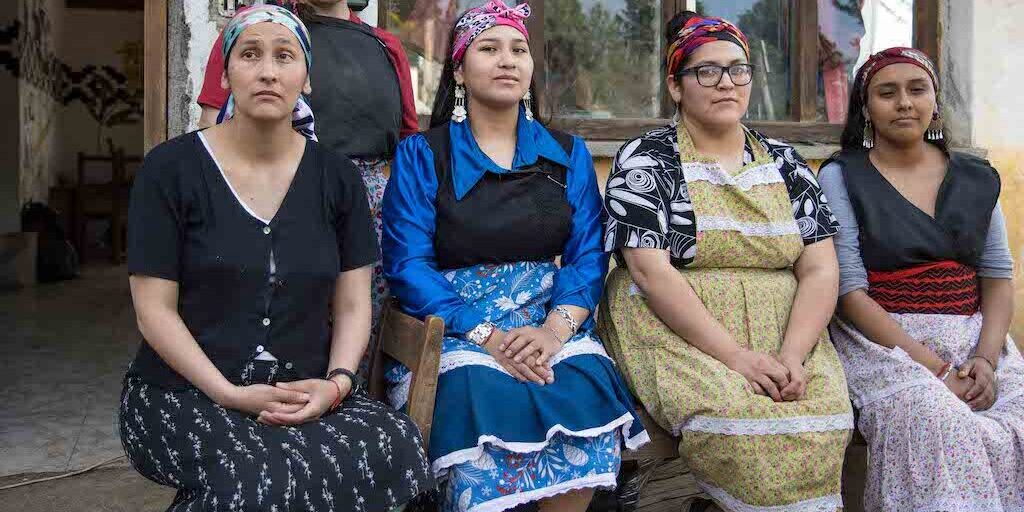
Nearly eight months after the violent operation that evicted the Lof Lafken Winkul Mapu Mapuche community from their reclaimed territory on the shores of Lake Mascardi in Argentine Patagonia, and after almost eight hours of tense negotiations, an agreement was finally signed on June 1st between representatives of the State and the delegation of Mapuche authorities. This agreement includes submitting a settlement to the courts to end the legal proceedings that have kept four Mapuche women—along with their nine children—under house arrest.
On the same day as the meeting, a ruling by the Court of Cassation was announced , allowing for the release on Friday of one of the four detainees, Celeste Ardaiz Guenumil . Celeste was the only one under house arrest in Carmen de Patagones. The machi Betiana Colhuan, Romina Rosas, and Luciana Jaramillo remain under house arrest in Bariloche. "They have granted me my freedom. It's a joy that things are starting to fall into place, but we continue to demand the freedom of our machi and the lagmien, the return of the rewe, and an end to the political persecution."
Nora Cortiñas, one of the observers at the table
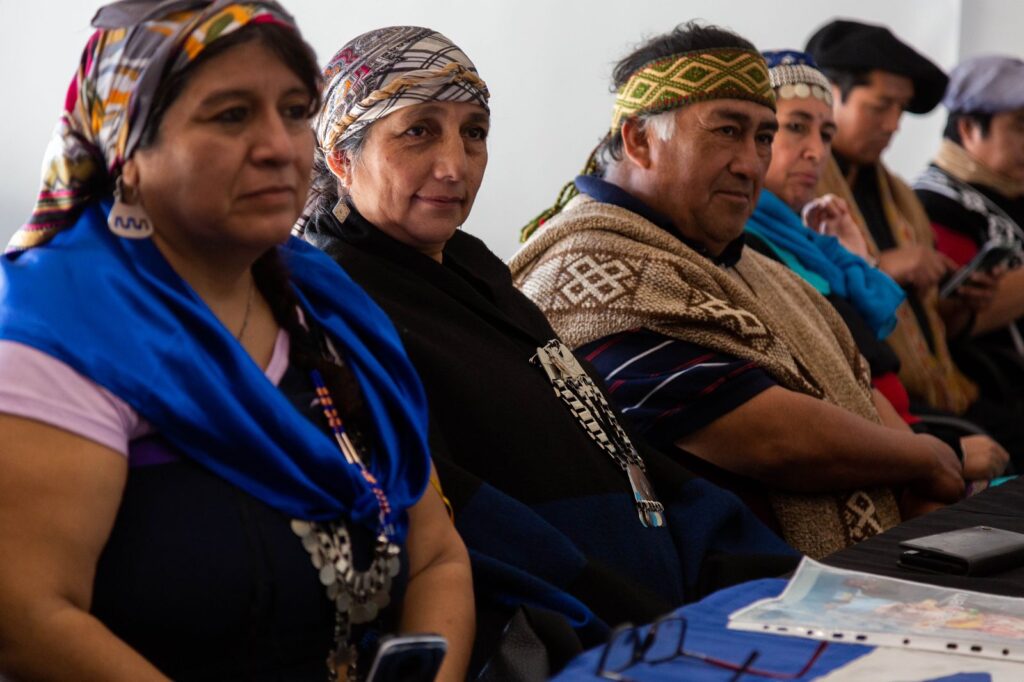
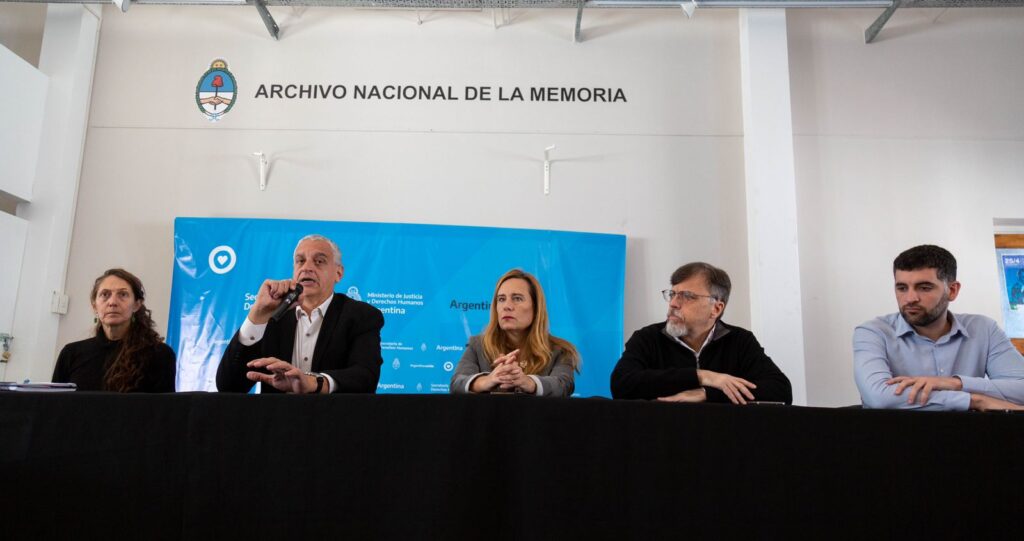
This third Dialogue Table included the participation of the Secretariat of Human Rights , headed by Horacio Pietragalla Corti, and various government sectors: Alejandro Marmoni from the National Institute of Indigenous Affairs (INAI), Federico Granato, president of the National Parks Administration, Carolina Varsky, Undersecretary of Special Programs on Gender-Based Violence at the Ministry of Women, Gender and Diversity, and Silvia La Ruffa, Secretary of Federal Coordination at the Ministry of Security. Representatives from Mapuche communities in the provinces of Río Negro, Chubut, and Neuquén participated: Mauro Millan, Carlos Curruhuinca, Maria Nahuel, Gabriel Nahuelquir, Isabel Huala, Soraya Maicoño, Juana Antieco, Eusebio Antieco, Daniel Loncon, Soledad Cayunao, Andrés Dinamarca, Leticia Curruhuinca, Javier Nahuelpan, Fernanda Neculman, and Orlando Carriqueo.
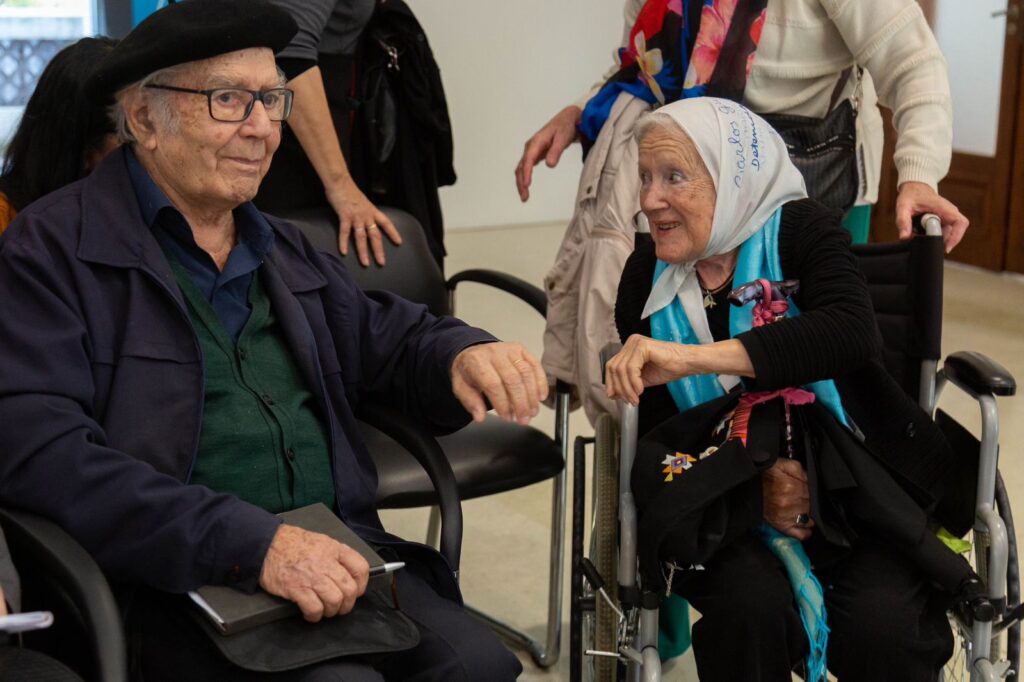
The meeting was attended by observers: Nora Cortiñas, from Mothers of Plaza de Mayo Founding Line, Adolfo Pérez Esquivel, Nobel Peace Prize laureate and Mariana Katz, SERPAJ, along with other representatives of human rights organizations.
"There is no victory until they are free."
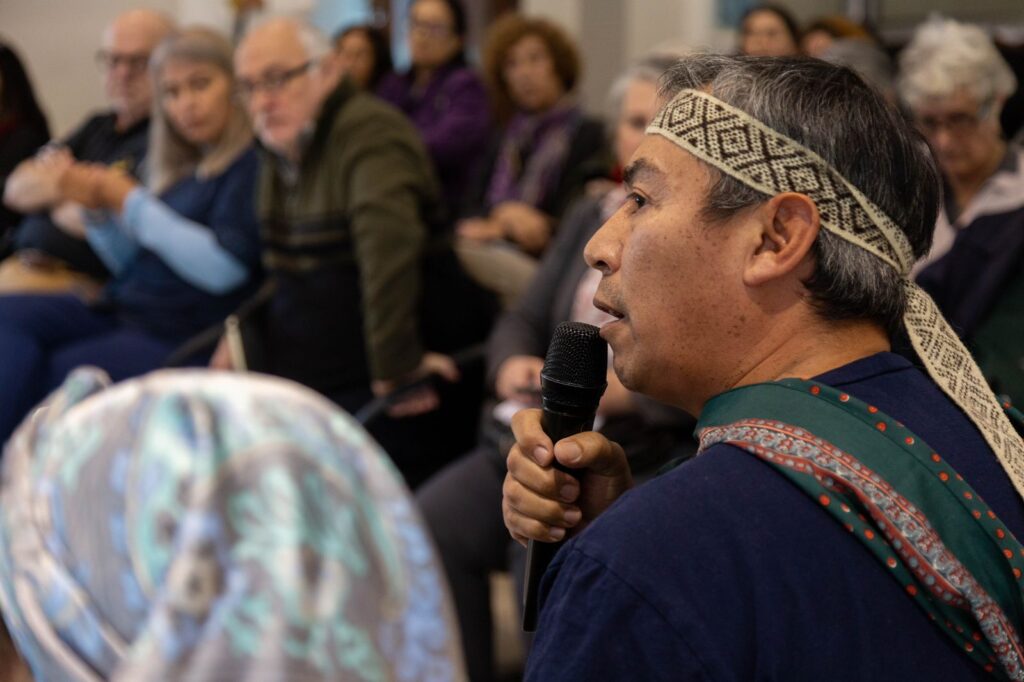
Last night, after the signing of the agreement, representatives of the Mapuche nation shared the details. Soraya Maicoño, one of the spokespeople for several communities in conflict, commented after the meeting at the former ESMA (Navy Mechanics School): “It was a long and difficult process. At first, there were some very radical positions, mainly from the president of the National Parks Administration. But ultimately, the points of the agreement established in the February meeting were upheld. We are satisfied, but there is no sense of victory until we truly see our lamngen (brothers and sisters ) free .” This will depend on how the judge in the case reacts to this settlement. Her words were accompanied by the cry of “Rafael Nahuel present!”, commemorating the young Mapuche man killed by the Argentine Naval Prefecture in 2017.
The meeting took place at the former ESMA (Navy Mechanics School) in Buenos Aires—the site of one of the largest clandestine detention centers during Argentina's last civic-military dictatorship—and now a memorial space. Various organizations and agencies operate there, including the Secretariat for Human Rights. The Secretariat, through a press release, outlined the main points of the agreement. "Among other points, it was agreed that next week a conciliation agreement will be presented to the courts, conveying and demonstrating the agreement reached between the national government and representatives of the Mapuche communities so that the criminal proceedings may be dismissed—provided that all the clauses of the agreement are fulfilled," the Secretariat stated .
Outside the former ESMA detention center, and in various locations across the country, gatherings were held to support and await the signing of the agreement. The slogans echoed at all the meeting points: Freedom for the Mapuche prisoners, for the return of Machi Betiana to her rewe (ceremonial territory), for the preservation of life, recognition of territories, respect for the human rights of Indigenous peoples, and demilitarization.
The recognition of the rewe
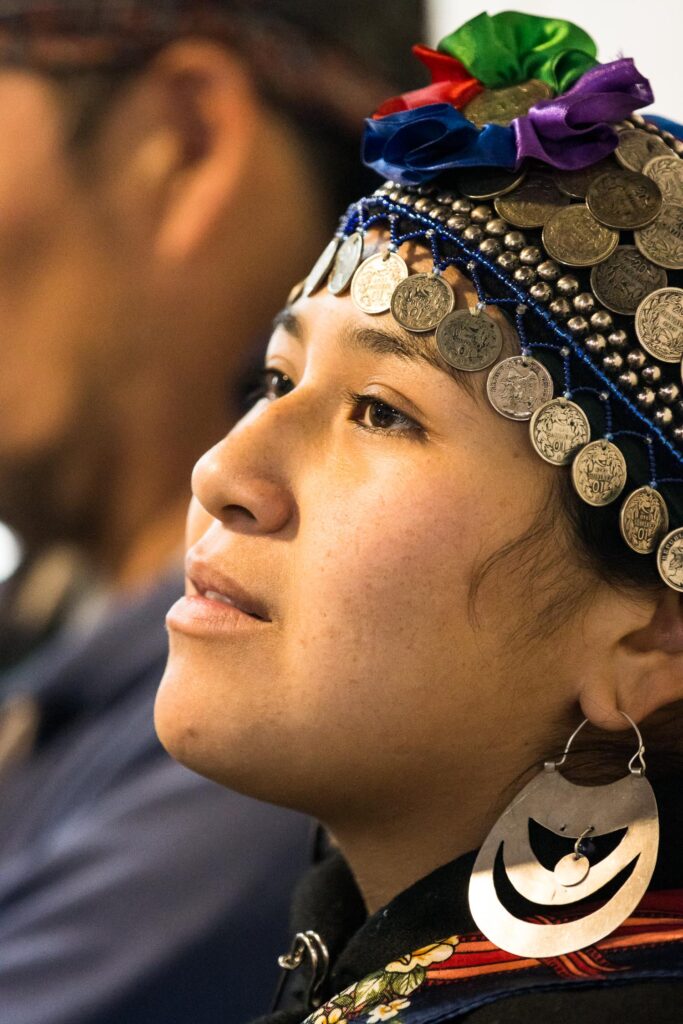
The signed agreement formalizes the State's recognition of the rewe (ceremonial space) from which the community was evicted as a sacred site for the Mapuche people, and where they will be able to return. The State commits to building three houses there: one for the machi (shaman) and her family, one for her assistants, and one for her patients and the storage of medicines. The rest of the community will be relocated to land near Lake Guillelmo, to a site to be determined in the coming days. The State will also open offices in the area for various government agencies (Access to Justice Center, Secretariat of Human Rights, Ministry of Security).
Given concerns that this would essentially be a military checkpoint, it was agreed that they would not be in the immediate vicinity of the rewe . The community will continue the registration process with the National Institute of Indigenous Affairs until it is completed and they obtain legal status.
They will ask to have the case against the Mapuche women dismissed
The parties will present the agreement to the judge in the case next week, so that the case can be concluded by reaching a settlement. Finally, since the release of the four prisoners depends on this legal process and the judge's decision, up to six people will be allowed to enter the rewe (sacred site) to guard it. This measure is due to the fact that last Sunday, despite being under heavy military guard, the rewe . At the center of the ceremonial site is a large wooden carving, several meters high, which was found covered in fluorescent green paint. With entry strictly prohibited not only to the community but to anyone, it is impossible to imagine that such an act could have been committed without the approval of the military guards.
Why the Dialogue Table
In December 2022, a Mapuche delegation comprised of members from numerous communities in Chubut, Río Negro, and Neuquén traveled to Buenos Aires, where they were received by President Alberto Fernández. The President pledged to establish a Dialogue Table, and the first meeting took place in Buenos Aires on January 12. The second meeting was held in Bariloche on February 10. At that meeting, a preliminary agreement similar to the current one was drafted. A follow-up meeting was scheduled for two weeks later, at the end of February, but it never materialized.
The national government suspended that meeting, and on three more occasions set a date for the Roundtable, only to postpone it again each time. Meanwhile, the process dragged on, and the situation worsened. Betiana Colhuan Nahuel, the only machi (spiritual authority) on this side of the Andes today, is one of them. “Today we are detained without trial, but as if we were condemned ,” Betiana said in the week leading up to this meeting.
For this reason, the Mapuche delegation declared that June 1st would be the last opportunity for the State to keep its word. Yesterday, already inside the compound, they made a decision: they would not leave without a signed agreement.
The four Mapuche women are being held in pretrial detention, accused of trespassing. The case began when the community reclaimed the land in 2017. At that time, a violent operation resulted in the death of 22-year-old Rafael Nahuel. Since then, no arrest warrants had ever been issued in that case. But on October 4, 2022, the newly formed Unified Command of federal and provincial security forces stormed the community, violently evicting them. They then proceeded to demolish all the houses. For the past eight months, the property has been under a constant security presence.
In addition to the four women imprisoned, several men and one woman are now in hiding because arrest warrants have been issued for them. Gustavo Franquet, the community's lawyer, states, “Dialogue with a community that has half its members imprisoned and the other half on the run is not dialogue. The State says it will only present a settlement to the judge to end the trial if the community accepts its terms . They are not prisoners, they are hostages.”

Democracy and the Mapuche people
This time the meeting took place at the former ESMA, with all the historical weight that implies. Carlos Curruhuinca, lonko of the Lof Curruhuinca (San Martín de los Andes, Neuquén), said at a trawún (parliament) in Bariloche on May 20: “Many of you lived through the dictatorship, and so shocking was it for so many Argentinians, we have been living with it since 1870.”.
Mayra Sepúlveda stated that “the Argentine state was born as a terrorist state and has never ceased to be a terrorist state.” Mauro Millán, lonko (chief) of the Lof Pillán Mahuiza (Corcovado, Chubut), declared, “The state celebrates its 40 years of democracy, but for our people, nothing has changed. We live through it as a dictatorship—people murdered, kidnapped, serving sentences without trial, families torn apart, births in captivity.”
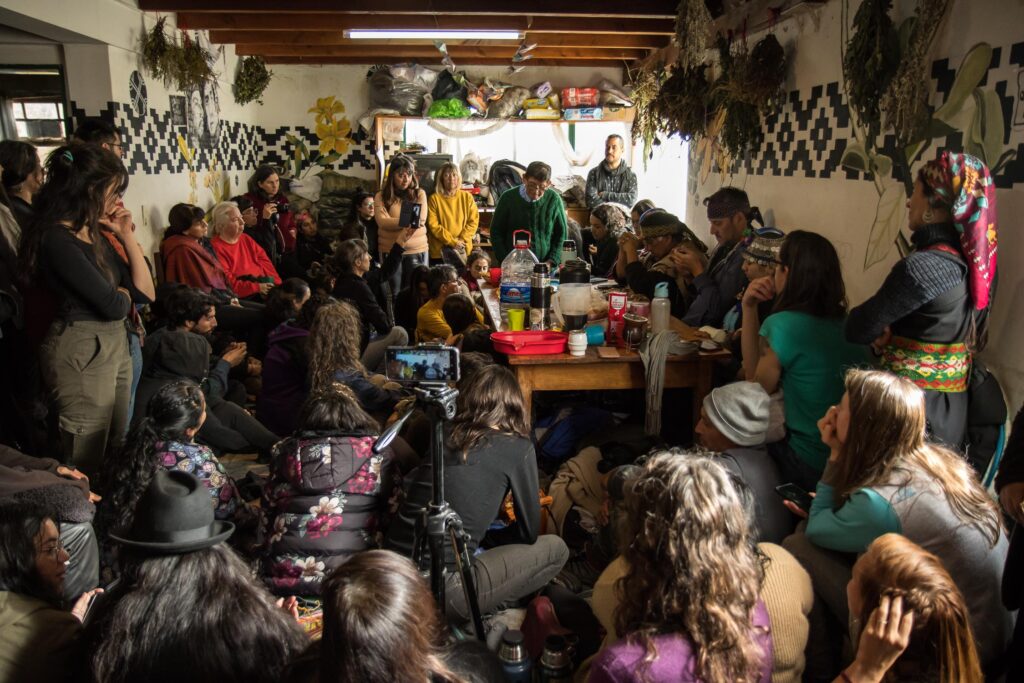
Communities from Chubut, Río Negro, and Neuquén attended, joined by social organizations from various parts of Patagonia and a delegation of Abya Yala Feminists who traveled from Buenos Aires. This delegation included members from Bolivia and Mexico. Adriana Guzmán, a renowned Bolivian Indigenous feminist activist, stated that “all states are genocidal, but it is doubly outrageous that a government that talks so much about human rights, like the Argentine government, tramples on them in this way.”
In some way, Argentina's intertwined history had its moment in the negotiations, through prominent human rights activists. Soraya Maicoño recounted, "The loving contribution of Nora Cortiñas—who was present at the debate before joining the Thursday marches in Plaza de Mayo—was a great help, as was that of Adolfo Pérez Esquivel, who challenged the president of the Parks Administration for having treated us in very racist terms. "
A ruling by the Court of Cassation for freedom
Apart from this negotiation, on the same day the notification arrived from the Federal Court of Cassation regarding one of the detainees, Celeste Ardaiz Guenumil, who was under house arrest in Carmen de Patagones.
After the judge denied their request for release, Celeste's lawyers appealed to the Court of Cassation. Indeed, in the official communication issued on Thursday, the Court accepted the defense's argument and instructed the judge to modify his ruling. Celeste's release was announced Friday night.
We are present
We are committed to journalism that delves into the territories and conducts thorough investigations, combined with new technologies and narrative formats. We want the protagonists, their stories, and their struggles to be present.
SUPPORT US

FOLLOW US
Related notes


We are present
This and other stories are not usually on the media agenda. Together we can bring them to light.