

The Chamber of Deputies began debating the bills for historical reparations for transvestites and trans people
The speeches that were heard on Wednesday, May 24, on the historic day that took place in the Chamber of Deputies to talk about the bills for trans and travesti reparation.
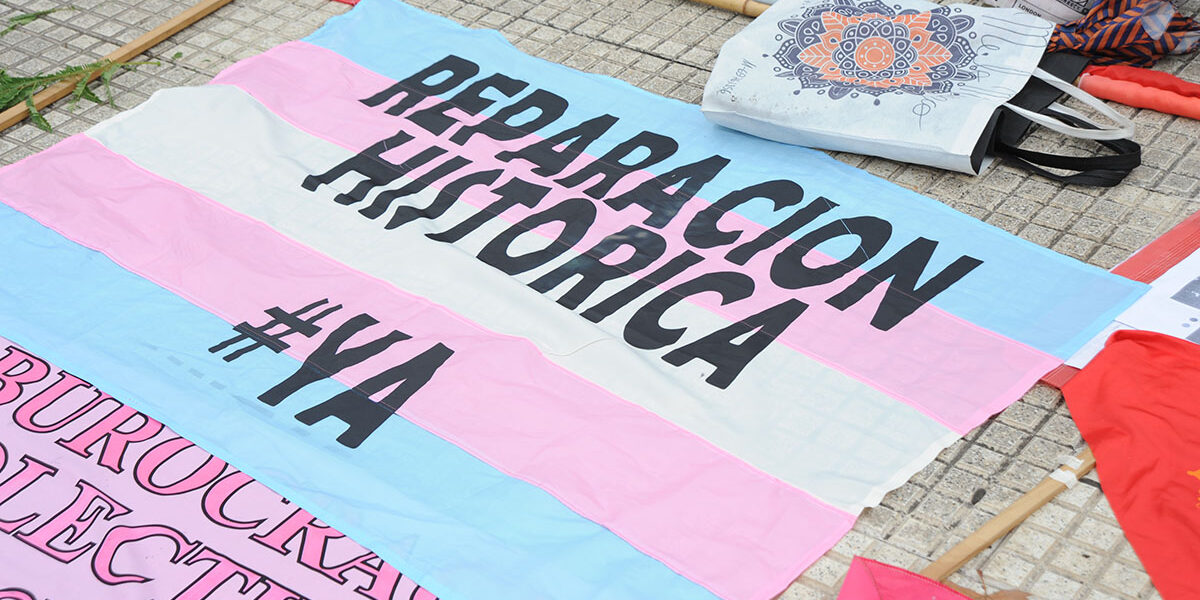


Share

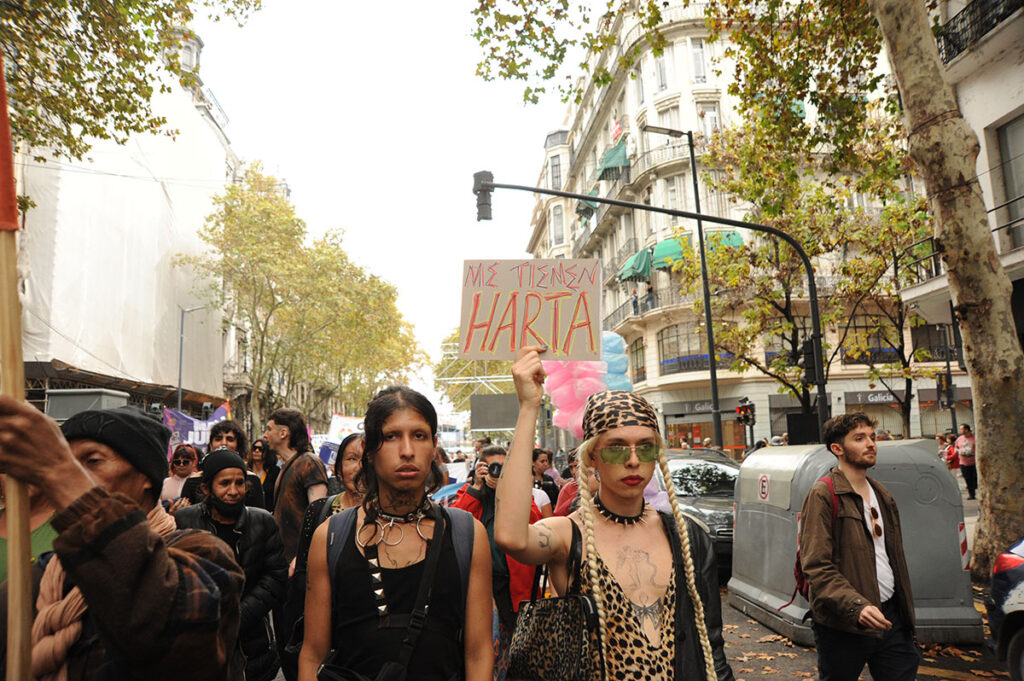
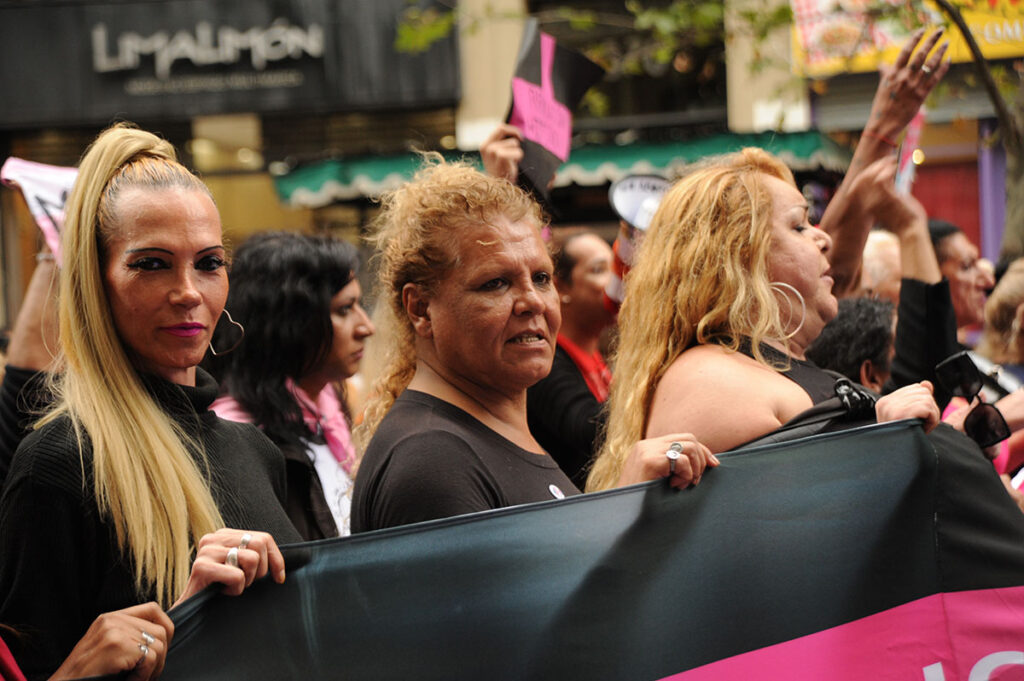
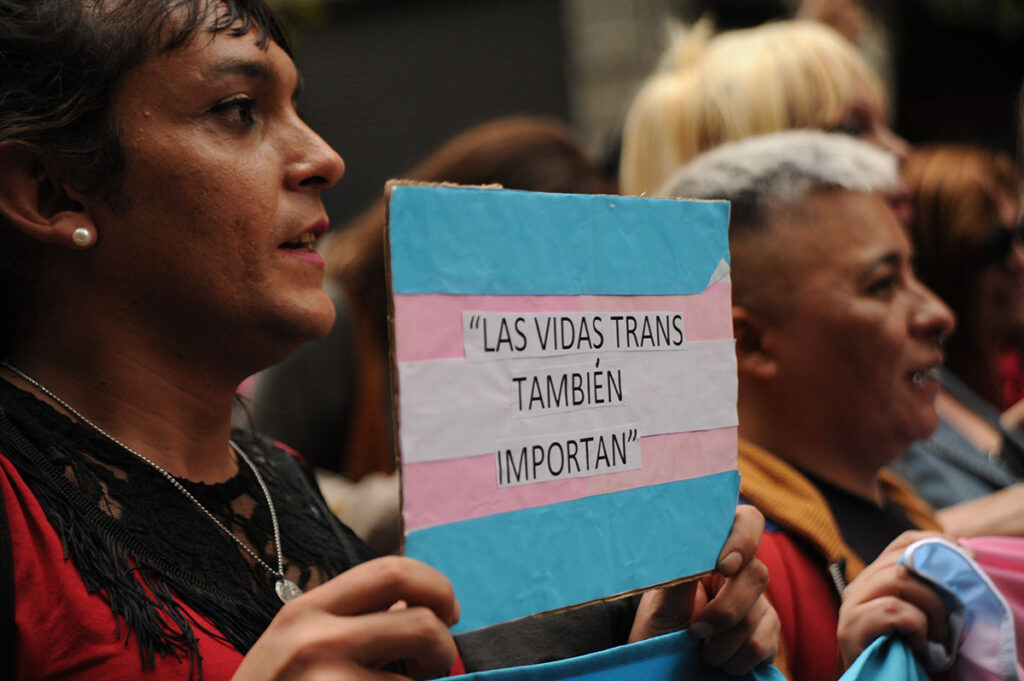
BUENOS AIRES, Argentina. Representatives of the trans and travesti community were the leading voices in the first meeting held in the Chamber of Deputies, convened by the Women and Diversity Commission of the Chamber of Deputies.
The meeting aimed to seek consensus on a historical reparations project for elderly transvestites and trans people that integrates the collective to guarantee income equivalent to the Universal Pension for Older Adults.
Currently, there are three bills proposing this idea. All three belong to the Frente de Todos congresswomen: Mónica Macha, Gabriela Estévez, and Mara Brawer. The purpose of this meeting was to consolidate everything into a single document.
Officials, activists, referents
Among those invited were Alba Rueda, Argentina's special representative on Sexual Orientation and Gender Identity at the Ministry of Foreign Affairs; Agustina Ponce, Undersecretary of Diversity Policies at the Ministry of Women, Gender and Diversity; and the head of Inadi, Greta Pena.
Also present were Victoria Travieres, Undersecretary of Diversity of Tierra del Fuego; Daniela Castro, Director of Diversity Policies of the province of Buenos Aires; and Úrsula Sabarece, Director of Diversity of Chaco.
Presentes covered the day and here we highlight the most important moments of the meeting.
Agustina Ponce
Undersecretary of Diversity Policies of the Ministry of Women, Gender and Diversity of the Nation
“I welcome this long-awaited information session so that Argentina can finally acknowledge, through the National Congress, years of persecution of the trans community through police edicts. I would add an apology to the community and a financial contribution that would allow trans women to access this benefit and put food on the table.”.
“We still have colleagues in situations of extreme vulnerability despite the 11 years since the Gender Identity Law was passed , despite the 13 years since the Equal Marriage Law . Argentina is a global example in terms of human rights, but there were other times and we have learned from those times.”
“The Mothers and Grandmothers of Plaza de Mayo have been our guiding lights. Part of this project is a demand from our historical figures, from our commander Lohana Berkins . I remember when I came to Buenos Aires, Lohana had called us to discuss the need for the national government to recognize, to apologize, and to contribute so that we in our old age can live our final years with at least a little dignity.”
“We are talking about a total population that won't significantly impact the national treasury. It's about continuing to build this Argentina that we wanted to continue living in, where human rights are respected.”
“When we talk about persecution, we are not speaking in the abstract; there were decrees and laws that criminalized being transvestites. It was a crime against public trust to be a transvestite, transsexual, or transgender.”
Alba Rueda
“We talk about reparation because there was a violation of human rights and this is the starting point; it has to do with a structural and structuring socio-historical context of inequality that is “material and symbolic and also has to do with the very concept of restitution of rights”
“For the rights of transvestite and trans people, it is a context of threat; there is a lot of backlash to push back our agendas in a political and social sense.”
“The fact that we live with this violence and the threat to the rights of LGBTIQ+ people in the broadest sense, and specifically with an anti-trans and anti-gender movement at a global level, is related to the fact that there are explicit political interests that prevent us from being recognized in rights.”

“Something is evident in the campaigns currently being waged in Argentina by right-wing parties, whose campaign strategy is to take away the rights of those of us who live below the line of privilege.”
“These projects are part of a reality of profound inequalities. Raising the issue of recognition and reparations is undoubtedly a fundamental topic and debate within human rights.”
“Talking about adults is a crucial issue, a substantive issue. And there are national studies on aging, but they counted the adult population in a binary way, and this contradicts everything we approved in terms of regulations in the country.”.
“Regarding the budget allocated to the 14.3% of the population over 60 years of age, we also need to discuss the variables related to this issue.”
“In Argentina, 16,090 people underwent the legal gender change process. The average age at death is 44, meaning that 396 of those who changed their documents have died since the gender identity law was enacted.”
“The world has recognized reparations as part of a fundamental concept. During 2020 and 2018, the Netherlands and Sweden provided reparations to the transvestite and transgender population for having undergone surgical castrations.”.
"In Colombia, reparations policies were also implemented for the trans population for human rights violations perpetrated by the armed forces or paramilitaries; in Uruguay, the law establishes reparations funds for the transvestite and trans population. In Argentina, this concept is also present in the province of Santa Fe, which has a law recognizing reparations for trans people deprived of their liberty during the last military dictatorship."
“When it comes to budget discussions, we have a significant impact, but when the census was conducted, they said 'let's not talk about minorities,' and during the post-midterm election campaign, we shouldn't focus on minority issues. This doesn't have a strong impact on GDP; that's not true, and it needs to be said openly.”
“We are a small population, a population decimated by institutional violence.”
“I would like to end with a call to action: Vidal enacted the trans employment quota law two weeks before leaving office, after shelving it for four years. I want to urge our political bloc not to do the same. We must go out and seek the votes so that we can make this not just a symbolic gesture, but a concrete and tangible law that is just and necessary to recognize the standard of human rights.”
Marlene Wayar
Trans activist, director of the Futuro Trans Civil Association . Trans activist, social psychologist, journalist, writer, twice awarded honorary doctorates from the University of Rosario and the University of Mar del Plata.
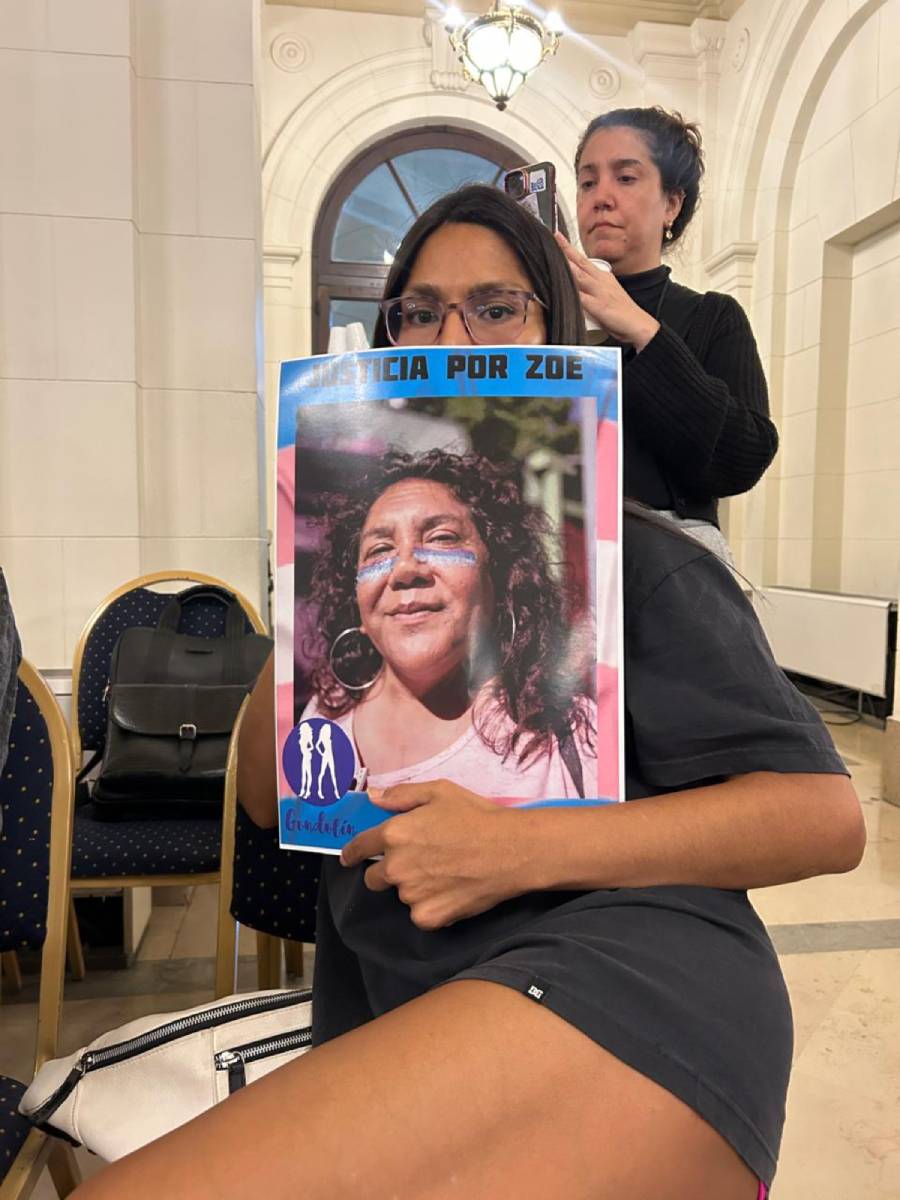
“We are not referring here to events that occurred from 1983 onwards that affect the entire transvestite and trans community. It is important to remember that two years ago Tehuel De la Torre disappeared and on April 14, Sofia Fernández was found dead in police station number 5 in Pilar.”.
“In Argentina, the transvestite and trans community has been systematically persecuted, suffering crimes against humanity within the framework of a genocide specifically directed at our group because of our gender identity. These were acts aimed at destroying our community.”
“Some key actions that the State must take: Official recognition, the State must recognize the crimes against humanity committed and assume responsibility”
“Justice and accountability. It is essential to ensure that those responsible for crimes against humanity are brought to justice and punished.”
“Material reparations: victims must receive material reparations that address the losses suffered, including financial compensation for physical, psychological and material damages, as well as the restitution of confiscated goods and property.”
“Symbolic reparations: victims must receive symbolic reparations that acknowledge their suffering and promote memory and dignity”
“Access to the truth. They have the right to know the truth about what happened to them and the identity of those responsible.”
“Guarantees of non-repetition. It is essential to implement measures to prevent crimes against humanity in the future.”.
“We are here to safeguard the future of our girls, boys, and girls. To build them a future free from horror, we know their capabilities and we demand that they work on a law that provides satisfaction to the victims and guarantees of non-repetition.”.
Claudia Vasquez Haro
Otrans Argentina – Federal Call for Trans and Travesti Argentina .
“To repair, we must acknowledge. And in Argentina, what the transvestite and trans community experienced was a systematic violation of our human rights: systematic, structural, and historical because it goes beyond what happened during the dictatorship.”
“We are a group that has been stripped of all its rights, excluded from all its educational spaces and neighborhoods, and confined to places of extreme vulnerability. It is necessary for the State to recognize this and also to provide reparations.”.
“The fact that the gender identity law was passed in 2012 and that the rights policies, which we can date from 2003 to 2015, are state policies implemented during the governments of Néstor and Cristina Kirchner, is no coincidence, just as it is no coincidence that we are now discussing four bills from our colleagues in the Frente de Todos coalition. This needs to be said at a time when there is a right wing that threatens the rights we have managed to win.”
“What happened in Argentina was genocide, and what occurred constitutes crimes against humanity.”
Say Joaquín Sacayán
Transvestite activist - Coordinator of the Anti-Discrimination Liberation Movement .
“I want to remind everyone that Diana Sacayán has been a driving force behind fundamental laws for our transvestite, transgender, and transsexual population, such as the gender identity law, the labor quota law, and access to formal employment for transvestite and trans people in the national government.”
“Diana was the victim of a transvesticide in 2015. Transvesticides are the violent deaths of transvestite and trans people. The legal concept of transvesticide was recognized in the trial for Diana's murder. But there are also social transvesticides, which are preventable deaths resulting from a state of vulnerability and a chain of violence against our population, which has an average life expectancy of 35 to 40 years.”
“We must continue to delve deeper into the emergency situation in which our community finds itself.”
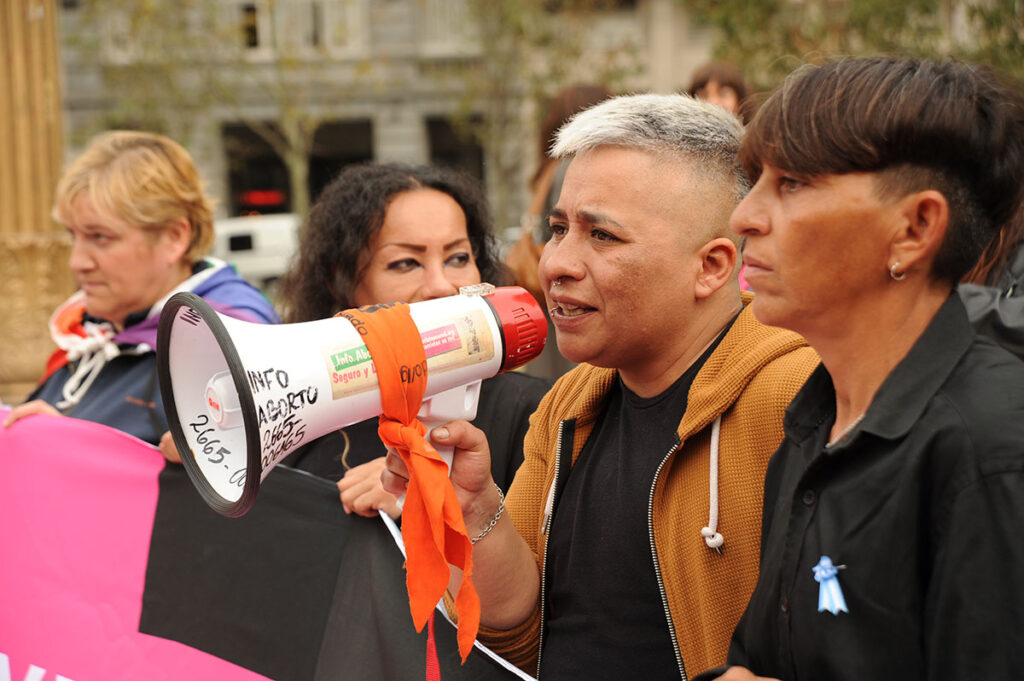
“Suicides, expulsion from workplaces and schools, transvesticide, and transfemicide are social issues that are part of our community and threaten our lives.”
“Tehuel de la Torre and Sofía Fernández immediately come to mind. Tehuel was a 22-year-old trans man who disappeared two years ago when he went looking for a job. Sofía Fernández, a trans woman, was detained under unclear circumstances and murdered in a cell less than 40 days ago.”
“What we have been saying for many years is that there is a continuity of the form of genocidal repression that was established by the dictatorship and that continued in democracy for our population.”
Marcela Antonia Tobaldi
Founder of La Rosa Naranja Association . Human rights activist for transvestite and trans people, activist of the Pride and Struggle Front .
“This law is very necessary. Someone said it's coming late, that it should come late and only come when the political process is underway. Not all voices are represented in this parliament; there's a lot of support from the Frente de Todos coalition, but not from other political groups like the PRO.”
“We urgently need a law for historical reparations. Argentina claims to be at the forefront of human rights; let's show the world that we are at the forefront.”.
Greta Pena
Representative of the National Institute Against Discrimination, Xenophobia and Racism -INADI-
“INADI, together with INDEC, conducted a first pilot survey in 2012. We had statistics provided by the trans community itself and other reports, but that year the Argentine government began this survey. The data indicated that more than half of the people surveyed had been detained without a judge's intervention; 75% of those surveyed had suffered violence and discrimination. Of that total, 33.8% experienced extortion, threats, mistreatment, and humiliation; 20% suffered rape or sexual assault, the same percentage suffered physical violence, and about 2.5% were subjected to torture.”
“In 2012, Argentina established that gender identity is a human right. Violation of this human right also implies financial compensation. This is stipulated in the American Convention on Human Rights, but I want to emphasize that the Yogyakarta Principles establish the principles for what we are discussing.”
“Today I see not only a more empowered civil society, but also a transvestite Undersecretary of Diversity Policies, an international expert in the transvestite field, and the highest authority on the matter in Buenos Aires. This is the path we must embrace 40 years into democracy because they are coming for the consensus we have managed to achieve.”
Paula Luana Salva
Activist, militant for transvestite-trans rights, national reference of the Historical Argentine Transvestites-Trans.
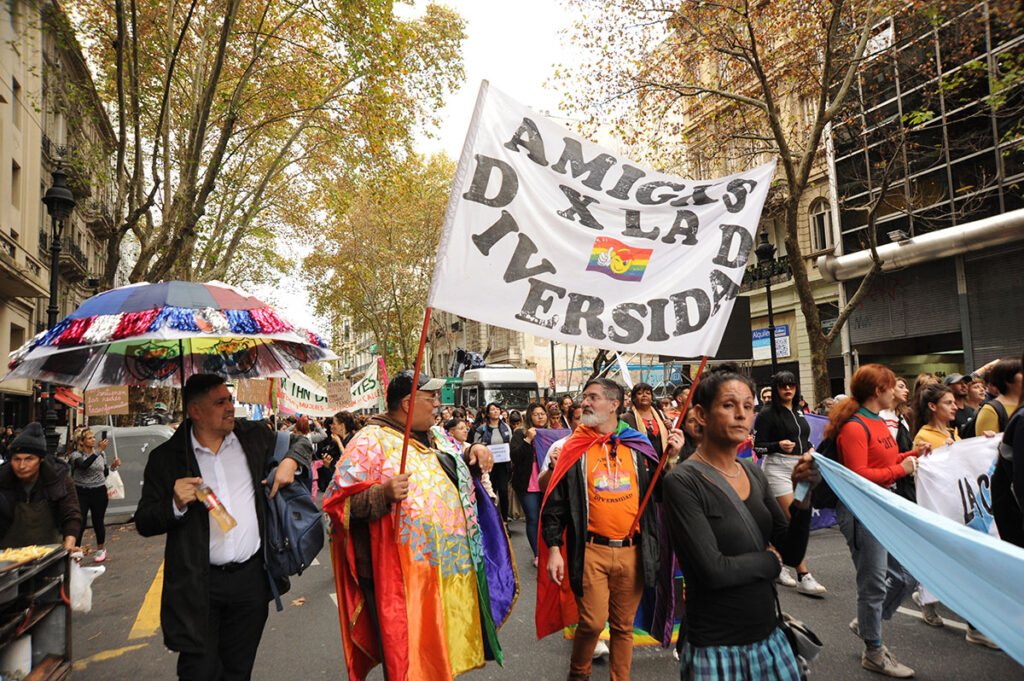
“I come representing a transvestite and trans collective that has been silenced, that has not been able to speak in the first person. We are talking about a minority of survivors, of companions in their 40s and 50s who are still in conditions of prostitution.”.
“We are demanding reparations for a dignified death, so we can die with some of our rights. Because we continue to be excluded from healthcare, education, and even our own families; there are still no housing plans for us, and we remain in prostitution, filling that red-light district where we continue to die.”
“We are talking about historical monetary reparations, not about all those years we have been excluded. When we talk about democracy, we are talking about the gender identity law because our democracy began 11 years ago, and here we are, resisting and setting an example for new generations.”.
“While we sit here debating what law will repair those lives, a colleague is dying in the Constitución area, prostituting herself at 50 or 60 years old.”.
“Out here we are gathering to say that we do exist, that we are here, that we are the evidence of that State that continues to be absent.”
“If we have little time left in government, get your act together, put yourself in our shoes because to be a trans woman you have to have a lot of courage, a lot of bravery. To stand up against those people who, from their positions of privilege, have not given a decent law to our trans and travesti sisters who continue to resist.”.
Ivana Adelaida Gutiérrez
A leading transvestite figure in Conurbanes por la Diversidad (Suburbanites for Diversity ), an institutional and international agent for the Audiovisual Ombudsman. Former Director of Diversity Policies for the municipality of Morón, a human rights defender, and a member of ILGALAC for Latin America and the Caribbean.
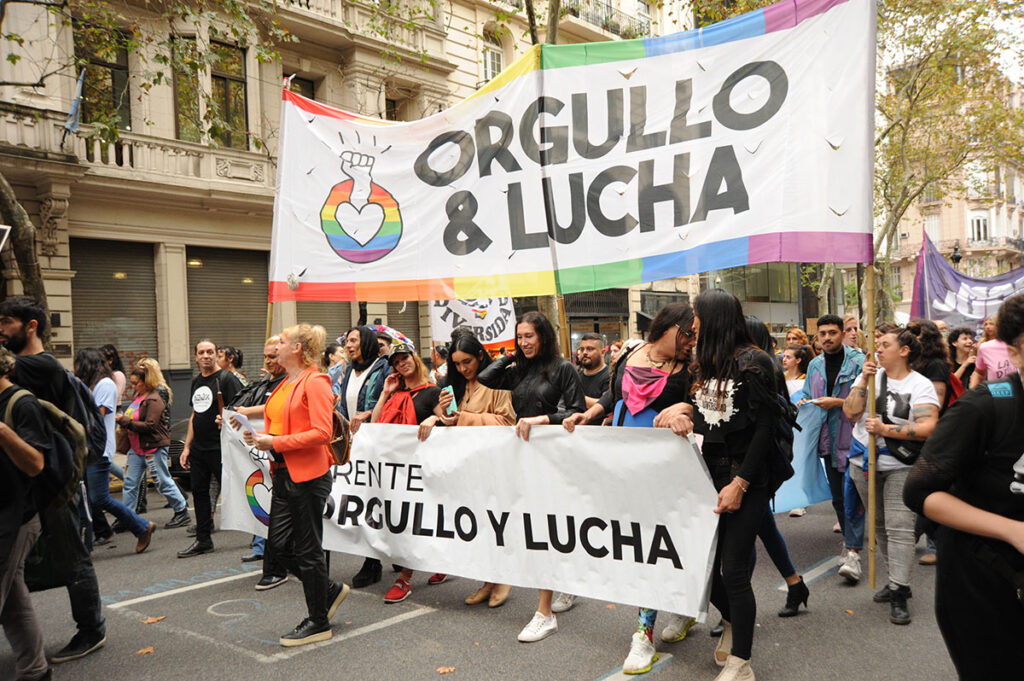
“When I say that we are still in a situation of persecution, today we have two districts like Mar del Plata and La Plata where our colleagues in prostitution continue to be persecuted.”
“I think the census’s findings on the transvestite and trans population are important. Where is the hard data from the census?”
“When we fight for these laws, what about the media, how they use our identities, especially the media that demonizes us? It’s time to say yes to historical reparations, yes, we are going to support the project, we have to read it, understand it, recognize and inform ourselves about what we are going to defend.”.
“I would like all the blocs to be listening because these laws are specifically about human rights.”
Florence Guimaraes
Transgender political activist, head of the Transgender and Transvestite Rights Access Program at the Women's Justice Center. President of the Lohana and Diana House .
“No amount of reparations will undo the damage done to our population, the years of criminalization, torture, and complicity from many sectors: political, judicial, and civil society. We are talking about contravention codes enshrined in laws under which we were imprisoned.”.
“There is no possible repair for the damage that has been done to our lives.”
“Society owes us a great debt. We have also been excluded from productive participation. We are not seen as part of the working class, and that worries me enormously. We are always pigeonholed into the realm of prostitution, where most of our colleagues are today.”.
"We need those who have the political power to rise to the occasion.".
“We need a basic income to live a dignified life, to have what is rightfully ours. We want to talk about numbers, and for those numbers to be enough to clothe ourselves, to eat, to live, for leisure activities like going to the movies, which our comrades couldn't do because they were imprisoned.”
“We trans women have paid for everything. The VAT tax, gas, water, we drive the economy. Beyond talking about reparations, we need to talk about what age we will retire, what will happen to those of us who started working in our forties.”.
Daniela Castro
Director of Diversity Policies for the Province of Buenos Aires.
“We continue fighting and will continue to argue not only to gain recognition and redress, but also to occupy seats in parliament because we have long been grateful that the voices of others have been reflected in the places where political decisions are made, and that our voices have been raised. But it is time for us to raise our own voices.”
“We have a lot to contribute to society, to places where political decisions are sound. We have so much to offer because when we say the debt is owed to the people, we are also part of the people. We demand to be respected as part of that people.”.
“This reparation will not repair anything, it will not bring back the lives of many of our colleagues who are still dying today.”
“In this place we said, and I say again, that I hold responsible those who have the political power to stop this massacre and who fail to do so, neither in the province of Buenos Aires nor at the national level. We seriously need to be recognized.”.
Cintia Pili
Coordinator of Access to Employment for Transvestite, Transsexual and Transgender People of the Ministry of Women, Gender and Diversity of the Nation .
“It’s important that we’re here. I want to thank the members of parliament, and the member of parliament from the left-wing party who is present. Clearly, there’s a sector that hasn’t included this on their agenda as an important part of their job, which is to legislate for all citizens.”.
“This is the first time I’ve been able to speak in front of all the female members of parliament. As a survivor, I ask, I demand, this law so that my fellow women have a roof over their heads and a decent bed.”.
Paula Arraigada
Nelly Omar – Secretary of Diversity of the PJ CABA.
“The lives of trans people have not only been difficult, but we have suffered every possible persecution. From institutional violence to social violence, including extreme vulnerability, that is why a reparations law is necessary, but it must be made clear that no one will be able to return what was stolen from us.”.
“We are in a place where laws are being debated, and there is still no representative of the trans community sitting on the bench. We thank our allies as always for allowing us to move forward with the laws, but this is a time for reparations, acknowledging that there was institutional violence.”.
“If we have to talk about poverty, go and ask the trans women; if you want to talk about housing, go and ask the trans women; if you want to talk about hunger, go and ask the trans women.”.
“There were others who gave their lives in those scraps: Diana, Lohana, Claudia, Mariela Muñoz, we must name them.”.
“This cause is the people’s cause and all the representatives should be here.”.
“Getting here wasn’t done alone. There are people who are supporting us and are here, but we must celebrate the fact that the debate is beginning.”.
Ursula Sabarece
Director of Diversity for Chaco
“This law listens to the voices that have been historically violated. And it obliges the State to redress the systematic human rights violations committed against our population.”
“As a State, we must not repeat these actions and must give our female colleagues a dignified old age, a life of support that the national State has exercised over our bodies and continues to exercise over our childhoods and adolescences.”
“Without us, it is impossible to create transfeminist policies that reach every corner of Argentina.”
Diana Aravena
La Paquito Cooperative / Fucking Peronists
“We are fighting another battle for equality, another fight that began with civil unions. It is social justice that justice be done for our community.”.
“I’m so happy that we’re united again to fight for these laws. We still need more things, like decent housing, a truly happier and more fulfilling life. This is a right that makes up for everything we didn’t have when we were young.”
Karin Tuma
Becoming Diverse – LGBTIQ+ League of the Provinces
“Those of us who are younger have a commitment to our female comrades who forged a path of life through their activism.”
“We must continue to make progress on the rights of our adult transvestite and trans sisters.”
Adam Lopez
We Are Diverse – LGBTIQ+ League of the Provinces
“Historically, we have been singled out, violated, criminalized, and pathologized because of our gender identity and expression. We have experienced multiple forms of violence, including institutional violence.”.
“These projects need to become law. They need to have the force of law, they need to be a new state tool so that each comrade can receive dignified reparations in these instances and thus guarantee that this projected life expectancy can be increased.”.
The words of the congresswomen
Congresswoman Gabriela Estévez is the author of one of the initiatives. “We’re not just going to campaign, we’re also going to support this project,” she said. She also noted the absence of members of the group in Congress.
From the Left Front, Romina Del Plá anticipated that her group would support the project and that they would have its full backing once the texts were unified.
For her part, Mónica Macha emphasized that discussions will resume in mid-June to reach a unified text endorsed by the collective. “These types of reparations policies are linked to the defense of human rights.”.
During the meeting, an initial discussion was held on the project presented in March by Deputy Estévez, based on another text of her own draft prepared in 2021, which had lost its parliamentary status last February.
Called “Reparative Pension for Transvestite and Transgender Elderly People”, it proposes granting a lifetime pension to all transvestite and transsexual people over 40 years of age, whether or not they have carried out the registration rectification of the birth certificate and ID card.
We are present
We are committed to journalism that delves into the territories and conducts thorough investigations, combined with new technologies and narrative formats. We want the protagonists, their stories, and their struggles to be present.
SUPPORT US

FOLLOW US
Related notes

We are present
This and other stories are not usually on the media agenda. Together we can bring them to light.