

Ferni de Gyldenfeldt: "Folk music must accompany social changes"
We interviewed Ferni de Gyldentedt, the first non-binary solo singer at Argentina's most important folk festival. "We are no longer willing to hide our place on those stages."


Share

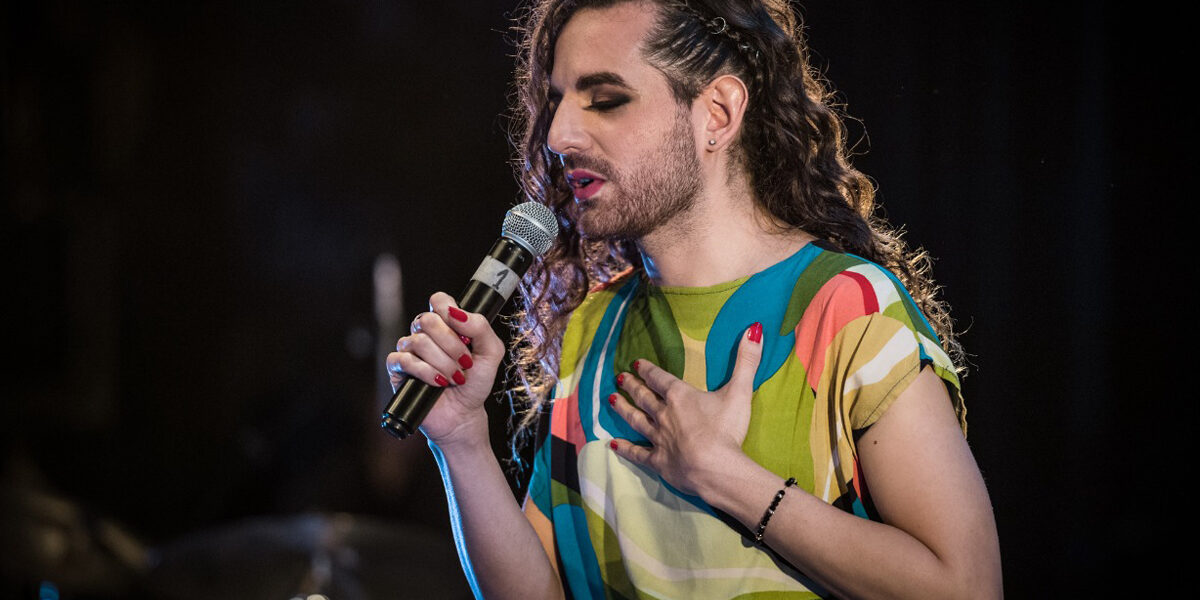
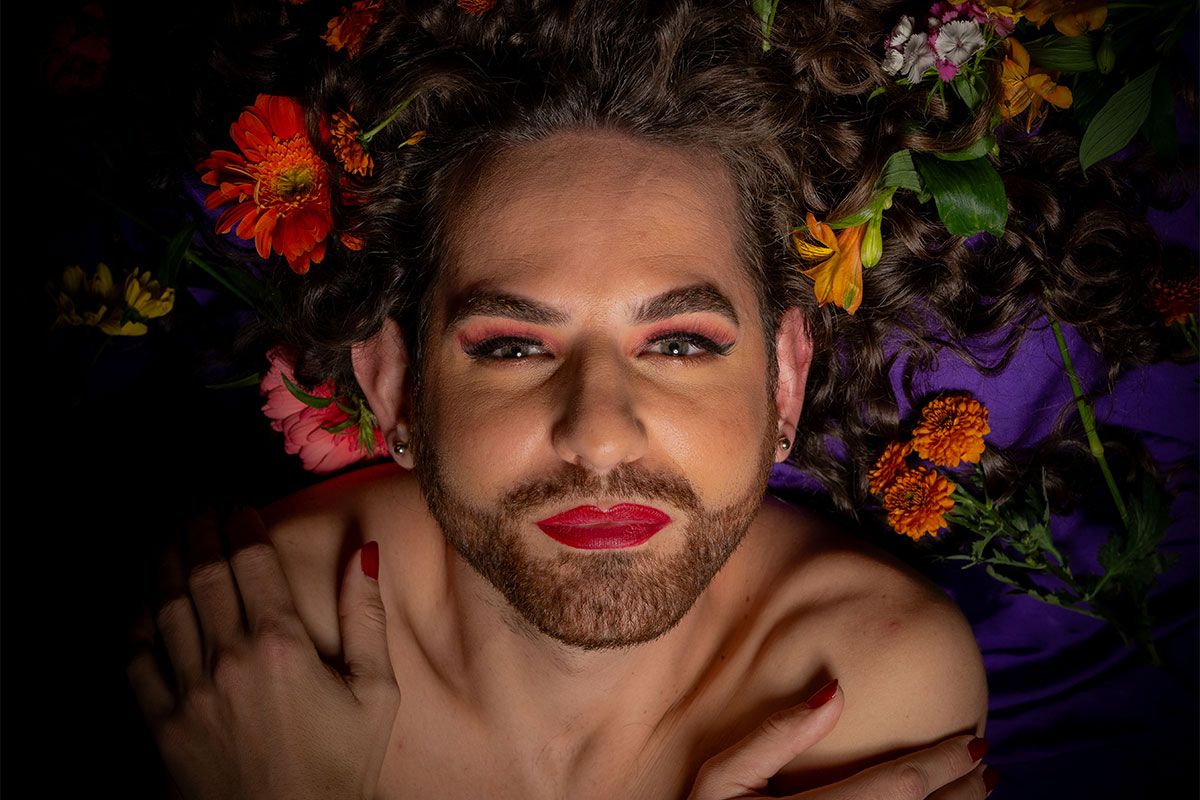
BUENOS AIRES, Argentina. Ferni de Gyldenfeldt was the first non-binary solo singer to perform on the Atahualpa Yupanqui stage at the National Folklore Festival in Cosquín, Córdoba, the most important in Argentina. Her arrival was not easy. In the Autonomous City of Buenos Aires, she won the competition with the highest score for those stages, but the festival committee did not authorize her: the statutes only recognized a binary distinction: male or female.
That direct encounter with folklore was, for Ferni, the firm conviction that his place was there. His arrival in Cosquín in the summer of 2022, after having managed to change the 1965 statute , was a kick in the teeth to tradition, to binary thinking, and to the old notion that folklore is a static genre.
“Fernie, you’re the person I would have liked to be in my life,” a 70-year-old man told her on the pedestrian street in the city of Cosquín, Córdoba. Reaching that stage marked a turning point in her career as a solo folk singer. It also led to a tour of various venues, different provinces, and musical companies. This is how the show Las Chinas, with Patricia Malanca .
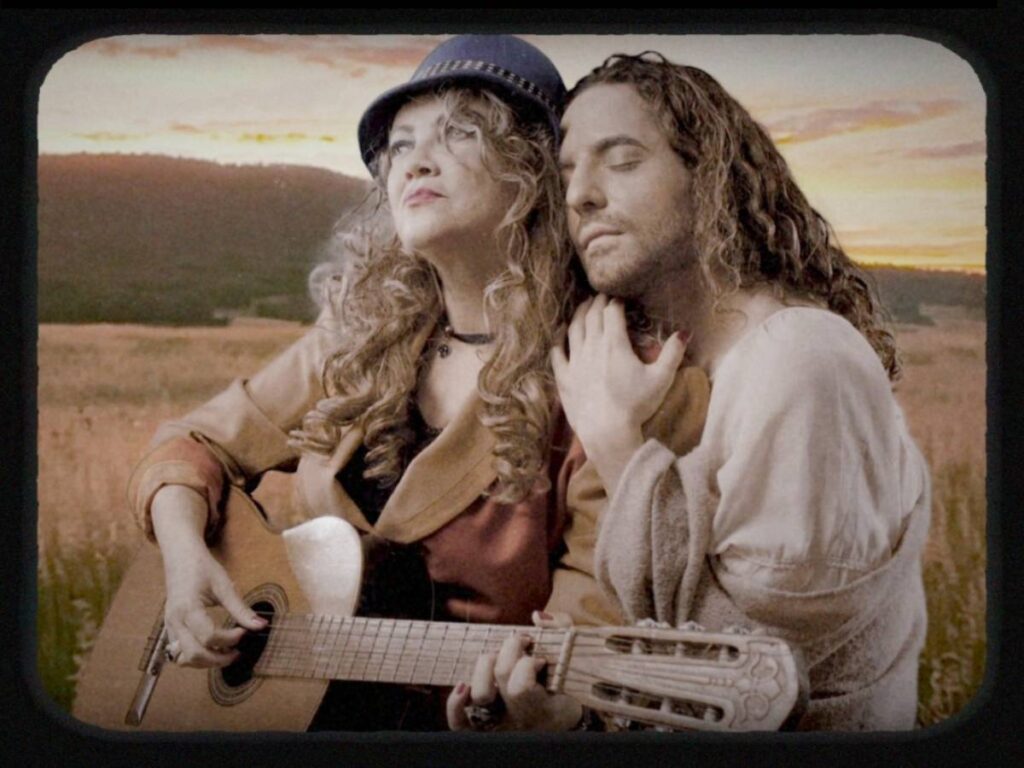
“Las Chinas” by Ferni and Malanca
This is the first time Ferni and Patricia Malanca will be performing together. Two years ago, when Ferni was denied the opportunity to participate in the PreCosquín competition, Malanca called her to tell her that she had composed the song "La China Iron" some time ago, based on the text " Las aventuras de la China Iron by Gabriela Cabezón Cámara . "It's you, it's your story," Patricia told her. That's one of the reasons why the show is called "Las Chinas."
The other is less anecdotal, more profound: reconfiguring the figure of the "china" in popular narrative. In Argentina, as in many Latin American countries, the word "china" usually refers to rural, mestizo women of the working class. She is the submissive woman with braids who, in the folkloric imagination, unconditionally accompanies the man.
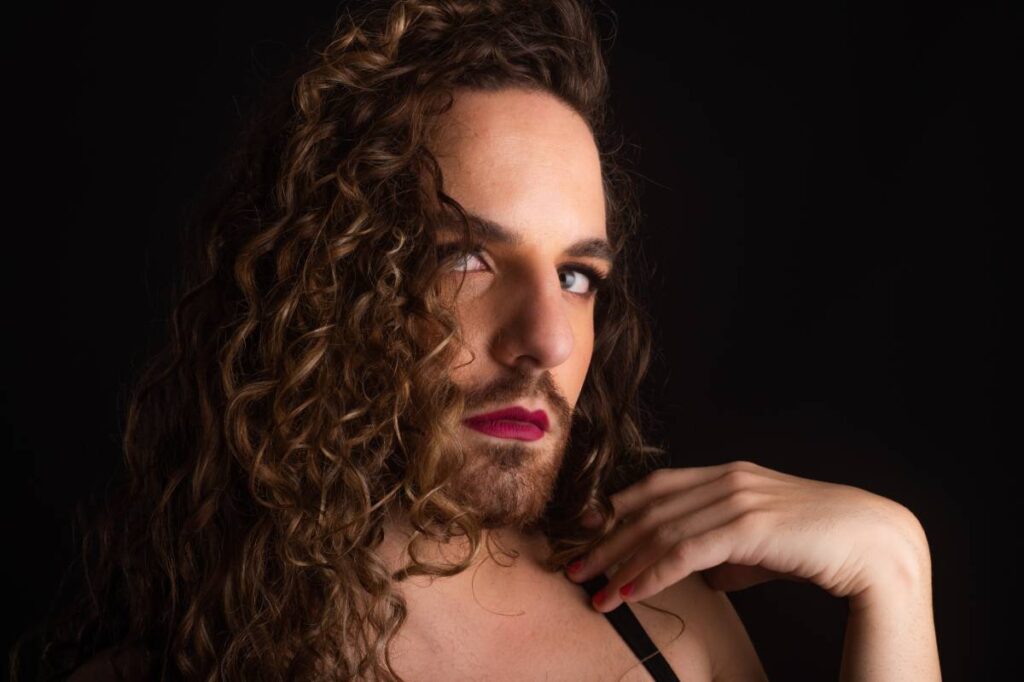
"We're running away from the CIsystem"
“This show is a reinterpretation of that name. We want to show that there isn't just one way to be Chinese, that there are many. We're moving away from that construction of femininity as submissive or fragile . We're moving away from the system and the systemic approach to show that there are other kinds of music and that there are Chinese women and men who are folk singers of our heritage ,” Ferni explains to Agencia Presentes . “It's a counter-hegemonic proposal to the historic May 25th celebrations, where women and gender dissidents are the singing voices and the voices communicating the works of the collective of silenced women and gender dissidents,” she adds.
Breaking out of stillness
-What is the journey that converges in today's show?
Folk music has long captivated me, both as an audience member and a music lover, after years of study and exploration at the Conservatory and University. I nurtured my affection for the folk repertoire until I began to approach it through various projects. One of these is Alpa Munay, where we delve into the lesser-known and unpublished works of Atahualpa Yupanqui and his partner Nené. Now we're working with Nahuel Quipildor . It took some time to realize this idea of standing out and presenting myself as a folk singer. After the Cosquín competition, the visibility it generated allowed me to establish myself in that position. Today, I can perform on stages that have historically excluded us. We are no longer willing to hide our place on those stages. We have an audience; we can present something of high quality and with great heart. We can move people .
– Where is the resistance to diversity in the world of folklore?
– The resistance comes from the festival organizers. The old ideas of “we can’t show this,” “this has to be hidden,” still linger. The idea that we should remain hidden in the basements of theaters, in brothels. But we, we, at this moment, stand before the world and declare that we are legitimate identities. We have built and constituted ourselves through much pain, but also through much joy, through much empowerment. Thanks to our historical struggles, doors have opened with groundbreaking laws that give us a crucial foundation to begin building another Motherland, another Homeland, to which we are singing today .
Tradition is the present
– If you had to define traditional, what would it be?
– I believe that music, art, is our tool to change the world, and that traditions are constantly evolving and changing. There's something very picturesque about traditions that we can appreciate, but we must contextualize it as part of our history. We must also embrace our past. But we mustn't let our past freeze us in the present, let it not prevent us from projecting ourselves into the future in terms of equality, respect, visibility, and diversity. We must embrace diversity. At festivals, we're only talking about gender, but I wish we could see people with physical disabilities dancing too, because diverse bodies are not abundant in folk dances.
It's interesting to encourage ourselves to show something new. After all, that's the incredibly complex social makeup of Argentinians in the 21st century; there aren't only hegemonic male and female bodies. There are transvestites, trans youth, non-binary people, fat bodies, dissident bodies, Black people, neurodiversities, neuromotor disabilities. The important thing is to stop representing things in only one way.
Social change takes much longer. But the important thing is that here we are, ready to show ourselves as legitimate interpreters of popular music . Using art, music, metaphors, and poetry as a weapon, our tool, and our springboard toward a better humanity. Imagine listening to a zamba and being moved by it, regardless of the singer's identity, or whether their nails are painted red or if I'm going to paint them blue that day. In that sense, tradition for me is also the present we are building . Today, I can happily tell you that Argentina's tradition is human rights.
Because our tradition can also be that which these 40 years of democracy and the struggle of our Mothers and Grandmothers of Plaza de Mayo have given us. That white scarf morphing into a green scarf, into a purple scarf. I want that to be my tradition. Perhaps it is the dream upon which to build a better Argentina.
-What did you find in folklore?
I find that music and poetry are the means by which I will address my people. They speak to my people and to everyone, not just my dissident community . I find so much metaphor, so much possibility of imagining other landscapes, many worlds, but I also find something very direct. Even the new works we're creating, from the couplet we sing with Lore Carpanchay : "Here come the queers singing the tunes, here come the butterflies bringing down the gazes," to the songs we revisit. I feel there's a message to people's hearts. That's why I choose folklore.
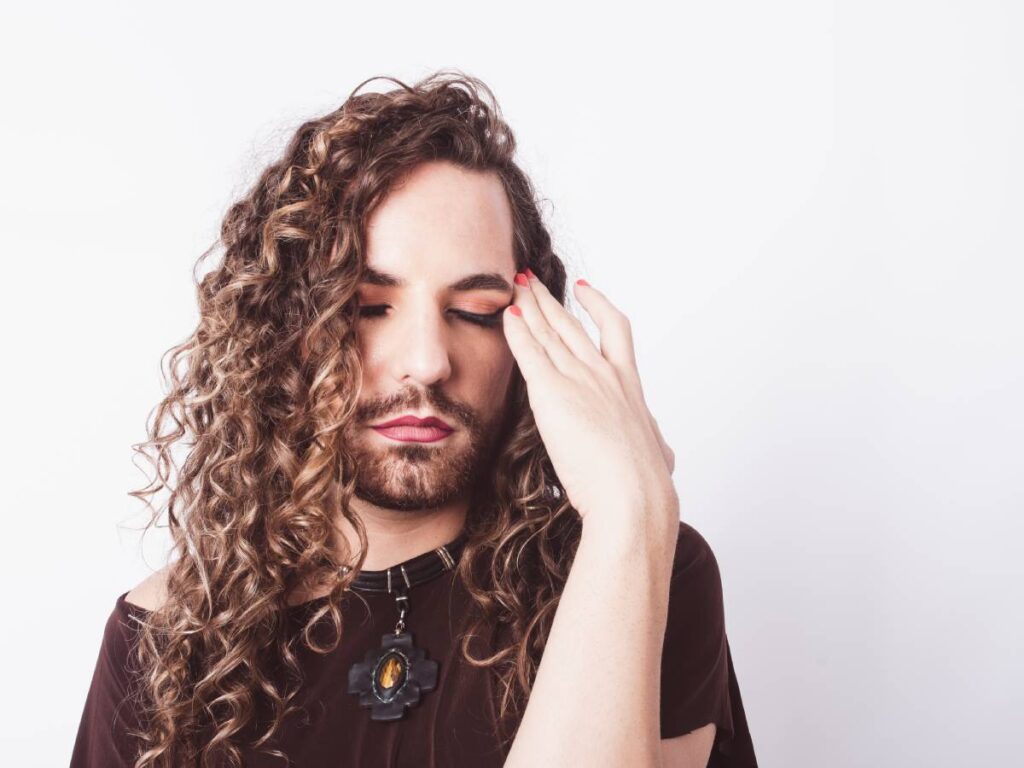
Transfeminist folklore
– What is the connection with the public like?
-Beautiful. The public is ready; those who don't want to understand the changes are the festival programmers. It's the same old establishment, the same old mainstream that wants to maintain those cultural products that sustain their economy and that are far removed from understanding the reality and social fabric of 21st-century Argentina. I've traveled to many provinces, and people approach me crying; many say, "I have a daughter, a granddaughter, a niece who is trans." I get messages all the time; it's moving. There's a lot of support, and it's beautiful. Those who don't want to change are the people who program because they're afraid to take a risk. We don't understand that. In this moment we're living in, there's no room for half-measures. If we want change to happen, we have to take a stand for what we believe in.
-Do you feel that a new chapter is being written in Argentine popular music?
Fe - Yes, and it's a very interesting chapter. "Brotecitos," this trans songbook named after a song composed by Valen, is an example. I think that, just as the Nuevo Cancionero (New Songbook ) signed by Tejada Gómez, Oscar Matus, and Mercedes Sosa in 1963 was important and relevant, in this 21st century, it's the moment for women and gender and sexual minorities. We are forging the Nuevo Cancionero of this century . With a transfeminist reading, we add to what that songbook already said: that popular folk music must accompany complex social changes .
We are giving that reading a gender perspective, moving beyond simply talking about man and landscape. It's not enough to just say man and his landscape, nor is it enough to say man, woman, and landscape. It's about the person and the landscape. We have songs written by the collective itself that speak of us, and this also happens in dance. We have trenches, we have spaces, and we have many representatives proposing a transfeminist perspective from grassroots movements.
Fernie and Patricia Malanca present Las Chinas on Thursday, May 25th at 8pm at Café Berlín , Avenida San Martín 6656.
We are present
We are committed to journalism that delves into the territories and conducts thorough investigations, combined with new technologies and narrative formats. We want the protagonists, their stories, and their struggles to be present.
SUPPORT US

FOLLOW US
Related notes

We are present
This and other stories are not usually on the media agenda. Together we can bring them to light.