

Mexico: A guide has been created to register missing LGBTI+ people
The guide is the result of an alliance between activists, academia and human rights organizations.


Share

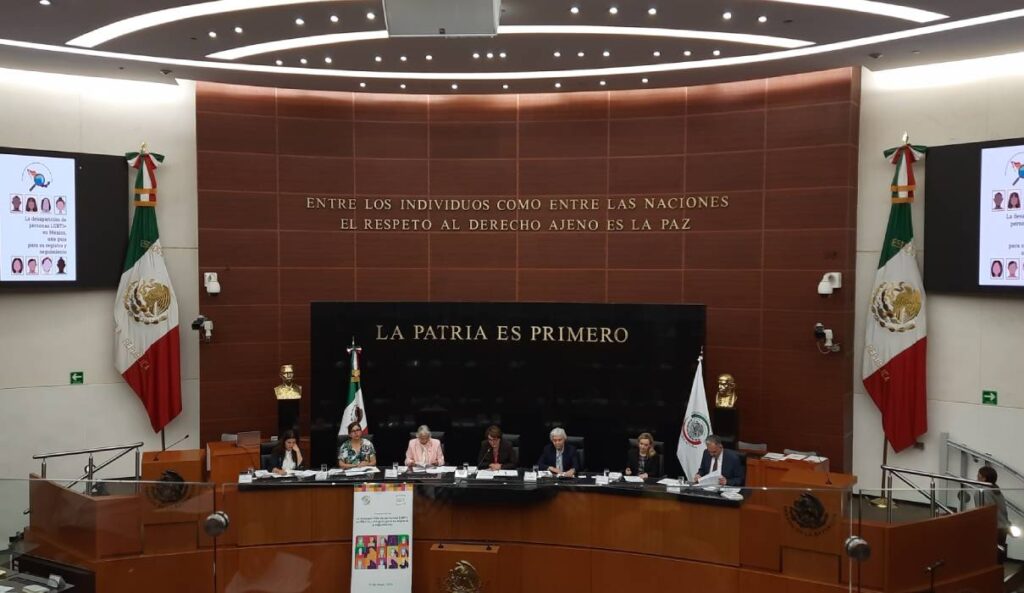
MEXICO CITY, Mexico. On May 17, the document “The Disappearance of LGBTI+ People in Mexico: A Guide for Registration and Monitoring ” was presented in the Senate of the Republic. This document analyzes the general context of the disappearance of LGBTI+ people in the country, as well as its registration and documentation. It is the first of its kind, aiming to provide information on how this human rights violation disproportionately affects this population.
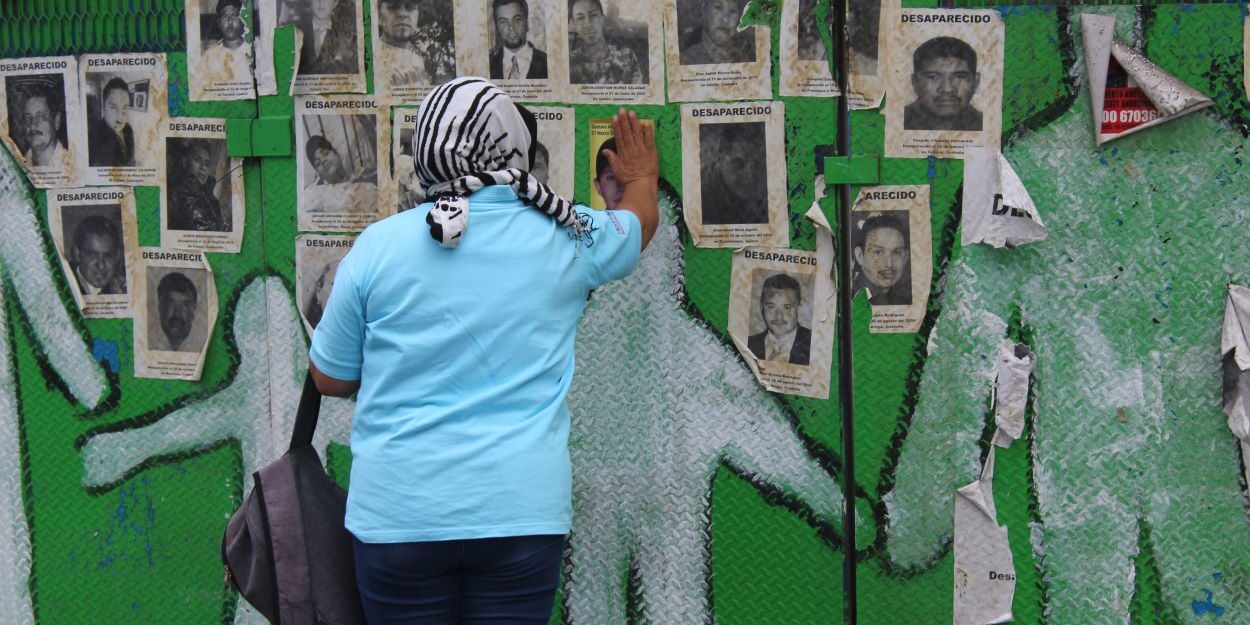
The document was presented in the context of the International Day Against Homophobia, Transphobia, and Biphobia . For the first time in the upper house of Mexico's legislature, the disappearance of LGBTI+ people was discussed, a consequence of a human rights crisis in the country where, according to official figures, more than 111,000 people are missing from their homes.
This report was prepared by the National Observatory of Hate Crimes against LGBTI+ people (ONCO) , coordinated by the Arcoíris Foundation and made up of 64 organizations throughout the country that are responsible for monitoring and tracking homicides, disappearances, suicides and attacks against the lives of LGBTI+ people in Mexico.
The construction of activism and citizenship
The guide is the result of collaborative work and partnerships between activists, academics, and human rights organizations. These groups work to create resources for society and public officials, as well as to train and systematize the processes of identification, registration, and documentation in cases of disappearance of an LGBTI+ person.
“The lack of adequate records, underreporting, and the lack of complaints and statements are the three levels where discrimination occurs (legislation, public policy, and the treatment at the service window or first point of contact). These have been among the biggest obstacles to addressing the disappearances of LGBTI+ people,” commented Alexandra Hass , executive director of OXFAM Mexico, during the presentation.
“It is citizen efforts that have been responsible for compiling the records. These exercises help to provide context to the situation, highlight the State's shortcomings, and offer tools for understanding what to do or how to view this problem. Especially for those at the three levels where discrimination operates,” Hass added.
“The way LGBTI+ people disappear is not the same as for all people.”
During the presentation in the Senate, activist Gloria Careaga , founder of the Arcoíris Foundation, commented that over the years the work of LGBT+ activists in the country who document violence warned that the disappearance of people was on the rise, and that they are part of the hate crimes against this population.
In that regard, Careaga, Alexandra Hass, and Marta Laura Carranza, author of this guide, agreed during the presentation that the prejudice-based violence experienced by LGBT+ people due to their sexual orientation and gender identity means that "the way LGBTI+ people disappear is not the same as for everyone else. These are disappearances with a high degree of cruelty and violence."
At Presentes, we have reported how the crime of disappearance is sometimes the precursor to transphobic and lesbophobic violence. This happened to Loren Guzmán in December 2021 and to the young woman Odilia Castillo in November 2022.
As highlighted in the presentation, this prejudice-based violence is compounded by other intersectional factors: migration, forced internal displacement, and being a victim and/or survivor of so-called ECOSIG methods, which repress non-hegemonic sexual orientations and gender identities .
In the article "How and why LGBT people disappear in Mexico , published in Presentes , Rocío Suárez of the Center for Support of Trans Identities ( CAIT ) has documented and analyzed the existence of "patterns that should not be understood as a general rule" but that could help prevent a disappearance from happening to an LGBTI+ person.
“Underreporting contributes to making violence invisible”
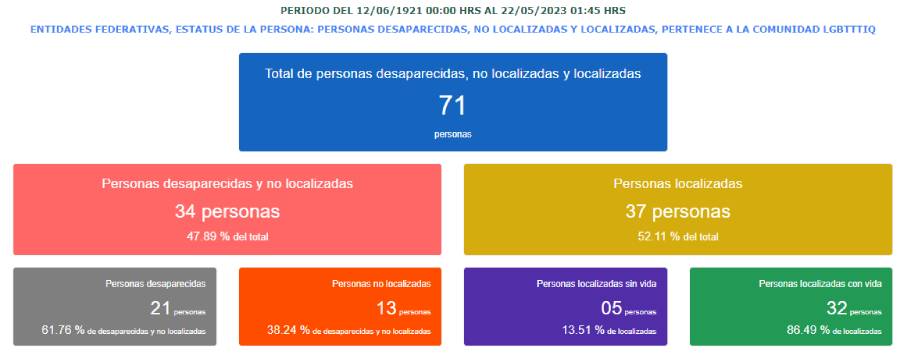
According to data from the National Registry of Missing and Unlocated Persons (RNPDNO) of the National Search Commission (CNB) as of May 22, 2023, 34 LGBT+ people are registered.
However, this official, publicly available figure does not break down the data by sexual orientation and gender identity. Nor does it provide further information to understand the ways in which LGBT+ people are disappeared.
“The underreporting of disappearances of LGBTI+ people is very high. The lack of documentation and records does not mean that they have not been victims of disappearance. Nor does it mean that no one is looking for them; quite the contrary. Failing to recognize the need for registration contributes to the invisibility of violence against LGBTI+ people,” the report states.
According to this guide, the underreporting of disappearances of LGBTI+ people in Mexico is related to:
- The fear or shame of reporting non-normative sexual orientations, gender identities, and gender expressions.
- The lack of instruments such as forms or questionnaires that allow the recording of these characteristics.
- Distrust in institutions or experiences of revictimization.
- The lack of people interested in searching for them. Those who search for them are usually their chosen families.
- The lack of information to report disappearances by family members and/or friends of the victim.
- Their families do not know their sexual identities or sexual orientations, or do not know how to talk about them.
Binary registration forms and documentation
Another obstacle detected when registering a disappearance case is that the forms are still binary or do not include boxes that allow documenting that it is an LGBTI+ person.
The only data set specifically for the LGBTI+ population included in the Standardized Protocol for the Search for Missing Persons and the Investigation of the Crime of Enforced Disappearance as part of the initial contact interview is the field for “sexual orientation.” This is followed by a section that asks for “any surgical intervention to modify your sex | yes or no,” where respondents are asked to specify.
There is no explicit category for "gender identity," and the sex section only offers two options: "male or female." The category "alias/nickname" is used to record a person's known name, not "social name," for example.

Lack of public policies for registering and searching for LGBT people
The Standardized Search Protocol and the General Law on Disappearances state that authorities have a duty of due diligence when gender-based violence is involved, whether committed against women or people of diverse sexual orientations and gender identities. They also stipulate that the differentiated violence that a person of diverse sexual orientation and gender identity may face must be considered.
However, during the presentation of this report, it was denounced that there is a lack of compliance with what is stipulated by the law.
“The law on missing persons and the incorporation of a differentiated approach do not solve the problem of the disappearance of LGBT+ people; it is merely another concept to combat this scourge. Therefore, the challenge is to materialize this approach stipulated in the law in the registration and search processes. This requires political will from institutions, the professionalization of those who apply the law, effective investigations to prevent impunity, and training to conduct contextual analyses of the aspects of the disappearance of LGBTI+ people and to systematize the structural obstacles,” commented Marta Laura Carranza, author of the guide.
The report mentions that the proper documentation of the disappearances of LGBTI+ people contributes to: having a record of the people who disappear; generating memory and restoring the stories of the disappeared; judging those responsible; finding the disappeared people; denouncing and demanding from the authorities and analyzing aspects and violence due to prejudice.
What to do in case of disappearance?
This guide includes a directory of state offices where you can report a disappearance.
In addition, in 2019, the journalistic innovation and research lab, Quinto Elemento Lab , along with other organizations, created the Socorro Bot . It's a WhatsApp guide to support those searching for a missing person. You can chat with Socorro Bot at this link .
The tool has no connection to authorities but is useful because it provides advice and information on what documents are needed and what your rights are when reporting a disappearance .
It also has a directory of authorities and groups of families searching for their missing loved ones.
Remember that all people, regardless of our sexual orientation, expression and gender identity, have the right to be sought out.
We are present
We are committed to journalism that delves into the territories and conducts thorough investigations, combined with new technologies and narrative formats. We want the protagonists, their stories, and their struggles to be present.
SUPPORT US

FOLLOW US
Related notes
We are present
This and other stories are not usually on the media agenda. Together we can bring them to light.
1 Comment