

Football, sweat and joy: the women's and dissidents' tournament that doesn't count goals
Every Sunday, women and gender dissidents play soccer on the courts of the Ramón López Velarde Garden in Mexico City. A safe space for meeting and resistance, open to all.


Share

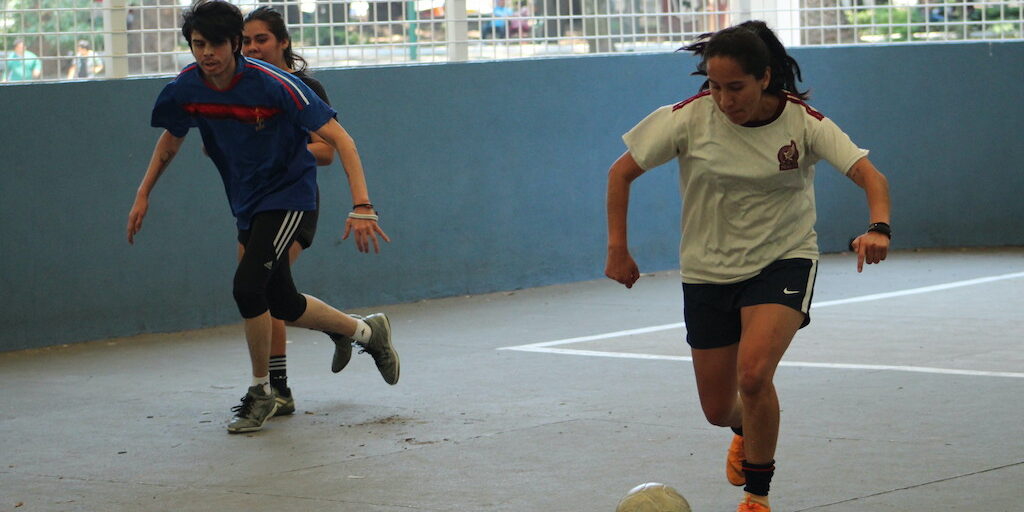
MEXICO CITY, Mexico. Every Sunday morning, amidst the chaos of Mexico City, women and gender-diverse individuals gather to enjoy casual soccer games on the courts of the Ramón López Velarde Garden. They call themselves “Soccer, Sweat, and Joy,” and it began with a small group of people during the Covid-19 pandemic in 2021.
Around that time, Julieta, who had arrived in Mexico from Argentina shortly before the quarantine, thought about finding people who shared her passion for soccer to build a community and create a safe space to connect and have fun. Initially, she was mainly looking to connect with other women, but as the group grew, it diversified to include trans, non-binary, and other gender-diverse people.
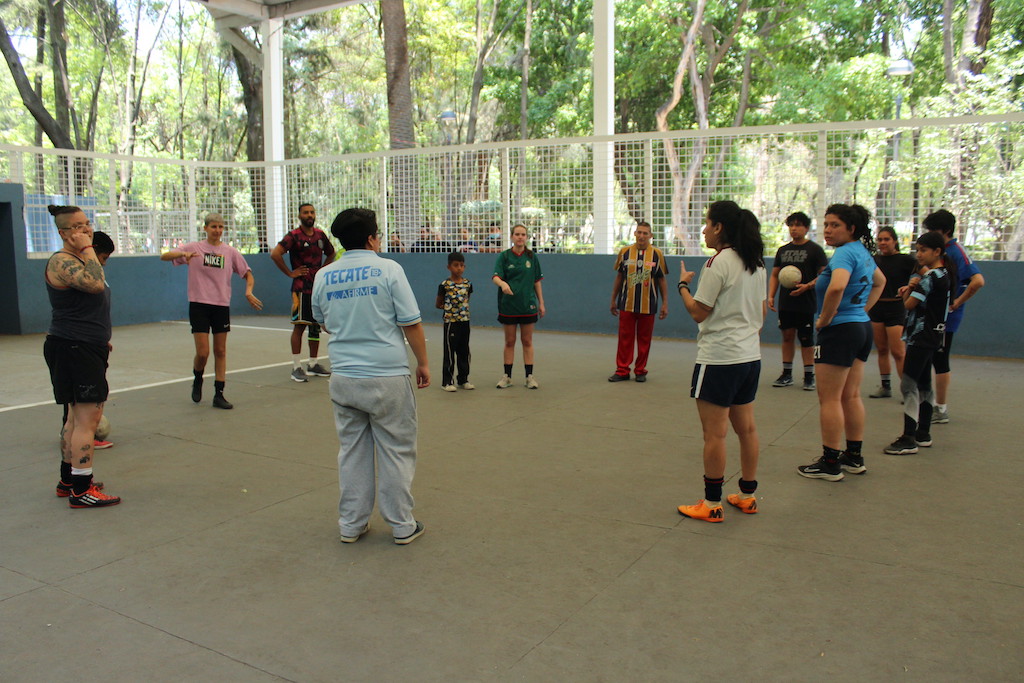
"We didn't know everything that was going to be called."
“In a WhatsApp group, Julieta posted the invitation: if anyone was interested in forming a small soccer group to meet people,” says Yorely Valero, who was in the first group that got together to play. “I’m from Colombia and I’d been living here for a while. But the pandemic changed everything, so it was like an excuse to combine wanting to play and also connect with more people.”
A small group of people responded to that proposal. After planning it for months, they met for the first time on a small court in the Juárez neighborhood: Julieta, Yorely, Yuki, Catalina, and Anne. It was March 2021. Word spread, and more people joined, also becoming part of the WhatsApp group where they organized the weekend meetings.
“There, we only added women and gender non-conforming people. That was the premise from the beginning, because there are many other spaces for cisgender kids to play. This space is for these other people who often haven't let us play ,” Yorely explains.
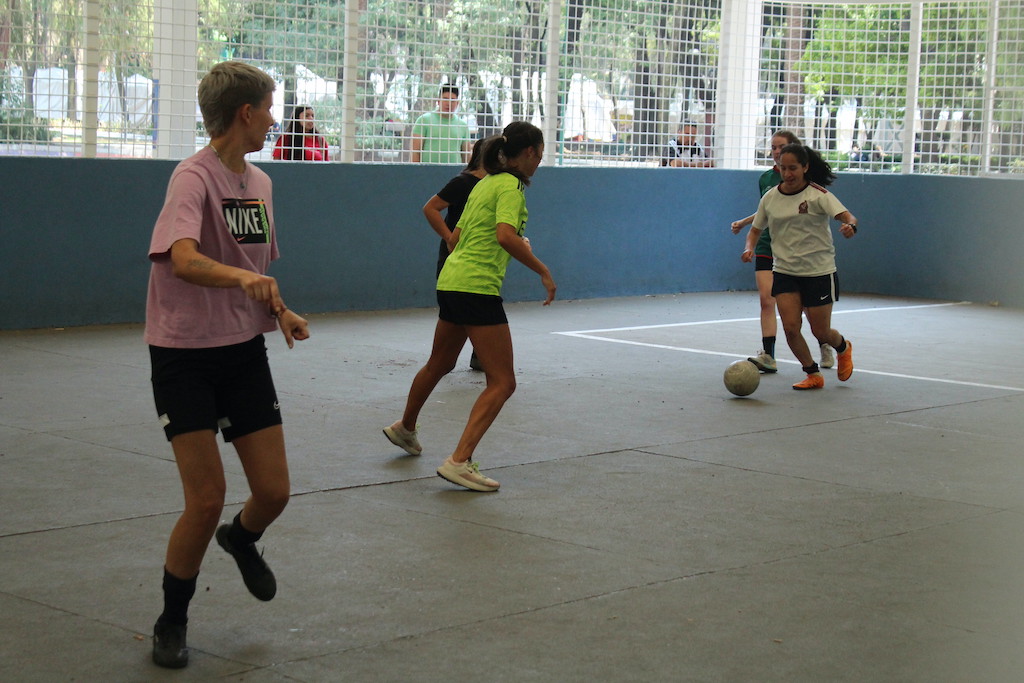
By October 2021, the small court where they started was becoming too small. They went in search of the place where they meet now. At that time, seeing that many more people were interested, they decided to create a tournament called the Sudor y Goce Tournament .
“It was a one-day tournament with eight teams participating. Everyone contributed what they could. Some did graphic design, others took care of social media, and a ceramic trophy was made. It was beautiful because we didn't know everything that was going to happen ,” Yorely recalls.
That's how more and more people started arriving. Some came after being invited by friends, like Bárbara Martín. "I used to train near here, and a Colombian friend who played invited me," she says. Others, walking by, couldn't help but notice the people playing on the courts and approach, eager to join in. "I live in the area and often walk my dog here. I'm used to the courts being mostly occupied by men. I usually walked away from the courts to avoid stares or any awkward moments. One day I got distracted, walked by, and saw that only women and men were playing, and I watched. They invited me to play. The following Sunday, I went to my first pickup game," recounts Nai Mojica.
“We didn't count the goals, but we all celebrated.
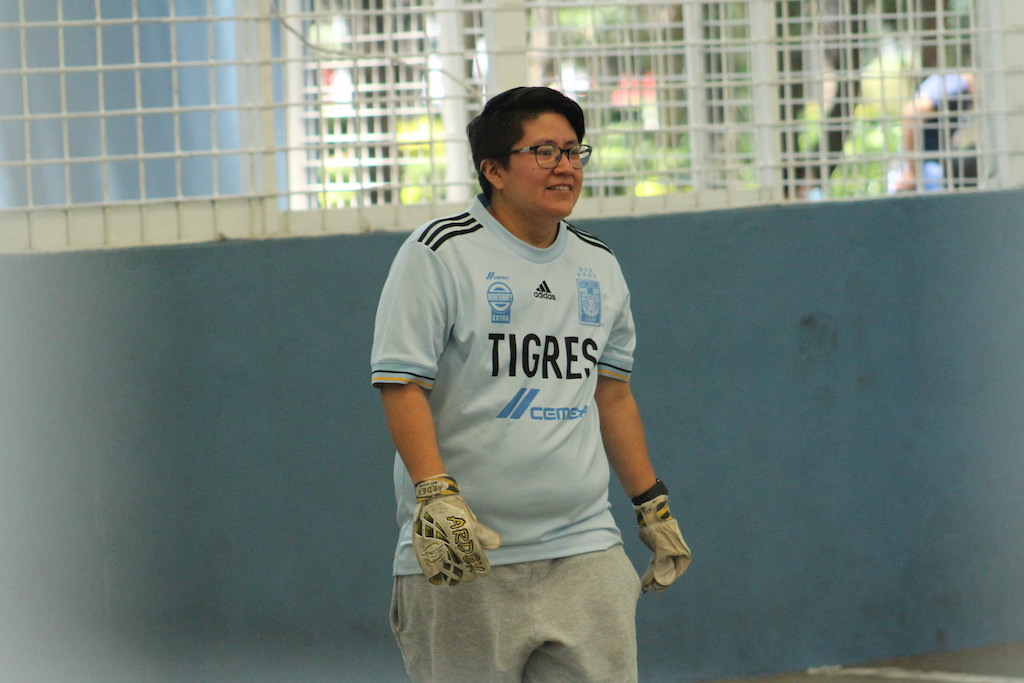
As the project grew, three unwritten rules emerged that they try to follow every time they get together to play . The first is, “We don’t count the goals, but we all celebrate .” It doesn’t matter so much which team is winning; what matters is the football and the camaraderie. So, while goals are celebrated, they take a backseat. The important thing is the game.
Second: it's a team sport . The aim is to pass the ball several times and not have it monopolized by one person to make a play. Teamwork and passing the ball are encouraged.
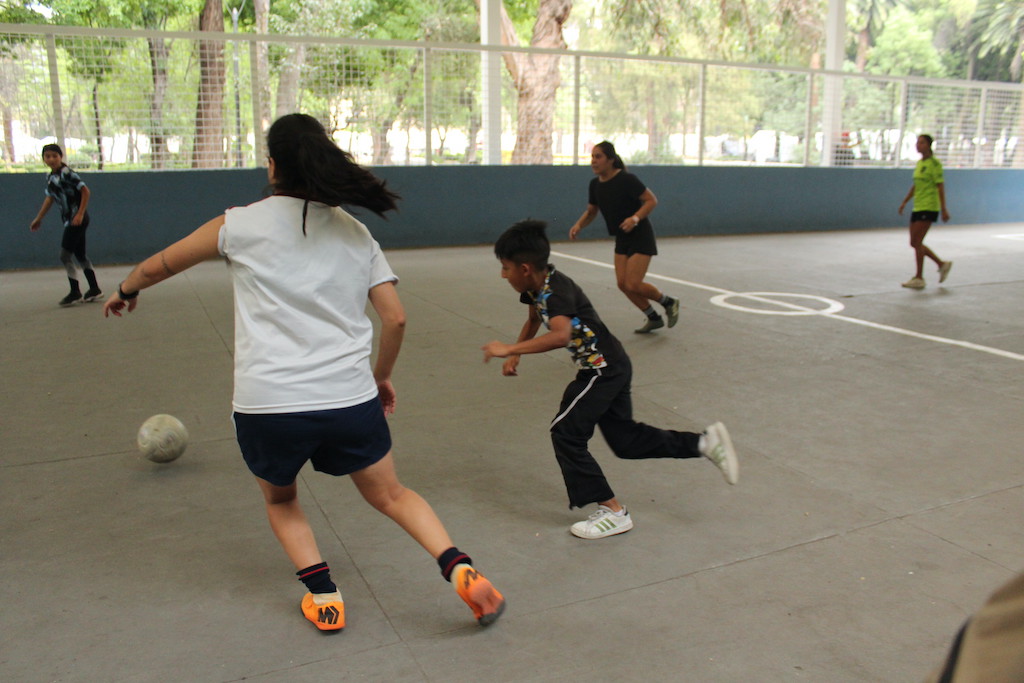
“Take care of your body and the bodies of others”
“As a woman, on men’s teams you’re a little afraid that they won’t pass the ball or that they won’t think I’m good. But it’s not like that here,” Sophia says. “Thanks to this, people who are coming in or new players who don’t have the same skill level as others can still touch the ball and start to feel confident,” Nai Mojica adds.
And third: no to rough play. “Take care of your body and the bodies of others,” Yorely emphasizes. Everyone is mindful of each other's well-being and tries to play in a non-violent way, although it can get a little out of hand in the heat of the moment; the goal is always to maintain fair play. “If someone feels violated in any way, whether because someone is playing harder or because of the adrenaline, they raise their hand and nothing happens. We talk it out and keep playing,” says Nai Mojica. “That hasn't stopped us from having a good level of futsal or from playing with passion and a strong desire to score goals.”
How to weave networks and safe spaces
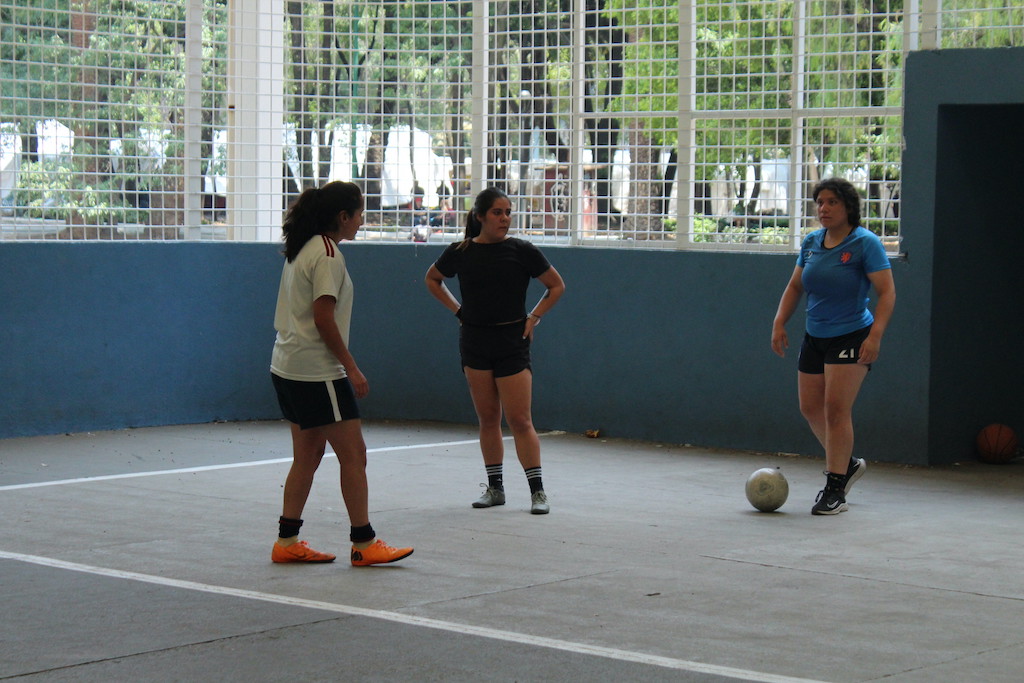
This space has become a place where, in addition to playing sports and exercising every Sunday, very different people have come together. They have formed a community through soccer, which has helped them open up more, both to themselves and to others. Karla shares: “It’s a space that makes us feel liberated, helps us express our emotions, exercise, and feel good about ourselves and other people .
“ It’s a space where you relax. Where you can really be yourself, no one will judge or criticize you. It’s a very safe place where you can experiment and give yourself permission to feel many things you haven’t felt before, ” says Daniel Mora, who, even as a cis-hetero man, has found in this group a place to question many things.
Alex Santiago mentions that, as a non-binary person, they have found a safe and supportive space to play soccer. “It seemed like a place where I could play soccer again and feel good about playing. Ultimately, it's a space of resistance, because we can't distance ourselves or stop doing these things because of the toxicity that exists in other spaces; we have to create our own spaces and resist so that we can continue playing sports .”
Furthermore, the group welcomes children who come to play, as well as anyone who wants to participate respectfully. Roberto Romero, a 66-year-old man, is one of these people who plays with them on Sundays. “It’s nice to play with the boys and girls, this mixed-gender soccer, where the goal is to exercise and have fun. I like coming here to have fun, that’s why I spend time with them. I don’t feel superior or inferior. I’m just one of them, and I come to play sports like any other human being,” he says.
How to contact them
If anyone wants to get closer to this group, they can contact them through social media, on their Instagram @futbol.sudor.y.goce; there they can ask any questions.
“We’re waiting for you, we’re here from 11:30 or 12:00 until about 2:30 and you’re going to have fun. It’s all done with respect and you don’t need to be a super level player. Even if you don’t know how to play, you can learn little by little and we’ll have a great time.”
We are present
We are committed to journalism that delves into the territories and conducts thorough investigations, combined with new technologies and narrative formats. We want the protagonists, their stories, and their struggles to be present.
SUPPORT US

FOLLOW US
Related notes

We are present
This and other stories are not usually on the media agenda. Together we can bring them to light.