

Intimas, a documentary about the lives of trans women in the greater Buenos Aires area
The film is a record of the connections and relationships of trans people in Buenos Aires neighborhoods. A red carpet for telling their own stories.


Share

BUENOS AIRES, Argentina. “ Intimates speaks of what we can say in confidence,” defines Arny, one of the protagonists of the documentary directed by Manuela Orellano in dialogue with Presentes .
In the documentary trailer, Juliana Carrizo recounts how the postman delivered her first national identity document after the Gender Identity Law in Argentina in 2012. Her voice overlaps with another that says the dictatorship never really ended. “I became very close friends with her, very close friends, and then suddenly she disappeared,” another person laments.
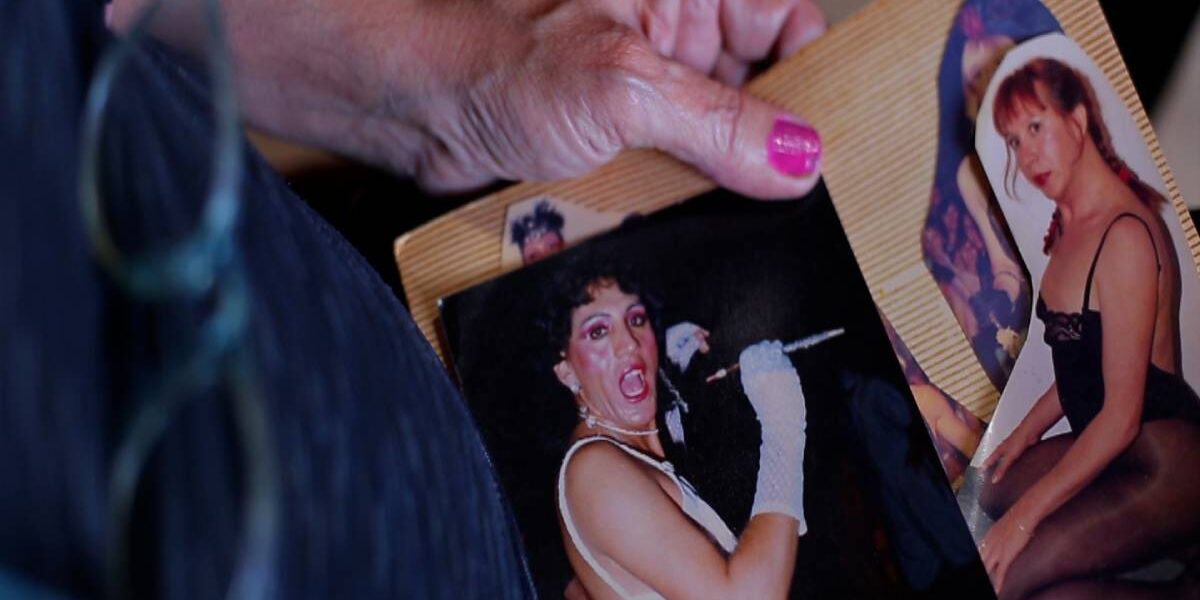
Details of their lives, real settings, rooms, kitchens, where we, the viewers, become part of this group of friends, who share their intimacy with us.
Íntimas is presented on the International Day against Discrimination based on Sexual Orientation and Gender Identity , and will feature the presence of the head of the National Institute against Discrimination, Xenophobia and Racism (INADI) Greta Pena, the national deputy Leonardo Grosso and the trans official Agustina Ponce, undersecretary of Diversity Policies of the Ministry of Women, Gender and Diversity of Argentina .
The essence of relationships
Close friends invite us to a red carpet event to celebrate lifetimes of learning, pain, and laughter. The screen fades to black, and one of them concludes: “I’ve always been the same, because what transition? I’ve always been a woman.”
For the authors, the word Íntimas has to do with rescuing the way in which bonds are built between companions, with a loving care that is a form of resistance against cruelty, individualism and violence.
For example, finding out that a comrade is sick and taking care of her, cleaning her up; or having to go pick her up from the police station; or knowing who needs to be said goodbye, and then how to organize the wake, raise money for it, reclaim that name that the State didn't recognize. It's an intimate web, within the framework of the great political struggles, a resistance situated in the territories: in the neighborhoods.
Some of its protagonists are part of El Teje de San Martín , an organization of transvestite and trans people that was born in that district of Buenos Aires province in the midst of the Covid-19 pandemic. There, various activities take place, including the Fuego beauty center .
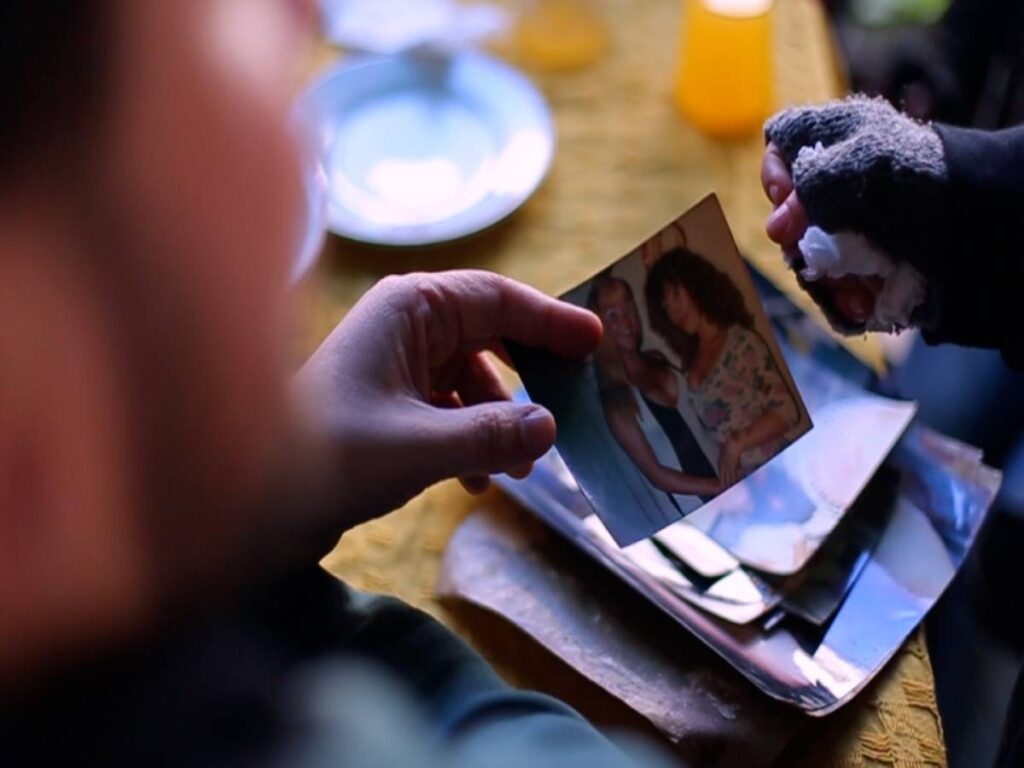
Photo: Courtesy of Facundo Nivolo.
Trans and suburban lives
Íntimas begins as a documentary (incomplete, a work in progress), an urgent record of the fundamental voices of this local, suburban, fighting and loving trans memory, in audiovisual format.
This record engages with other trans memory archives, but with the unique characteristic of being situated in a specific territory and recognizing strategic and important points of circulation, each with its own rich history for the residents of this district. It acts as a kind of magnifying glass, allowing us to recover the stories of the social fabric, of the connections, by listening to the voices of the protagonists. How do our voices sound? How do they resonate?
With the presentation on May 17 at 6 pm in the Tornavías Theater of the University of San Martín, these voices will begin to circulate, voices that have transformed so much and that have so much to continue contributing from their unique civic experience.
2020 and intergenerational crossing
The idea was born during the pandemic, when they got together to do ReparTeje, which consisted of getting and distributing the food and hygiene items needed by the almost 200 trans and travesti colleagues, who with the circulation restrictions could not work, and did not have another network to help them.
“The older women, Buby, who turned 79, Jorgelina, who is in her fifties, and Julia, who is over sixty, were telling stories, and we wanted to ask about a lot of things that were happening here in San Martín, without having to go to the capital. Foundational stories that happen on the streets where we walk and build our lives,” says the film's director, Manuela Orellano.
Among the protagonists of this first installment are also Gaby la Tucumana and the beloved Cristal, who recently passed away.
In one excerpt, the fantastic local artist, Angela Lulú, recounts how she met her first trans friends. “The famous Pepito, Mónica, Mery… I remember crossing paths with them on a bus and following them, and do you know where they ended up? They were going to a murga rehearsal in Pablo Podestá. I was struck by them already dressed as women, and I was maybe 14 years old, and I got off the bus and followed them, until I approached them without knowing them.”
"So?" Manu asks.
– And no… they told me I was a faggot, and everything was fine. I don't know, I fell in love with their condition, freely, then we became very close friends, very close friends, years, parties, birthdays, we spent everything together, until I gradually became gay.
The tone stretches eternally, the echo of the voices remains, transcending tenderness, innocence.
The documentary is still in production, as more interviews are needed and many stories remain to be told. It also aims to document and strengthen intergenerational dialogue.
“It is also a political memory because they are fundamental voices for designing the public policies that the sector needs and that the territory demands,” the director emphasizes.
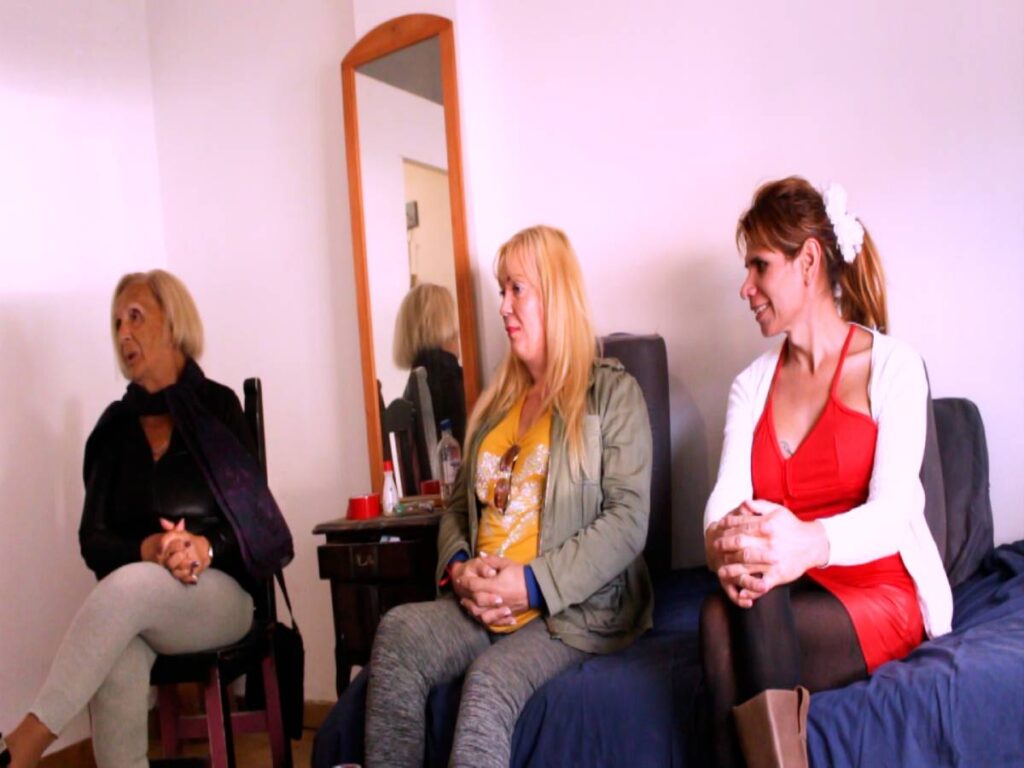
Photo: Courtesy of Facundo Nivolo.
Memory of the edges
The documentary overflows the screen. It has no end. Three generations coexist, and those yet to come. “One of the purposes of Íntima is to ensure that the experiences of our elders are not forgotten, and to value what has been achieved,” emphasizes Arny Toledo, who belongs to an intermediate generation of the trans and travesti community of San Martín. The town borders the northwest of the Federal Capital and extends into the Greater Buenos Aires metropolitan area via Route 8, where significant progress has been made. One such advancement was the first diversity clinic, located in the Fleming Hospital.
The challenge of building an audiovisual archive that recovers the experiences, stories, and memories of trans and gender-diverse people in San Martín is an arduous task. Guillermo Castro coordinates the initiative. “Our sisters have historically been excluded from the narratives of our nations, our resistance movements, and our struggles as a people. This is about doing justice for the many women who dedicated themselves to building a more just and equitable country. Having this record also revalues local stories and experiences outside the big city,” he explains.
Dear Future
What does it mean for the women to have been part of this historical journey in San Martín? Arny Toledo, a communications expert chosen by her colleagues as spokesperson, notes that listening to the older women made her re-evaluate how important it was to acquire new rights.
“When we hear from an adult trans woman who went through so much mistreatment in police stations, and that now we have the right to move about as we please… Because they were condemned solely for their clothing, I mean, it’s unheard of. And when we hear these stories, we realize that although we have achieved a lot, there is still much more to do.”
“We recently commemorated another anniversary of the gender identity law, which was a great step forward, achieved through struggle, and we have to go for more, and that is our part, with our new population, eighteen-year-olds, or twenty-somethings who are trans, to guide them so that they do not forget,” says Arny, because among the Íntimas they share dreams, and know how to weave rights.
The documentary will be presented on Wednesday, May 17th at 6 PM at the Tornavías Theater of UNSAM , Francia 34, Villa Lynch, Province of Buenos Aires.
We are present
We are committed to journalism that delves into the territories and conducts thorough investigations, combined with new technologies and narrative formats. We want the protagonists, their stories, and their struggles to be present.
SUPPORT US

FOLLOW US
Related notes

We are present
This and other stories are not usually on the media agenda. Together we can bring them to light.