

She is an evangelical pastor and a lesbian: “My Christianity: that of indecency and debauchery”
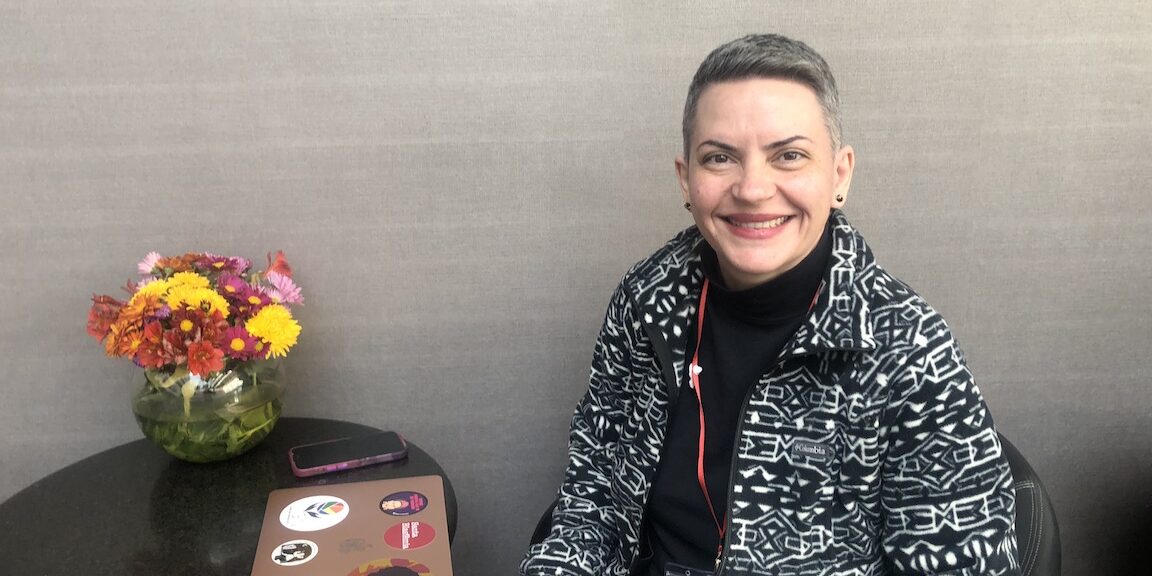
Ana Ester is a Brazilian queer theologian, journalist, and evangelical pastor. Her work involves deconstructing narratives about Christianity and creating safe spaces for LGBTQ+ people to practice their faith.


Share

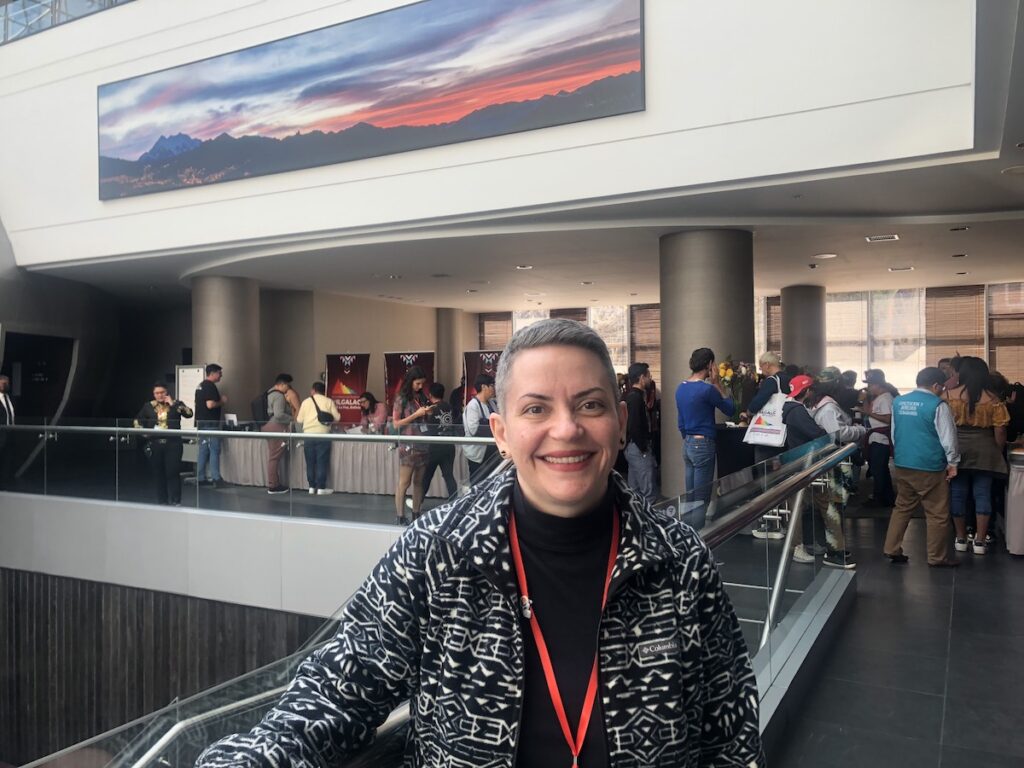
“Christianity must be de-Christianized”; “There are many Christianities”; “Christianity doesn’t need to be saved, it needs to be exterminated”; “Christianity is colonial and must be de-patriarchalized,” says Ana Ester, a Brazilian evangelical pastor, journalist, and PhD in theology, as if hurling hot spears. She was one of the participants in theIX ILGA LAC Conference in La Paz, Bolivia, a meeting whose motto was, precisely, “Decolonizing our struggles. De-patriarchalizing our bodies.” During the conference, religious fundamentalisms and the expansion of evangelical churches in Latin America were identified as some of the greatest dangers for LGBTI+ people, as these institutions use faith to traffic in anti-gender and anti-sexual diversity ideas, among other anti-rights discourses.
This Brazilian activist and academic is a kind of infiltrator in worlds that are usually separate: she is a pastor and she is a lesbian. A sort of intermediary between faith and queer theory, Ana Ester is also the Latin American representative for the Global Interfaith Network, a Johannesburg-based worldwide organization made up of LGBTI+ activists from all faiths. They seek to influence their local churches and temples to eliminate discriminatory and violent practices from within.
"I spend all my time coming out of the closet"
“I’m constantly coming out. As a lesbian in religious spaces and as a religious woman in activist circles. I know my presence can trigger difficult emotions because of the harm Christian churches have done to LGBT people,” says Ana Ester. She adds, “I’m aware that as a Christian I’m part of a religious structure that upholds the patriarchal system, but my Christianity is one of indecency and debauchery.”
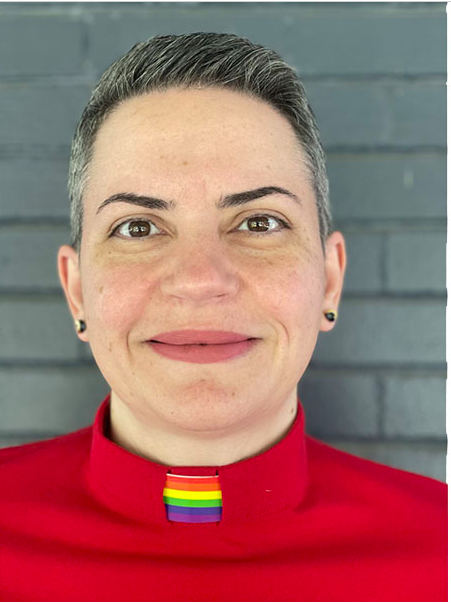
It wasn't easy for her to come out that way. She was 18 years old and had a Catholic upbringing when she began to identify as a lesbian. In the midst of her confusion, she went to a neo-Pentecostal church in her hometown of Belo Horizonte (southern Brazil), full of doubts and needing a place to belong. But the church's response was: being a lesbian is a sin. Immersed in the faith that offered her refuge, she underwent "gay conversion therapyand soon after came out as an "ex-lesbian." But that "conversion therapy," which tormented her and made her deny herself, lasted only until she fell in love with a woman.
– Did you feel like you had to choose?
Yes, it was one or the other. That's when I abandoned the experience of faith. I began to doubt whether I believed in God or not. But when I separated—and it was a very difficult breakup—I wanted to approach faith again. I needed to return. I couldn't find a way back, so I chose another path: the academic path. I was already a social communicator and I took a theology course. There, in the course, I encountered other perspectives on theology that allowed me to be who I was: liberation theology, feminist theology, and then queer theology. That's how I began to connect one thing with another. Later, I did a doctorate in Queer Theology and found an inclusive faith community: the Metropolitan Community Church, founded in the US. There, I realized that there was a possibility of also being a religious leader and representing that other faith. It was very difficult because I didn't want to be part of the system that was expelling us.
"Many LGBT people survive thanks to religion."
– Why become a pastor?
– I felt I could create safe spaces for the community in an inclusive church. For me, Christianity isn't singular, it's plural. Instead of pointing out homogeneity, it's necessary to challenge its meaning, to question how we came to be who we are and to believe in what we believe. In our progressive evangelical church in Brazil, we seek to offer counter-narratives to fundamentalism, spaces where people can practice their faith ethically, with values. Because many LGBT people also survive thanks to the meaning that religion gives us; sometimes it's all we have, because almost everything else has been taken from us.
“Christianity is one of the great educators on gender in Latin America”
From liberation theology she moved to feminist theology and from there she jumped to queer theology, thanks to the work of the Argentine theologian Marcella Althaus-Reid, a brilliant theorist who scandalized several churches, was little known in her country of origin and died in 2009.
– What does it mean to de-Christianize Christ?
The thesis I defend is that to de-patriarchalize religion, we must de-Christianize Christianity . And for that , we must challenge the figure and person of Christ, taking him off the throne and bringing him to the peripheries. My training in liberation theology is very strong, and I have worked with church communities and small popular formation groups. This is how we transmit the good news of the Gospel: basically, unconditional love for all people . For that, we must also decolonize it. Undoubtedly, Christianity is colonial. One of its colonial forces lies in the regulation of our sexualities, because Christianity is one of the great pedagogues of gender in Latin America . Marcella Althaus-Reid spoke of religion as "oral sex." She said: we must oralize the sexual histories that were hidden. For her, theology is sexual, and she shows how traditional theology contributed to reinforcing violence against sexual and gender dissidents.
– How do inclusive evangelical churches coexist with other churches?
There are many evangelical traditions: Protestant, Pentecostal, Neo-Pentecostal, and even Catholicism has its fundamentalist elements. That's why I prefer to speak of Christianities rather than Christianity. People come to our church who were sent by their evangelical families to conversion therapy, expelled from their homes. Our work is always one of peace, and we believe that Christianity must be a liberating force, not one of oppression. So we welcome those who come from all these churches and open our doors to them.
We are present
We are committed to journalism that delves into the territories and conducts thorough investigations, combined with new technologies and narrative formats. We want the protagonists, their stories, and their struggles to be present.
SUPPORT US

FOLLOW US
Related notes
We are present
This and other stories are not usually on the media agenda. Together we can bring them to light.