

“Advancing LGBTI+ rights is a fight for better democracies.”
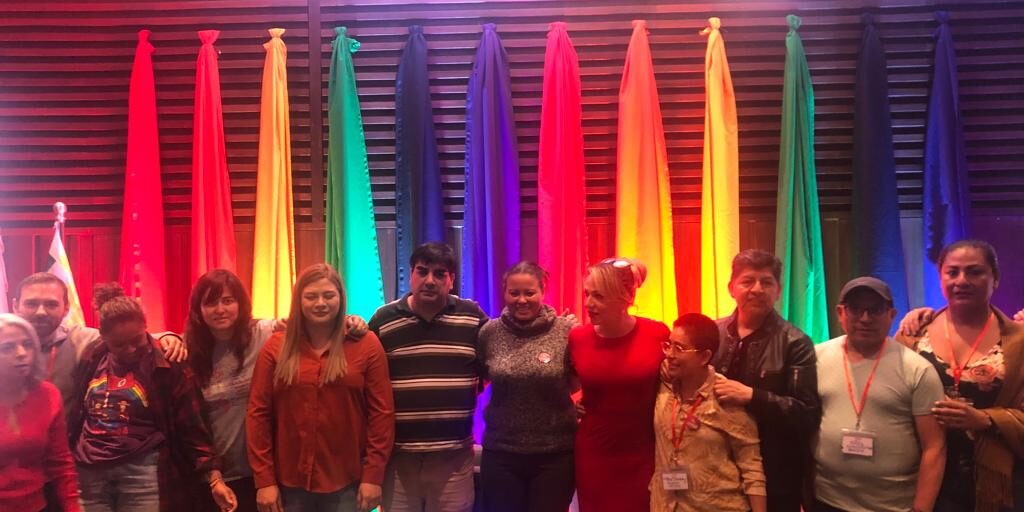
Assessments and agendas from the IX ILGA LAC Conference in La Paz. Participants agreed: it was a historic meeting in a context of advancing neo-fascism, with governments allying themselves with religious fundamentalists and other anti-rights sectors.


Share

LA PAZ, Bolivia (special correspondent). Mainstreaming struggles with other social and cultural sectors. Recovering and building memory. Ensuring the transmission of knowledge to new generations. Making visible and fighting for the rights of older adults. Protecting children with comprehensive sex education. Opening more spaces within the community for intersex people. These were some of the key themes that emerged and were repeated in the nine plenary sessions, six caucuses, and 22 workshops of the IX ILGA LAC Regional Meeting in La Paz, Bolivia. For four days, 250 LGBTI+ activists from Latin America and the Caribbean shared local experiences with organizations and discussed the problems, needs, progress, and collective dreams.
This year's theme was "Decolonizing our struggles. Depatriarchalizing our bodies." Participants agreed: it was a historic gathering in a context of advancing neo-fascism, with governments allying themselves with religious fundamentalists and other anti-rights groups.
Until now, there had been no focus on intersectionality or the need for a decolonial perspective on LGBTQ+ activism. The choice of the Plurinational State of Bolivia as the host country was in line with this. Indigenous history and present shaped the agenda of the meeting.
“This meeting was historic because it places plurinational, anti-racist, and territorial periphery agendas at the center of the region’s LGBTI+ agendas. We all leave with many commitments to strengthen these agendas, especially those of historically marginalized groups in our community,” Darío Arias, re-elected co-secretary of ILGA LAC, told Presentes.
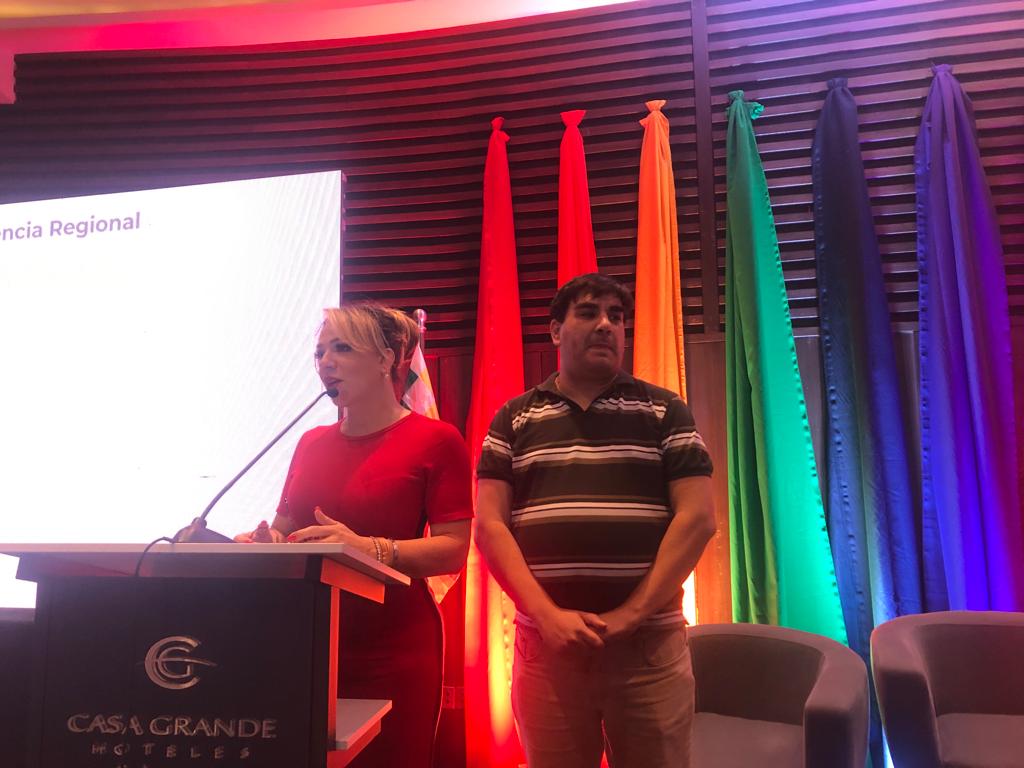
The next meeting will be held in three years in San Salvador, El Salvador, a decision made at the conference's closing ceremony. The ILGA LAC Regional Council was also elected by secret ballot. Co-secretaries Ari Vera Morales and Darío Arias were re-elected. After announcing the winners, the conclusions of each caucus (trans, women, lesbian, bisexual, intersex, and gay) were read, outlining a roadmap for work in the coming period, both within ILGA LAC and in local activism.
Intersecting the struggles
In the final plenary session, moderated by Luz Elena Aranda Arroyo (Las Reinas Chulas AC, Mexico), activists Manu Mireles (Bachillerato Popular Travesti Trans Mocha Celis, Argentina), Rossana Marzán (Diversidad Dominicana, Dominican Republic), and Shane Cienfuegos (OTD, Chile) identified priorities, strategies, and their dreams for LGBTQ+ people in the region. A recurring theme throughout the conference was revisited in every table, workshop, and panel: the need to form alliances and work with other social sectors, such as labor unions, and to strengthen ties with feminism, migrants, and racialized people. Ultimately, the goal is to intersect these struggles to advance human rights. Discussions also focused on how to work together to create comprehensive legislation.
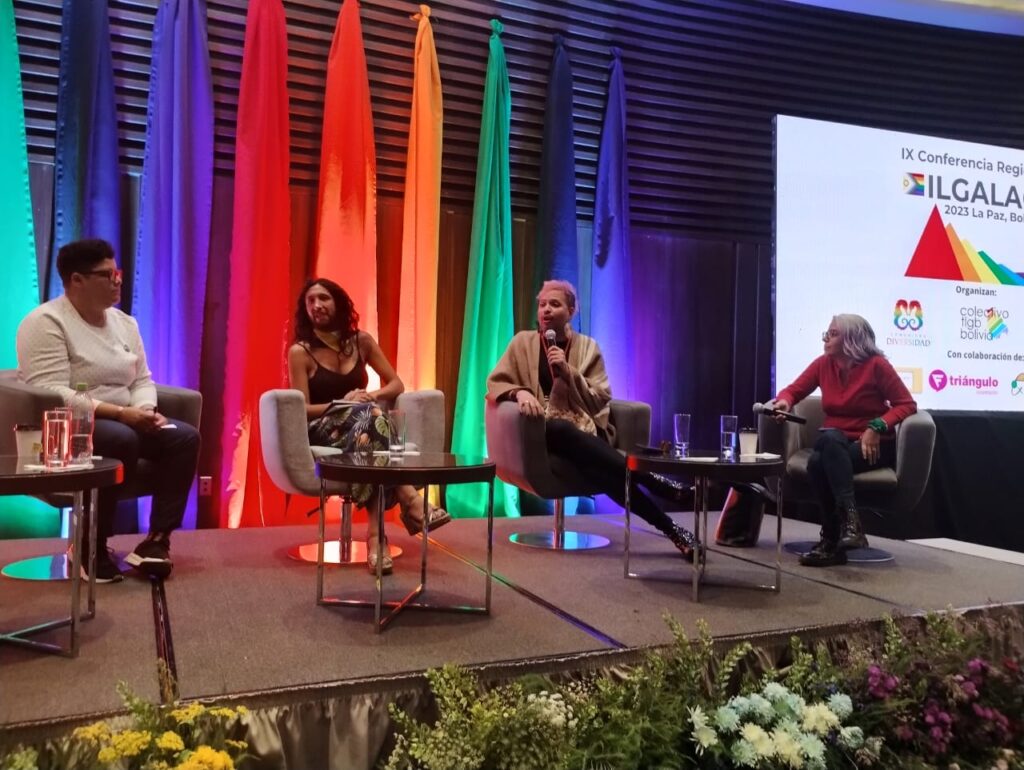
“In countries with laws like marriage equality, gender identity laws, or trans quotas, the progress hasn't just been for our rights, but for everyone. Advances in LGBTI+ rights strengthen democracies,” said Manu Mireles. The activist explained that, at Mocha Celis—where they work not only with LGBTI+ people but also with migrants, women in vulnerable situations, and people with disabilities—they also investigate how right-wing groups are organizing regionally. “We need to know how they are organized, what their resources are, who funds them, and also think about how we can move forward regionally and review our legal frameworks.”
Shane Cienfuegos, who became the first person in Chile to obtain legal documentation recognizing their non-binary identity, spoke about the need for a job quota for trans and non-binary people in their country. They also raised the need to develop reparations policies for the trans community. “We need laws that acknowledge the structural violence we have suffered due to historical segregation. And we need lifelong financial reparations, specifically for older trans adults,” they said.
In the Dominican Republic, according to Rossana Marzán, there is institutionalized homophobia within the state, and anti-rights groups are funded from there. She explained that their work is arduous and proposed that LGBTQ+ organizations conduct an investigation into how public funds are allocated in her country.
Less ego and more networks of politics and affection
To achieve these objectives, the participants identified different strategies.
Shane Cienfuegos spoke about the need to transform education and theory. “We have to radicalize knowledge and build our own epistemology to break free from heteronormative frameworks . A second priority is to generate scientific research, and for this research to be collaborative. There also needs to be an intergenerational transfer of knowledge from historical activists. And we need to move forward internally, because we also need to advance inwardly. Through affection, love, and best practices.”
Mireles also alluded to this, speaking of setting aside competition between identities. “We have to learn to work together and stop stepping on each other's toes, worrying about who's taking away whose rights. We could be better off if we put aside the egos of organizations . People starting out in activism today need to understand the necessity of creating networks , with international cooperation, the government, and grassroots sectors. That's the goal. If the LGBTIQ+ movements could let go of some of their fear and understand that we're not just working for ourselves, but rather ensuring the creation of better societies, better democracies—which is something much broader—so that other worlds are possible. A world where you don't have to fear that your family will stop loving you, for example. I know it's utopian, but I'm incredibly ambitious.”
For Shane, it's necessary to "manufacture a politics of affection. To give the love that has been denied us. We see others as enemies, that's why there are divisions. That's an effect of the capitalist system that makes us reflect on identity politics. I invite you to radicalize through affection, through love, through saying 'I admire your work' and not engaging in competition. Because while we fragment ourselves, who does that serve?"
Manu Mireles emphasized the need for intersectionality. “For us, it’s incredibly important to understand how we provide support in a context of extreme poverty. Not only for LGBT+ people, but also for racialized people, migrants, and so on. We need to develop public policy based on the specificities of our communities, with a human rights approach . That is, we need to consider how we guarantee rights while taking into account the particularities of people in these territories.”
We are present
We are committed to journalism that delves into the territories and conducts thorough investigations, combined with new technologies and narrative formats. We want the protagonists, their stories, and their struggles to be present.
SUPPORT US

FOLLOW US
Related notes
We are present
This and other stories are not usually on the media agenda. Together we can bring them to light.