

Why some lesbians do not identify as women
"Lesbians are not women," said philosopher and lesbian feminist activist Monique Wittig. The phrase became an emblem. Lesbian activists explain why they do not identify as women and what lesbian identity means to them.



Share

“Lesbians are not women,” said the French philosopher and lesbian feminist activist Monique Wittig in the late 1970s. The phrase became an emblem for lesbian activism, which continued her legacy. With it, she explained that being a lesbian is not limited to a sexual orientation (who you like) but rather a way of inhabiting the world and escaping the heterosexual order.
To find out why some lesbians do not identify as women, Presentes spoke with lesbian activists Vic Sfriso, María Eugenia Sarrías, Mariana Rodríguez Fuentes and María del Milagro Mariona.
Wittig's influence as the origin of this line of thought . The philosopher uttered the phrase that caused such unease in her time at the close of her speech "The Heterosexual Mind" in 1978 at the Modern Language Association Convention. Two years later (1980), it was published for the first time in the French journal Questiones féministes (Feminist Questions).
In her theory , Wittig recognizes heterosexuality as more than just a sexual orientation. For her, it is a political and economic regime . This organization of the heterosexual world is based on the submission and appropriation of women by men , according to the French activist.
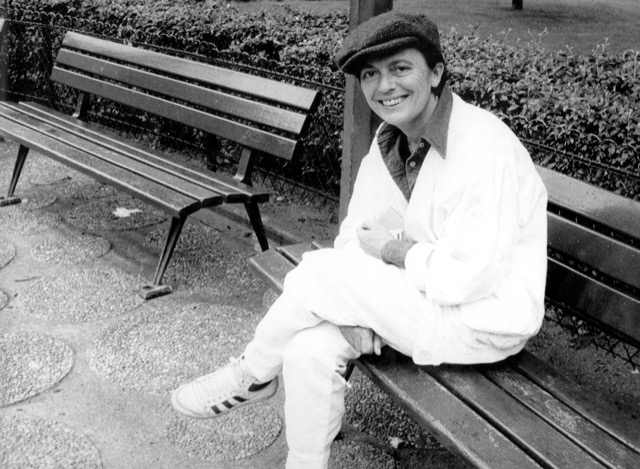
Photo: By Succession littéraire de Monique Wittig – Own work, CC BY-SA 4.0, https://commons.wikimedia.org/w/index.php?curid=96055288
Fugitive lesbians
“You might think my viewpoint is too harsh, and I’m not surprised, given the centuries of thought that have opposed it,” the writer says in the introduction to her essays. In this context, for Wittig, lesbians are fugitives from the heterosexual regime; that is, they escape from this order.
The interviewees agreed that being a lesbian implies a specific way of inhabiting the world, different from that of a cisgender heterosexual woman . Therefore, they consider it a gender identity. Furthermore, they emphasized that it is a way of being that is neither fixed nor the same for all lesbians.
To explain, they answered the questions: What does being a lesbian mean to you? and Why do you identify as a lesbian and not as a woman?
Gender identity and political expression
María Eugenia Sarrías, social worker and member of Lxs Safinxs, from Rosario, Santa Fe
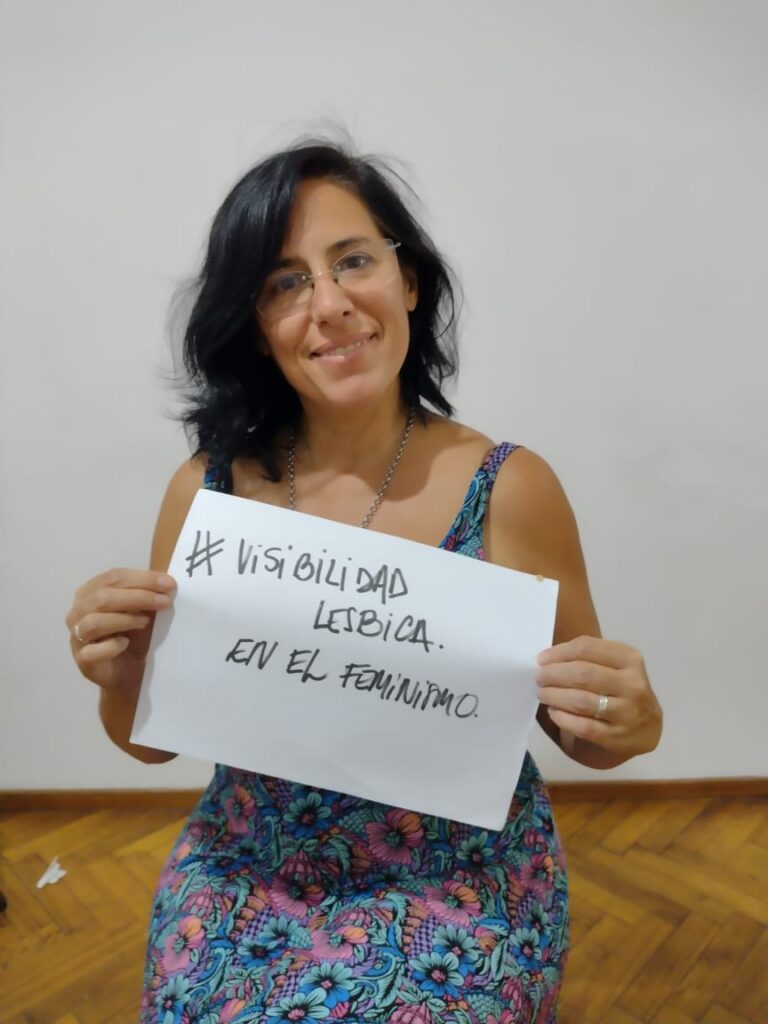
Lesbian is a revolutionary word ; it names a political subject that is neither binary, neither male nor female. It is a gender identity and a political expression . It is also a way of life that breaks with conventional forms and modes of relating to each other, to nature, and to ourselves.
Furthermore, lesbian is an identity that encompasses the many diverse ways we choose to inhabit it. There are lesbians of all colors : Indian lesbians, poor lesbians, working-class lesbians, intellectual lesbians, lesbian scientists, cis lesbians, trans lesbians… simply lesbians. I identify generically as lesbian because I don't identify with other categories or ways of inhabiting this world.
What is the lesbian conceptual space
Vic Sfriso, teacher and translator, lives in the City of Buenos Aires
She recently translated and published *Paris, la Política* with Asentamiento Fernseh Publishers in Córdoba. She also studies how small publishing houses, such as Bocavulvaria Ediciones , engaged in lesbian activism.

I think of lesbian identity as a space we've collectively created by building words and constructing a semantic field where we can recognize ourselves in different experiences. In that sense, there are different receptions of this identity proposition in political terms. I like Wittig's proposal in the sense that lesbians are not women and that they constitute a way of being in the world that doesn't operate generically like women . But also that lesbianism is a conceptual space in terms of deviance or even what we might update today as queerness.
One of Wittig's closest friends described her conception of lesbianism as a hologram. As if it were something only visible in fleeting moments, something not fixed, not static, not ontological, lacking essential features: that nothing inherently defines a lesbian except those movements aimed at finding deviant spaces for sexual expression. I'm interested in lesbianism as a sexual space that disrupts the generic. Not as an identity that encrypts itself, as if lesbians are a certain way and that this constitutes the category of lesbianism .
Identity on the run
María del Milagro Mariona, journalist, feminist activist and lesbian activist-
She edits and directs the cooperative newspaper La Nota de Tucumán , which has a feminist and LGBT+ agenda. She lives in Tucumán.

For me, being a lesbian is a much deeper identity than who I'm sexually and emotionally attracted to. It's a way of being in the world, of inhabiting it, of navigating it by breaking with the binary of woman/man or heterosexual/homosexual.
As an identity outside the norm, it is shaped, on the one hand, by the violence of the heteronormative system. This system constantly seeks to suppress what you are, or if you are, to keep it hidden, unheard, and unknown. And on the other hand, it is shaped by the resistance and the bonds that form around this escape from the system and its violence.
I experience it as a fleeting identity , an identity without form or rules. I didn't always experience it this way. It was a process, a maturation, a collective construction with other lesbians who inhabit the world from a similar perspective, where we can find common ground in our experiences.
An understanding of the world and of building community
Mariana Rodríguez Fuentes, graduate in Communication and trainer in Comprehensive Sexuality Education (CSE)
Together with Mariona, she produces the podcast Antro de Lesbianas and is also from Tucumán.
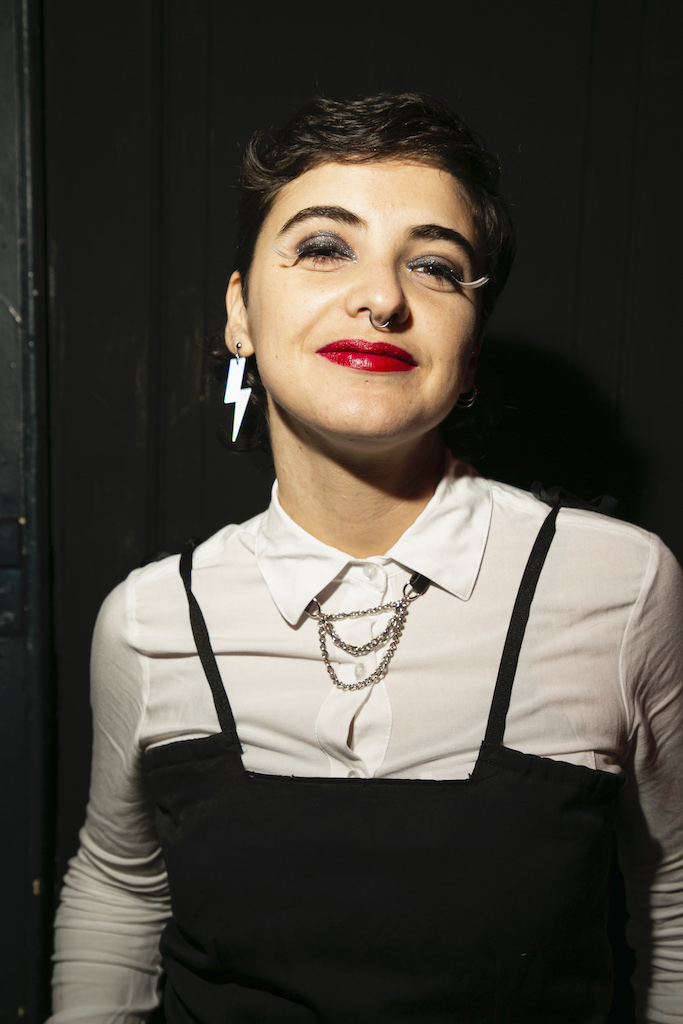
Identity is a stance you take with you everywhere. In my experience, it involves trying to legitimize, or constantly challenge the legitimization of, my identity as a lesbian in many places where it's not expected. I work as a teacher or teacher trainer, and I can't help but share and assert my experience as a lesbian there as well. For me, there 's a vision or understanding of the world that isn't the same as the heterosexual one , and I feel more comfortable in that space.
We will always try to promote the idea that sexual orientation and gender identity are not linear. Sexuality is a dynamic form of expression. For a non-binary person to identify as lesbian is a way of reclaiming a way of life, of building community as the lesbian movement has done.
We are present
We are committed to journalism that delves into the territories and conducts thorough investigations, combined with new technologies and narrative formats. We want the protagonists, their stories, and their struggles to be present.
SUPPORT US

FOLLOW US
Related notes

We are present
This and other stories are not usually on the media agenda. Together we can bring them to light.