

“Non-binary lesbians exist and we resist”
"We are non-binary people who love from a lesbian perspective." Le Paline, Gizeh Jimenez, and La Mala share their experiences of lesbianism as a diverse space of affection and political resistance.


Share

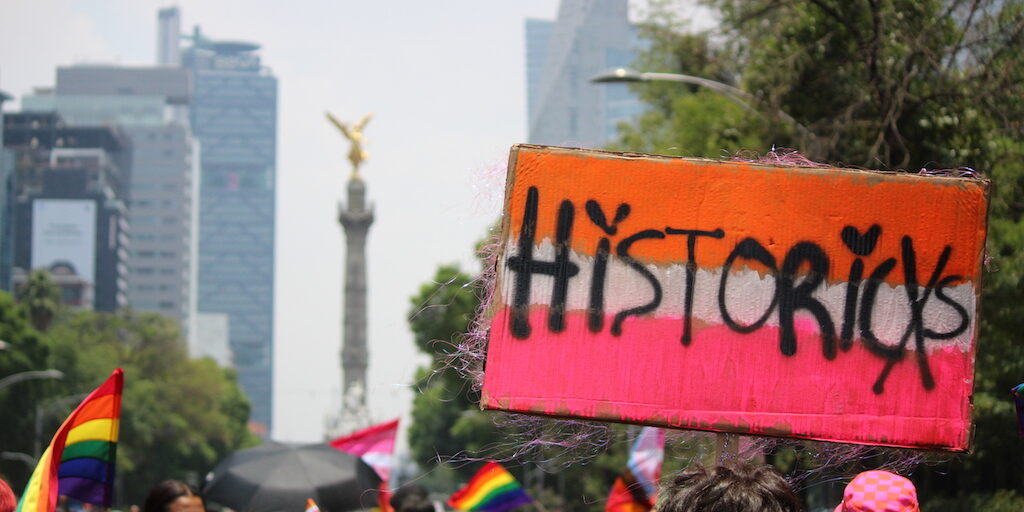
MEXICO CITY, Mexico. The label "lesbian" has traditionally been used to refer to women who are emotionally, romantically, or sexually attracted to other women. However, it can be restrictive and limiting for those of us who, while not identifying as cisgender women, do identify with the lesbian experience. We are non-binary people who love from our lesbian perspectives.
If we are not women, do we stop being lesbians? For some of us, no. We make being lesbian an identity and choose to stay in this space that has represented a safe haven, so that our affections, experiences, and feelings as non-binary people can be visible.
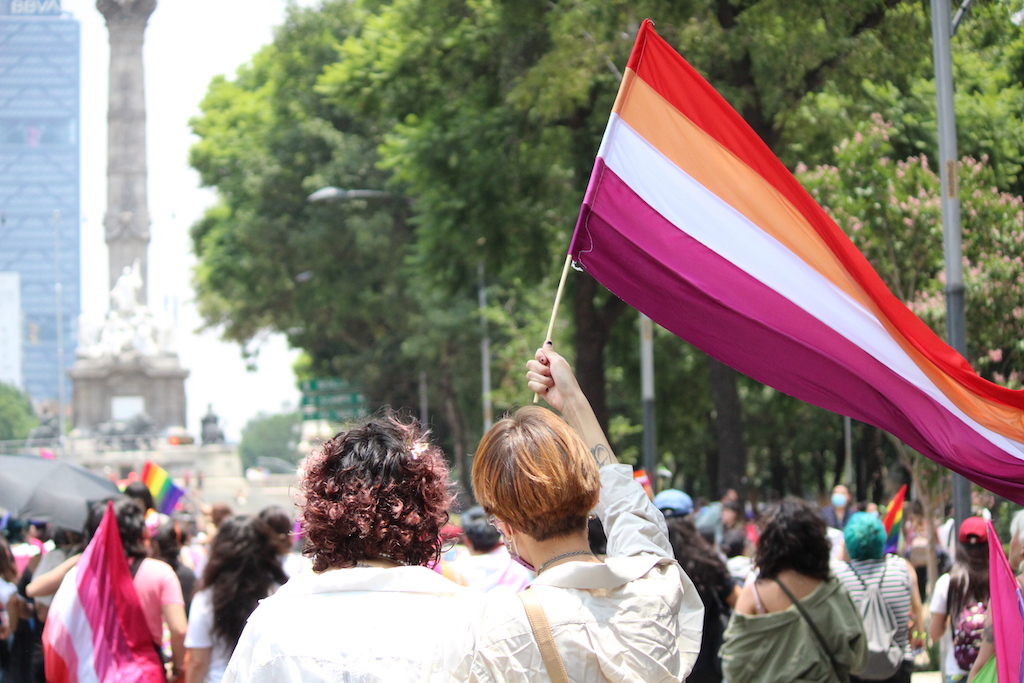
A great lesbian
For Le Paline, a Mexican comedian, activist, and content creator, questioning his gender identity has also meant questioning his sexuality and, ultimately, finding a space within the lesbian community.
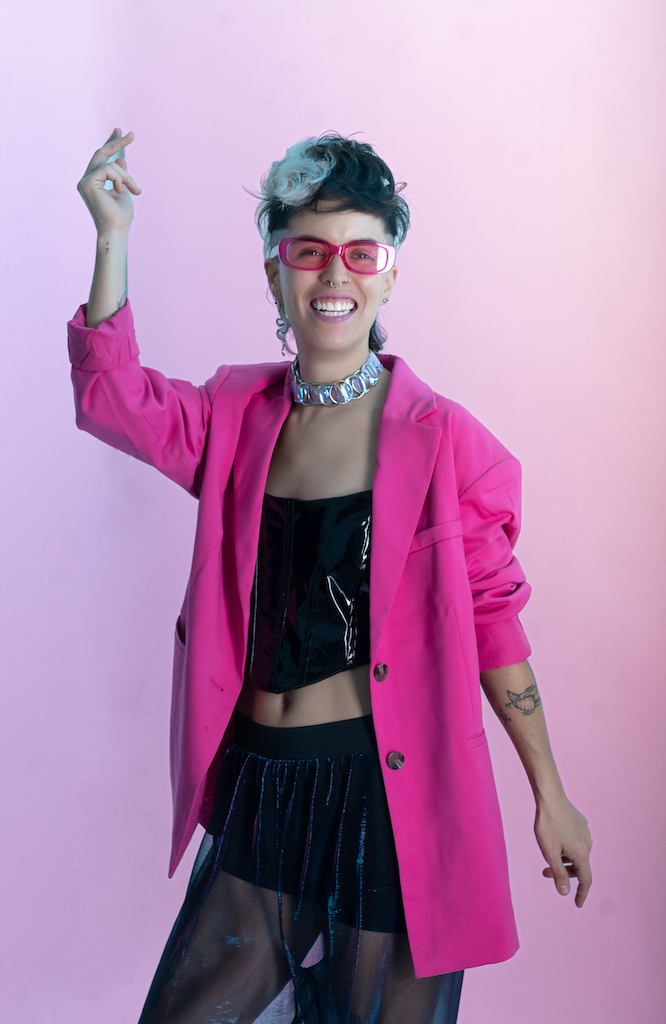
“I identified as a lesbian woman. I bought into the lesbian starter pack: 'lesbians dress this way, act this way, and sexually we only like this,' like many little boxes you're supposed to fit into and that you never question. But when I discovered I was non-binary, I also questioned my sexual orientation . There was a time when I rejected the word 'lesbian.' However, now I embrace it wholeheartedly . Yes, I am a big lesbian , but not anymore in the way they told me I had to be.”
" Lenchitude" is a term used to refer to diverse communities that share a common bond of love between women*. This asterisk is used to refer not only to cis women who exclusively relate to other cis women, but also to trans women, bisexuals, pansexuals, and non-binary people who identify as lesbians.
“When I found the answer in lesbianism, it was like saying: wow, these connections are possible! In these bonds with cis women, trans women, and other identities, there is a different kind of vulnerability that the hetero-cis world doesn't allow you to feel . For me, lesbianism gave me the possibility of being vulnerable and getting to know myself through the relationship with another person and building something with another person,” Le Paline mentions.
“Sometimes we let labels define us”
Gizeh Jimenez is a writer and creator of the Perra Mala 666 , a poetry space focused on women, trans people and dissidents, based in Mexico City.
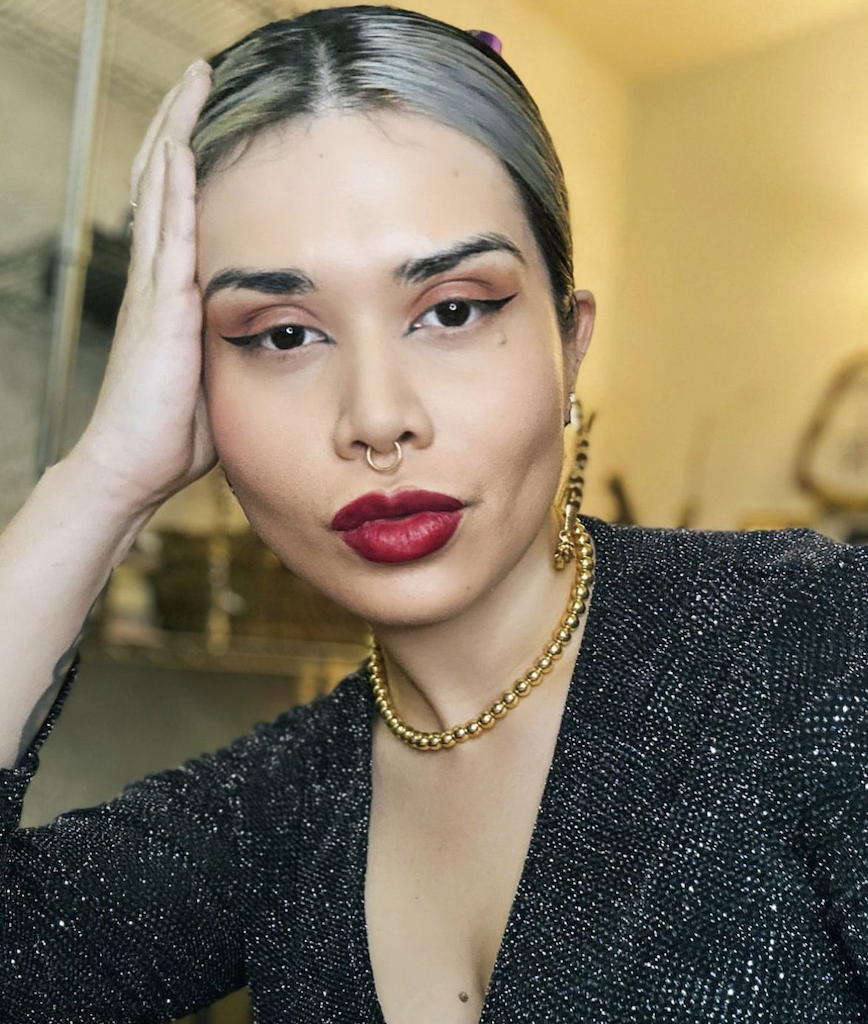
“Sexuality and gender are spectrums, and I’m navigating them freely,” she says. “I identify as queer, within the lesbian community, and as a non-binary person, regardless of where my spectrum points. Because I think that sometimes we let labels define us, and we don’t define the labels .”
“I feel like cisgender heteronormative culture has taught men to look for a list of checks in women,” Gizeh says. “In my relationships with cisgender men, I always felt like an incomplete checklist. What I’ve learned from interacting with lesbians and gender non-conforming people is that they see me for who I am, not for a list I’m not checking off.”
“Lenchite relationships are more horizontal.”
We, the lesbian community, are diverse: feminine, androgynous, or masculine. Our existence, desires, affections, and sexuality are uncomfortable for the hetero-cis-patriarchy. Often, this means we continue to be subjected to violence and discrimination, wounds we share and which, through our lesbian affections, we have been healing.
For La Mala, a content creator based in Mexico City, the support they found in their girlfriend during their process of discovering themselves as a non-binary person was extremely important:
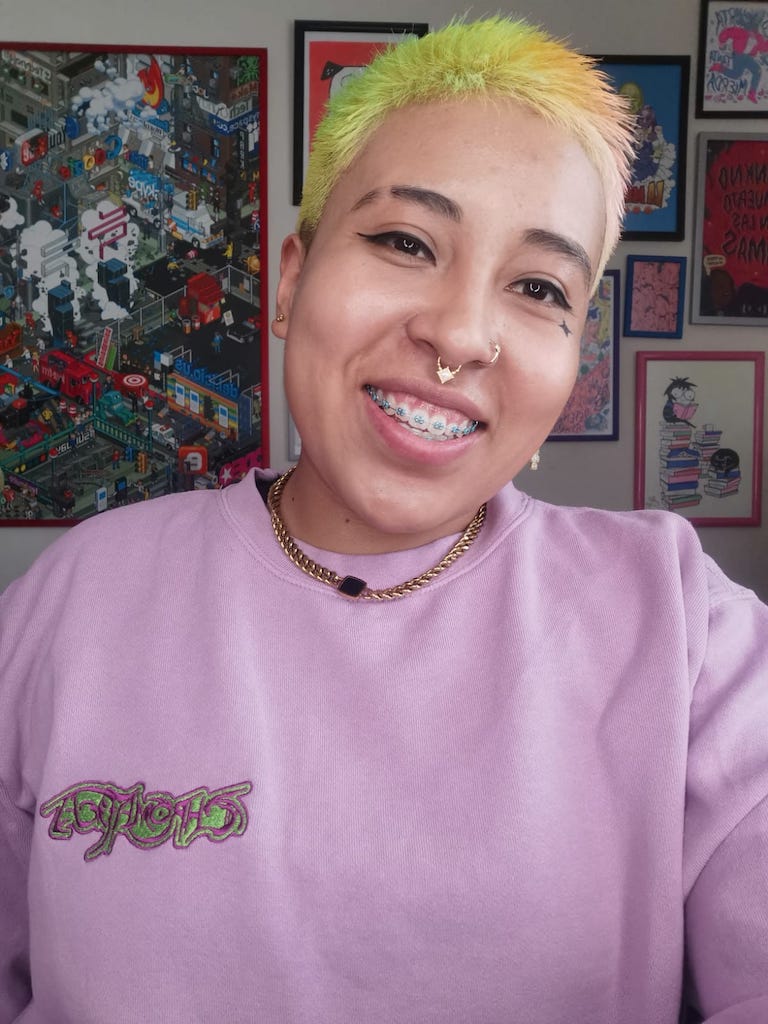
“I had been starting to perceive myself as I truly was for a year and a half, but I had never spoken about it. Until one day I told my girlfriend, 'Today I feel gorgeous.' All day she spoke to me using gender-neutral pronouns, and I felt incredible happiness, like the first time you kiss a woman and you say, 'Is this what I've been missing all this time?' From then on, I began to reflect more on my non-binary identity.”
Mala mentions that loving outside of cis-heteronormative frameworks from a lesbian perspective was also a guiding light. It allowed her to recognize her non-binary identity and build other ways of experiencing her relationships and sexuality.
“I think lesbian relationships are more horizontal, where you can talk about what you want and not what you've been told a relationship should be. Even in recognizing my identity, I was able to acknowledge that I also like men. And while I don't have emotional relationships with them, I had that as a block because that's what being a lesbian meant.”
Something similar happened with Le Paline, who, after beginning to question their gender identity thanks to drag, arrived at the question: am I not a woman? After reflecting on it with themselves, they decided to talk about it with their girlfriend:
“I literally woke up one day and said, ‘Hey, well, I’m not a woman, I identify as non-binary, and my pronouns are elle.’ Then they said, ‘Okay, I see you, I see you’re a non-binary person, and I see you’re happy.’ They referred to me with the neutral pronoun, and something clicked. I call it like I felt like I’d come home.”
Making the lenchitudes a safe place for everyone
Lesbian, lesbianx, dyke, sapphic, queer, and butch are some of the words that, rather than pigeonholing us, name our diverse experiences. Recognizing ourselves as pansexual, bisexual, trans, or cis doesn't diminish our identity as dykes; instead, it helps us become visible and acknowledge that not everyone who identifies as dyke identifies with the same words or under the same definitions.
“Named as a possibility is also important,” says Le Paline. “Everything is seen from the perspective of homosexuality and everything is centered on homosexuality, but we lesbians have other needs and are affected by other things.”
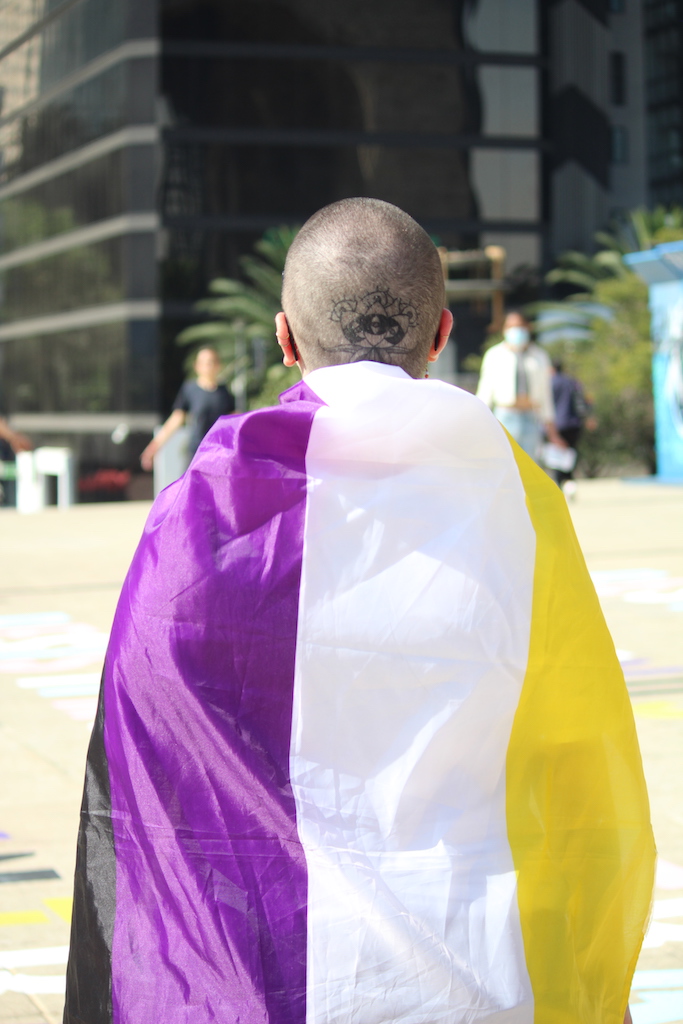
In Mexico, seven out of ten women over the age of 15 have been victims of gender-based violence , according to the National Institute of Statistics and Geography. However, it is unknown whether any of these attacks were motivated by lesbophobia or lesbophobia.
For Gizeh, it's important not to romanticize the issue and to recognize that lesbians are not exempt from perpetrating violence. “I had partners who abused me in ways that, if I had been a cisgender man, I would have realized much sooner. Because of how they identified or because they were gender nonconformists, I didn't believe it was violence. And I'm not just talking about them . I've also engaged in cis-heteronormative behaviors, believing that because I'm a queer person, I can't be committing violence, and that's a lie.”
Love between women* is one of the most powerful tools against systems of oppression. Loving a body that the system has made invisible and violated is, among many other things, an act of rebellion.
Talking about our realities allows us to connect, validate our feelings and our lesbian identities, outside the imposed frameworks that have weighed so heavily on us. Lesbianism is a commitment to the freedom to love freely, to love trans people, to love (each other) among women*, and to rebel against a world that wants us invisible.
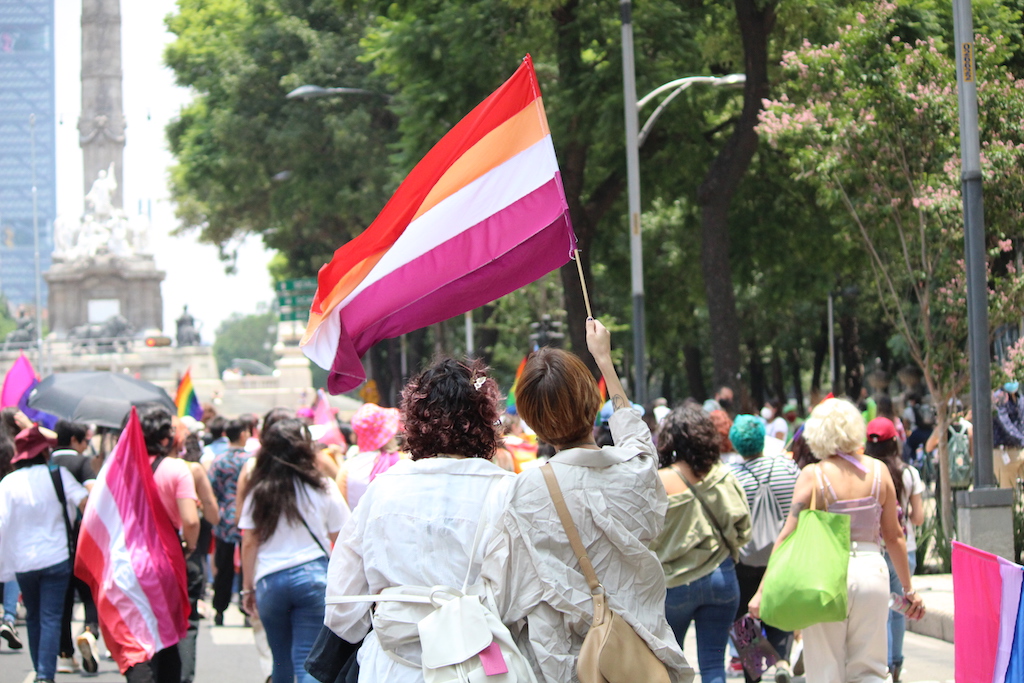
We are present
We are committed to journalism that delves into the territories and conducts thorough investigations, combined with new technologies and narrative formats. We want the protagonists, their stories, and their struggles to be present.
SUPPORT US

FOLLOW US
Related notes
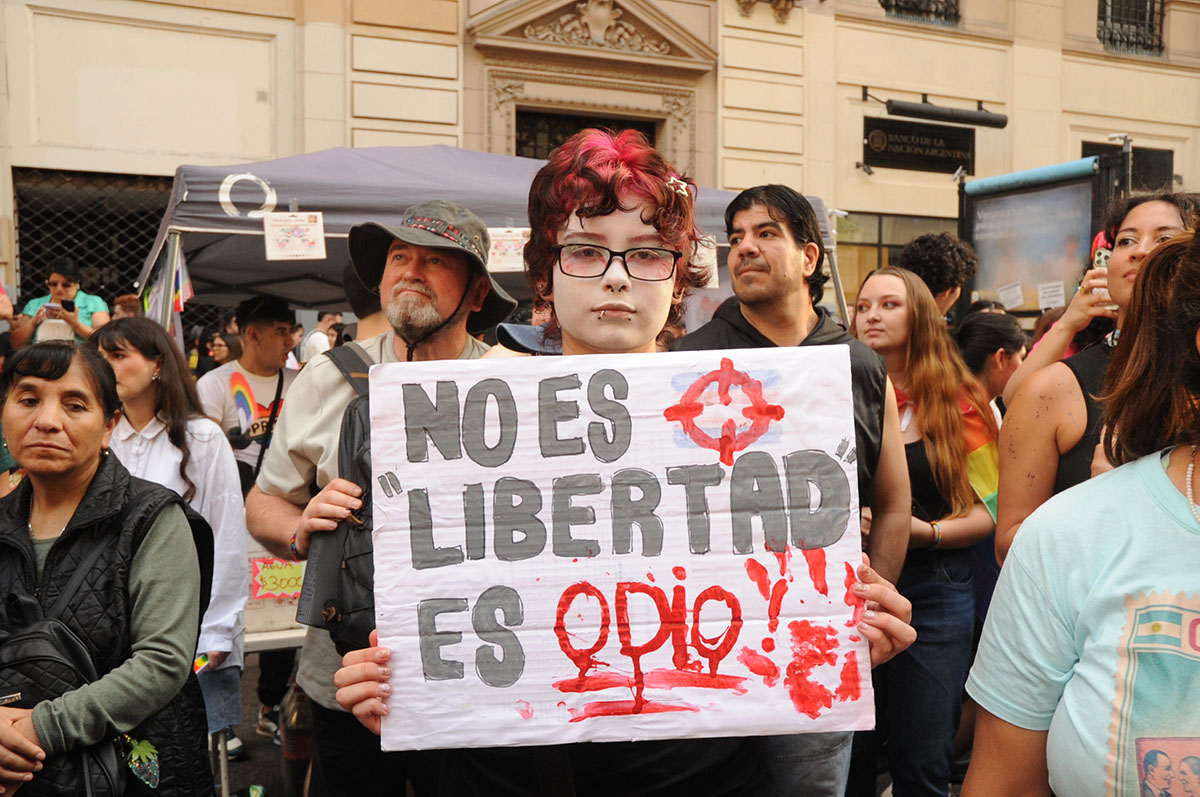
We are present
This and other stories are not usually on the media agenda. Together we can bring them to light.