

Transphobia Trial in Córdoba: Accused of attempted murder of Maxim Tabari acquitted
Ten years ago, Maxim Tabari, a young trans woman, survived an attempted femicide. She was left with lifelong consequences. She fought for ten years to obtain justice. The accused was acquitted but convicted of minor injuries to a police officer.


Share

CITY OF CORDOBA, Cordoba. The Criminal and Correctional Court of Villa Dolores, in western Cordoba province, acquitted Matías Enrique Farías of the attempted murder of Maxim Tabari, a young trans woman. He was sentenced to two years and eight months in prison, not for coming close to killing Maxim, but for attempting to assault the police during the investigation. The verdict caused shock and outrage among the victim and LGBTQ+ and human rights activists who supported her in this first transphobic hate trial in Traslasierra .
Maxim was attacked with sticks on April 28, 2013, by Farías and a nephew, who was a minor at the time and is now a fugitive. Her neighbors found her unconscious and bleeding and took her to the hospital. The attack caused her a skull fracture, facial injuries, and a broken nose. She still requires medication and treatment for the aftereffects of the attack.
The verdict was announced last night after 10 p.m., following more than two hours of deliberation by the jury. It was the culmination of a long day that began at 10 a.m. and lasted twelve hours, including closing arguments, and the frustrating outcome after ten years of demanding justice.
Without aggravating circumstance for transphobia
“It’s a disgrace,” Germán Romero Marcón, the victim’s legal representative, told Presentes after hearing the verdict. In his closing argument, he had requested a 15-year prison sentence for “attempted aggravated homicide, qualified by treachery, the involvement of a minor, and the presence of gender-based hatred.” He also proposed an investigation into the possible “breach of duty by public officials” by the police officers and judicial officials who handled the case.
For her part, prosecutor Eugenia Ferreyra dismissed the charge of attempted homicide and considered Farías a “co-perpetrator of serious bodily harm – with premeditation – and for committing such a crime against a minor.” Her indictment did not include the aggravating factors of gender-based violence and transphobia . She requested a sentence of 5 years and 7 months for the accused.
In turn, defense attorney Juan Pablo Bastos attributed all responsibility to Farías's fugitive nephew and challenged the forensic reports, claiming they were "void." He argued for his client's acquittal, or failing that, the minimum three-year sentence stipulated for attempted homicide.
“It's an injustice, but life goes on.

“The world is crazy. I don’t know what to think. Obviously, it’s an injustice. When they said he was acquitted, I wanted to get up and leave. But out of respect, I stayed. This has been a great humiliation for me, but life goes on,” Maxim said as he left the courthouse after hearing the verdict.
a member of the Traslasierra Human Rights Working Group , stated: “ The sentence didn't even mention the beating Maxim suffered, which almost cost him his life . According to the defense, it was the minor who hit him, not Farías. But in these ten years, it has never been investigated, nor has there been any talk of another trial. It's terrifying. I don't know how we get out of this.”
A public trial without an audience
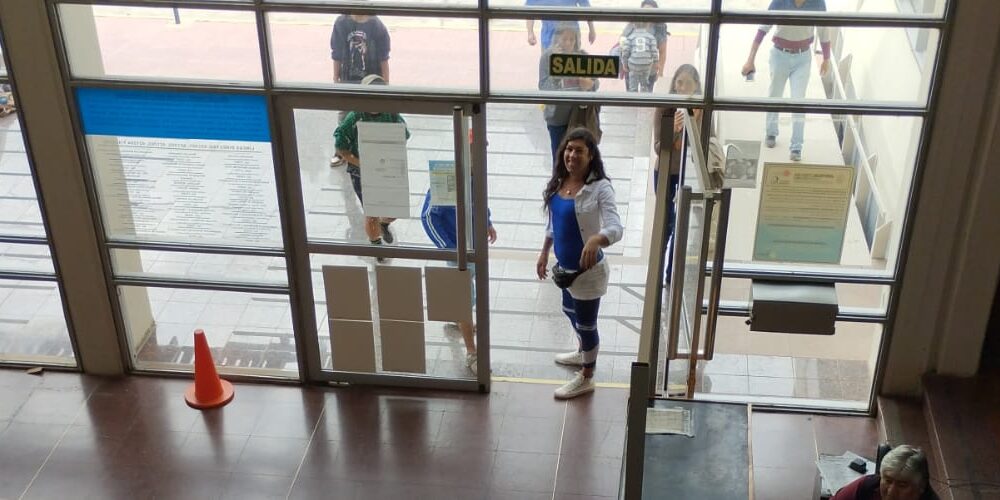
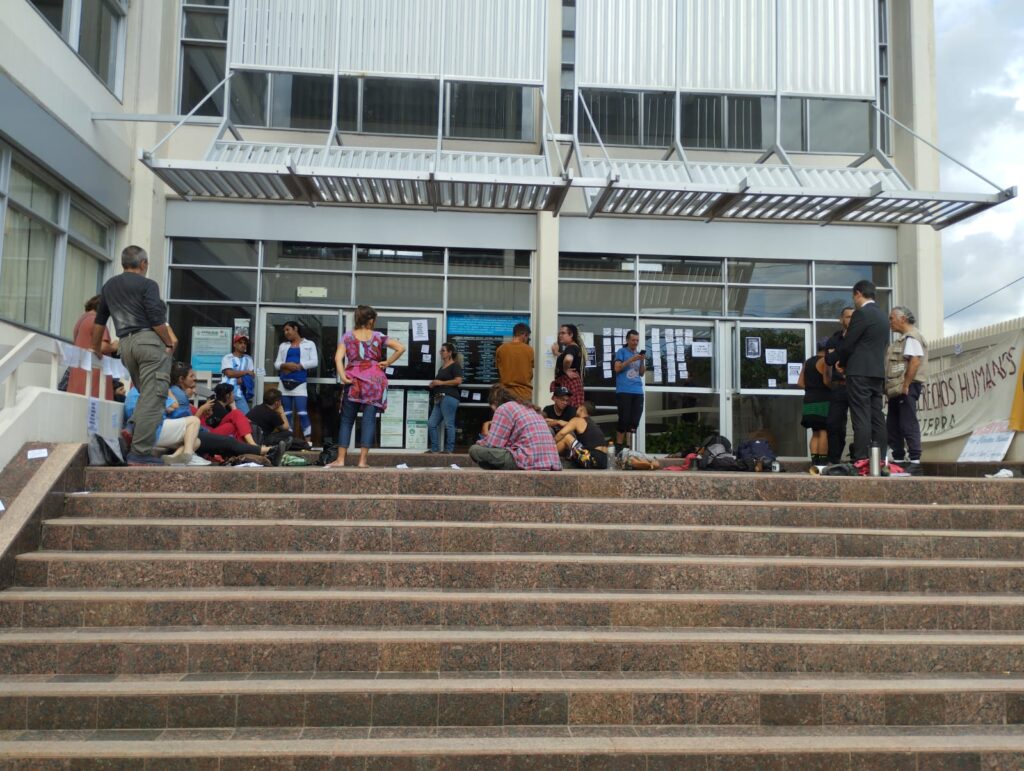
Since the start of the trial on March 13, the groups supporting the victim have been denouncing various irregularities in the proceedings. The public was barred from entering the courtroom, and Maxim was not allowed to hear the defense's testimony, among other restrictions . "Why does a public case prevent social organizations and community witnesses from entering the courtroom, suddenly turning it into a private matter? It seems the judges and prosecutors are not working to protect the victim," questioned representatives from Casa Diversa Traslasierra.
On the eve of the day of arguments and sentencing, the Traslasierra Human Rights Working Group appealed to the National and Provincial Human Rights Secretariats to ascertain whether the court presided over by Judge Carlos Escudero was committing “an irregularity by not allowing access to the public and the victim”.
In response, Mariano Ariel Przybylski, head of the National Directorate of Policies against Institutional Violence, sent a letter to the Criminal Court of Villa Dolores, requesting that “ the necessary measures be taken to guarantee the attendance of the general public, as well as human rights organizations in particular, at the hearing on April 4th .” “Given that Article 372 of the Criminal Procedure Code of the Province of Córdoba establishes orality and publicity as one of the fundamental principles of all trials, it is imperative that this right not be affected,” the request stated.
We are present
We are committed to journalism that delves into the territories and conducts thorough investigations, combined with new technologies and narrative formats. We want the protagonists, their stories, and their struggles to be present.
SUPPORT US

FOLLOW US
Related notes


We are present
This and other stories are not usually on the media agenda. Together we can bring them to light.