

They denounce illegal arrests and the criminalization of activism in Yucatán
A judge declared two of the arrests during the Water March in Yucatán illegal. Organizations have denounced the systematic criminalization of activism in the state.


Share

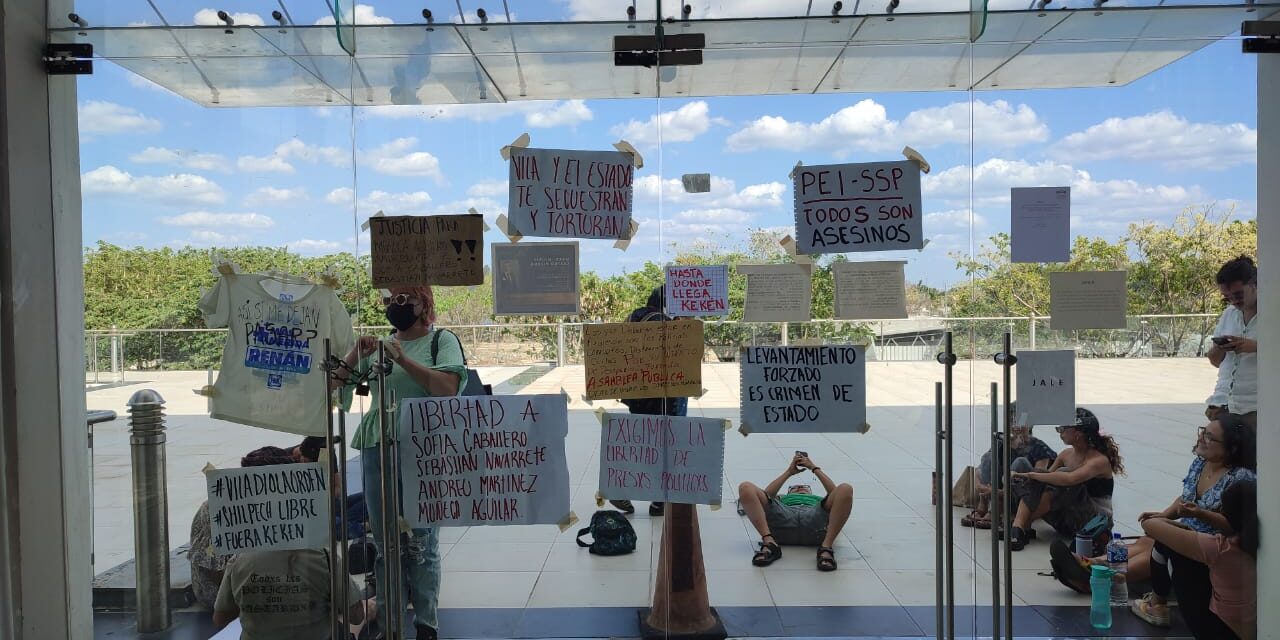
MÉRIDA, Mexico. Plainclothes agents from the Yucatán State Investigative Police arrested four people who attended a peaceful demonstration in Mérida, the state capital, in solidarity with the Mayan community of Sitilpech on March 22. They were released three days later. Judge Santos May Tinal ruled that the arrest of Sofía Caballero and Sebastián Navarrete, two young people who had peacefully attended the World Water Day March, was illegal. Meanwhile, Dafne A. and Andreu O., LGBT activists, were charged with weapons possession, disobedience, and assault.
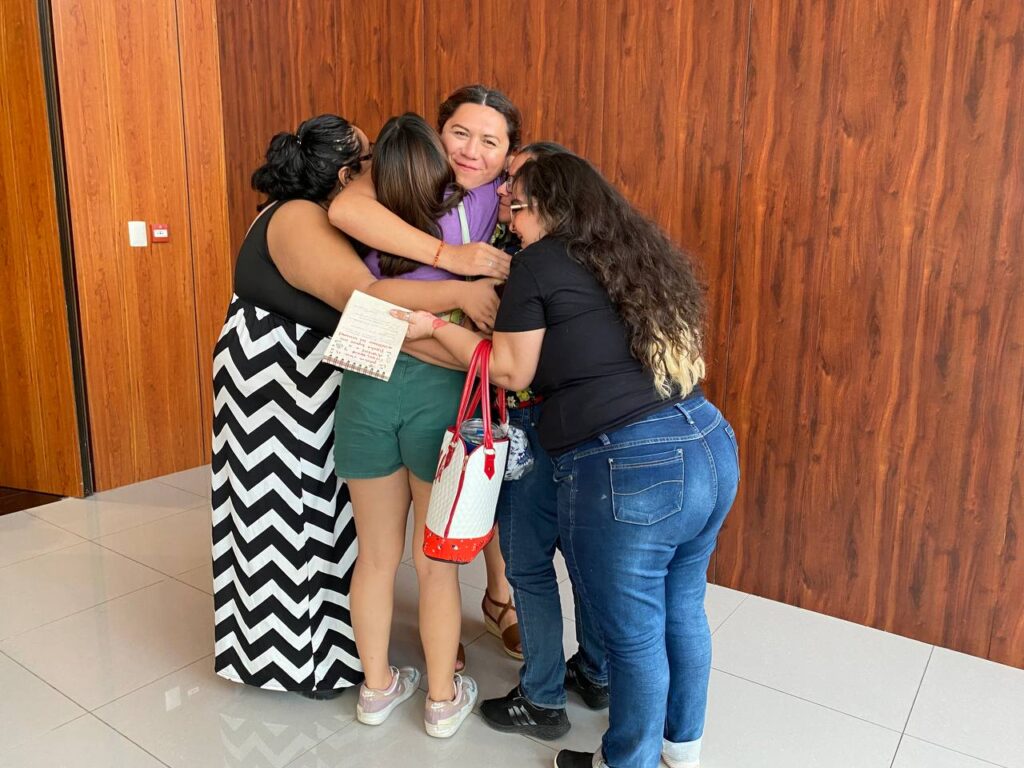
At yesterday's hearing, March 30, Judge Diana Garrido ruled that Andreu O. would be charged with possession of weapons and prohibited items. The other charges were dismissed, and Dafne, better known as "Muñeca," had all charges dropped.
The fight against mega pig farms
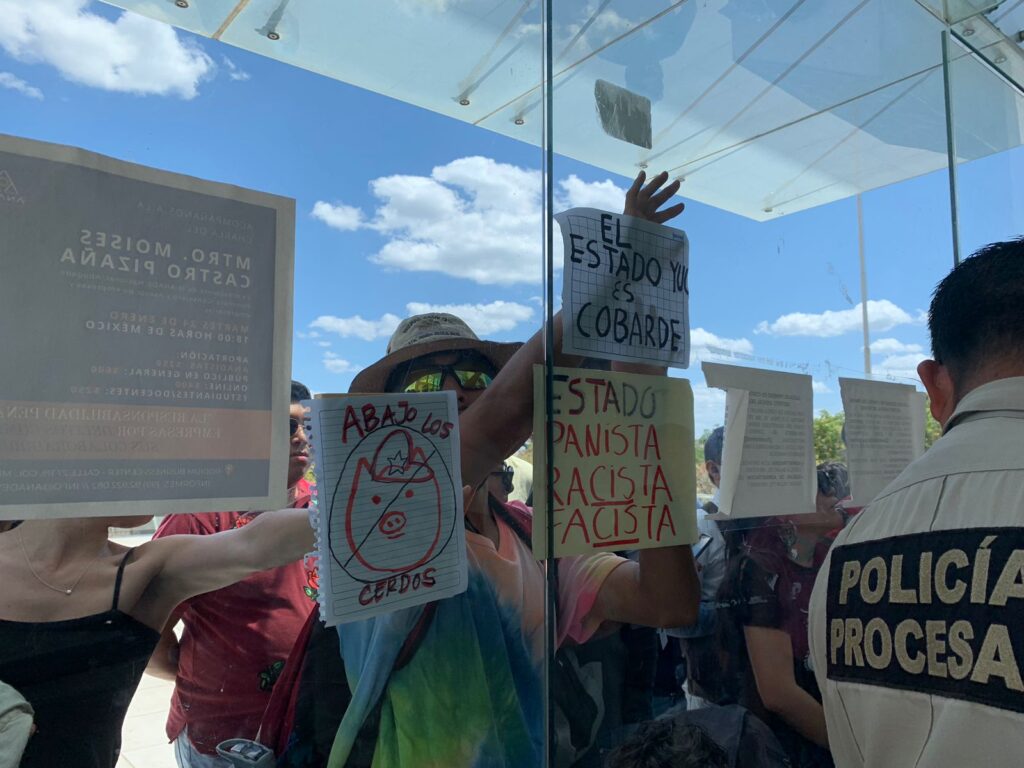
Since 2019, the Mayan community of Sitilpech, a village in Izamal, Yucatán, has been waging a social and legal battle against a mega-farm owned by the Kekén company that kept 48,000 pigs three kilometers from their homes. They denounce that the pig waste has contaminated their water and air, sickened their children, and fractured the community.
In recent months the struggle has intensified. On February 18, 70 armed riot police stormed the protest camp they maintained in the town in the early hours of the morning and beat the people there: 15 women with children and elderly adults.
“Free Sitilpech” and “Out with Kekén” are phrases seen on the streets of Mérida and on social media in support of the residents' collective “La Esperanza de Sitilpech” (The Hope of Sitilpech). They were also criminalized by the press and prosecuted for the crime of “obstructing communication routes as part of a gang.”
Arrests at the march for water
On World Water Day, March 22, several civil organizations called for a march to support Sitilpech and defend water. At the end of the march, shortly after 8 p.m., videos began circulating on social media reporting the arrest of Sofía and Sebastián, two young people who had attended the peaceful demonstration.
Hours later, the organization Substantive Equality Yucatán confirmed that Andreu O., a non-binary activist, and Dafne Aguilar, known as Muñeca and vice president of the organization, had also been arrested.
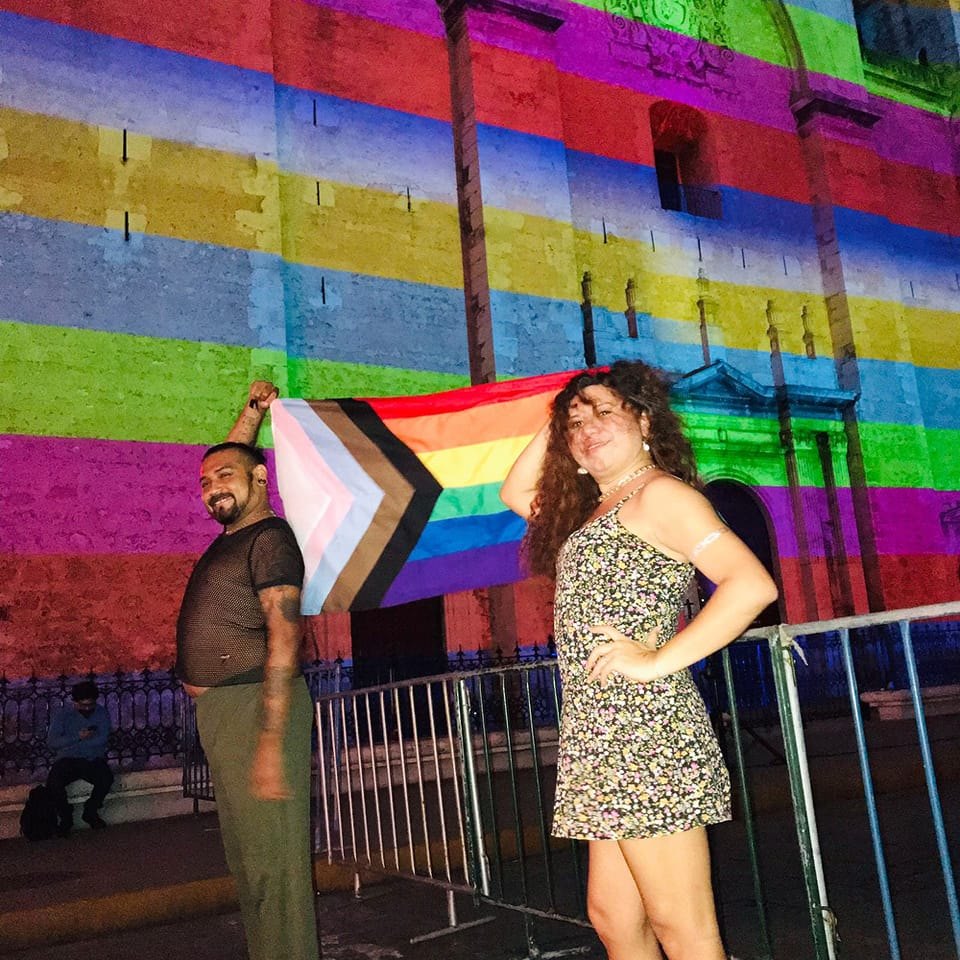
Muñeca Aguilar is a trans woman, activist, and sex worker. In addition to being vice president of Substantive Equality Yucatán, she leads the Intersectional Trans Command, which defends the rights of trans people in the state. She also promotes sexual health for cisgender and trans Mayan women in rural communities of Yucatán.
In an interview, Kelly Ramírez, president of Substantive Equality Yucatán, commented that Muñeca will not be able to continue practicing sex work, her main source of income, for her safety.
“The crimes she was charged with were fabricated. Now she finds herself in a vulnerable economic situation. We will take some concrete actions such as donations and applications to international funds for women human rights defenders. This whole process is emotionally and financially damaging to her,” Kelly told Presentes.
Arbitrary arrests in Yucatán
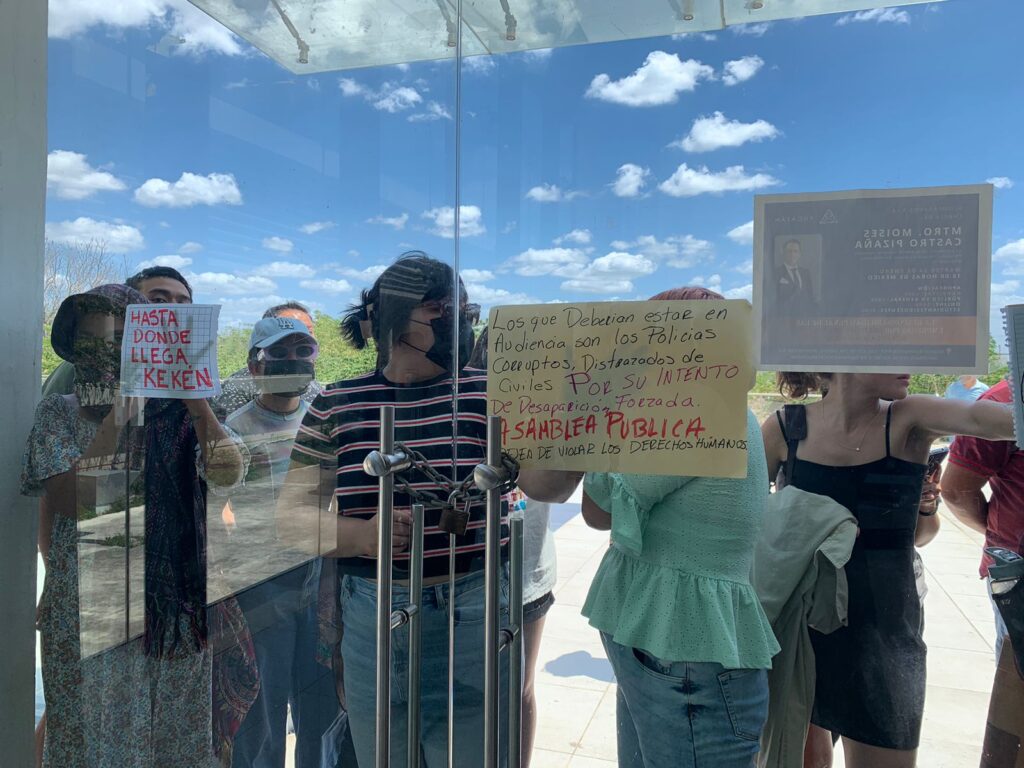
The human rights organizations Elementa Derechos Humanos and the Center for Justice, Democracy, and Equality (Cejudi) presented a report last February detailing cases of torture, sexual abuse, raids, arbitrary detentions, and even murders perpetrated by the Yucatán state police and the Mérida municipal police against racialized individuals, members of the LGBTQ+ community, and human rights defenders. Cejudi was present as an observer during the march and provided legal follow-up after the protesters were criminalized.
“This situation is an example of what we are presenting. It reminds us that arbitrary arrests in Yucatán are not isolated incidents but systematic. And that there is a profile: young, racialized, activist people. The dynamics of these arrests are a deep-seated problem in Yucatán,” stated María Paula Balam, director of Cejudi.
Yucatán is known internationally as a “safe state” in Mexico. Activists and organizations have made it clear that this is not the case for Mayan people, the LGBT community, and human rights defenders.
We are present
We are committed to journalism that delves into the territories and conducts thorough investigations, combined with new technologies and narrative formats. We want the protagonists, their stories, and their struggles to be present.
SUPPORT US

FOLLOW US
Related notes
We are present
This and other stories are not usually on the media agenda. Together we can bring them to light.