

She survived a transphobic hate crime and fought for 10 years to be heard by the justice system.
In 2013, Maxim Tabari, a young trans woman living in Traslasierra (Córdoba), suffered an attack from which she survived, though with lasting injuries. LGBTIQ+ organizations denounce police and judicial negligence.


Share

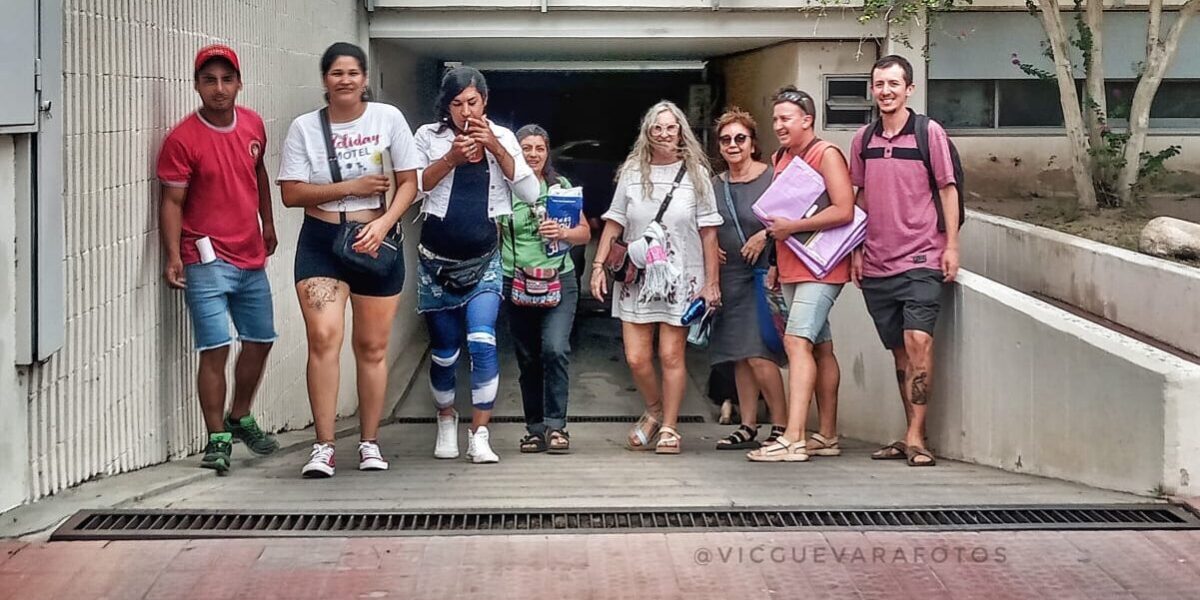
Maxim Tabari was a 19-year-old trans woman when, on April 28, 2013, she was brutally attacked with sticks by Matías Enrique Farías and his nephew—who was a minor at the time. They attacked her while she slept in her home in the Villa Sarmiento neighborhood, on the outskirts of Villa Dolores, Córdoba. The attack caused her to suffer a traumatic brain injury, facial wounds, and a broken nose. She was left with lasting effects that still require medication and treatment.
However, initially the case was classified as “minor injuries.” Ten years later, it was brought to trial in the Villa Dolores Courts as “Farías Matías Enrique and another, for attempted aggravated homicide with premeditation involving a minor under 18.” The LGBTQI+ groups supporting the victim consider this classification—the legal label—insufficient, as it fails to consider “the social context that generates these crimes, the transphobia that violates the rights of diverse communities in this territory every day .” This was stated in a press release from Casa Diversa Traslasierra.
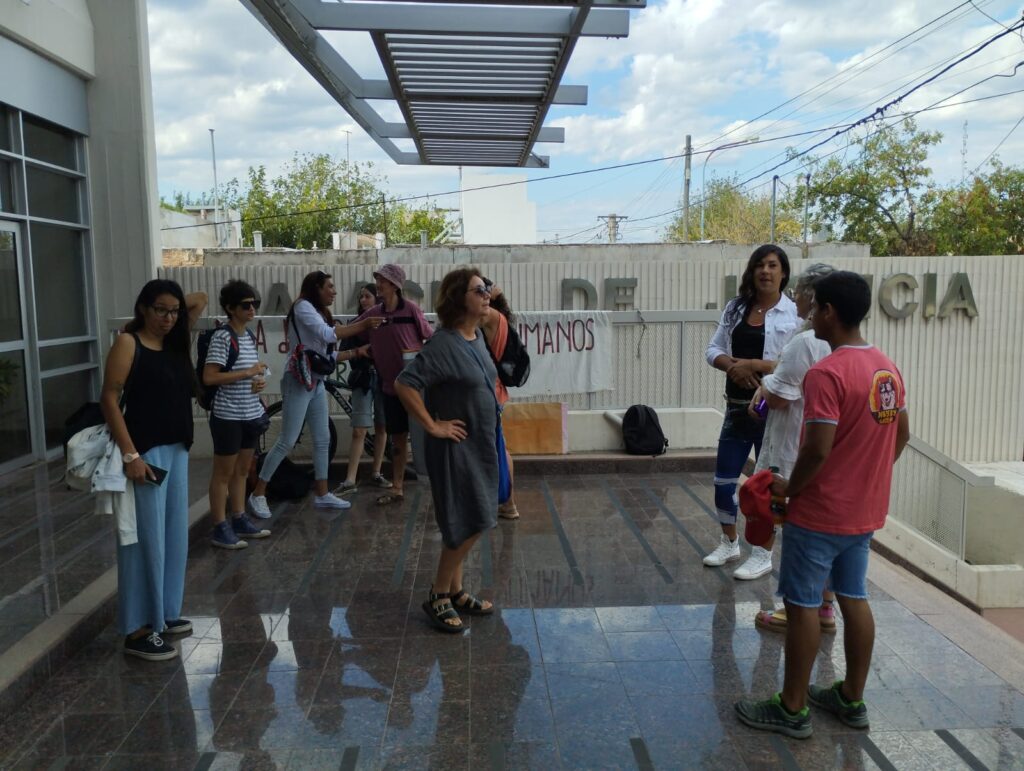
“That wasn’t the first attack. A year earlier there was another one. Matías Farías had lost seven joints and blamed me for it. He came to my house one morning and broke my things and the door. That time he came with a knife. I went to the police in Villa Sarmiento, in Villa Dolores, and to the Prosecutor’s Office, but they wouldn’t take my report. So, I had to report it on the radio. That’s how it all started. But the second incident was worse,” Maxim tells Presentes .
According to her account, Farías and his nephew broke into her house and attacked her while she slept. “First, my nephew hit me with a stick. My first instinct was to subdue him, but they hit me with other sticks and I lost consciousness. They ran out; I felt like I was being run over, I couldn't even see anymore.” Helped by her neighbors, she had to be treated first at the Villa Dolores Hospital and then in Córdoba. She still suffers from irreversible injuries and lasting effects, such as chronic headaches and a depression on the right side of her skull.
Delayed for several reasons —the defendant was a fugitive and was captured in December, the case file went missing, pandemic restrictions were in place, a defense attorney contracted Covid, but above all, the police and judicial investigation was slow—the “first transphobic hate crime trial in Traslasierra” began on March 13. Only Matías Farías is in the dock. His nephew, now 27 years old, has been missing since the day the young trans woman was attacked.
First trial for transphobia in Traslasierra
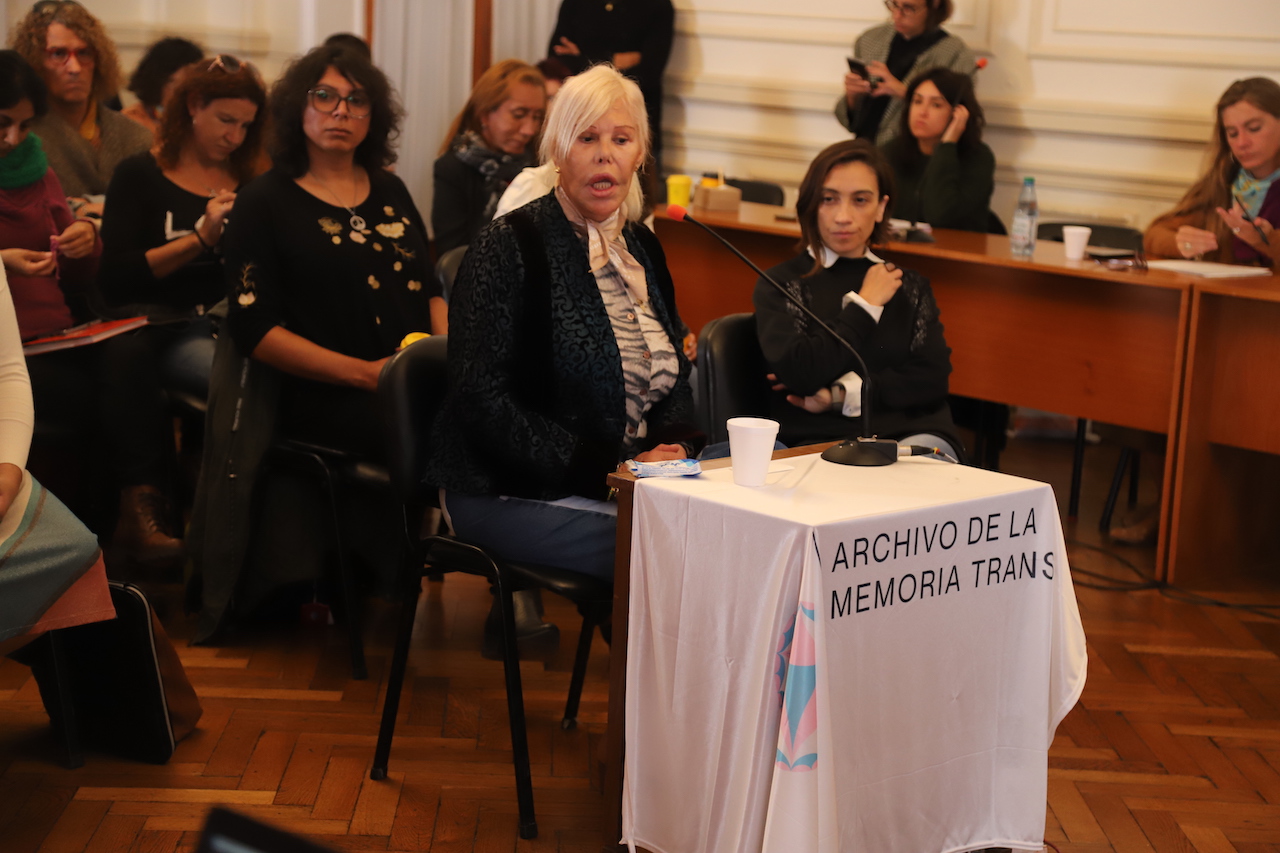
“It seems that the police and the justice system in Córdoba can’t find someone without connections. Something’s going on. He’s been a fugitive for ten years, meaning nobody went looking for him,” says Germán Romero Marcón, the lawyer representing the victim.
"They never sought the evidence to bring justice."
The delay has only one explanation, according to the plaintiffs: “ We are in a very remote area, and Maxim is a person without resources. If we and the people who showed solidarity with her hadn't intervened, the case would have expired in two more years, like so many crimes that do in this jurisdiction.”
“The investigation and proceedings have been deficient. Clinical studies are lacking, as is evidence of the material used to inflict the wound, among other things that demonstrate the little importance given to the case and the victim,” stated the Traslasierra Human Rights Working Group. In another statement posted on their Facebook page, they added: “ There would have been no trial if she hadn't threatened to 'bring a mattress and sleep in the courthouse until they do something' about her case. And so we arrived at a trial that was canceled three times .”
For Ru Guzmán, a member of Casa Diversa, it is necessary to have “more training in human rights within legal institutions. And to always remember that trans lives exist and resist in this territory, despite their forced social invisibility.”
“I always went to complain because nothing was being done, and this guy (Farías) would come and mock me. He laughed in my face,” Maxim recounts. “If you defend yourself because the justice system does nothing, you have to take justice into your own hands or wait for God to punish them. There are a lot of obstacles in the trial to keep me out, because they know I won’t back down from anyone. They never bothered to look for evidence to try to get justice .”
An opportunity
Of the hate crimes against transgender people in recent years in Córdoba—including those against Estrella Belén Sánchez, Denisse Montenegro, Cindy Arias, Pamela Torres, Marion Gorak, Viviana Echenique, and Laura Moyano— the only one that went to trial was that of Azul Montoro . Azul was murdered on October 17, 2017, with 17 stab wounds and a blow to the head. Her attacker, Fabián Casiva, was sentenced to life imprisonment on August 22, 2019, for femicide.
The transfemicide of Sofía Bravo, murdered by truck driver Rodrigo Nicolás Espíndola on January 6 in the city of La Carlota, has its investigation practically completed and should go to trial this year .
On Tuesday, April 4, starting at 10 a.m., the trial of Maxim Tabari will have its final day, with the arguments of the prosecution, plaintiff and defense, the deliberation of the popular juries and the reading of the sentence.
Presentes asked prosecutor Eugenia Ferreyra if her assessment of the episode being judged would include the component of discrimination and gender violence, but the official declined to answer: "For now, nothing to report, the trial has not yet ended."
For his part, the plaintiff's lawyer anticipated that he will argue the charge of "attempted aggravated homicide, qualified by treachery, the involvement of a minor, and gender-based violence, given that the victim is a transgender person." "We don't know what the prosecution will request, but we are hopeful that the jury will find the defendant guilty. And that the judges will agree," lawyer Romero Marcón told this agency.
With only a few days left before her fight for justice reaches its conclusion, Maxim speaks to those who, like her, have had to defend their identity against discrimination and violence. “Don’t stay silent, say everything you feel and think. Fight every day to get ahead and be a better person. In this life, nobody is perfect, and we are all different in body, thought, and attitudes. Never give up and fight for your dreams, because after the storm, the sun always comes out.”
Now, the judiciary has the option of making this trial a revictimization for her, or a starting point to begin repairing the damage with a measure of justice.
We are present
We are committed to journalism that delves into the territories and conducts thorough investigations, combined with new technologies and narrative formats. We want the protagonists, their stories, and their struggles to be present.
SUPPORT US

FOLLOW US
Related notes
We are present
This and other stories are not usually on the media agenda. Together we can bring them to light.