

The fight for therapeutic abortion in El Salvador: Beatriz's story
The Salvadoran state must answer to the Inter-American Court of Human Rights (IACHR) for denying her the right to choose. Why the absolute criminalization of abortion puts the integrity of pregnant people at risk.


Share

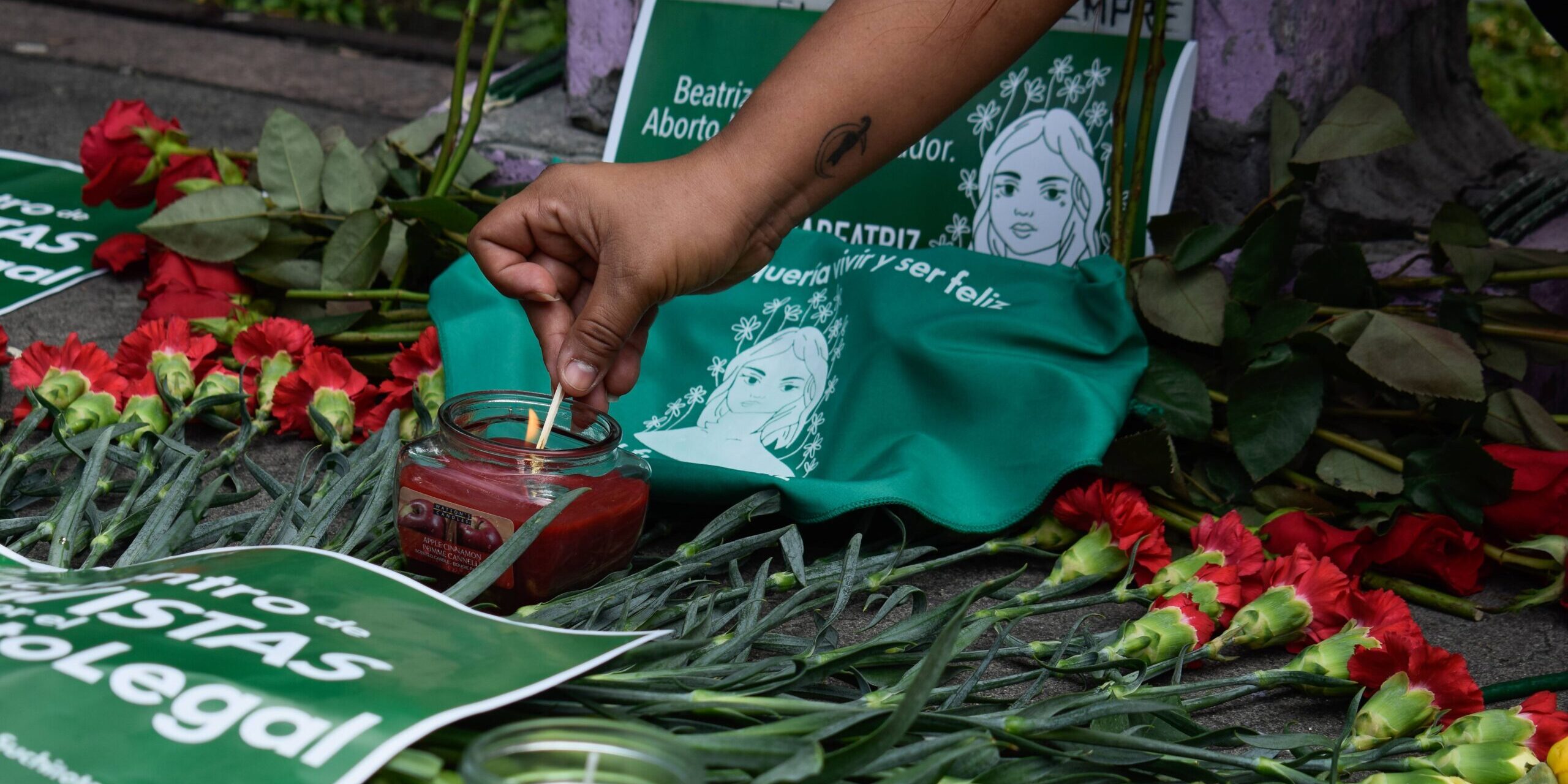
SAN SALVADOR, El Salvador. Beatriz's right to choose was never respected. Eighty-four days passed before she underwent a cesarean section, just as she went into labor. The fetus she was carrying lacked a skull and brain; it was anencephalic. This made life outside the womb impossible. Furthermore, the pregnancy posed a risk to Beatriz's life and health. She had a mixed illness: rheumatoid arthritis and systemic lupus erythematosus in its lupus nephritis stage. According to medical literature, all pregnancies in women with lupus are considered high-risk.
Systemic lupus erythematosus mistakenly attacks healthy cells and tissues. It can affect the skin, joints, kidneys, brain, and other organs. It affects women more often than men, at a ratio of 10 to 1. It most commonly appears in women between the ages of 15 and 44.
Anencephaly is a birth defect that can be diagnosed during pregnancy. In some cases, it is detected only at birth. The baby is born without parts of the brain and skull. According to the Centers for Disease Control and Prevention (CDC), “there is no cure or standard treatment for anencephaly. Almost all babies born with anencephaly will die shortly after birth.”
This is how Beatriz's daughter was born and survived five hours outside the womb. “She presented with a total absence of the skull and brain tissue,” according to Beatriz's medical record. This is one of the pieces of evidence presented by the co-litigant organizations. They sued the Salvadoran State before the Inter-American Court of Human Rights “for the lack of access to a legal, early, and timely abortion in 2013, which endangered her life and affected her integrity, health, and other rights.”
A state that tortures
The plaintiffs consider forcing her to continue the pregnancy for 84 days a form of torture. “The absolute prohibition of abortion is a form of torture because of the suffering caused to Beatriz. She knew, she was aware that if she did not have an abortion, her life and health were in danger. And here we must not only consider Beatriz's specific rights, but also the fact that she already had a child, who was about a year and a half old at the time. If she died, she would lose her mother,” explained Gisela de León, legal director of the Center for Justice and International Law (CEJIL), one of the petitioning organizations in the international lawsuit filed by Beatriz and others against El Salvador.
In 2017, the then United Nations Special Rapporteur against Torture and other cruel, inhuman or degrading treatment or punishment, Juan E. Méndez, determined that “the absolute prohibition of abortion violates the prohibition of cruel, inhuman and degrading treatment and even torture in certain cases .
The UN Human Rights Committee considers that the total ban on abortion violates some of its decisions by failing to guarantee safe abortion in cases of severe fetal malformations. “It is a violation of the right to be free from torture and cruel, inhuman and degrading treatment enshrined in Article 7 of the International Covenant on Civil and Political Rights.” This is in accordance with Communication No. 1153/2003, from the case of Llontoy v. Peru , in which a minor was denied a legal therapeutic abortion (of an anencephalic fetus) permitted under Peruvian law.
In March 2020, the Inter-American Commission on Human Rights (IACHR) concluded in Report No. 9/20, Case 13.378, Merits, Beatriz , that “the State of El Salvador is responsible for the violation of the rights to life, personal integrity, judicial guarantees, privacy, equality before the law, judicial protection, and the right to health established in Articles 4.1, 5.1, 5.2, 8.1, 9, 11.2, 11.3, 24, 25.1, and 26 of the American Convention on Human Rights, in relation to the obligations established in Articles 1.1 and 2 of the same instrument. The Commission also declared violations of Articles 1 and 6 of the Inter-American Convention to Prevent and Punish Torture , and Article 7 of (Convention of Belém do Pará ).”
In the case of Beatriz and others versus El Salvador, the president of the IACHR, Ricardo Pérez Manrique, summoned the Salvadoran State and the representatives of the Feminist Collective for Local Development of El Salvador, the Citizen Group for the Decriminalization of Abortion of El Salvador, Ipas Central America and Mexico and Cejil, petitioning organizations, to present their arguments and final observations this March 22 and 23, in Costa Rica.
This is the first time the Inter-American Court of Human Rights will hear a case against a state for prohibiting abortion when the health and life of the pregnant person are at risk and when the fetus is not viable outside the womb. Its ruling will set a legal precedent for all of the Americas regarding abortion. El Salvador has prohibited and criminalized abortion under all circumstances since 1998.
When pregnancy is incompatible with life
Beatriz was the eldest of two brothers and two sisters. She completed the seventh grade. She was 20 years old when she was diagnosed with systemic lupus erythematosus, lupus nephritis, and rheumatoid arthritis. A year later, in July 2011, she became pregnant. She lived with her partner near her maternal family in a municipality in Usulután, in extreme poverty.
Her first pregnancy was considered high-risk. She was hospitalized twice for anemia and "exacerbation of lupus with episodes of dyspnea caused by community-acquired pneumonia and bilateral pleural effusion." This is according to her medical record and reports from the Rosales and Maternity National Hospitals.
On March 2, 2012, she was admitted to the National Maternity Hospital. A medical examination revealed severe hypertension, which was classified as “severe preeclampsia superimposed on lupus.” Two days later, she underwent a cesarean section. Beatriz's son remained hospitalized for 38 days. He was diagnosed as a “preterm newborn with respiratory distress syndrome and necrotizing enterocolitis.”
Preeclampsia is a hypertensive disorder that can occur during pregnancy and postpartum, according to the World Health Organization (WHO). It has repercussions for both the mother and the fetus. Globally, preeclampsia and other hypertensive disorders of pregnancy are a leading cause of maternal and neonatal illness and death. The WHO estimates that hypertensive problems account for more than 20% of maternal deaths.
Due to her health condition, she was advised to be sterilized. She didn't do it out of fear of the procedure and because she might eventually want to have more children. The sacralization of motherhood is key to understanding this decision, according to sociologist Emely Flores. The sacralization of motherhood refers to the idea that motherhood is seen as a sacred and fundamental experience in a woman's life. This can influence the decisions she makes regarding her reproductive capacity.
An unviable pregnancy
On February 18, 2013, she was diagnosed with her second pregnancy. “High risk.” She was 11 weeks along. She was hospitalized for three days. Fourteen days later, during a medical check-up, she was informed that the fetus was anencephalic. That they would take her case to the Medical Committee “to reach a consensus on the timing of the termination for the mother’s benefit, since anencephaly is incompatible with life.”
March was a pivotal month for Beatriz, who, with the support of her family, decided to terminate her pregnancy. Two ultrasound scans, performed on March 12 at the National Maternity Hospital, confirmed the diagnosis of a congenital malformation. This, combined with Beatriz's mixed maternal illness and her history of complications during her first pregnancy, would further complicate her pregnancy. On March 14, the doctors explained that the fetus had no chance of survival. Faced with this situation, she requested an abortion. She was told that it was not legal in El Salvador, where abortion has been completely prohibited since 1998, even in cases where the mother's life is at risk, when life outside the womb is not viable, and when the pregnancy is the result of sexual violence. Thus began her legal ordeal.
The medical opinion was clear: the only option was to terminate the pregnancy. Beatriz agreed. She didn't want to risk leaving her first child, a 13-month-old boy, an orphan. “She had three illnesses that indicated the pregnancy had to be terminated (systemic lupus erythematosus, lupus nephritis, and rheumatoid arthritis). In addition, the fetus had no brain; there was zero chance of survival outside the womb. You didn't need extensive medical knowledge to understand that the best thing for her was to end the pregnancy,” explains Guillermo Ortiz, a perinatologist. He was the one who attended her during her first and second deliveries. He is also a witness for the organizations involved in the lawsuit filed by Beatriz and others against the Salvadoran state.
The legal pilgrimage
On that same March 14, the Medical Committee of the Rosales National Hospital , composed of 15 doctors, agreed that this was the appropriate time to perform the abortion because it posed the least risk to Beatriz. Waiting longer implied the probability of a preventable maternal death.
Six days later, this Committee requested an opinion from the hospital's Legal Unit and the Life Unit of the Attorney General's Office (PGR), and informed the Ministry of Health of the case. The Head of the Legal Unit also notified the Coordinator of the Child and Adolescent Protection Board about the situation. In its report, the Board responded that the matter was not within its territorial jurisdiction and that the PGR should appoint a prosecutor to represent the interests of the fetus. The Assistant Attorney General of El Salvador responded that "there would be no objection to the medical-surgical procedure being performed."
Upon learning of Beatriz's case, representatives from the Feminist Collective, an organization that defends women's rights in El Salvador, and from the Citizen Group , a group of social activists, contacted the young woman to confirm her decision to terminate her pregnancy, and began to legally represent her.
Marcia Aguiluz, who in 2013 was part of the legal team at CEJIL and is currently in the Legal Department of Women's Link Worldwide, recalls that they sought a legal alternative to save Beatriz's life. They filed a writ of amparo (a constitutional remedy) with the Constitutional Chamber of the Supreme Court of Justice on April 11, 2013, requesting that she be allowed to terminate her pregnancy. However, when the justices of the Chamber delayed their response, the co-litigant organizations began to analyze what options existed at the international level to protect Beatriz's human rights.
On April 18, while Beatriz was being readmitted to the National Maternity Hospital for a psychological evaluation, her co-plaintiffs requested precautionary measures from the Inter-American Commission on Human Rights (IACHR). These measures were requested to ensure that Beatriz received adequate medical care and that her human rights were respected. According to the psychological report, the young woman had experienced suicidal thoughts in the preceding months. The hospital psychologist also noted that Beatriz's emotional state was affected by her estrangement from her eldest son and that she was very anxious about her prognosis and the fetal anomaly.
In various interviews published by national and international media outlets, Beatriz expressed her decision to terminate the pregnancy. She also spoke of her fear of death and her need to be with her child: “What I want is to live. I want to be with my child, with my family.”
Without the right to privacy
Beatriz's life and that of her family changed in that instant. People from various sectors of Salvadoran society, and even internationally, publicly debated her decision. The most conservative groups, using arguments based more on religious than legal grounds, insisted that she continue the pregnancy. One of the representatives of a pro-birth foundation sent her a hat to cover the baby, who was born without a brain or head. For Beatriz's family and the organizations that supported her, these kinds of actions, like sending kits for newborns, were an insult to the young woman and further affected her mental health. Humberto, one of her brothers, remembers that he and his family feared for his sister's life. They wanted everyone to respect Beatriz's right to choose.
Although the court admitted the amparo (constitutional protection) petition and issued a precautionary measure to guarantee Beatriz's life and physical and mental health, in May it rejected the petition, finding no negligence on the part of the defendant authorities. However, the Inter-American Commission on Human Rights (IACHR) granted precautionary measures, which the Salvadoran State failed to comply with. Therefore, the IACHR requested the Inter-American Court of Human Rights to issue provisional measures ordering El Salvador to terminate the pregnancy.
Beatriz went into labor on June 3, 2013. In addition to the cesarean section, she underwent a hysterectomy (removal of the uterus). The anencephalic fetus died five hours later. Víctor Mata was part of the legal team representing Beatriz. He is now a witness in the international lawsuit, stating that with their decision, the judges “violated Beatriz’s right to integrity and endangered her life.” It is for these and other violations of Beatriz’s and her family’s rights that the plaintiffs have filed an international lawsuit against the Salvadoran state.
According to the Background Report, the Salvadoran State argued that Beatriz had access to the country's legal mechanisms by filing a writ of amparo, which resulted in the precautionary measure seeking to ensure her right to life and health, as well as the right to life of the fetus. The State asserted that the court decisions were based on current legislation and that Beatriz was considered to be in a stable situation. It also noted that, because the Constitution of the Republic does not establish a hierarchy between the life of the mother and the life of the fetus, both have the same level of protection, unless the specific circumstances of the case justify otherwise.
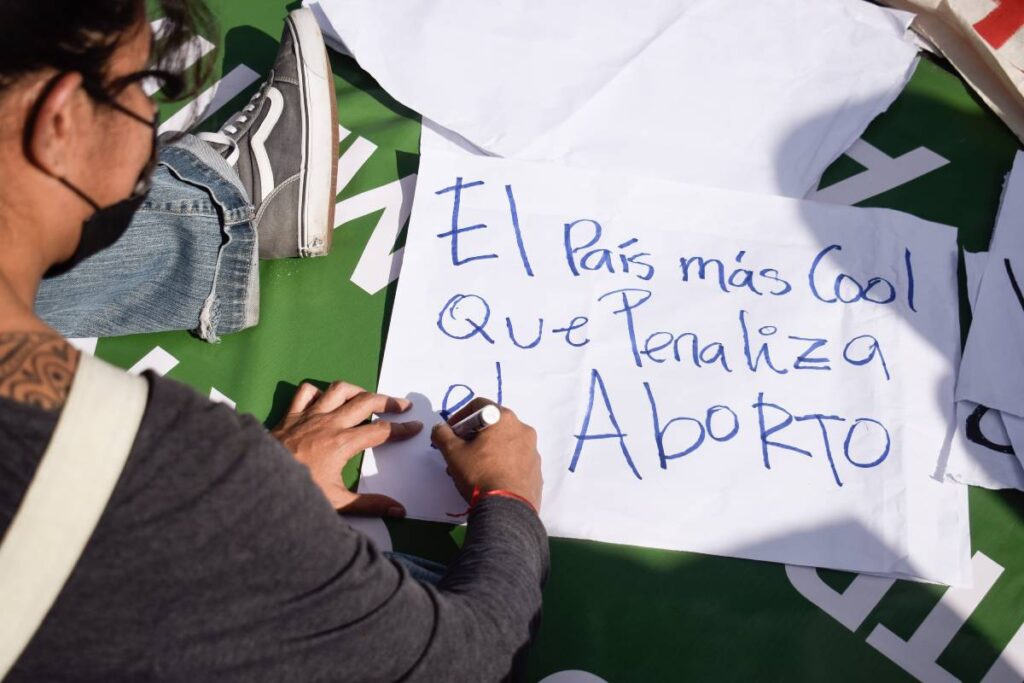
Legislation against the integrity of pregnant people
The IACHR considered that, although the protection of life from conception is a legitimate aim, the criminalization of abortion in cases where the fetus is incompatible with extrauterine life fails to meet the requirement of suitability. This is because the fetus's inviability breaks the means-end relationship between the criminalization and the intended purpose, since the protected interest (the life of the fetus) cannot be realized. Furthermore, it was established that the lack of access to abortion severely affected Beatriz's rights to life, health, personal integrity, and privacy, reaching the highest level of severity in this case. Therefore, the degree of achievement of the intended purpose—that is, the protection of the fetus's life—was nil due to its anencephalic condition.
According to the Office of the United Nations High Commissioner for Human Rights, “restrictions on access to safe abortion are the result of societal attitudes that stigmatize women and turn their bodies into instruments of the political, cultural, religious, and economic objectives of others. The criminalization of abortion further perpetuates stigma and discrimination and violates women’s dignity and physical integrity.”
Gabriela Paz, a social anthropologist and feminist activist, mentions that Beatriz's case is a disruptive example of the contradiction inherent in the norm. Although Beatriz had the life experience to be a mother and was in a heterosexual, monogamous relationship, by expressing her desire to terminate her pregnancy to continue with her life, she became a person who defied the norm. Despite the legal argument that the pregnancy threatened her life and the law recognizing individuals as having the right to choose, she was not allowed to terminate it. Paz emphasizes the importance of recognizing that human life is a fundamental value and that the norm must be reviewed and adapted to the realities and needs of individuals.
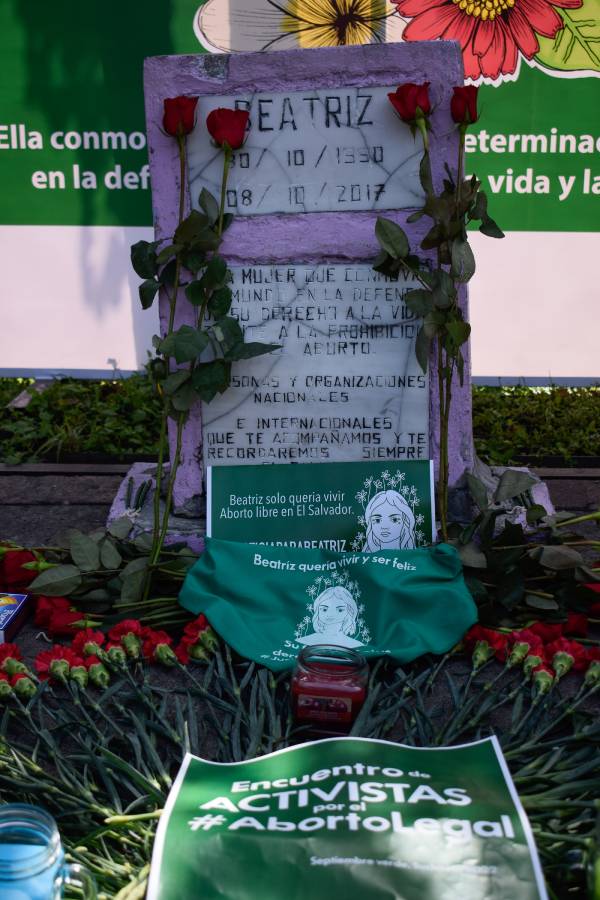
On October 8, 2017, Beatriz passed away due to health complications, aggravated by a traffic accident after she had been discharged from the hospital. She experienced respiratory problems and suffered two cardiac arrests.
Set precedents
Beatriz's family and the organizations supporting her case are seeking a ruling from the Inter-American Court of Human Rights (IACHR) following the hearing on March 22 and 23, 2023. They are also seeking comprehensive reparations for Beatriz's family, as well as measures to prevent other women and girls from suffering the same fate as Beatriz. Furthermore, they are seeking to amend the legal framework that criminalizes all forms of abortion, which endangers the lives of thousands of women in El Salvador.
“The right that the State violated in Beatriz was the right to choose. The State failed her. The State must approve abortion when necessary, as was the case with Beatriz. Our reason for continuing (with the international lawsuit) is to prevent other women from going through what my daughter went through,” explains Delmi. The Inter-American Court of Human Rights will announce its ruling in the last quarter of 2023.
This is the second time the Salvadoran state has been brought before the Inter-American Court of Human Rights (IACHR) in a case related to women's sexual and reproductive rights. On November 2, 2021, El Salvador was condemned in the case of Manuela et al. v. El Salvador. Among the reparations ordered by the IACHR are the regulation of medical confidentiality and its exceptions, and the adaptation of medical protocols and guidelines for obstetric emergencies.
This article was originally published in Alharaca
Share
We are present
We are committed to journalism that delves into the territories and conducts thorough investigations, combined with new technologies and narrative formats. We want the protagonists, their stories, and their struggles to be present.
SUPPORT US

FOLLOW US
Related notes
We are present
This and other stories are not usually on the media agenda. Together we can bring them to light.