

Soledad Cayunao, the Mapuche defender who puts her body on the line to stop the fence builders of the Chubut River
"It's not just about defending Mapuche territory. These are the sources of the water, the river that runs through all of Chubut. This should matter to everyone," says Soledad Cayunao. A look back at the long struggle to defend the territory, as seen through the eyes of a reporter who spent six days in the area.


Share

ALTO RIO CHUBUT, Río Negro. Soledad Cayunao walks 15 kilometers through the Chubut River valley, which originates here in the Río Negro mountain range, to reach the place where her family traditionally grazed their animals in the summer. This 38-year-old Mapuche woman now leads the defense of the river's headwaters. These days, workers from a nearby large estate are extending a fence along the high peaks, enclosing not only the traditional summer grazing land of the Cayunao community, but also that of many other families and the river's source.
For several years, many communities and organizations have protested the expansion of large landholdings in this area. Soledad, along with her partner and children, has spent two summers standing in front of the fence builders to stop their advance. They have already witnessed large tracts of communal and public lands being privatized.
“They’re cutting down the fields, drying up the springs, the watering holes, the wetlands. Dismantling the balance that exists here,” says Soledad. “What’s happening is very sad, because when I was very little, a tiny girl, I used to go there. I was free, I knew how to go fishing. Now I can’t. I have to look in from behind a gate. I can’t go in because they’ve dispossessed my people.”
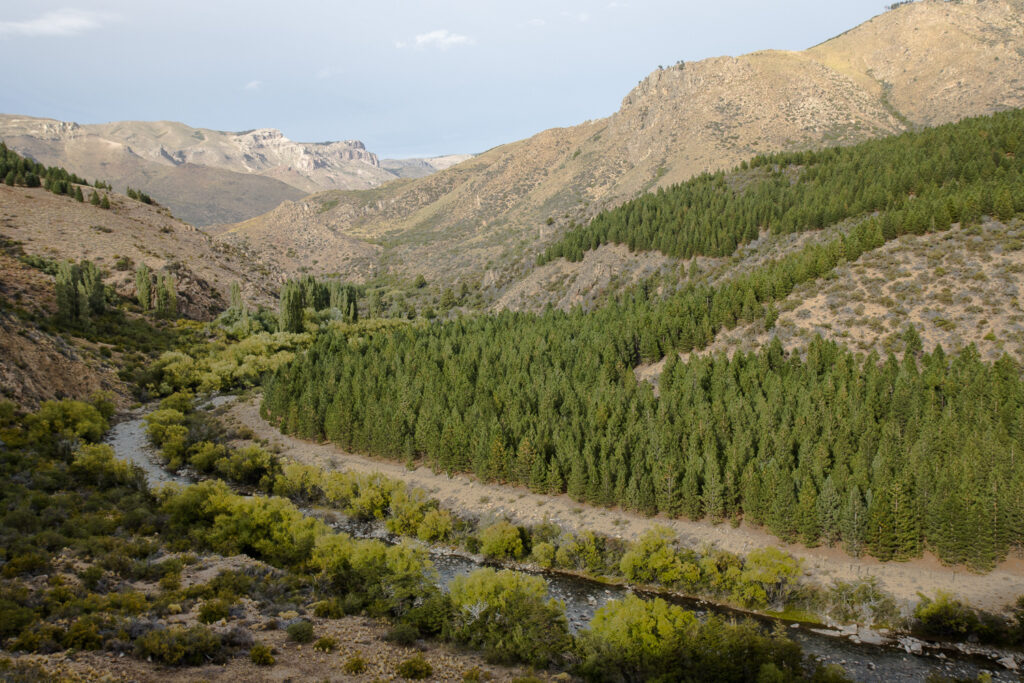
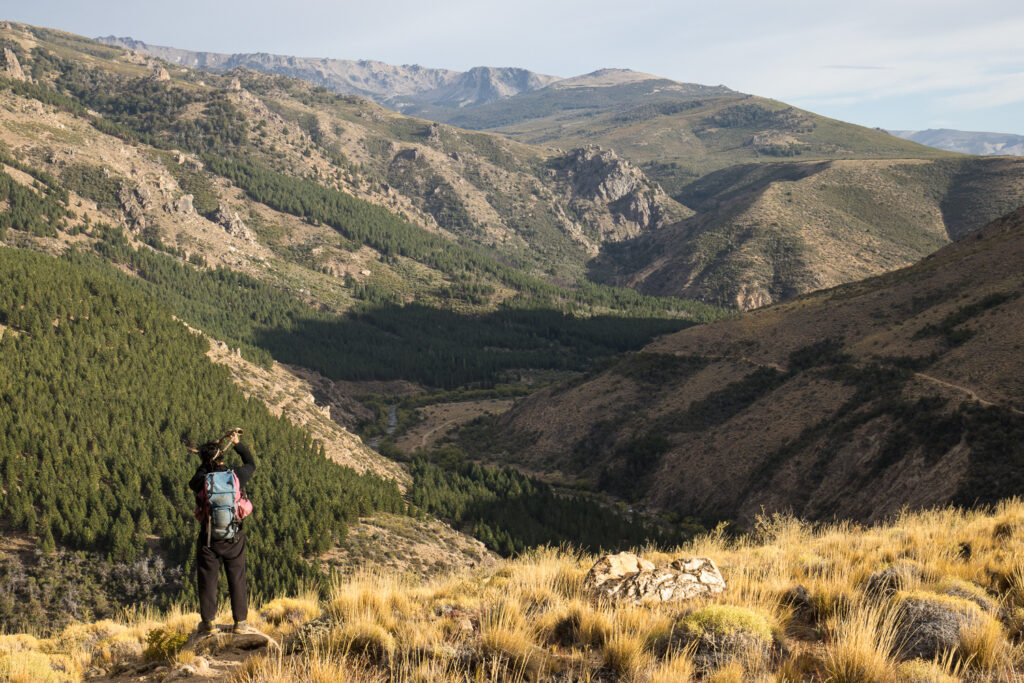
Defending water at its source, in such a remote and isolated place, is more than just an arduous task. As the crow flies, this corner of the Chubut River valley lies 40 km northeast of El Bolsón and 65 km south of Bariloche, in the province of Río Negro. But in the Andes, lines aren't straight. To get there, you have to enter from the east, through the El Maitén valley in Chubut. From there, it takes an hour by car along a gravel road, difficult to navigate until you reach the winter pastures, the area inhabited and grazed during the winter, which is already at almost 1,000 meters above sea level. From there, Soledad continues on foot, climbing through a pine plantation that was partially burned in 2021. Then she descends to the river and follows the bank for a few kilometers, passing stone towers and the typical vegetation of the arid steppe. The path veers away from the river to climb the slope of a more wooded mountain, passing through ñire trees and then lenga trees.
The valley is immense, and there are other areas that have become private property. From the heights, you can see the deforested area that Soledad describes. You can see the clearings of felled forest and the dark patches where native vegetation has been replaced by pine plantations.
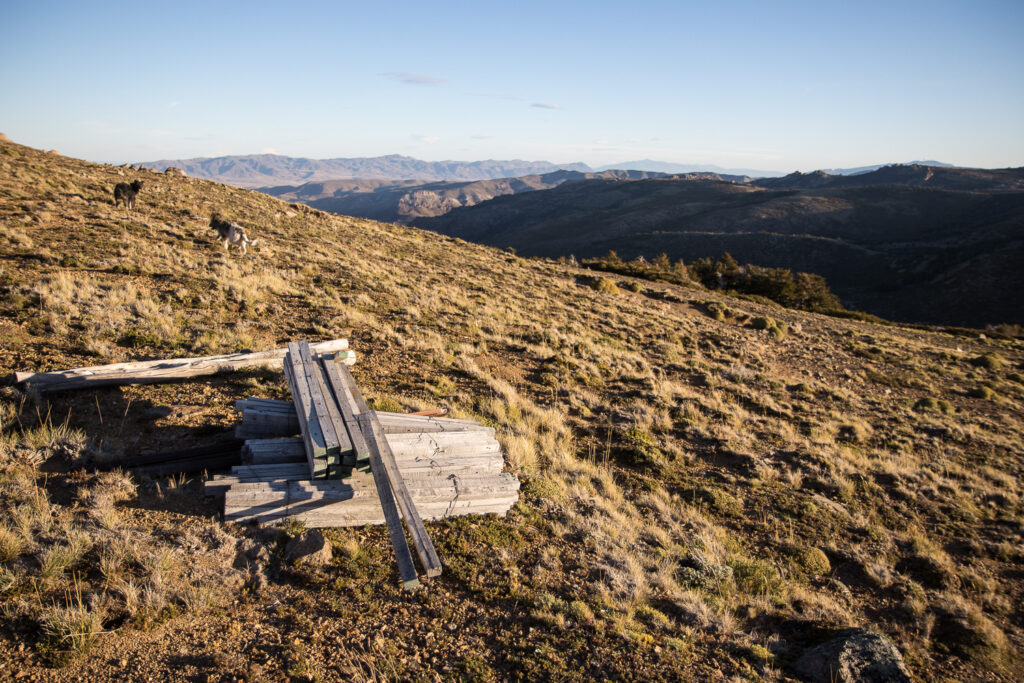
Along the mountain's edge lie piles of rods, wooden posts, and iron ones. Everything is ready for more fencing. Here, in a lengal forest at over 1,600 meters above sea level, the Lof Cayunao maintains a camp at their ancestral summer pasture, where they resist the advance of the wire with their presence. Every day they go out to confront the workers, to tell them they cannot continue enclosing their territory.
In this remote place, resisting power requires a different kind of effort. There is no communication, and help doesn't arrive quickly. Harassment is almost constant. These distances pose a great risk to Soledad and those who accompany her.
February of threats and dispossession
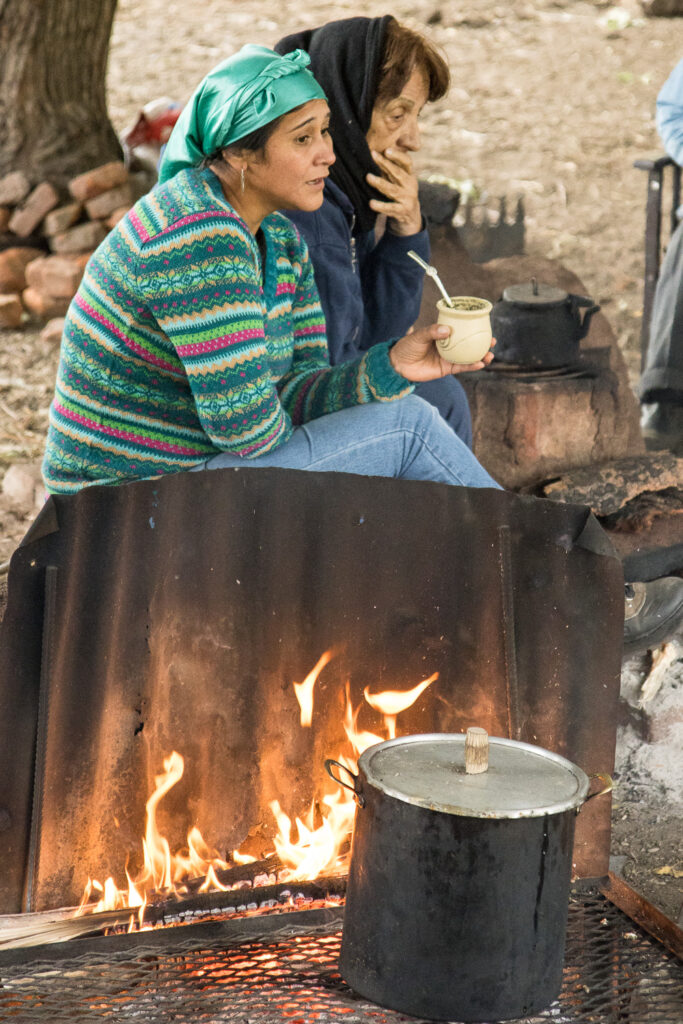
In early February, they faced a group of more than ten horsemen who intimidated them from their horses; on several occasions, these men have passed by the camp at night to frighten them. In August 2022, Turkish journalist Sadik Celik was traveling through the area with Soledad when he was attacked by a staff member who struck the horse, causing it to bolt with Celik clinging to the stirrup . Soledad has received death threats. Given this violence, the inability to provide timely warning in case of emergency is a significant issue.
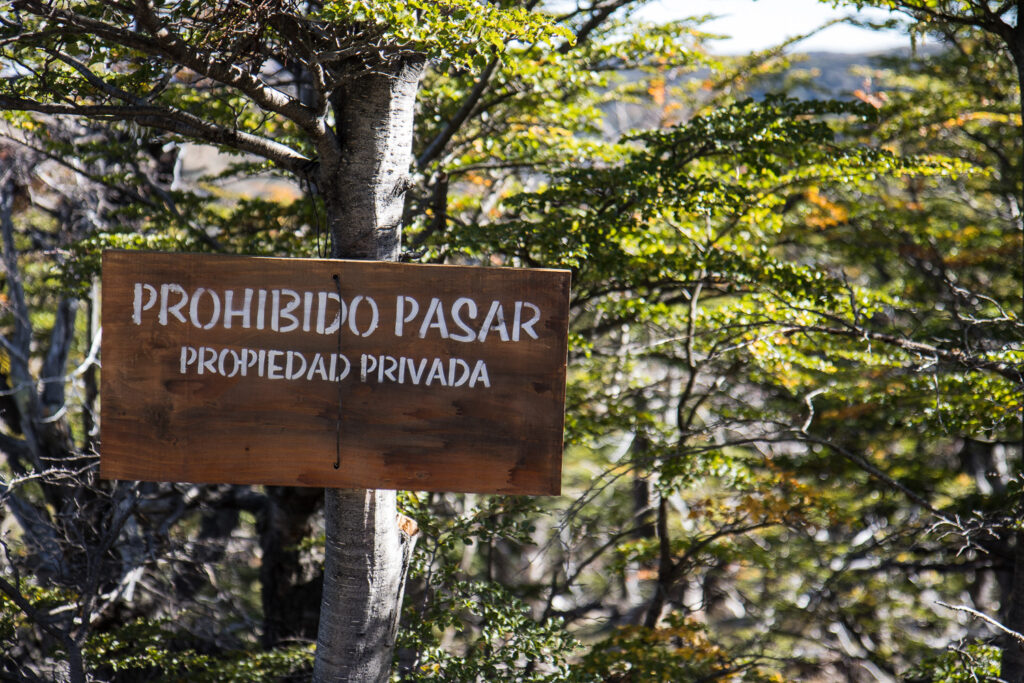
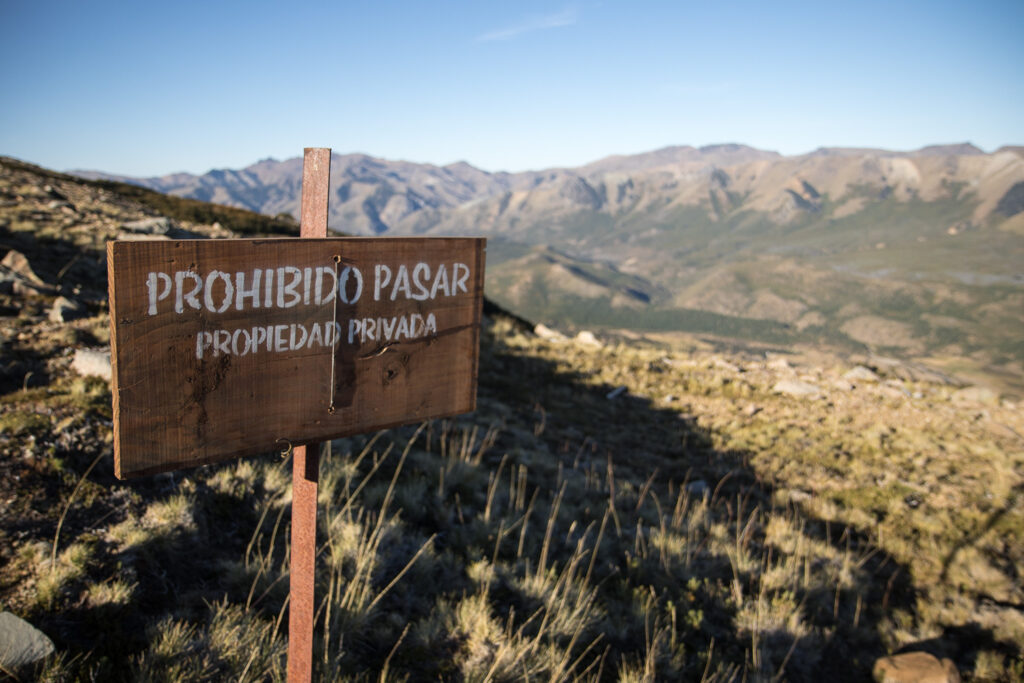
On February 25, Soledad left the fields to attend the unveiling of a mural in El Bolsón honoring Casimiro Huenelaf, a local Mapuche leader who had passed away 12 years earlier. Upon returning, Pablo, her partner, went up to the summer pasture and along the way began to find new signs: No Trespassing, Private Property . When they arrived at the outpost, nothing was there. “They took everything,” he says angrily. “The tarp, the sleeping mats, the blankets. The pots, the kettle, all the food. They took everything. Even the shovel.”
To warn Soledad, they had to wait until the scheduled time to communicate, while she prepared to climb the next day. This is what endurance in the mountains is all about. Soledad has to walk half an hour from the winter pasture just to reach a place where she can communicate with Pablo by UHF radio. That day, it was his turn to deliver the bad news. Soledad returned to the winter pasture and set off with the mare, bareback because she didn't have a saddle, to travel the 8 kilometers along the road to El Maitén to a place with cell service, so she could make a phone call and report the robbery of the outpost. She made the 8-kilometer return trip at night.
The Movement of Indigenous Women and Diversities for Good Living has been denouncing the situation for some time now, through posts on their social media and in Agencia Telúrica. “A group of people, mostly Mapuche women, are resisting the illegal fencing being erected in the area of the headwaters of the Chubut River, a river that flows 800 km to the sea. Officials in Río Negro are not responding to the request for protection of the lives of the Defenders of the Chubut River. The State is allowing foreign capital to appropriate the water. It is the law: No one can appropriate lagoons, river sources, or lakes,” they stated in a press release. They added: “The Defenders of the Chubut River hiked for hours. Thanks to solidarity, they had obtained blankets and sleeping bags, materials to build a shelter, and food supplies. Everything was stolen from them.”
Since February 6th, they have been demanding a dialogue. “The State is responsible for anything that might happen to them. So far, there has been no response from the responsible agencies,” the Movement warns.
Background of arson
This isn't the first time landowners have attacked the property of the local people. Previously, in the same spot where the Lof Cayunao community maintained their encampment, there was a rustic log cabin used by members of the Kom Kiñe Mu (We Are All One) community. This is a historic Mapuche community that brings together several families from the area, including relatives of Soledad. In December 2019, they reported that ranch employees had burned down the community outpost. Soledad's brother filmed them throwing logs into the fire. That report went nowhere; the impunity for burning Mapuche homes remained. The following year, while the community was under lockdown due to the pandemic, the ranchers continued their advance. In the winter of 2020, a new cabin appeared there, entirely clad in sheet metal, right where the community outpost had stood.
Unequal
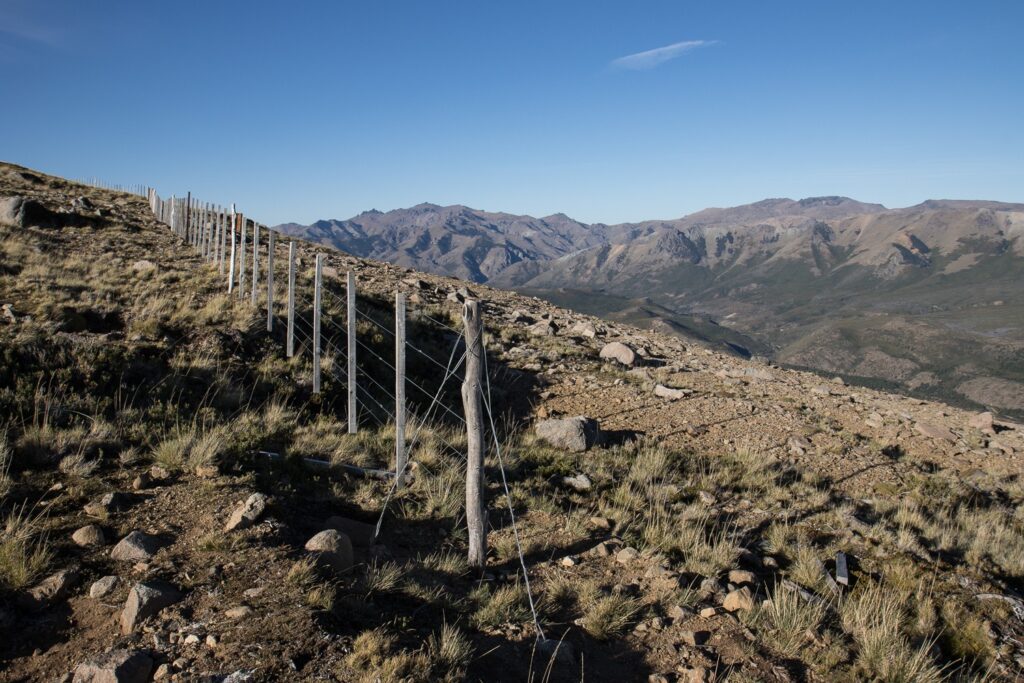
The next time she went up after the robbery, Soledad encountered Andrés Saint Antonin, foreman of the fencing crew. There were also three employees, two lawyers, and three police officers. According to the community's statement, Saint Antonin, “true to his violent, macho style, charged Soledad Cayunao with his horse, without any objection from the police present.” She was lucky: she escaped unharmed. The police then proceeded to review the security camera footage that had evidently been installed on the property.
The disparity is blatant, both in terms of violence and technological resources. While Soledad talks to the employees to tell them they can't fence off community land ("we know they're just employees," she says), the ranchers assault her. While Soledad travels the roads at night to make a single phone call, the police install remote cameras dozens of kilometers away from the power grid and cell phone signal.
Historical struggle and ties with Lago Escondido
The territory has been in dispute for a long time. In the early 2000s, Miguel Guajardo, mayor of the neighboring town of El Maitén, Chubut, agreed to purchase 14,698 hectares of public land. He had never lived there, even though it was already home to many Indigenous families. This sale is considered, at the very least, irregular and illegitimate. This is the view of a lawsuit filed by the Indigenous Advisory Council, a long-standing Mapuche organization in Río Negro.
In 2009, businessman Marcelo Mindlin bought the land from Guajardo and, on the same day, purchased two adjacent properties, totaling more than 19,000 hectares of pristine mountain range. Mindlin is president of Pampa Energía, one of the country's highest-grossing companies, and a longtime partner of British businessman Joe Lewis. Lewis is among the 500 richest people in the world and is well-known in the area for owning 11,000 hectares surrounding the entire Lago Escondido (Hidden Lake) . The Alto Río Chubut summer grazing area is just 35 kilometers east of the lake.
Also in 2009, the Indigenous Advisory Council filed a class-action lawsuit against the provincial government, claiming the ancestral lands of several communities, including Kom Kiñe Mu. Fourteen years later, the lawsuit remains stalled. The province of Río Negro has never admitted to irregularly transferring lands inhabited by Mapuche families to third parties.
The transfer of titles between distant businesspeople sometimes makes it difficult to know who is behind what happens in the territory. In 2010, the Kom Kiñe Mu community denounced the construction of a fence, enclosing what was later revealed to be an exclusive hunting reserve. It is called Rincón del Diablo (Devil's Corner), after a stream that runs through it. That stream flows into the Foyel River, then into the Manso River, and finally into the Pacific Ocean, while the other main waterway is an unnamed stream, the second tributary of the Chubut River, which flows into the Atlantic. In other words, it is located right on the watershed. There, they maintain a population of red deer, an exotic species that wreaks havoc on the native flora, for the sole purpose of allowing millionaires to come on vacation to hunt them.
That complaint about the fence also went nowhere, as did the one about the burned-down post and the collective lawsuit for the land. It was the lack of response to that lawsuit that led Soledad to take direct resistance. “I was overcome with desperation. I saw what was happening and I couldn’t defend the land,” she says. Then she decided that she could, and in the spring of 2021, she and her family began standing in front of the fence builders.
These recent events, and the new fencing that continues to be extended, are now linked to new owners. In 2017, Mindlin sold the property to DIUNA Inmobiliaria SA, a company created at that time. The public face of the company since then has been Hugo Alberto Barabucci, a polo horse breeder in Santa Fe. But alongside Barabucci, the company's board of directors includes a well-known figure in the area and another who is very new to this scene. The well-known figure is Nicolás Van Ditmar, the long-time manager of Hidden Lake and Joe Lewis's right-hand man in Argentina . The newcomer is Matar Suhail Ali Al Yabhoumi Al Dhaheri, who all indications suggest is the true owner (the deed shows the payment originating from an Abu Dhabi bank) , while Barabucci acts as the main front man.
Al Dhaheri is a billionaire businessman from the United Arab Emirates. While information about such individuals is difficult to find, according to journalistic sources, he is extremely close to the Abu Dhabi royal family , which typically governs the country. Al Dhaheri also owns the construction and real estate company Kopaonik, named after Serbia's highest mountain, where he built a luxury ski resort for over $70 million . As a result of his business dealings in Serbia, Al Dhaheri obtained Serbian citizenship in 2016.
When Al Dhaheri bought the hunting reserve in 2017, it was part of a significant influx of Arab capital into the Río Negro mountain range. And it wasn't by chance—that year, Mauricio Macri and Alberto Weretilneck, then president and governor of Río Negro, respectively, traveled together to the UAE. That same year, the brother-in-law of the current Emir of Qatar (both the UAE and Qatar, Saudi Arabia, Bahrain, Oman, and Kuwait are absolute monarchies) bought the ultra-exclusive Baguales Mountain Reserve ski resort in partnership with former Argentine tennis player Gastón Gaudio . Baguales is just 30 km north of Rincón de Diablo. The intervening land, also enormous, is owned by the BURCO group, a Belgian company. And across Route 40 lies Joe Lewis's fiefdom. In fact, Al Dhaheri also bought some 679 hectares from Mindlin, adjacent to Lewis's property on the banks of the Foyel River. That in itself is a lot of land, it only seems like it isn't when compared to the almost 20,000 hectares he has in Rincón del Diablo.
What happens in these places is very opaque. In October 2022, a UAE military plane landed in Bariloche. For days, everyone speculated about the mystery of what it was doing there. It was finally revealed that it was bringing equipment for a satellite station to be installed on Al Dhaheri's ranch, but its purpose was never explained.
This needs to matter to everyone
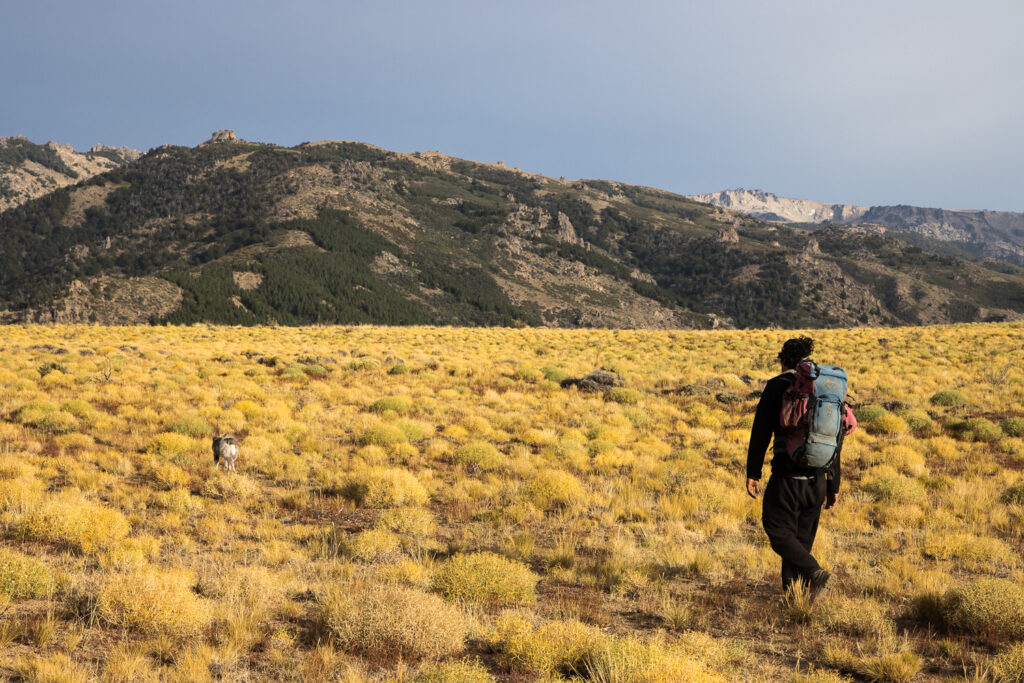
Meanwhile, those walking the territory are Soledad, Pablo, and a handful of people who have come to support their resistance. Some people have arrived in solidarity, including members of the Indigenous Women and Diversity Movement, which has been campaigning to raise awareness of Soledad's struggle.
“I walked alongside them on the ascent of the mountain,” wrote the Mapuche weychafe (warrior) Moira Millán. “I experienced through my body extreme exhaustion, the cold of the night, the lack of rest, the pain in my feet, the deprivation of so much, but I also received the strength and love of the land and was able to understand from there the unwavering decision to defend the life that dwells in the heart of this community. I descended transformed from that summit, filled with the certainty that we still have time to save the Chubut River and that it is possible to achieve it. We only need to awaken our senses, unite our thoughts, and act without excuses, moving from small actions to those that will allow us to climb the mountain.”
But while Lewis's case gained national attention, with activists, organizations from across the country, and Argentine flags converging to demand access to Lago Escondido, the Chubut River seems to lack the same resonance. Here, in this place where the river originates, the enemies seem distant and/or in the shadows, unlike in Lewis's case, where much more information is available. Here, where, in addition to protecting the river, the rights of the Mapuche people are being defended, the struggle is much more solitary.
“It’s not just about defending Mapuche territory,” says Soledad. “It’s about the source of the water, the river that runs through all of Chubut. This should matter to everyone. ”
We are present
We are committed to journalism that delves into the territories and conducts thorough investigations, combined with new technologies and narrative formats. We want the protagonists, their stories, and their struggles to be present.
SUPPORT US

FOLLOW US
Related notes



We are present
This and other stories are not usually on the media agenda. Together we can bring them to light.