

Women weavers of Nazareno: weaving the knowledge and memory of the Kolla people
A group of twenty Kolla women, "Las Warmis" from Nazareno, Salta, came together to recover ancestral weavings as a way to build memory, political organization and future.


Share

NAZARENO, SALTA, Argentina. At 52, Paulina Copa says she doesn't want to live anywhere but up in the mountains. Her house is in Abra Ciénega, almost 4,000 meters above sea level, in the Santa Victoria department. It's 7 km from Nazareno and 551 km from the city of Salta .
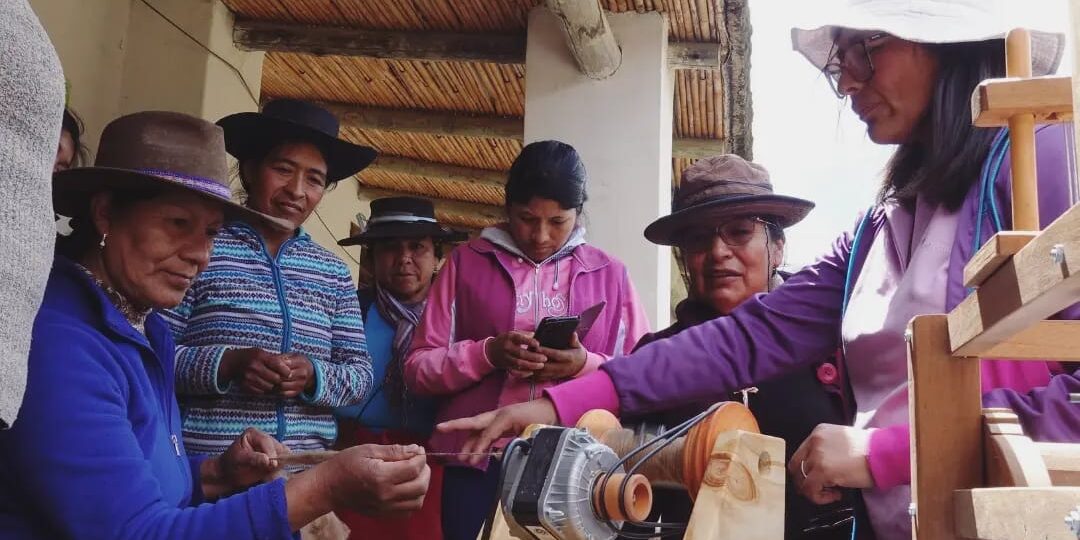
In May 2022, Paulina became the first woman to hold the position of vice-coordinator of the Organization of Aboriginal Communities of Nazareno (OCAN). She is, above all, a weaver. She is part of a group that came together to weave as a way to support each other during the first months of the pandemic.
That's how they realized that weaving could be used to talk about other things: like politics and their place in community life. It was there that the need arose to launch a project that would help them become financially self-sufficient. Thus was born “Weaving Knowledge, Weaving Memory: Towards Strengthening Collective Work and Political Participation of Las Warmis de Nazareno” or simply Las Warmis (woman, in Kolla), the weavers of Nazareno.
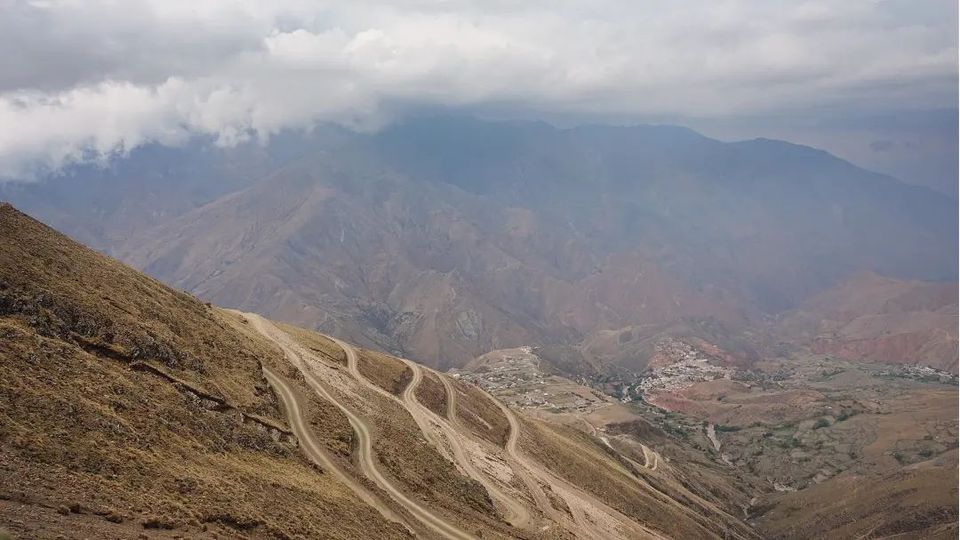
“The idea is to recover the knowledge of weaving. Because ancestrally we all knew it, but now we've all moved closer to the village and we don't know how to raise animals, how to care for them,” says Paulina. She recalls that in her childhood they still wore a lot of hand-knitted clothing, but that the massive influx of industrially produced garments, of lower quality but at affordable prices, slowly led to the displacement of garments woven from natural fibers.
Ways to spin
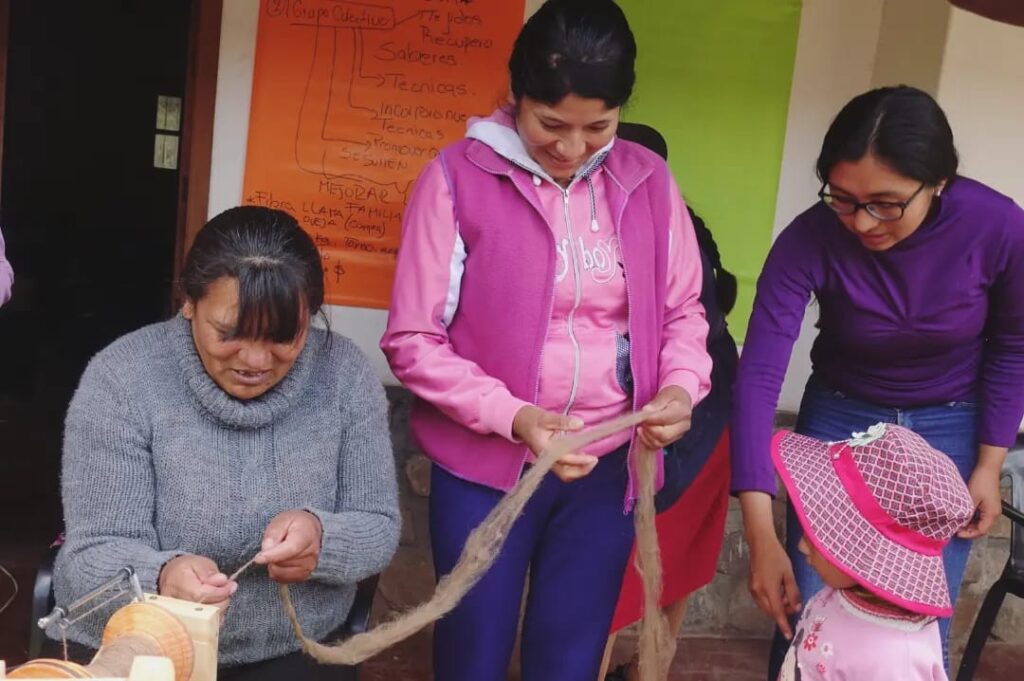
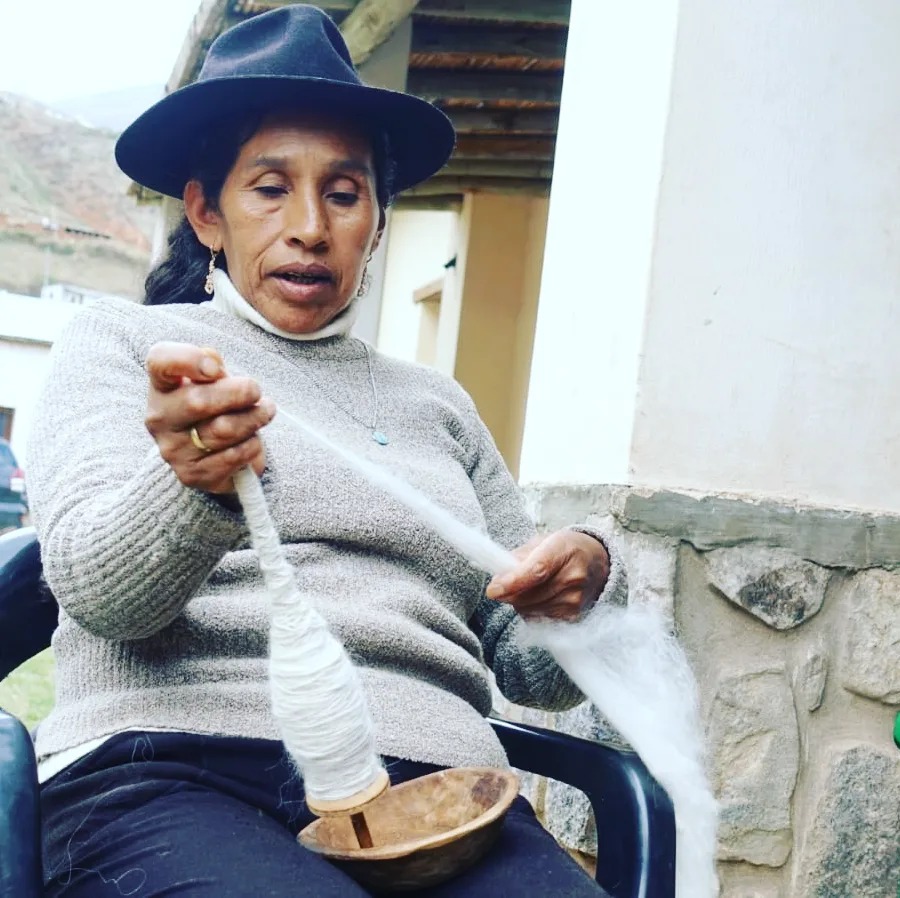
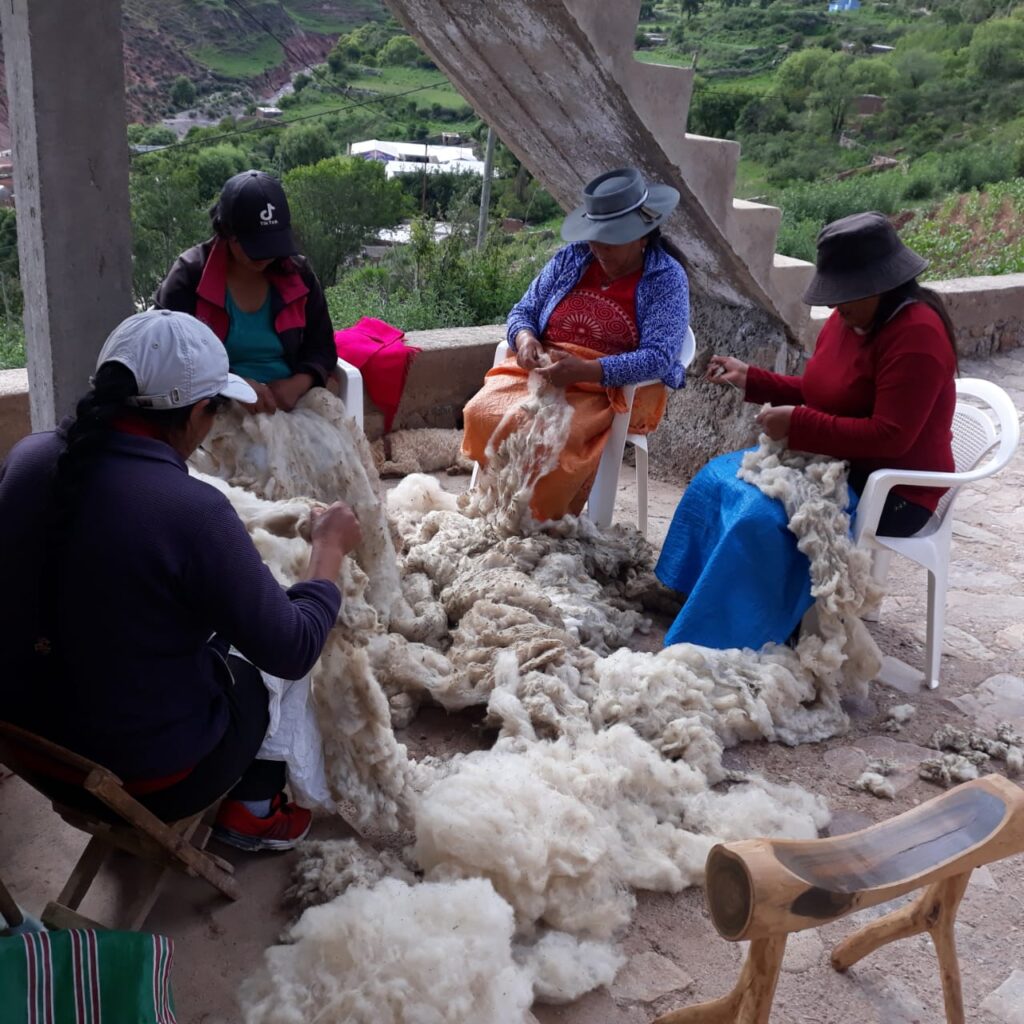
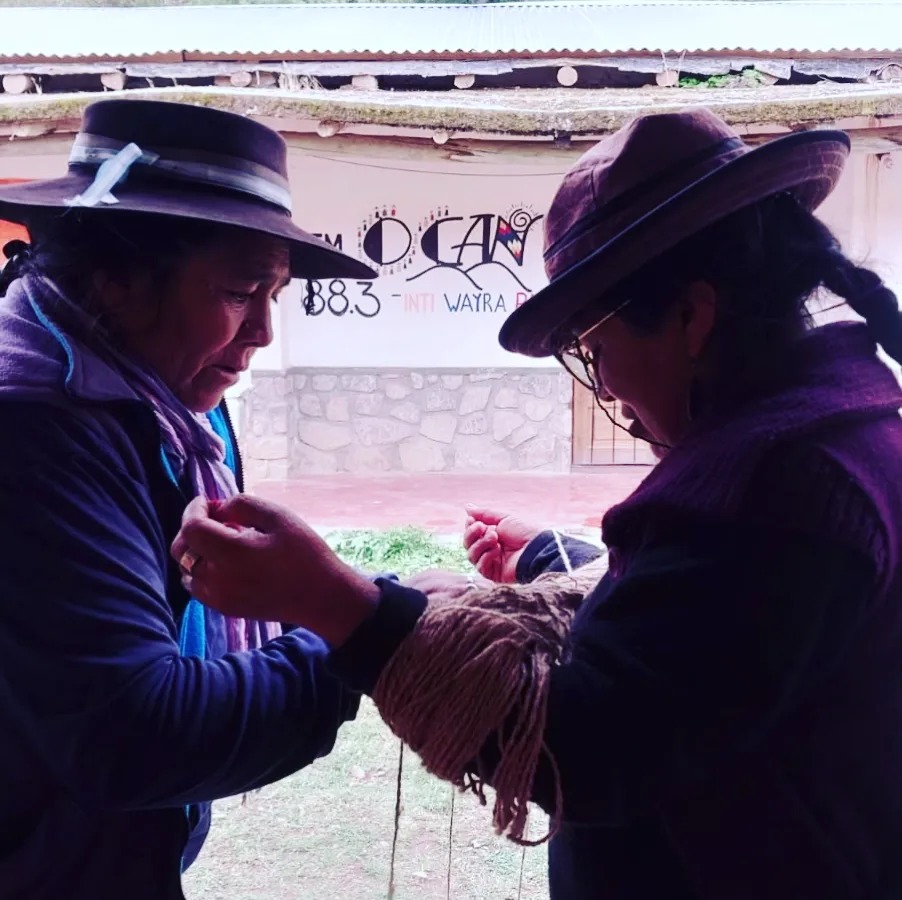
Before the arrival of industrial textiles, the inhabitants of Nazareno raised their sheep and llamas, knowing how to care for and shear them. To prepare the wool, it must be washed and then separated. Afterward, it is spun, dyed (if it is to be dyed), and only then is it ready for weaving. This process has always been artisanal, and even now many still spin with a spindle. Paulina is one of them.
María Albarado, 32, is a teacher and also a member of Las Warmis. She lives in the rural area of Campo La Cruz, about 3 kilometers from Nazareno. She comes from a family of weavers: “My grandfather wove on looms, my father also wove, but I hadn't learned. I did crochet, with two needles, but not on a loom.”
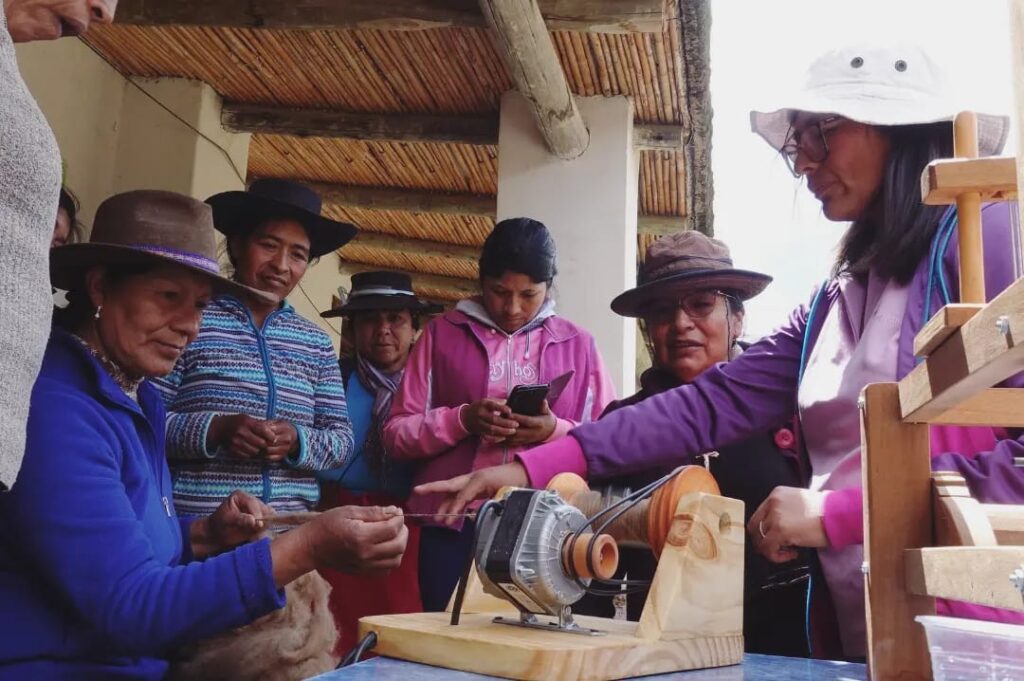
The Warmis have a loom and a spinning machine that they take to the homes of their members, a transfer that is not always easy because they have to go up and down mountains.
Since the time when their ancestors wove, some things have changed. Maria confirmed Paulina's statements regarding the loss of certain practices and the few sheep and llamas that families still have.
Accompanying while knitting
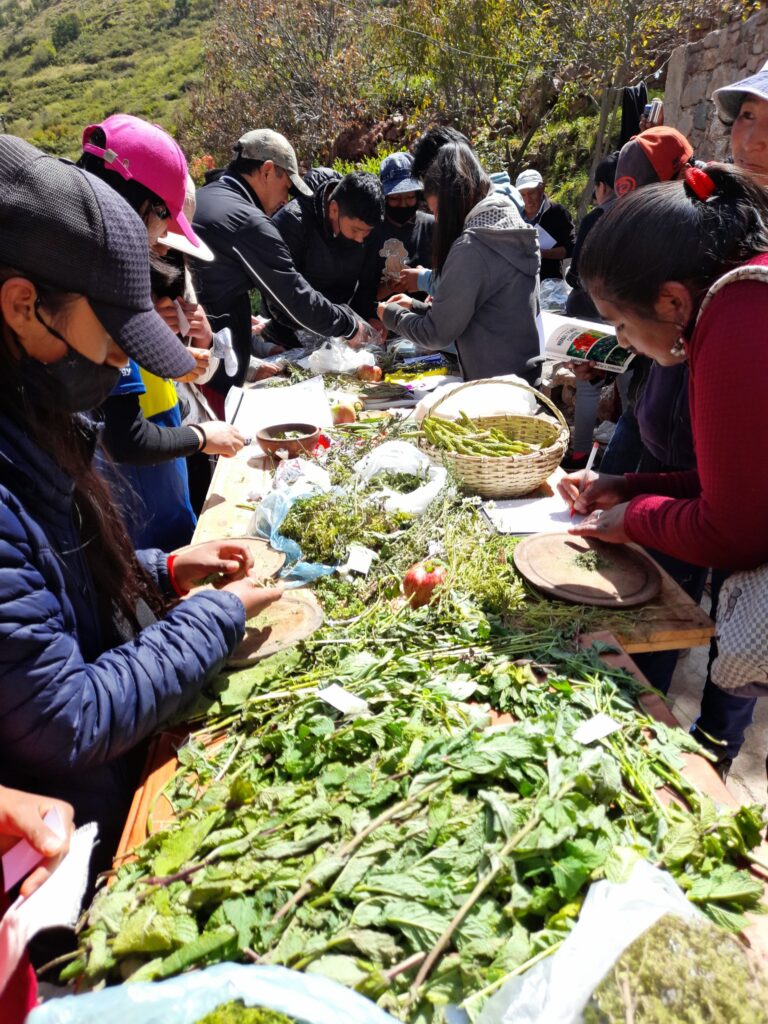
Over time, Las Warmis decided to expand their offerings, and a medicinal plant workshop emerged. “It was a whole project based on native plants and their uses in the community, especially with the idea of recovering traditional knowledge, including the Quechua names of the plants. So it was like a time of recovering collective memory,” says Emilia Villagra. These cultural practices weren't lost, “but rather silenced or limited within families.”
The same is true for loom weaving; it's not lost, but rather somewhat hidden within the domestic sphere. Machine weaving—the project enabled the purchase of supplies—is used alongside hand weaving, since although it takes more time, it's something that has always been done.
Roles, violence and solidarity networks
“We get together to talk about our personal lives,” Paulina says about the weavers’ meetings. They talk about gender violence, for example, and how it’s necessary to change that.
María adds that in the workshops they discuss women's practices: “We reflect on all the tasks we perform, not just domestic chores. If someone has a problem, we talk about it so we can move forward and help each other.”
“It started as a weaving project, but it also became a gateway to recovering knowledge, working with memory, and above all, giving great value to the role of women from different perspectives, not only based on the weaving itself but also on the roles and positions they hold in their families, on everything they do to sustain the daily lives of those families,” says Emilia Villagra, another member of the group. She adds, “While their work isn't invisible, because women occupy an important place, it's often under-recognized and they're frequently relegated to the background, even though they're the ones putting their bodies on the line in various ways.”
Regarding the initiative's origins, anthropologist Paula Milana noted that, like most of Las Warmis, "they are leaders, they have participated in marches and various organizational activities. They were thinking about how they could contribute by amplifying their voices." With this in mind, they presented the project to the Southern Women's Fund.
That initiative worked, and since 2020 they have been able to purchase looms and yarn and conduct various training sessions. The workshops were comprehensive, reaching over 40 women. Topics ranged from women's political role in their communities to teaching spinning and dyeing techniques. This second workshop brought together women from the Condorhuayra community in the La Caldera department, near the provincial capital.
The workshop was open to the general community and although most of the attendees were women, there were also men "because the practice of weaving has historically been a male activity; they have that division of labor between women who spin and men who weave in a large part of the cases."
After three years of work, they are already talking about a collective brand. “We are looking to shape the project not only with the making of the garments but also with everything involved in selling them, because now many women sell their textiles, but in a very informal way, at fairs or among themselves, and that is why there is the idea of strengthening a sales space,” explained Emilia Villagra.
Podcast recordings

Between 15 and 20 women make up Las Warmis. The number fluctuates because there are always changes. Sometimes participation depends on the activities. The creation of podcasts sparked the interest of the younger members.
Paula Milana highlighted the podcast as one of the tools that helped them systematize the process. “It served as a tool for the women to share on different radio stations, via cell phone, and so on. We would share these audio recordings and review them until we put together a podcast about a stage of this project.”
They have produced three podcasts: one about the role of women in general and about what happened during the pandemic; another about traditional medicine knowledge ; and the last one about women's struggle for territory.
Breathe in freedom
The Kolla communities that make up OCAN, and others from the Santa Victoria department, have been carrying out a legal struggle for years for the delivery of the single title of ownership over a large territory, which includes part of what was formerly the extensive Marquisate of Yavi.
The families in this region raise lambs and cows, and while some also raise llamas, they face a growing distance from rural areas. Paulina Copa is one of those who resists. “It hurts to leave because I grew up with this,” she explained. “I prefer the countryside. There you can plant crops, walk with the animals, go to the hills, and breathe in the freedom.”
In 2010, Nazareno made headlines when its residents rejected the capitalist tourism model in a referendum. That fundamental decision, along with the inherent difficulties of reaching the town, have kept it largely unchanged. And yet, things are changing here as well. The community of Paulina Copa, previously accessible only on foot or by donkey, now has a paved road. A route connecting the town of Santa Victoria Oeste with Los Toldos has also been opened, gradually easing the historical isolation. And while "not many tourists are arriving yet, they are starting to come," notes the vice-coordinator of the OCAN (National Organization of Cantabrian Tourism). This also presents an opportunity for them to sell their textiles.
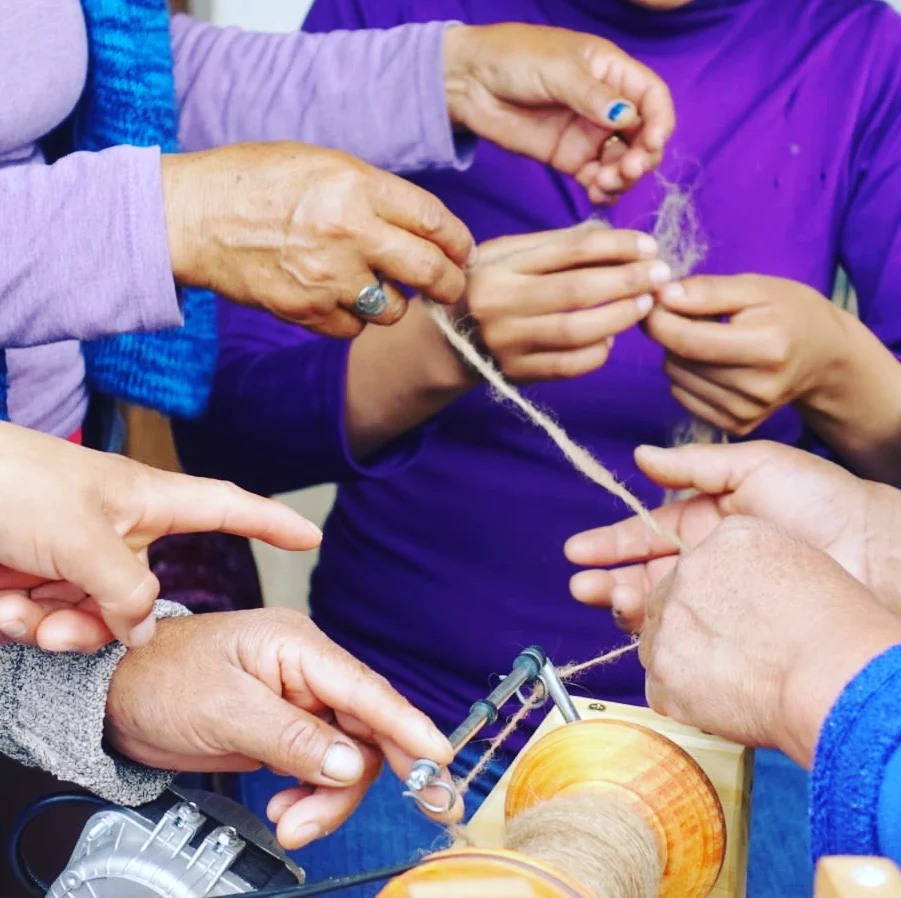
And the weaving project “is a gateway to showcasing other ways of inhabiting territories and creating politics as well,” says Emilia Villagra. Paula Copa’s position as first vice-coordinator is closely linked to this. “The Las Warmis project allowed us to reclaim women’s place in a political space generally dominated by men.” It’s a struggle that has been gradually unfolding and, thanks to weaving as a way of coming together and organizing, is now a reality.
We are present
We are committed to journalism that delves into the territories and conducts thorough investigations, combined with new technologies and narrative formats. We want the protagonists, their stories, and their struggles to be present.
SUPPORT US

FOLLOW US
Related notes
We are present
This and other stories are not usually on the media agenda. Together we can bring them to light.