

5 questions for Los Pipis: "Theater is a game where you don't lose"
Since 2017, this duo has been writing, acting, and directing from queer universes, with creative freedom and surprise as their horizons.


Share

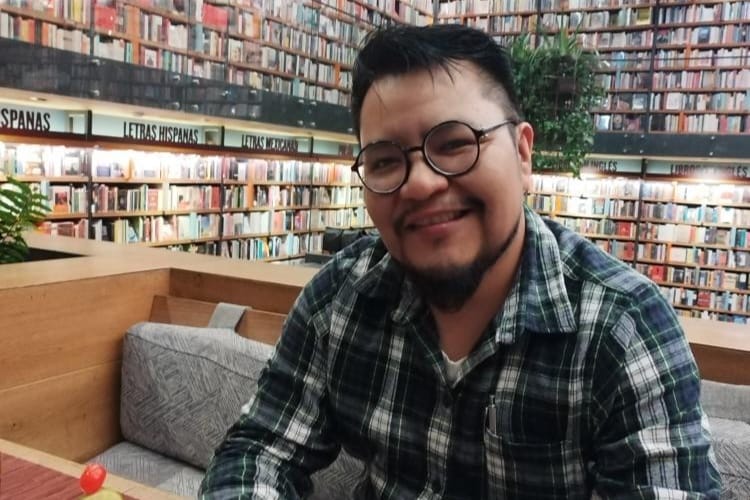
The universe of Los Pipis Teatro revolves around a couple: Federico Lehman and Matías Milanese. If being queer is about escaping norms and expectations, then these two have forged their relationship into a loving, creative partnership that expands, mutates, and shapes countless productions. Los Pipis is a heroic multiverse where several works run simultaneously, incorporating people/characters with cameos, interactions, interwoven narratives, and above all, a wealth of creativity and art that overflows with tenderness. Their productions often blend dance, objects brought to life as if they were in the mansion of Beauty and the Beast, plenty of pop music, and a proud queer manifesto.
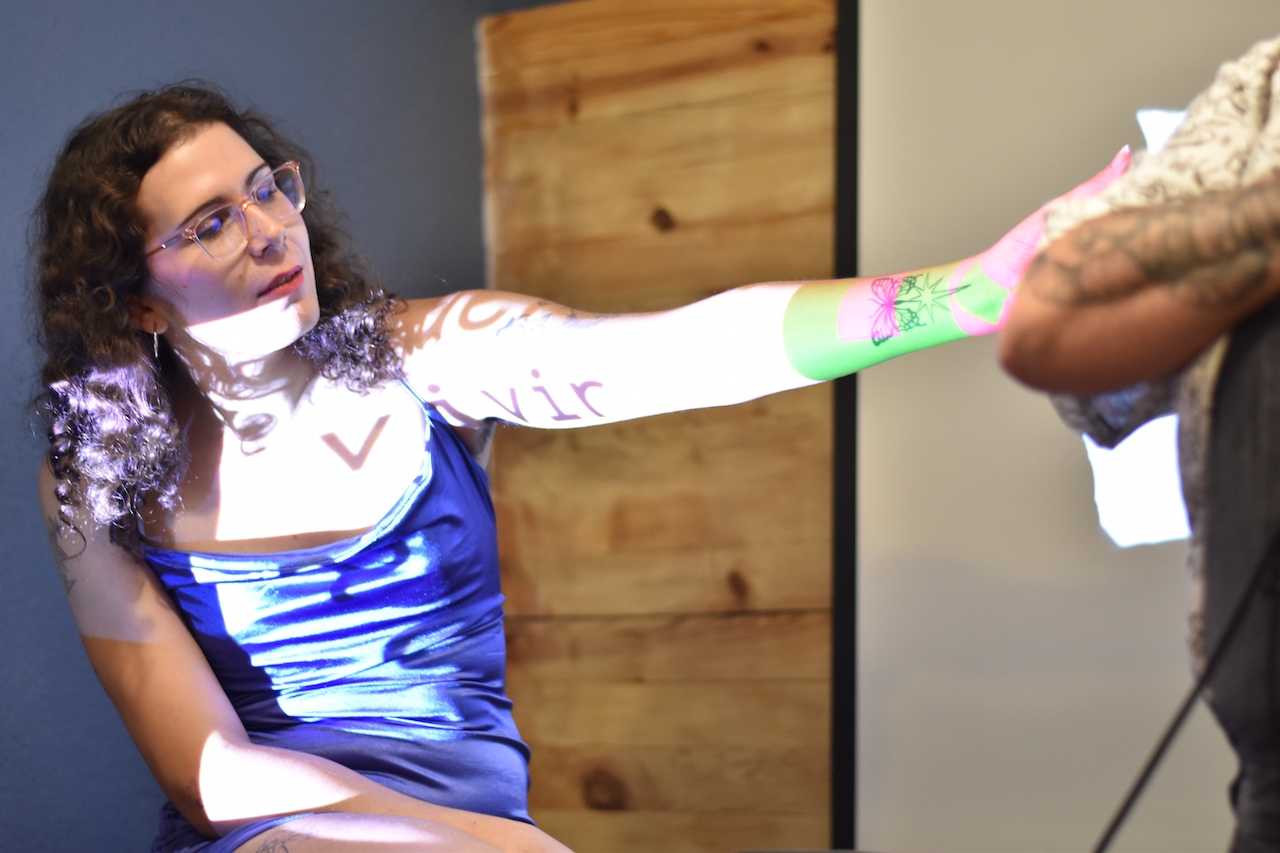
The creative duo began their project in 2017. They currently direct a troupe of talented young people in 'Las jóvenes promesas' at the Teatro San Martín while preparing the second season of 'El mecánica de Alaska' at Timbre 4. In this production, they share the stage for the first time, and it's no wonder, as they explore the very essence of their relationship. The play opens with them dancing on stage, spinning like propellers that carry the infinite information of a story that, besides being their own, encapsulates so many queer people and so many loves.
In the recently revived 'Porcelain Puppies,' the hourglass is filled with glitter, and as it runs out, the threat of a hostile world intensifies. A hate crime affects a group of friends, and far from being a cheap shot, the choreography of feelings is an emotional rollercoaster. Los Pipis, along with Camila Marino Alfonsín, Lucía Deca, and Fede Prezet, transform the Espacio Callejón theater (Buenos Aires) into a city about to collapse upon its innocence.
Federico and Matías continue to make theater a loving refuge and a manifesto. They assemble teams, evolve their roles, and keep creating.
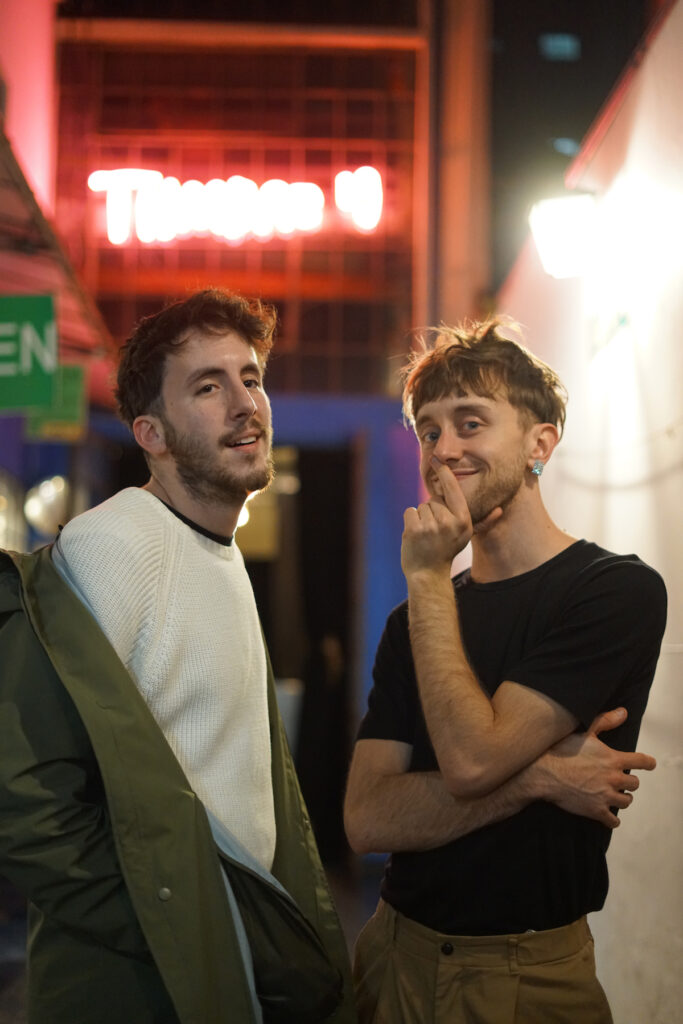
– What do you think about labels like “LGBT+ theatre” or “queer theatre”?
- – Ever since we started doing theater with Los Pipis, and even before (perhaps long, long before; when we were kids playing at theater in our bedrooms), all the forms we created responded to a queer logic, almost unconsciously. The stories were permeated by feeling different, the impossibility of fitting into certain social roles, gender as a place to be discovered, and so on. Even in more formal aspects, like the handcrafted costumes, the construction of identity on stage, the format of the stories, the colors, and more, they already contained something promising, strange, enticing, mysterious, and queer. I mean, even before assuming a gender identity, or being rejected by a classmate, or becoming aware of the activism for visibility, these concerns sought to manifest themselves in a very genuine and innocent way. However, thinking about the inner workings of the plays and the company's work in rehearsals, the writing processes, staging, etc., limiting ourselves to thinking about the work under the label isn't something that motivates us. It's precisely about preserving that certain primal freedom to create, attending to contradictions, to what is incorrect, and above all to the body and its needs in the moment. If defining the work as something helps someone, that's fine, but perhaps it will always be something else.
How can you avoid clichés when addressing topics such as love, relationships, being gay, etc.?
-Do you remember that board game that consisted of a palm tree pierced by sticks, plastic monkeys hanging from it, and the objective was to keep the monkeys in the air? I take the creative process of our latest work 'The Alaskan Mechanism' and this game to answer: the cliché is always present because it is the first image that assaults us when we decide to address a topic.
In this case, the cliché is the suspended monkey, and the rods represent all the artifice and optics that pierce it. We always like to position ourselves as players when creating. We take an object of study, set it floating, and alternate all the points that support it, so that it falls again, revealing what holds it up. Here, we have the advantage that theater is a game where you don't lose.
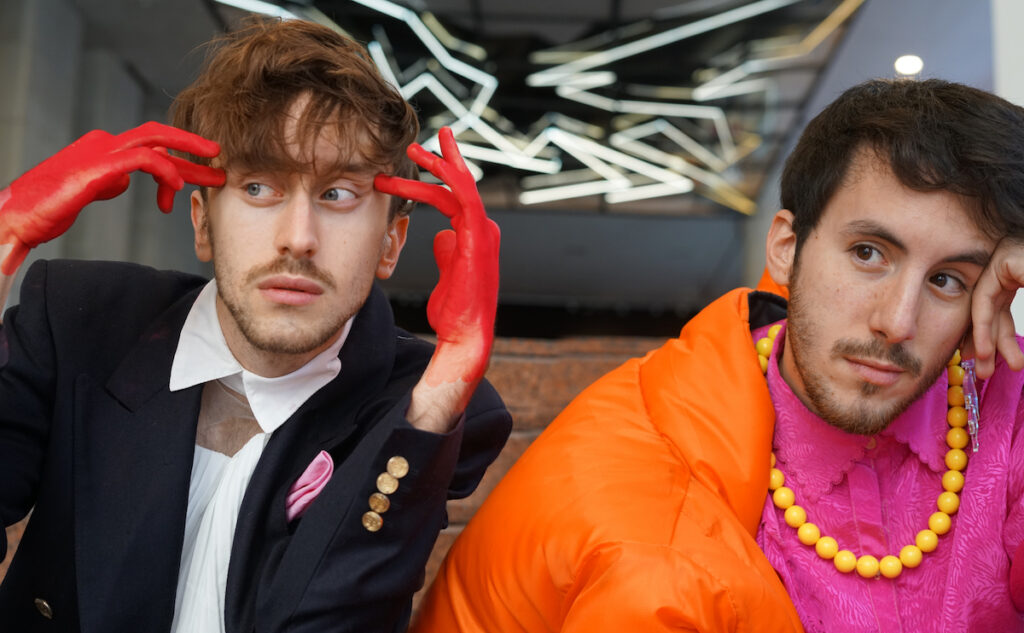
– Part of your work involves writing and directing other people, what is most important when it comes to making the other person shine?
We believe that the key is, through the rehearsal process and all the work prior to presenting the work, to discover what each performer or worker most wants to do in the work.
The feeling is like watching an athlete perform their game, seeing their body, their awareness, and their desire traversing the stage with a skill that leaves you speechless. This refers not to talent or virtuosity in acting, dancing, or anything else, but to the state of presence and enjoyment in doing it.
-How can activism be done through art?
– Porcelain Puppies is a play that addresses the grief of losing a friend killed in a hate crime, but it's staged from the perspective of pride and celebration that the LGBTQ+ community has embraced for years to celebrate and affirm its existence. We believe it's still necessary to bring these themes to the stage, and they appear from the diverse perspectives that theater offers, considering the many ways to approach a scene and express oneself through this art form.
We believe it is still necessary for these kinds of stories and forms of expression to appear in fields that at first glance are not those of militancy, at a time when hard-won rights seem to be in danger due to the arrogance with which many far-right sectors manifest themselves.
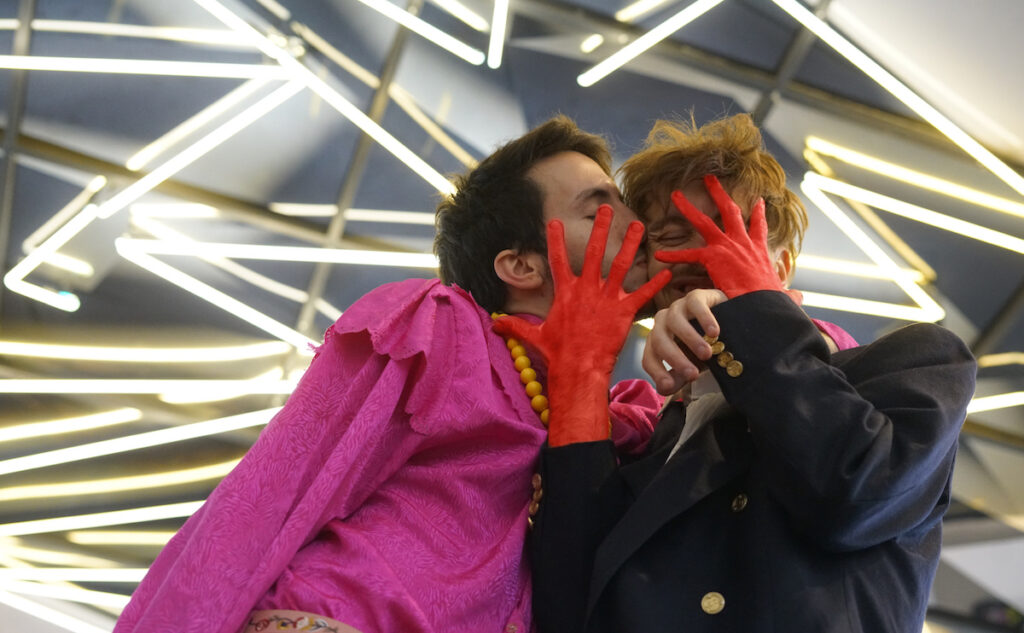
What do you want people to take away from seeing a play by Los Pipis?
– To recapture the element of surprise, the possibility of seeing how magic continues to happen even when made with just a few simple tools (some rope, a bit of glitter, and ingenuity working with limited resources). The certainty that things can be transformed in real time, right before your eyes and without elaborate equipment, into something a little more pleasant. To inspire creativity. To leave a performance eager to create and offer opportunities to make all of the above happen.
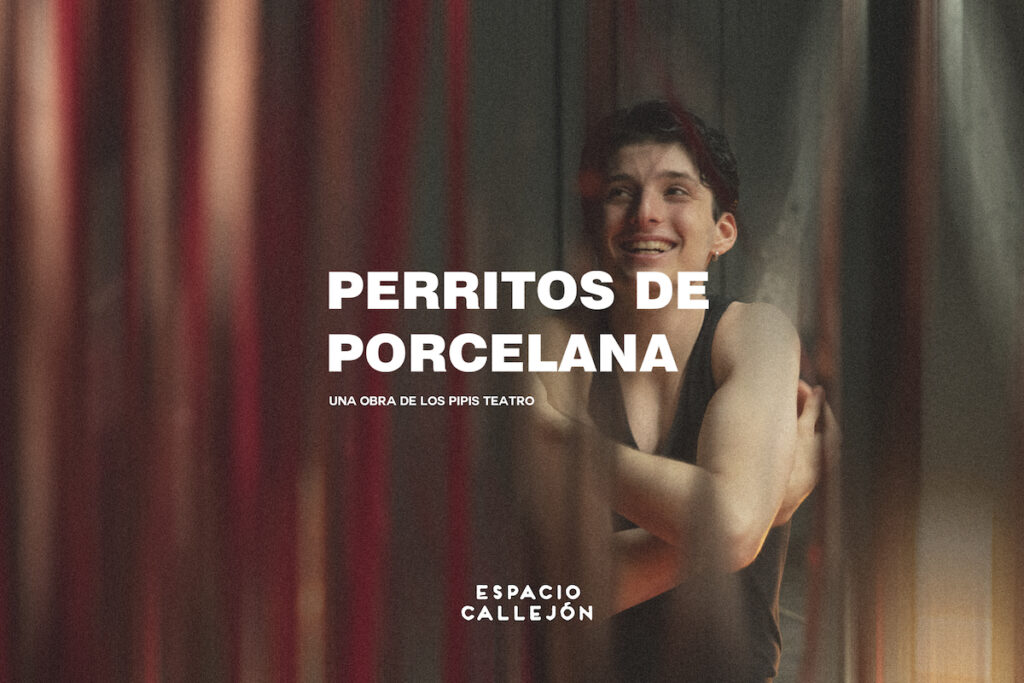
Showings:
Porcelain Puppies – Wednesdays 9pm, Espacio Callejón (Humahuaca 3759 – CABA)
Young Promises – Saturdays and Sundays 4.30pm, CC Gral. San Martín (Sarmiento 1551 – CABA)
The Alaskan Mechanism – Starting in April, Thursdays at Timbre 4 (Boedo 640 – CABA)
Share
We are present
We are committed to journalism that delves into the territories and conducts thorough investigations, combined with new technologies and narrative formats. We want the protagonists, their stories, and their struggles to be present.
SUPPORT US

FOLLOW US
Related notes

We are present
This and other stories are not usually on the media agenda. Together we can bring them to light.