

Javiera Mena: “It’s very political to speak openly about love between two women”
Interview with Javiera Mena, Chilean pop singer and LGBT+ icon: "I've always said I'm a lesbian. It's still very political to talk openly about love between two women."


Share

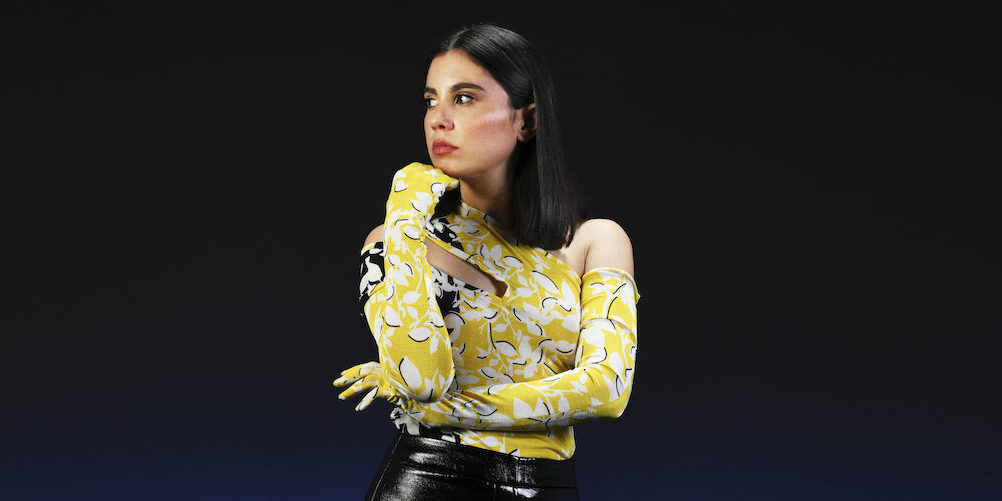
*Lots of ballads, lots of dancing, lots of everything. That's how Javiera Mena describes her fifth album, Nocturna. She also says that's how her concert this Sunday at Niceto Club in Buenos Aires will be, part of the Nocturna Tour, promoting her fifth album.
Pop singer, electro-pop star, and a leading figure in the LGBT community, the Chilean artist is one of the most prominent figures to emerge from the Latin music scene in recent years. In November, Javiera performed at Primavera Sound, sharing the stage with Julieta Venegas and Björk, and felt that the Argentine audience was left wanting more. Therefore, she returned for her own concert.
Javiera Mena is today a queer electro-pop icon. Her simple and sensitive compositions have opened a new horizon for Latin American artists seeking direction in the world of songwriting. Her fifth album features eleven tracks, including “Debilidad” (Weakness), “La isla de Lesbos” (The Island of Lesbos), “Culpa” (Guilt), “Dunas” (Dune), and “Corazón Astral” (Astral Heart). She says it's her most collaborative album because, thanks to other artists, she was able to find what she wanted to communicate.
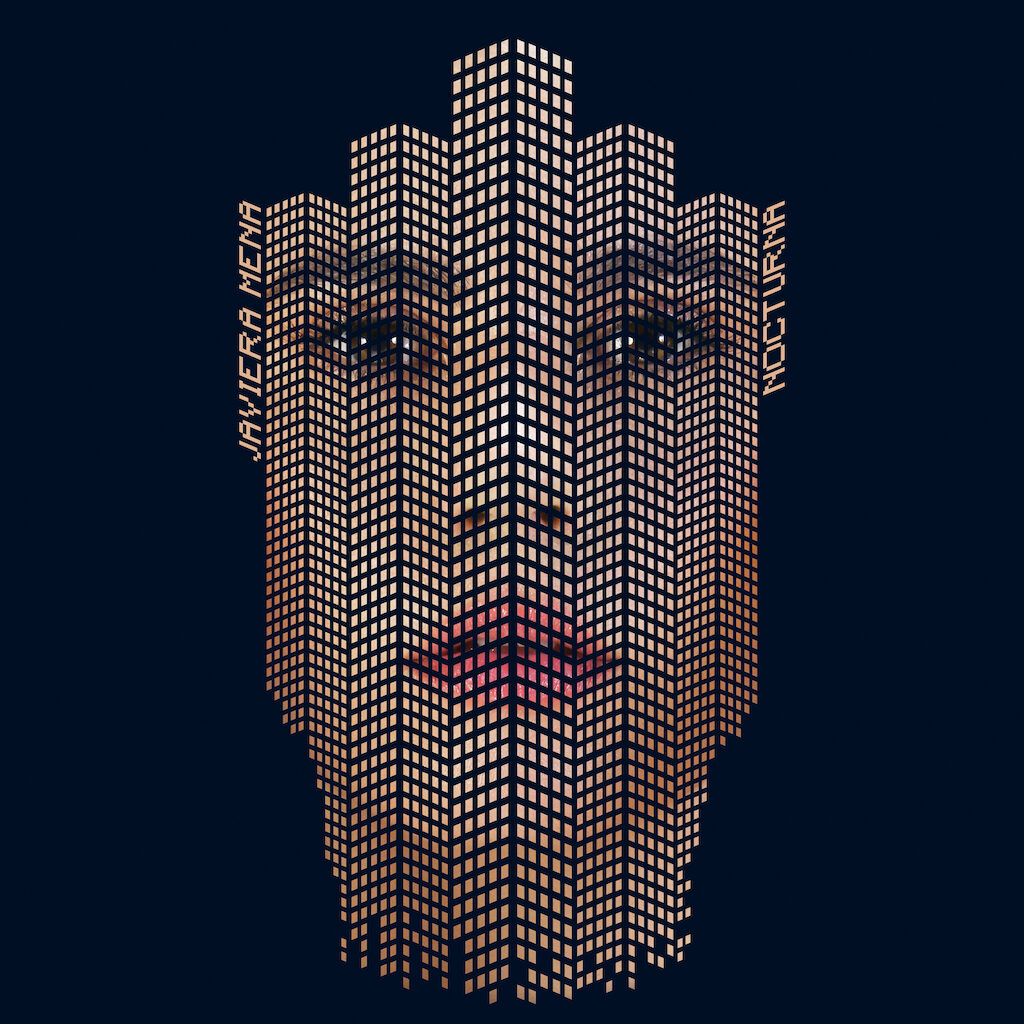
“Argentina was the first country to release one of my albums. Going there is like a miracle,” Javiera tells Tiempo Argentino via Zoom. From Chile, she says she's excited about her upcoming concerts in Córdoba (Saturday the 11th) and Buenos Aires (Sunday the 12th). “We're here to present our new album, 'Nocturna Tour,' which we've been touring in Spain and Chile. I'm bringing my band, which includes saxophone, drums, guitar, and bass. I want to perform songs from Nocturna and from my entire career,” she adds.
This year she arrived in Argentina right on International Women's Day (March 8th). In other years she participated in the demonstrations, but this year she couldn't. "I went straight to record with Lara 91K, and it was symbolic because we're two lesbian girls. We were involved in something very activist because we made an amazing song about love between girls, paradigm shifts, and we were present from our studio creating art for us, women ," Javiera explains.
-You're here to present Nocturna Tour, the tour for your fifth album. What did this album mean for your career?
"It was like a rediscovery of my creative side. It was like getting back on the field with an album I made a bit during the pandemic. It's a full album, steeped in that moment, but that doesn't make it dense. On the contrary, it's filled with that desire for lightness that comes from such a chaotic and uncertain world. Nocturna is an album of great joy, of falling in love, of eroticism. For that very reason, it was also about rediscovering myself as a woman, as a free woman, within a context as dense as wars and a pandemic . Even in my own country, with a social uprising, with so much chaos. But that doesn't make it an album of chaos. On the contrary, it's like wanting to escape that chaos through art and music."
Social unrest and pandemic
-Social unrest and pandemic, how difficult it is to reach a creative situation with all that environment and that intensity that exceeds the personal, how was the elaboration?
Yes, in fact, at the beginning, in the first few months, I didn't really feel like creating. The social uprising did give me a lot of energy, but the pandemic brought a lot of uncertainty. Also, being an artist, the concerts, which were a very important source of income for me, had stopped. At that time, I couldn't create; it wasn't until the seventh month of the pandemic that I was able to dedicate myself to it. But the uprising did give me a lot of fire. The same fire of passion as the people in the streets, the same fire of passion when you fall in love. So, in that sense, I feel very much injected with that fire on this album.
-Chile is a country with many musical styles within popular music, what did you find in pop that made you choose it as your rhythm of expression?
"I grew up with pop music, and it's my place, my little ship. What really gets me going is Madonna, the Pet Shop Boys, and Latin pop too—Maná, Juan Gabriel. I like songs with this structure: AB AB. That's what moves me, and it's what resonated with me from my childhood in the '80s and '90s. I like making that kind of music because I feel comfortable there. Even though many other rhythms have been added lately, I feel comfortable in pop. I'm a defender of pop music, especially pop music with an '80s influence. I'm nostalgic for that era, for the movies, for that futuristic feel, for the synthesizers. It's like my safe haven. But who knows, maybe I'll try other things later. I do know that I'm all about songwriting. That's my thing."

-It's always said that pop is a genre for having fun and that's it, what do you think of that prejudice?
– I think there's a kind of pop that's both profound and incredibly simple, with simple ideas that generate incredibly deep messages. For example, I was watching a Madonna documentary about the song "Holidays." The songwriter explains that it was during a time of war, and the song expresses, "How I wish everyone could take a whole day off!" and that's very political when you think about it. What I like about pop is that it has a light message that resonates very deeply, and people don't even realize it. That's what I like about pop, and I think it's not obvious. And that lightness that many people criticize is actually very good. If you have a project that truly wants to contribute to society in some way and wants to create lighthearted lyrics, I think it's very difficult to do, and I don't see it as something superficial. I see it as something that seems superficial but is actually incredibly profound.
Pop made by lesbians
-Your compositions confirm your stance regarding pop; you have built a discourse that is not superficial.…
– Yes, I like that. Like mixing lightness with depth, love too, romance can be something incredibly profound that connects you with yourself. When you fall in love, there's the object of desire, but there's also yourself, connecting with your fears, with that transformation that the other person brings about. I feel that's the key, and that's where my focus lies, on Eros, on highlighting it, as many others have done, but in my own way . And I also see pop music made by a lesbian—I've always said I'm a lesbian—and that's also incredibly political. I feel that, unfortunately, it's still very political to speak openly about love between two women.
-Today you are also a role model for the LGBT community, how was that representation built and how do you experience it?
– I always said it openly. I was never in the closet. From a very young age, in my first interview, they would ask me if I had a boyfriend, and I always said I had a girlfriend. That became a conscious-unconscious activism, and from there, people crowned me a queer icon, a lesbian icon, because there were so few role models. I know there's still a lack of lesbian role models. The new generations come with a different paradigm, but yes, that's what happened to me, and I embraced it. What I'm passionate about is making music, writing lyrics, writing poetry. But of course, there's this added element of romantic lyrics that speak of women's love. So, that inevitably becomes a discourse, given the times we live in. It was very positive for me to heal the people around me, who have thanked me, especially women in their fifties who couldn't talk about their sexuality. So, without intending to, without seeking it, by being visible, I became a role model for many lesbian women in Latin America who have had very difficult lives for loving women.
Sexual diversity here and there
-You live between Chile and Madrid, is there any difference between what happens in Spain and what happens in Latin America in terms of sexual diversity? Do people also ask you about your sexuality there?
– Yes! They ask me about it there too! There have been advances there, but more for men. Lesbians have always remained in a less visible place. Madrid is a very gay city, but in the '80s and '90s it was always more from a male perspective. It's been difficult for lesbians worldwide to find a place, and also to find a place in pop music. I mean, now things are changing and everyone wants to put a lesbian in their film or music video because it's very appealing . It's even become fashionable among heterosexuals and the establishment. But I feel there's still a lack of spaces for lesbians . In Madrid, I'm kind of an advocate for this. Whenever I've given talks here in Chile and also in Madrid, it's clear we lesbian women are lacking. The difference I do see with Latin America is that here there are many more hate crimes against lesbians. There aren't as many murders and beatings there, things that do happen here.
-What are the musical and poetic references you always return to?
Madonna is always a big influence on me. For me, her evolution over time is incredibly important; it's like a work of art. I really like Giorgio Moroder's electronic music; I like Federico Moura, his poetic imagery and the metaphors he uses. That's been a great inspiration for me. And reading is very, very important. I'm increasingly immersed in psychology and starting to learn a lot about it, but in the end, I end up writing very simple lyrics, which I think is the hardest part. There's an Argentinian psychologist I really admire, who inspires me, her name is Laura Gutman. Also Joseph Campbell, who has researched myths. I'm a voracious reader; I almost read more than I listen to music because it inspires me so much to have fresh ideas for creating. I mean, I don't want a life full of ups and downs, to wallow in the muck and create. Theory inspires me a lot.
-What did the Latin Grammy nomination mean to you at the time?
"I come from the underground, from techno parties, almost illegal ones. That's where I played my first gigs. And to get to the Grammys, which is such an institutional and very Latin American place, seemed crazy to me. Especially because it was without seeking it, without lobbying, which is what everyone else does. It felt like a reward for that, for being fresh at that time. My album 'Otra era' and the version of 'Otra era' felt like a beginning, like the industry was opening up to something else, to other diversities. The song was selected from among a thousand songs that were listened to. Later, I was also kind of a selector, and people really get together to listen to the tracks in the first rounds. That's why, at that moment, it felt like a reward for being fresh."
-New artists are constantly emerging or becoming known in the Latin American music scene. What is your take on the music scene in Chile and Argentina?
-Yes, I see it as much more connected to technology, to its characters. It's an era where there's the musician, but there's also the persona that has to be presented. It's more theatrical within the realm of technology. I learn a lot from younger people, and I also see that some have been influenced by my music. I don't know, I've spoken with Lara 91k , for example, whom I went to see a while ago, and she was really excited to see me in the audience. I like Zoe Gotusso ; I feel like there are a lot of people doing interesting, different things. And it's not all trap, it's not all urban, even though there's a big urban scene, there's a diversity… Bándalos Chinos . I feel like I'm in a place where I'm already seen as a role model, and there's a new generation that saw my generation when they were very young, and I feel like we see ourselves that way. I can draw inspiration from that, and they drew inspiration from me at some point. I love meeting new artists and meeting them in person, seeing how they work and how they create, how they produce their music.
-And what happens when you realize that suddenly you are the role model?
– It's great, it's like I did things right. My first album is called Youthful Schemes, and a lot of 20-year-olds in Argentina, Chile, and Peru love it and see it as a fantastic album that marked them when they were very young, and for me, that's like the Grand Prize, more than a Grammy, more than anything. It's like your art ages well and continues to appeal to young people. That, for me, is the best prize of all. Obviously, it's normal to get older, and you come with the drive and freshness of youth, and then, of course, you start to inhabit a different space, to understand things differently, and that's just part of life. And when your work starts to age well and remains relevant, that, for me, is like maintenance; it's the hardest and best part. And for young people to recognize you as a role model is better than a Grammy.
Javiera Mena will be performing on March 12th at 8 PM at Niceto Club. You can listen to the full album here.
This article was originally published in the Diario Tiempo Argentino and is published through an alliance between that media outlet based in Buenos Aires and Agencia Presentes.
We are present
We are committed to journalism that delves into the territories and conducts thorough investigations, combined with new technologies and narrative formats. We want the protagonists, their stories, and their struggles to be present.
SUPPORT US

FOLLOW US
Related notes
We are present
This and other stories are not usually on the media agenda. Together we can bring them to light.