

What the waves couldn't silence: What it's like to be an LGBTIQ+ student at UNAM
A survey by the National Autonomous University of Mexico (UNAM) indicates that 72.56% of LGBTQ+ individuals reported experiencing at least one form of discrimination at UNAM due to their sexual orientation or gender identity. This work is part of the research project "What the Waves Couldn't Silence."


Share

This text is part of What the Waves Did Not Silence , a project promoted by the Investigation and Journalism department of PODER Latam and the media outlet Serendipia Data , in collaboration with the organizations and media outlets: Técnicas Rudas , Tor Project , Agencia Presentes , Proyecto Matriarcas and Tails *.
MEXICO CITY, Mexico. While initiatives aimed at eradicating discrimination are beginning to emerge in the educational sphere, classrooms in academic settings are not safe spaces for sexual diversity. The National Autonomous University of Mexico (UNAM) is no exception, according to data from the “ First University Survey on Gender Equality Conditions for the LGBTIQ+ Community at UNAM .” This statistical exercise focuses on the experiences of gender-diverse individuals during their university life. It was conducted by UNAM’s Coordination for Gender Equality (CIGU) between October 2021 and May 2022 and identifies transgender people as one of the most vulnerable groups.
Friendly but discriminatory
At UNAM, at least 5,529 people identify as LGBT+. Of these, 85.98% are high school, undergraduate, and graduate students. According to the data, 45% perceive the University as a “friendly” institution for LGBT+ people. However, the perception of safety was rated as “fair” by 41.31%. And 72.56% of people reported having experienced at least one form of discrimination at UNAM for being part of the LGBTQ+ community.
“I think we need to start demanding different perspectives and theories, and aim for the inclusion of diverse feminisms. At the administrative level and in everyday life, prejudices remain deeply ingrained. Trans-exclusionary or trans-misogynistic people try to mask these prejudices with theories,” says María Fernanda, a member of UDiversidad , the oldest interdisciplinary LGBT+ collective at UNAM.
Symbolic violence against trans people
Symbolic violence is a dimension of gender-based violence that operates in subtle ways. It involves messages conveyed through icons, signs, and patterns that reproduce relationships of domination and inequality, normalizing discrimination against women and LGBTQ+ people. This is especially true for trans people, who are among the most vulnerable within the LGBTQ+ community.
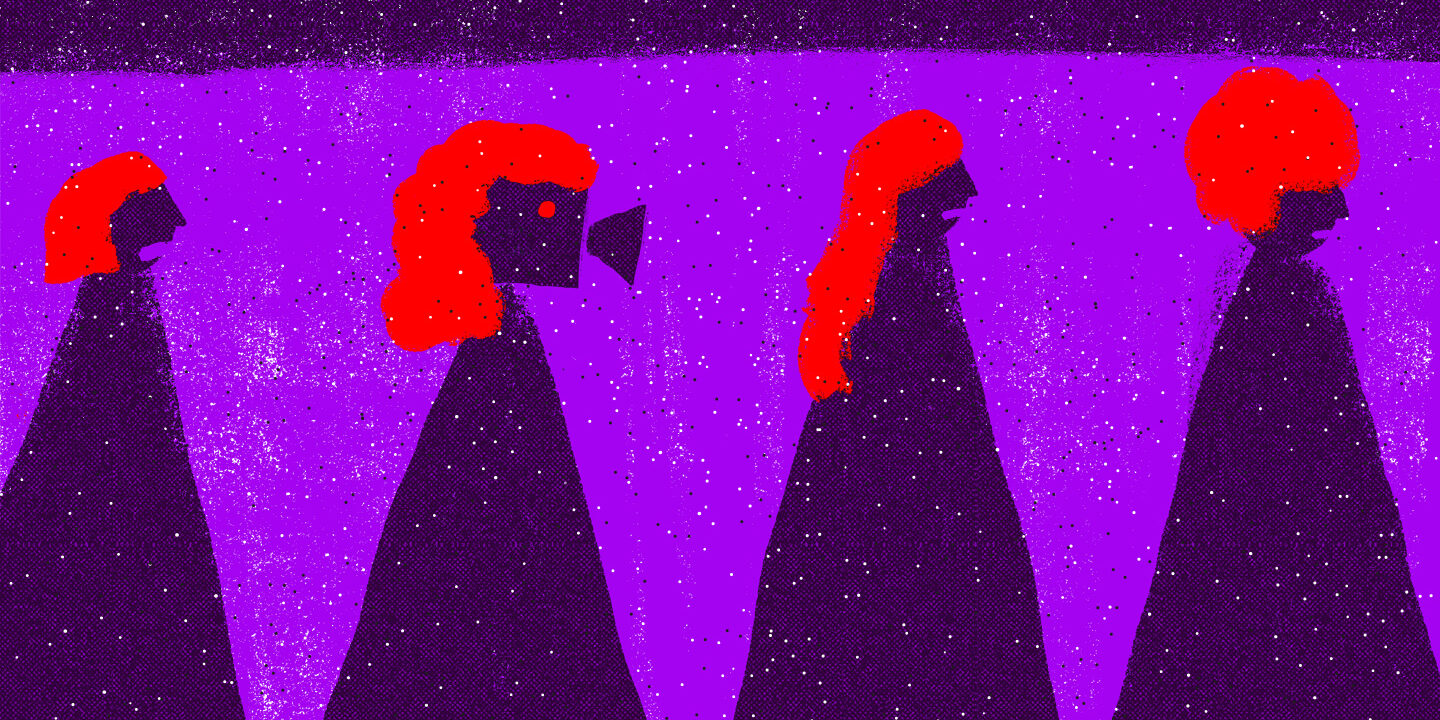
At UNAM, students report experiencing this symbolic violence: from graffiti with transphobic messages in gender- neutral bathrooms , to the organization of a forum where four feminist academics delivered hate speech and denied the existence of trans, intersex, and non-binary people.
At the end of the forum, at least 743 people from the university community and beyond signed a statement . In it, they expressed their concern that the National Autonomous University of Mexico (UNAM) is giving space to hate speech.
“Spaces like this contribute to gender-based violence against trans women, trans men, non-binary people, and transvestites (…) The statements made by the participants in this forum not only deny trans experiences and identities but also represent a setback in the fight for rights for trans populations . Furthermore, their discourse excludes them from the right to bodily autonomy, the right to identity, and the right to a life free from violence,” the statement reads.
In a context of institutional aggression toward sexually diverse populations, María Fernanda believes that “a complete reform is urgently needed regarding how gender continues to be conceived and understood” within the curriculum. This reform is also necessary at a social level, in the daily interactions of the entire university community.
How discrimination works
According to data from the First Consultation on Gender Equality Conditions of the LGBTIQ+ Community at UNAM , the forms of discrimination recorded range from misgendering, that is, addressing or referring to a trans person in terms that do not reflect their gender identity.
Nearly half of the people who responded to this survey (49.45%) were victims of prejudiced comments because of their sexual orientation, expression, and gender identity.
Other forms of harassment also appear, such as gestures of displeasure, prejudiced comments, rumors, mockery, intimidation, threats, physical abuse, and obstacles to exercising university rights.
LGBTIQ+ people, especially trans and non-binary individuals, report facing obstacles in accessing spaces within UNAM. At least 40 trans and non-binary people stated that someone at the University denied them the right to use a restroom, solely because of their gender expression and identity.
Student responses to violence
Through assemblies, resistance actions against gender violence at the University, and collective organization, LGBT+ students have taken different paths to guarantee their safety, recreation spaces, and organization within the university community.
María Fernanda, a member of UDiversidad, says that although there are institutions like Igualdad UNAM or the University Rights Ombudsman, they still “have too many gaps”.
“In that sense we are helpless, abandoned by that type of management and therefore we have to, in some way, start up these spaces, make them visible and make noise,” he says.
Finally, he considers it urgent that university authorities maintain open dialogue with dissenting groups and "confront and acknowledge these problems." Failure to do so, he believes, "will create a snowball effect."

*This alliance of What the Waves Did Not Silence aims to reveal the methodologies with which the Mexican Government, in alliance with transnational Social Media companies, uses the information deposited on these platforms to refine espionage operations against human rights groups, in particular, feminist groups.
We are present
We are committed to journalism that delves into the territories and conducts thorough investigations, combined with new technologies and narrative formats. We want the protagonists, their stories, and their struggles to be present.
SUPPORT US

FOLLOW US
Related notes

We are present
This and other stories are not usually on the media agenda. Together we can bring them to light.