

Trans children, bullying and preventable deaths
Leila and Iván climbed onto two chairs on a balcony and jumped to their deaths from the third floor: they were being bullied. Experts on transgender children reflect on how to protect them.


Share

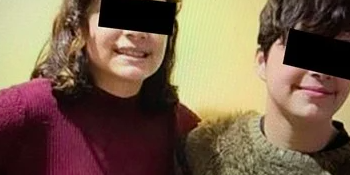
The news comes from Spain and reports that two 12-year-old Argentinian twins, Leila and Iván, climbed onto chairs on a balcony and jumped from the third floor in Sallent (Barcelona). They left farewell notes in which they wrote that they were being bullied because of their Argentinian accent—they had been living there for two years—and that Iván was being mocked at school for being transgender. Leila, who survived but is in critical condition, wrote in her note that she was doing it in solidarity with her brother. Although the school has denied that they were being bullied, classmates and acquaintances, as well as their Argentinian grandfather , have given statements to the press that support these claims.
While the facts and circumstances are being investigated, the media are reporting the story without respecting Iván's gender identity, referring to him with female pronouns and using his former name . Some outlets, feigning a veneer of journalistic rigor that is not genuine, have included a disclaimer in their articles stating 12-year-old girl treated is only known through indirect sources. Neither her family nor her closest circle have commented at this time.”
At Presentes, we consulted three specialized sources on the subject to help us better communicate some dimensions of this news, which causes us deep sadness in a medium where we daily cover the violence suffered by LGBT+ people, and especially transvestite and trans people.
Gabriela Mansilla: How to protect children
Gabriela Mansilla is the mother of Luana , the first transgender girl to obtain a document that respects her gender identity. She is also an activist for transgender children and adolescents and president of the Civil Association for Free Childhoods (ACIL). She has written two books: *Yo nena, yo princesa* (Me, a Girl, Me, a Princess) and *Mariposas libres* (Free Butterflies).
Deeply moved by the news, and especially because she has twins, Gabriela says: “Protecting children is an obligation worldwide. It involves informing, starting to educate those other children who punish and bully our own. If Iván went to a school where he was mocked and subjected to violence, we need to educate children, not only in Spain, but all over the world. We need to understand that a person with a vulva can construct multiple identities. The same is true for those with a penis.”
“These are preventable deaths.”
For her, more information is needed so that families can embrace their children and so that the media can report the news with the right perspective. “We urgently need to raise awareness, not only to look at children but also at ourselves as a society, with these bodies that make us uncomfortable. Let's be clear: these are preventable deaths. This is a social trans homicide,” she says.
The Free Childhoods Association conducted the first statistical survey on the experiences of trans/travesti children and adolescents, and published the results in 2021. Of 200 families, 53% of children under 12 and 63% of those between 12 and 17 reported having suicidal thoughts. “The accumulation of demands, the label at birth, the exclusion, contribute to a 40% suicide rate among our children in Argentina. This is not being seen. There are no prevention policies. When the damage is physical, emotional, and psychological, children are suffering and enduring mistreatment at school from classmates and teachers who lack information,” says Gabriela. She adds that she and Luana are considering whether or not to start school for this reason.
Manu Mireles: “Educating and informing ourselves about diversity”
Manu Mireles is an activist and academic secretary at the Mocha Celis high school. She identifies as a migrant and non-binary. “When we talk about moving away from an adult-centric perspective, we're talking about listening to trans children and adolescents. It's about opening the door to prevent the violence they suffer daily. Working on reparations is literally saving them and envisioning a world where everyone can live.”
Manu believes that the education system, families, and communities “must take responsibility for understanding that there are a great many gender identities and sexual orientations. Diversity in its broadest sense. It is more than necessary that we assume the responsibility and active role of educating and informing ourselves so that we can demand that the media include a gender and sexual diversity perspective in the news. And , gender-diverse, and non-binary children and adolescents
That Montenegro : The media denies Ivan's right to identity
Montenegro, a trans man activist, teacher trainer in Comprehensive Sexuality Education (CSE), and advisor to the Argentine Chamber of Deputies, invites us to consider this news from an intersectional and situated perspective. “The first thing one reads, part of a very established and accepted narrative, is that trans people commit suicide. The focus is once again placed on the trans person and not on the situation created by the structural conditions that lead someone to make such a decision, which is never due to a single cause. There are multiple factors that generate states of suffering, generally mental,” he warns.
He says that you only have to open the local or Spanish newspapers to realize it. Iván establishes the identity he wants to be called by, cuts his hair, and tells a few people that his identity is trans . “I don’t think it’s a coincidence that this event is so close to the passage of the trans law in Spain ,” he says, in a context of transphobic and trans-exclusionary discourses that have had a significant impact on the Spanish narrative.
"Progress in rights does not come without a price."
“When a law like this is passed, it comes at a cost to people. It’s an advance in rights, but it’s not free. In the near future, there’s a cost of symbolic violence that those who defend this achievement receive in terms of communication and social impact. And we don’t talk about that cost; it produces bullying and wears people down,” Ese says. She cites as an example the homophobic narrative that was unleashed in Argentina during the debate prior to the approval of Equal Marriage. Or the transphobic narrative when the Transgender Quota and Labor Inclusion Law was passed, specifically the Lohana Berkins and Diana Sacayán laws.
“All the media outlets have denied Iván’s right to identity. They’ve referred to him with feminine pronouns countless times. They say they have no record of him ever expressing his identity. They’re demanding that a deceased person account for his struggle for his identity. This is a violent and absurd argument. If we’re talking about him being able to communicate it to some people, that he was misgendered at school… Why do they continue to refer to him with feminine pronouns?” she asks.
Being a child, trans, and a migrant
Montenegro adds other variables to the analysis: “We have to talk about xenophobia and how being a migrant and being trans intersect. The media picks up on the hypothesis that the twins were harassed because of their Argentinian accent. The oppressions don't add up, they intertwine and generate very specific forms of violence.”
Reading articles in various Spanish media outlets, she says, which often point out that the family was under the umbrella of state social assistance programs, there's also a class issue at play. “It's emphasized that the family was in that structure because they were from a lower class, with some articles even questioning whether the father worked or not. I wonder what narratives this enables and how it impacts the lives of two 12-year-olds facing a multitude of inequalities. These narratives are perpetuated by media outlets that reflect this hatred. You only have to read the articles to understand that we aren't dangerous people, we are in danger. And that the situation we face is intersectional.”
We are present
We are committed to journalism that delves into the territories and conducts thorough investigations, combined with new technologies and narrative formats. We want the protagonists, their stories, and their struggles to be present.
SUPPORT US

FOLLOW US
Related notes

We are present
This and other stories are not usually on the media agenda. Together we can bring them to light.