

They denounce the human rights situation in Peru: "The persecution of the LGBTI community is tremendous."
Alejandrina Barry, a legislator and member of the Human Rights Commission of the Buenos Aires City Legislature, explains the key factors for understanding what is happening. Upon her return from Peru, she says, “Despite the massacres, the unity of workers, students, peasants, and indigenous people is a profound force that can affect those in power.”


Share

BUENOS AIRES, Argentina. “I’ve never seen anything like this. It’s a level of repression and international cover-up typical of a dictatorship. The army is committing massacres. Latin American governments should take a different stance toward what is a genuine uprising of the Peruvian people against the de facto government of Dina Boluarte. If they don’t condemn it, they are legitimizing it.”
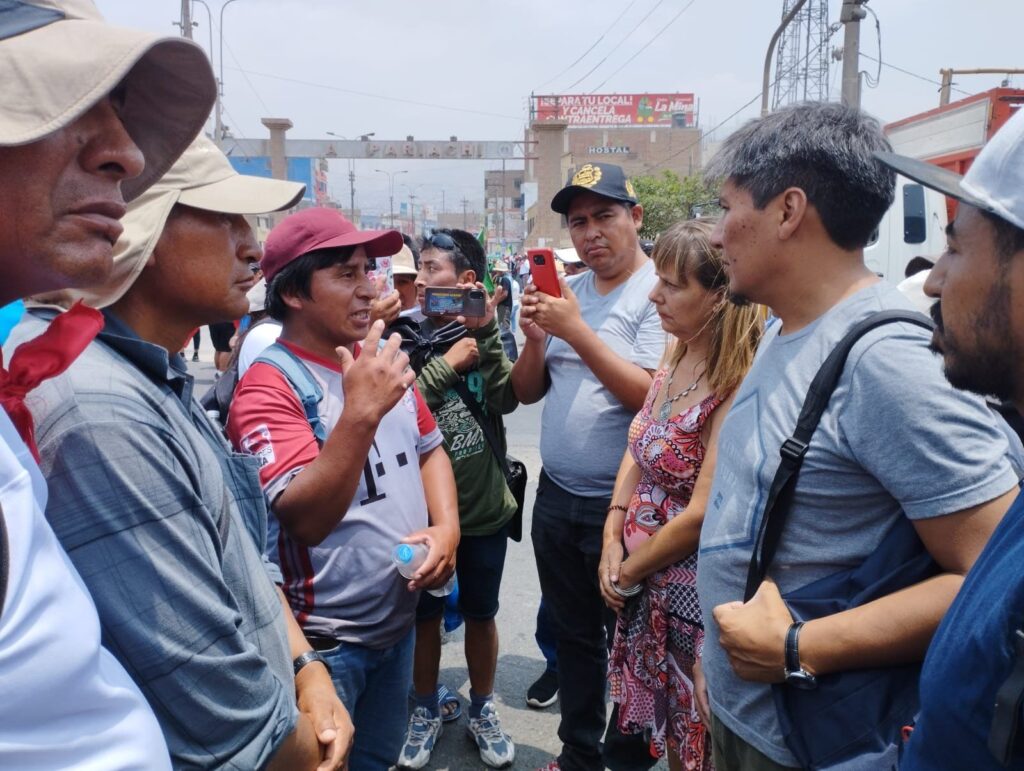
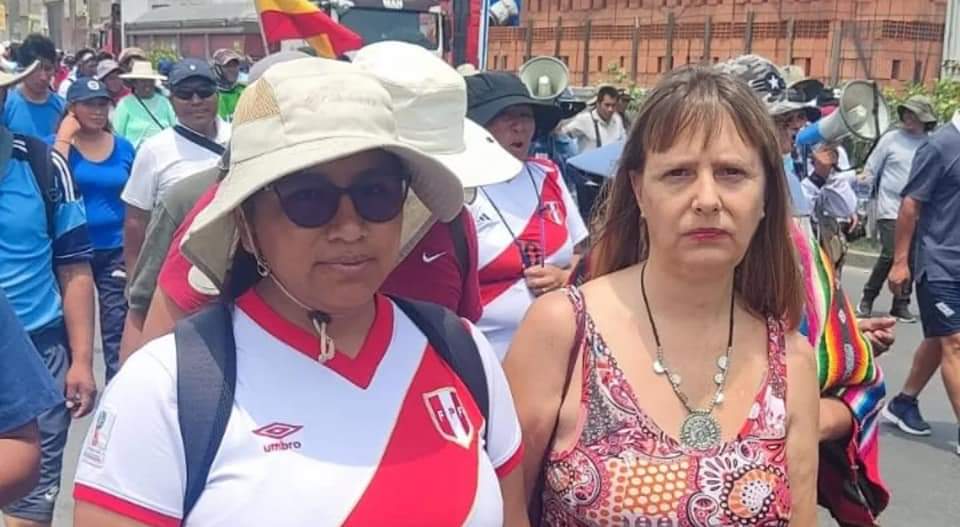
Alejandrina Barry is the daughter of victims of the Argentine civic-military dictatorship that began in 1976 and a member of the Buenos Aires City Legislature. She recently traveled to Peru with her partner, National Deputy Alejandro Vilca (Socialist Workers' Party, PTS). Alejandrina is the vice president of the Buenos Aires City Legislature's Commission Against Institutional Violence, and he is a member of the National Congress's Human Rights Commission. In these institutional forums, they will demand a statement against Boluarte. After a week in Peru, Barry told Presentes: “Despite the massacres, the unity of workers, students, peasants, and Indigenous people is a profound force that can affect those in power.”
Having just landed from Lima, the legislator and human rights activist described how “there are more than 60 dead in 60 days. And that's the official figure. The marches end and the Army chases down the protesters and kills them. We haven't finished counting the dead; there are missing persons, torture victims. The legal cases are terrible because they are based on the legal framework left by the (Alberto) Fujimori era. They imprison you for terrorism.”
–How would you politically characterize the uprising in Peru?
"It's a massive popular uprising that began with Dina Boluarte's coup, which led to the imprisonment of President Pedro Castillo. At that point, a wave of mobilizations unfolded that extended beyond Castillo himself. It stemmed from deep-seated and long-standing demands, in which Indigenous peoples and peasant communities played a crucial role . It was an economic and social crisis marked by discrimination . Boluarte declared that the mobilized region of Puno was not part of Peru, and then ordered brutal repression. Student participation in the mobilizations was vital, as was the participation of the labor movement."
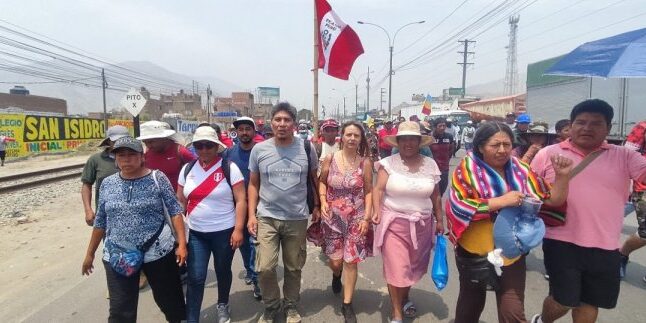
Alejandrina recounts that when they arrived in Peru on Thursday, February 9th, there was a general strike called by the General Confederation of Workers of Peru (CGTP). It was a highly controversial strike; there hadn't been a mobilization since 1977. But from the grassroots level, it was a march with enormous participation.
What are the demands of the protests in Peru?
They are debating the need to coordinate so much fervor. In the south, where the communities are located, the level of protest is even greater, accompanied by more intense repression. The slogans call for the resignation of Dina Boluarte; there is enormous anger fueling the mobilizations against the murders and massacres, along with demands for economic, social, and political rights . They are calling for a free and sovereign Constituent Assembly to end (Alberto) Fujimori's Constitution, which guarantees wealth concentrated in the hands of the same old elite and relegates the indigenous communities, which have a fundamental role in Peru. They demand more democracy because the criminalization of protest is constant. This is the basis of the popular uprising.
–Was there no repression on the day of that strike because there were foreign observers?
"I'm the daughter of disappeared people, and I've never seen anything like it. When you arrive, there are army tanks; the march had 7,000 people, and there were 11,000 police officers. These are intimidating operations meant to terrorize the population. I think they didn't repress the protesters because the organized labor movement was mobilizing."

Disinformation and media blackout
–He mentioned disinformation. Does this murky situation contribute to the impunity with which Boluarte operates?
That 's the most serious issue: in dictatorships, the press distorts or silences the truth . Now they've uncovered the massacres in Ayacucho and Puno. Official reports stated that on December 15th, the protesters wanted to seize the airport, that the military acted defensively, and that the protesters killed each other. The prosecutor's investigations are now coming to light and reveal that the army pursued the protesters through the streets of their region and executed them, not even at the scene of the events. This is what needs to be disseminated internationally. In the case of Puno, they even repressed the victims at their wakes. Because of this wall of disinformation, we organized a march with the Peruvian community here to demand that all Latin American governments, and CELAC, which met in Argentina, condemn what is happening in Peru. In the case of Brazil, there's a very serious matter: they are sending tear gas to Peru. (Jair) Bolsonaro bought it, but Lula could have refused to send it. The demand is that Alberto Fernández break relations with the government of Dina Boluarte and condemn the coup and the repression of the Peruvian people.
–Does that repression include disappearances, torture, and a high degree of secrecy?
–We know there are more than 60 dead. Alejandro Vilca and I met with members of the communities, and they reported disappearances and that arrests are being made using torture. In the police stations where the farmers and Indigenous people are being held, it seems anything goes, but they are also repressing the students. A very serious incident was the military intervention at the University of San Marcos because the students had opened its doors to farmers so they could stay there. Two hundred people were arrested when the army entered with tanks. The Human Rights Coordinator explained that the cases brought against the protesters are based on articles related to terrorism. More than 100 people are being prosecuted for that crime, or for advocating that crime while participating in the demonstrations.

–They are applying a legal framework inherited from Fujimorism.
–That's right. Let's remember that Peru has 21,000 disappeared persons since the 1980s. There's a lot of solidarity; local businesses are supporting fundraisers so that the marches to Lima can take place. A woman who had raised money for that was accused of being part of a criminal organization, which means 36 months in prison. It's like being imprisoned here as a criminal for organizing a strike or protest fund.
–How did you see the situation of the wounded?
They aim for the head; those who lost an eye have no medical coverage, and the healthcare system doesn't treat them; they receive no medical attention. The State condones all of this, and not a single police officer or soldier has even been investigated. It's total impunity; it's experiencing firsthand what the dictatorship was like in Argentina. On the contrary, in the midst of the repression, they gave the police a bonus as a reward.
The persecution of LGBTI people
–Did you know about the murder of a young trans woman, Ruby Ferrer ?
–Yes. The persecution of the LGBTI community is terrible. Castillo's government claimed to be progressive, but it was anti-rights. Now it's even worse. The LGBT+ community and women have been fighting for this for a long time. Saying you're a feminist means persecution. And forget about saying you're left-wing.
–What is your conclusion after these days in Peru?
“We must support the mobilization process of the Peruvian people because it is a powerful example for the rest of the peoples of Latin America. I felt like I was living through the genocidal dictatorship in Argentina; in my case, when my parents disappeared, I was a child, and the press launched a campaign to cover up the facts. That is why it is so important to break the media blackout surrounding these crimes of state terrorism against the Peruvian people . We cannot allow this level of repression and killings to continue with impunity; international condemnation is essential. On Wednesday the 22nd, we will hold a hearing in Congress with Alejandro Vilca, Myriam Bregman, and Nicolás del Caño, along with the Peruvian community, where we will present the reports we have brought. We will also submit them to the human rights committees.”
–Do you see any connection with the 2019 uprising in Chile?
“Yes, as they say in Chile, it’s not about 30 pesos, it’s about 30 years; these are demands postponed for decades. I met daughters of the disappeared in Peru, who are still digging to find their fathers’ bodies. There was no investigation, much less any punishment for those responsible. There is an enormous precarization of life. Eighty-five percent of the population in Peru works informally, from sunrise to sunset. The demands of the indigenous population are central; they only gained the right to vote in the 1970s. There is a very important labor movement; there’s a reason the army keeps the mines surrounded. If the miners and dockworkers in Peru went on strike, the situation would change. Workers, peasants, students, and indigenous people are a powerful force that could affect those in power. They are debating how to win this fight, which begins with the fall of Dina Boluarte and an end to these massacres.” Continue thinking about how to build a different society, on new foundations, thinking about a free and sovereign Constituent Assembly but on the basis of a provisional government of workers', peasants' and indigenous communities' organizations .
We are present
We are committed to journalism that delves into the territories and conducts thorough investigations, combined with new technologies and narrative formats. We want the protagonists, their stories, and their struggles to be present.
SUPPORT US

FOLLOW US
Related notes
We are present
This and other stories are not usually on the media agenda. Together we can bring them to light.