

Hormone therapy, violence, and the habit of speaking without knowing
The murder of the child Lucio Dupuy by his caregivers served to proliferate lesbo-transphobic discourses and disinformation.


Share

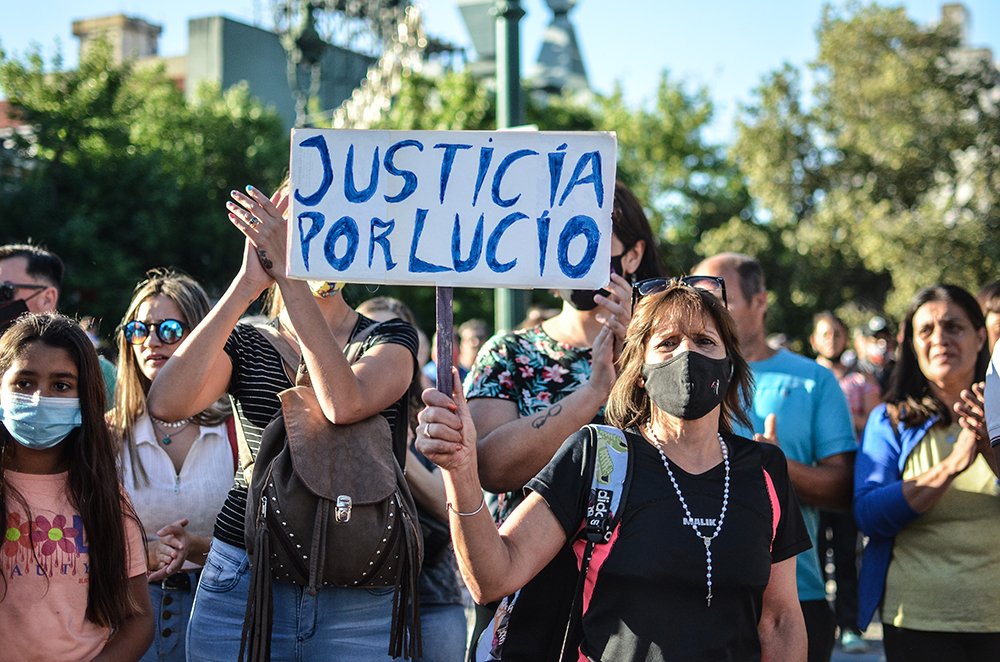
The case of Lucio Dupuy is shocking and heartbreaking. Because he was five years old. Because he was brutally beaten to death. Because those who were supposed to care for him tortured and abused him. Because all state protocols and procedures for protecting children failed. Because society continues to normalize violence as an educational method.
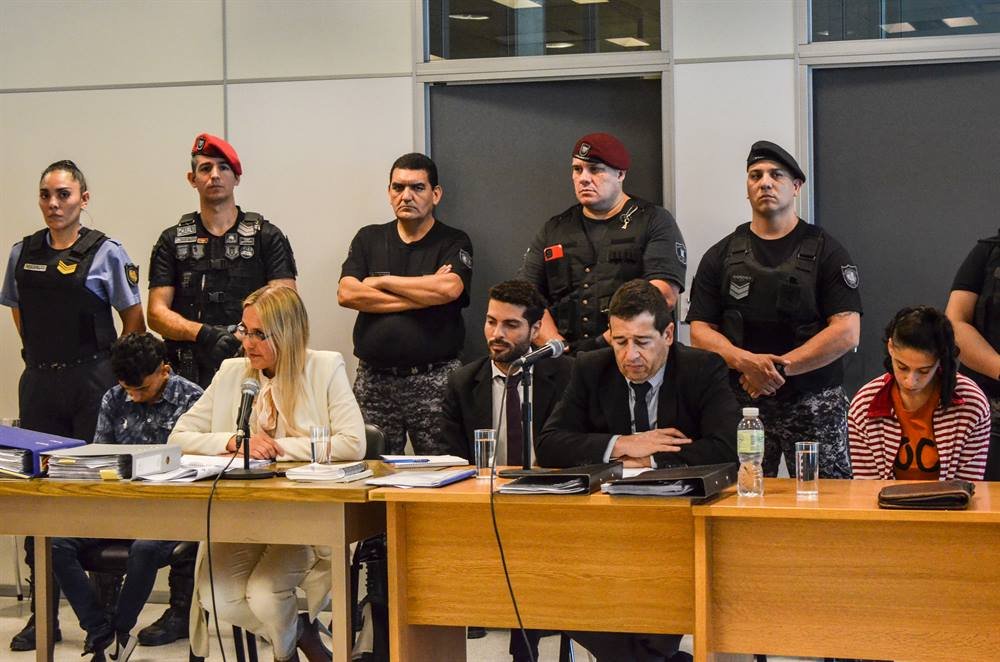
For the child's death, his mother, Magdalena Espósito Valenti , and her partner, Abigaíl Páez . The court found them guilty as the perpetrators and criminally responsible for the crime of homicide, aggravated by the familial relationship, treachery, and cruelty. Páez was also convicted of sexual abuse, "aggravated by her status as the child's guardian and by the fact that it was committed against a minor under 18 years of age, taking advantage of the pre-existing cohabitation situation, as a continuing offense," according to the verdict of the La Pampa Court of Appeals.
“It’s very difficult to bear and this case has to be a turning point for everyone. We have to talk about it, we have to denounce child abuse,” said Mario Aguerrido , the lawyer representing Lucio’s family. “It’s the maximum sentence, regardless of the differences regarding the sexual abuse related only to the mother and not to the partner; I understand that the sentence will be life imprisonment,” stated Walter Martos , the prosecutor in the case. “I thank everyone for the miles they traveled to learn of the murderers’ guilt. Lucio made history in Argentina,” commented Ramón Dupuy , the victim’s grandfather.
Lucio's crime and "gender ideology"
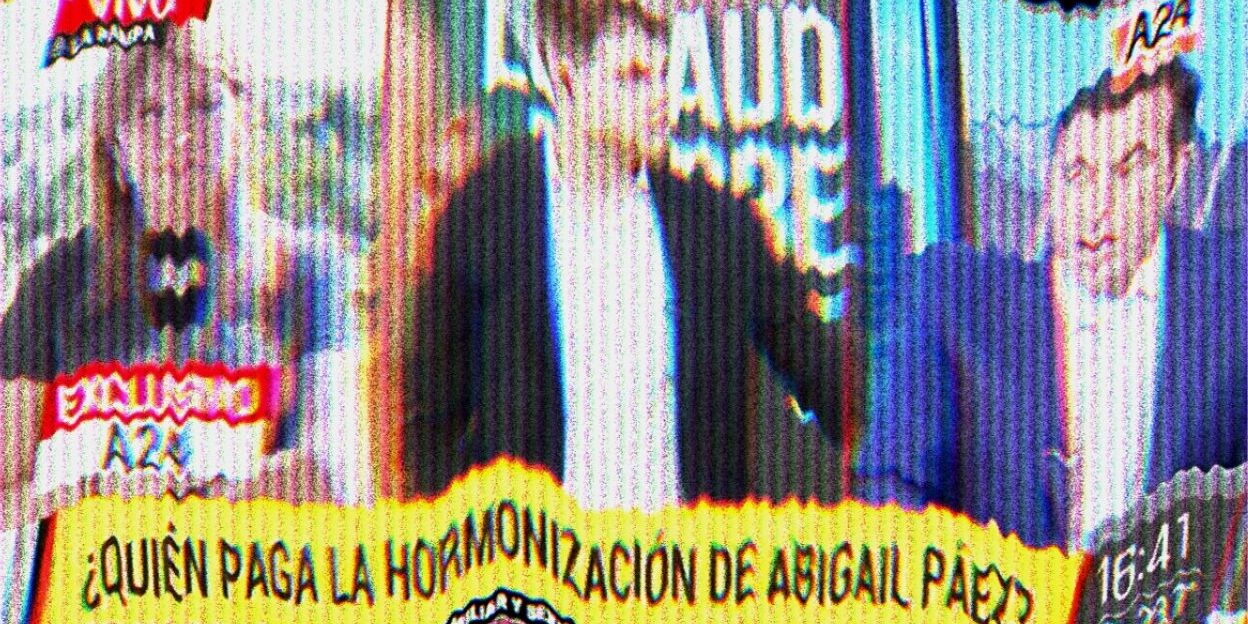
“Since when has this monster been on hormone therapy?” asked Dr. Rodrigo Salemi on a news program on the A24 channel. The question referred to Abigail Páez, who had reportedly requested to continue her hormone treatment in prison. The doctor then answered, “The most significant adverse effect of hormone therapy is emotional fluctuations. This means increased aggression.”
Lucio's infanticide led some in society to blame feminist movements for the violence. "Where are the feminists?" was the question repeated in the mainstream national media. It exposed the misogyny and collective homophobia of a society that questions and draws conclusions about the correct ways to mother.
“If I give hormones to a trans man, it doesn’t mean I’m transforming this person into a violent being.”
— Fabiana Reina
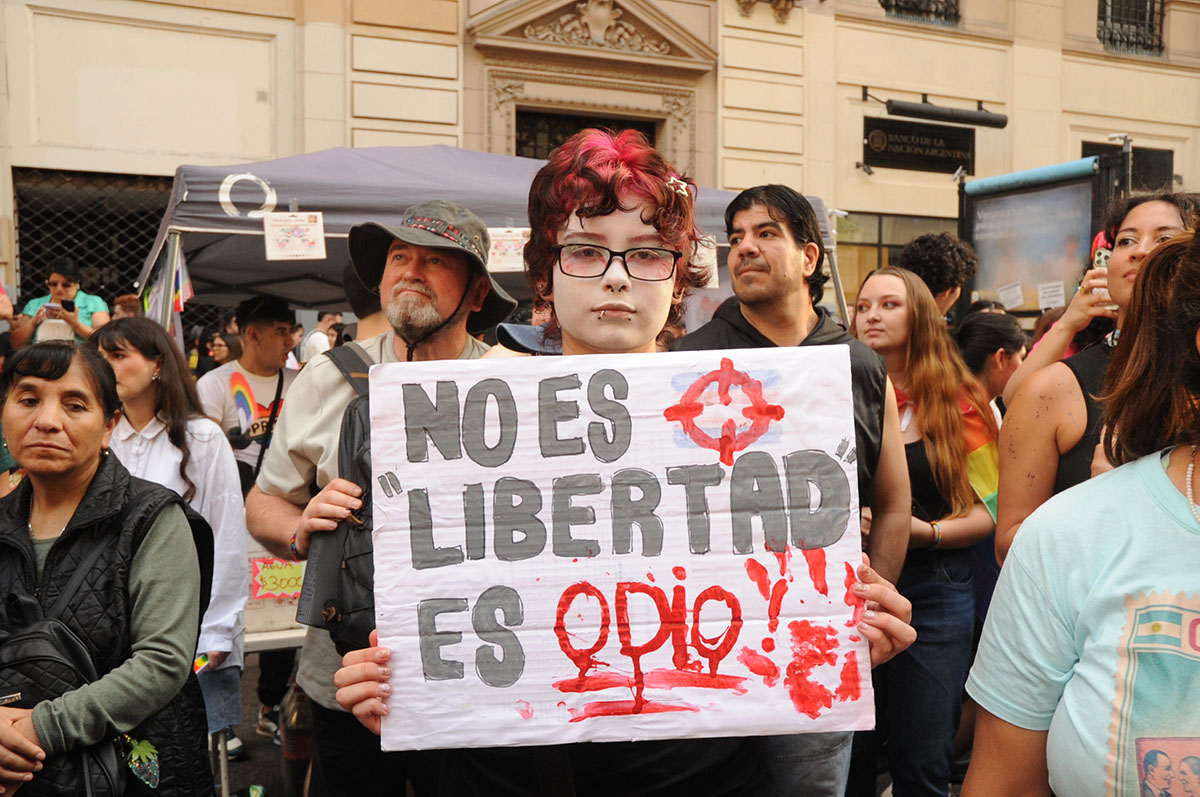
That the murderers participated in "Not One Less" marches. That they campaigned for the slogan "Death to the patriarchy." That they are a consequence of "gender ideology"—these were some of the statements circulating on social media to discredit feminist struggles. Since Lucio's case gained media attention, many political and media sectors have lumped their prejudices together to attack progress on gender equality in Argentina.
The debate that began on the A24 program was between journalists and a doctor who is not a specialist in the field. He himself acknowledges this, clarifying that the idea of aggression as an adverse effect "is not his, but rather that of the Huésped Foundation.".
“If I prescribe hormone therapy to a trans man, it doesn’t mean I’m transforming him into a violent person,” Fabiana Reina , a medical toxicologist and gynecologist specializing in gynecological endocrinology and a leading expert in comprehensive care for gender-diverse individuals through the National Program for Sexual and Reproductive Health and Diversity, clarifies to La Palta. She adds, “If this person has a history of social interaction that leads me to suspect they will be violent, that’s based on my assessment when I see the patient.”
Reina, a physician specializing in hormone therapy, clarifies that violence doesn't stem from the treatment itself, but rather from the social context in which the person—like anyone else—lives. "If I know that testosterone won't make him more violent, but I have a patient in a violent environment, I have to address that," the specialist reiterates, adding that "providing such biased information (like that of Dr. Salemi) warrants a response stating that journalism must report with a gender perspective and accurate data. We need to seek out qualified individuals to answer questions or address concerns on these topics.".
The failures of the State
Following Lucio's murder, the media and society reacted against family courts and their perceived bias towards women when granting child custody. The day before the court found the women guilty of the murders, Judge Ana Clara Pérez Ballester was denounced for approving an agreement between Lucio's aunt and uncle and his mother, granting custody of the child to the accused.
However, one fact does not invalidate others. In Argentina, statistics on child abuse show that 62.1% of abusers are men, and 53.8% are fathers. Regarding sexual violence, 81.1% of abusers are male, and 24% of child and adolescent victims were sexually abused by their biological fathers. The fact that Lucio was murdered by his mother and her partner is alarming, but it does not invalidate the denunciations made by women's movements.
The Gender Identity Law is clear: a person, even if they change their name on their official documents, is civilly and criminally responsible like anyone else. This means that if someone has a debt or commits a crime under one name, those rights and obligations do not disappear when they change their identity. “I support three girls and two boys within the provincial prison system who are receiving hormone therapy, but that doesn't mean they won't have to serve their sentences,” says Fabiana Reina.
Preventing violence by adults in childcare is also the responsibility of the child and adolescent protection system, stipulated by Law 26061 of 2010. “What happened to that system that it failed to properly assess Lucio’s situation?” asks the specialist, emphasizing the State’s lack of responsibility regarding, for example, the five times the victim was admitted to the healthcare system for traumatic injuries. “While violence is domestic and private, it always has a connection to the healthcare or social services system. There’s always a neighbor who sees or hears, for example, and doesn’t want to intervene,” Reina reflects, arguing that one of the shortcomings is that violence is treated backward: “We always arrive too late, and the work needs to be the opposite. We need to prevent it and provide accurate information.” The doctor concludes: “Just look at how complicated it is to lose a five-year-old child to abuse; this person's hormone treatment is just the tip of the iceberg, showing that society as a whole and public policies are failing.”.
This article was originally published in the media outlet La Palta.
We are present
We are committed to journalism that delves into the territories and conducts thorough investigations, combined with new technologies and narrative formats. We want the protagonists, their stories, and their struggles to be present.
SUPPORT US

FOLLOW US
Related notes

We are present
This and other stories are not usually on the media agenda. Together we can bring them to light.