

Mexico: Demands for justice for the brutal transfemicide of Dani Millan
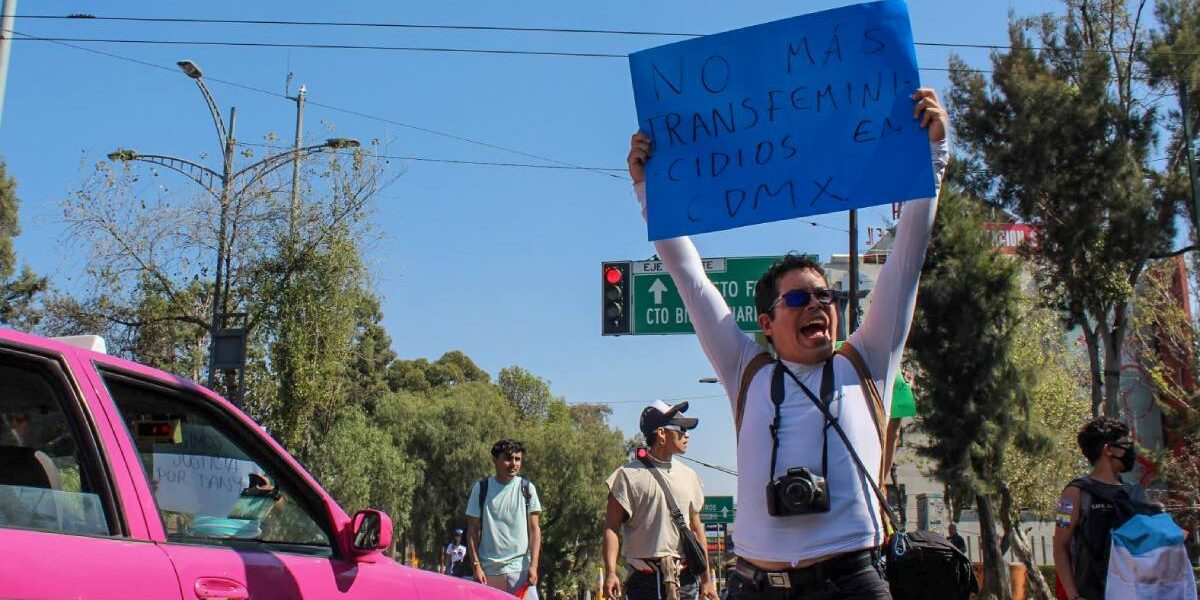
Dani's family, along with friends, marched to demand an investigation into the woman's murder.


Share

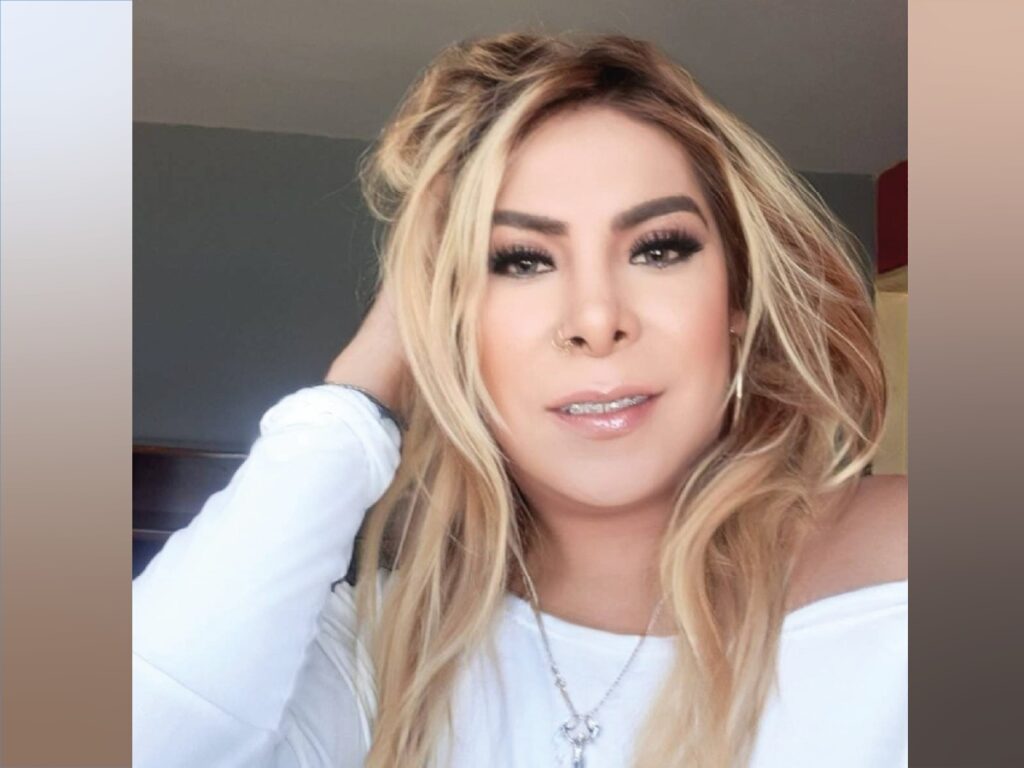
MEXICO CITY, Mexico. Dani Millan was beaten to death in Mexico City. She was 35 years old and owned a beauty salon. On the night of January 19, she left work for a meeting. Her family lost contact with her, and in the early morning of January 20, she was found with signs of physical violence in the street in the Gustavo A. Madero (GAM) borough. The crime is being investigated under the femicide protocol.
Dani's family has no idea what happened to her on the night of January 19th and the early morning of January 20th. They only know that she took a taxi to a meeting where she was apparently with two men. One of them gave a statement to the Public Prosecutor's Office; the whereabouts of the other are unknown.
Dani was located around five in the morning between North 74th and East 125th streets. Her body showed signs of physical violence.
The Gustavo A. Madero (GAM) borough is a peripheral district of Mexico City and is a territory with high rates of insecurity.
In the last five years, 17 transgender women have been murdered in Mexico City. They represent 68% of the victims of hate crimes against LGBT people, according to the organization Letra Ese .
“What happened to my niece deeply affected me. I mean, why her? Why?... It's not right. What we want is justice, and for whoever is responsible to pay. We haven't been able to grieve because we're here, and we're going to keep fighting until there's justice,” said an uncle of Dani Millán Presentes
They denounce omissions by the authorities
Family members report that no authority could tell them where Dani Millán's body was. They were only able to identify his body three days after the crime.
The family went to a hospital, to the Public Prosecutor's Office of the Territorial Investigation Prosecutor's Office of the GAM mayor's office and finally to the Institute of Forensic Sciences (INCIFO), where Dani was listed as unidentified.
“When the ambulance took my niece away, she was already dead. They took her to a hospital instead of calling forensic experts. We went to the hospital and they told us she wasn't there, that they had her at the town hall in territorial division 2. When we got there, they told us they didn't have her anymore, that she was at INCIFO (Forensic Science Institute). On the 20th, they wouldn't let my nephew in to identify Dani because they didn't have enough staff. They told us to come back on Monday the 23rd because, apparently, they don't work on weekends,” an uncle of Dani Millán Presentes
INCIFO is a public institution under the Judicial Branch. According to information on its website , the identification department is open on weekends (Saturday and Sunday) and holidays from 10:00 AM to 2:00 PM and from 4:00 PM to 7:00 PM.
“For us, all the mistreatment began with the police officer who received the 911 call, when Dani was practically dead in the street, and decided to call an ambulance without notifying the family. That, and the treatment at the GAM (Greater Metropolitan Area) and the Public Prosecutor's Office, was horrible. That's why we went directly to the Attorney General's Office, where the treatment was completely different. They attended to us that same day,” adds Dani Millán's uncle.
The Femicide Prosecutor's Office of the Attorney General's Office of Mexico City is investigating the crime, and because it involves a trans woman, they activated the femicide protocol.
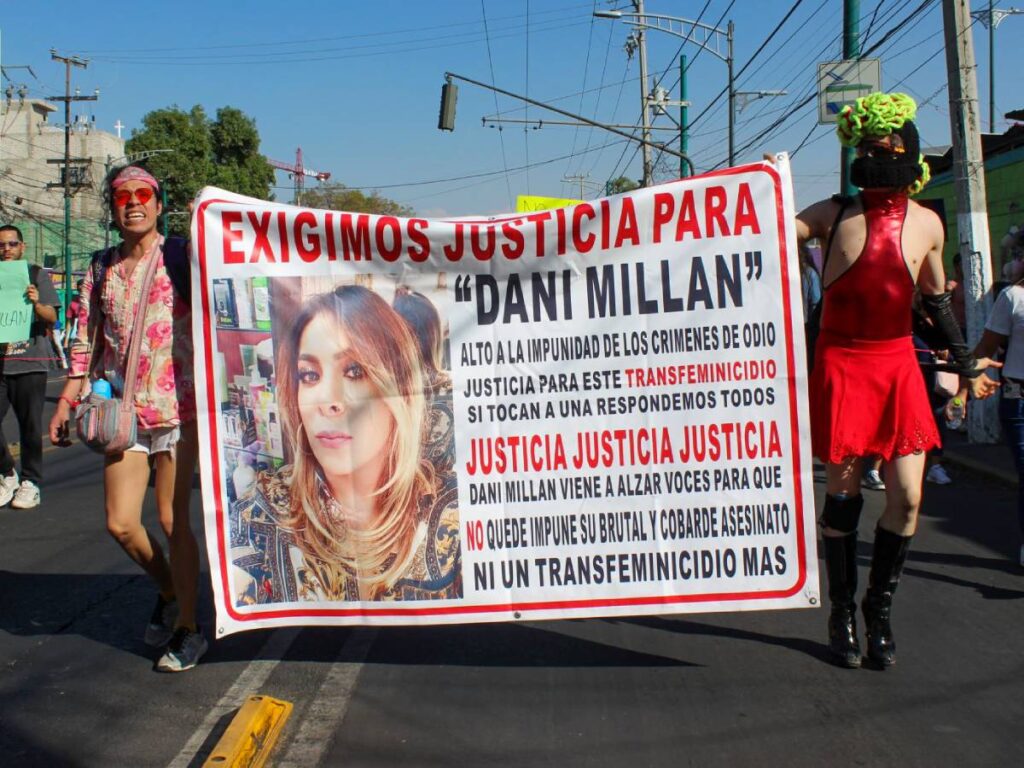
Photo: Geo González
“Dani was hardworking, a dreamer, and supportive.”
Dani was 35 years old. She fulfilled her dream: opening her own beauty salon. Her favorite song was "Las manos quietas" by the Spanish musician Juan Carlos Pérez, and lately tequila had become her favorite drink.
People who knew her describe her as "hardworking, awesome, a dreamer, entrepreneurial, a party girl, supportive, and fun."
After this hate crime became public, his high school and college classmates, friends, and neighbors joined his family in demanding justice.
“Dani is a person with an enormous angelic spirit. She’s funny, she’s loving. I think what they did was out of so much hatred against someone who didn’t bother anyone that it’s still hard to process. It’s hard to process that I’m never going to see her again, or talk to her. In a way, whoever did this to her also took away my friendship with her that lasted twelve years,” Anita, Dani’s friend, Presentes
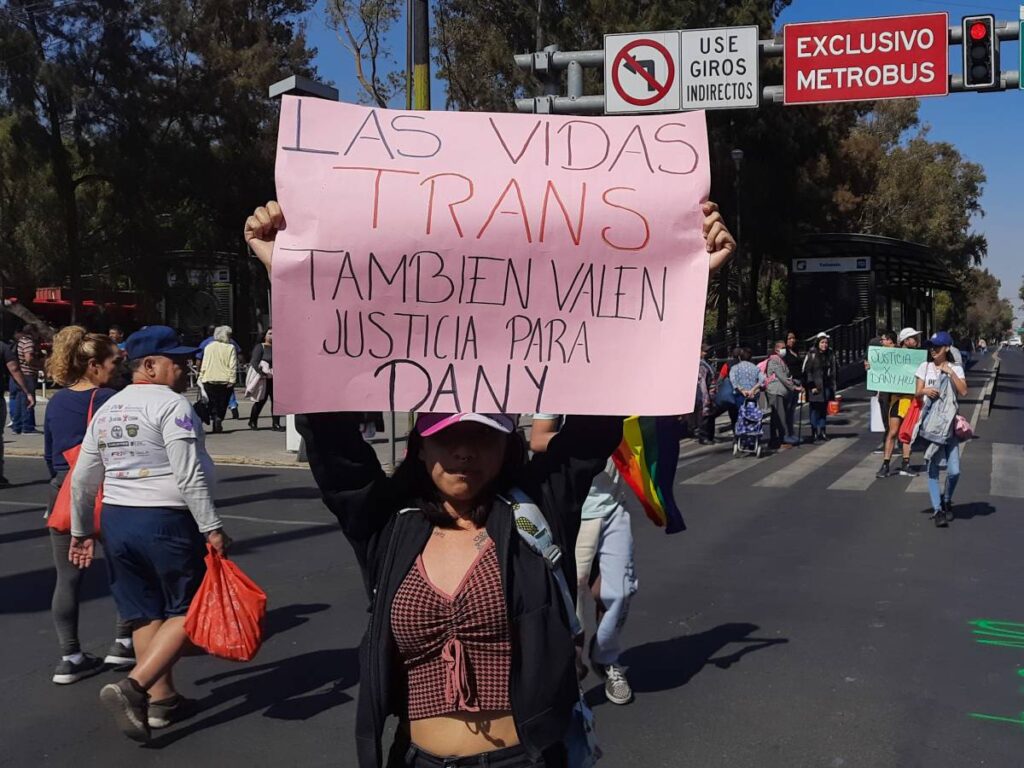
Photo: Geo González
They demand security for LGBT people in the GAM mayor's office
On February 4, family, friends, and LGBT people demonstrated to demand justice for Dani Millán and safety for all people of sexual diversity living in the Gustavo A. Madero borough.
The Gustavo A. Madero (GAM) borough is considered one of the areas with high rates of gender-based violence in Mexico City. According to the Traffic Light (Semáforo Delictivo) , crimes such as rape, domestic violence, and femicides were above the Mexico City average during 2022.
In 2021, the GAM ranked second among 100 municipalities in the country with the highest rate of femicidal violence, according to figures from the Executive Secretariat of the National Public Security System ( SESNSP ).
Since there is no disaggregated data, we do not know how this crime incidence of gender violence is affecting LGBT+ people who travel through or live in the borough.
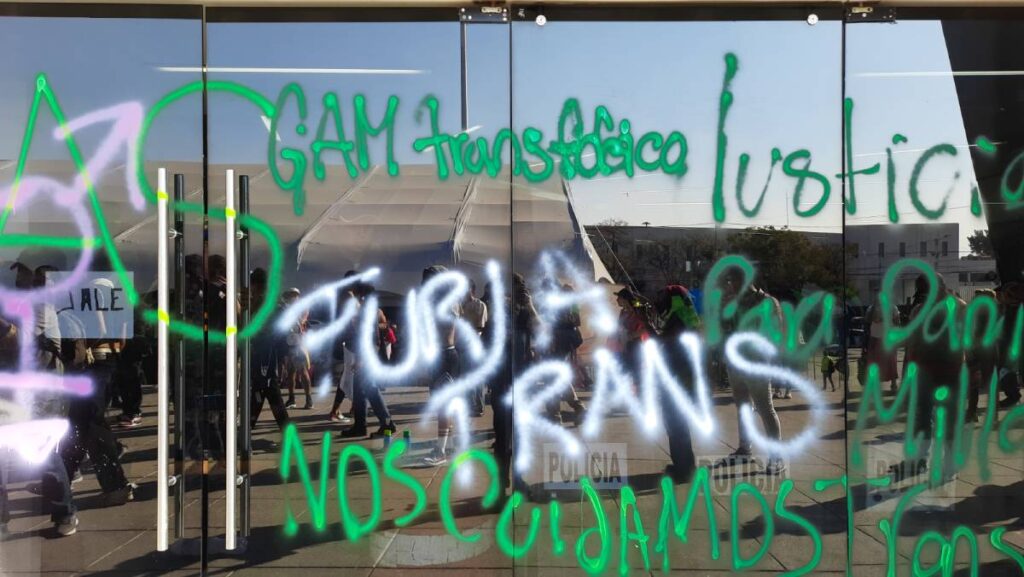
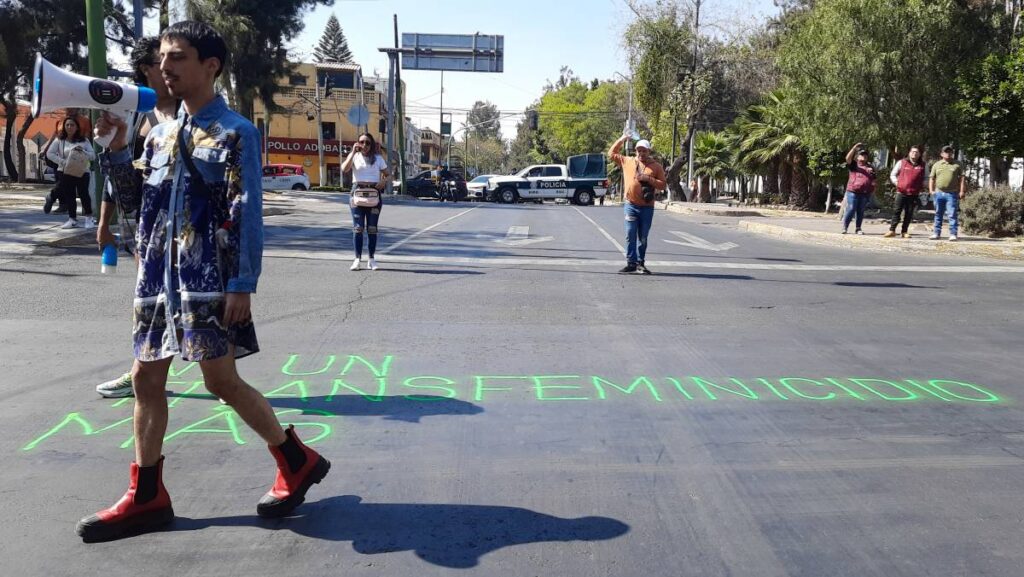
Kintsugi, a non-binary person who met Dani Millán and organized this demonstration, told Presentes that they do not feel safe in this mayor's office.
“Dani wasn’t mugged, she wasn’t shot, it was pure, brutal violence, and I’m terrified of this area, of my borough, because you don’t need much for people here to attack you, from the way they look at you to how they interact with you. You only need a little purple powder in your eyes for someone to feel entitled to attack you, and for the nightmare of being a victim of trans femicide or hate crime to become real. That’s why taking to the streets to demand security is vital, and we need everyone.”
The demonstration concluded in the esplanade of the mayor's office where carnival organizers who were there tried to silence the demonstration by throwing firecrackers, hitting and insulting LGBT+ people and media outlets that covered the protest.
Police officers and public officials from the GAM mayor's office who were present did not act to stop the attack.
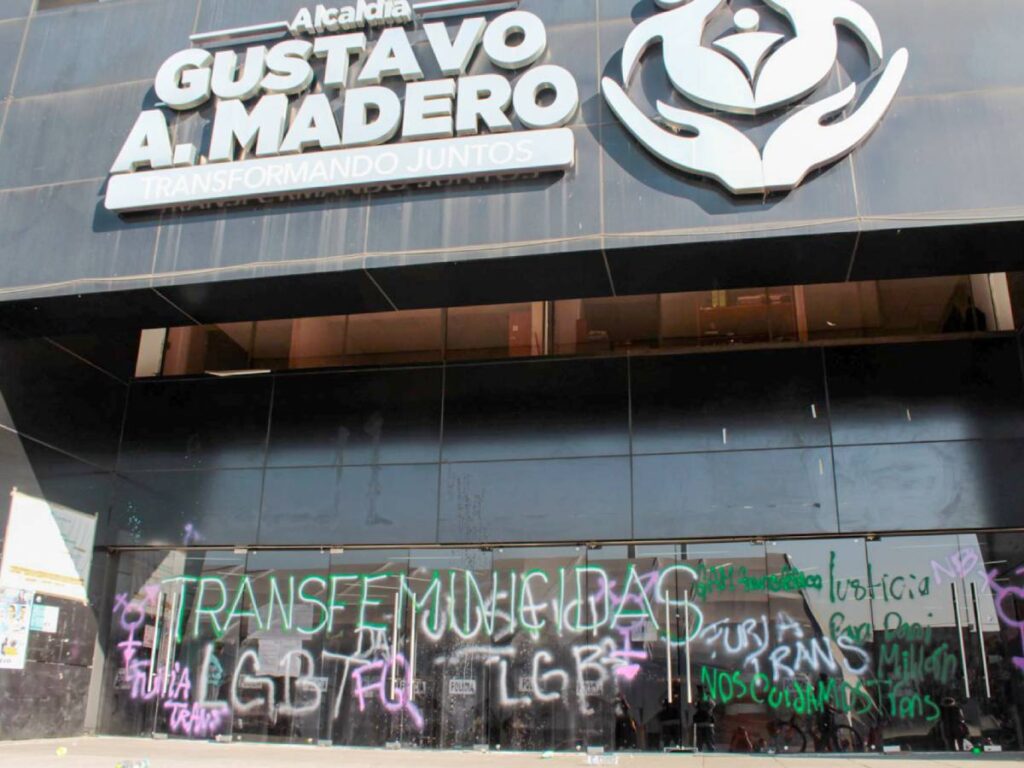
Photo: Geo González
GAM authorities have no proposals to prevent LGBT-hating violence
At the end of the march, a dialogue was planned between authorities from the Gustavo A. Madero mayor's office and members of the LGBT+ community in order to address their demands.
The mayor, Francisco Chíguil Figueroa, was requested to attend, but he did not appear. Instead, the head of the sexual diversity unit, Eduardo Berber Mejía, and the director of government, Álvaro Ramírez Romero, were present.
At all times, these public officials showed no interest in listening to the security demands of the LGBT+ population. They kept going in and out of the room where the meeting was held, and Ramírez Romero even referred to a trans activist using masculine pronouns.
The protesters presented a list with at least ten demands directly to the mayor's office regarding: security, access to sexual health, awareness campaigns, dissemination of programs, trans quota, among others.
The minutes provided by the Mayor's Office only addressed four of these demands, and the public officials present did not offer any solutions to their demands.
We are present
We are committed to journalism that delves into the territories and conducts thorough investigations, combined with new technologies and narrative formats. We want the protagonists, their stories, and their struggles to be present.
SUPPORT US

FOLLOW US
Related notes


We are present
This and other stories are not usually on the media agenda. Together we can bring them to light.