

Unprecedented ruling: “gender hatred” included in attempted transvesticide of trans activist Claudia Vásquez Haro
The defendant was sentenced to 10 years in prison. This is a ruling that could set a precedent.



Share

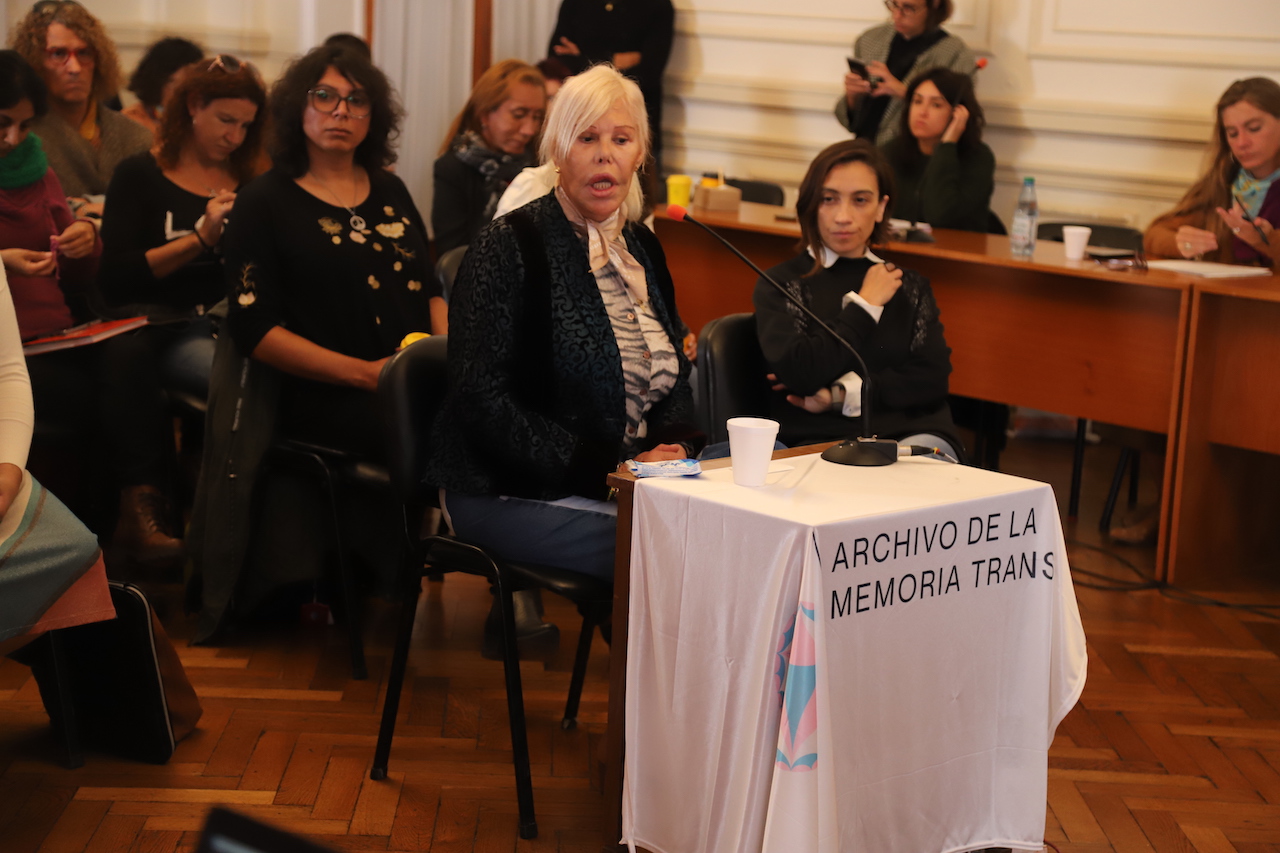
BUENOS AIRES, Argentina. The Oral Criminal Court (TOC) No. 1 of La Plata, in a landmark ruling, sentenced Leonardo Danilo Ariza Mendoza to 10 years in prison for attempted murder aggravated by hatred based on gender identity. "We wanted a ruling that considered this legal concept because we are killed for our gender identity," trans activist Claudia Vásquez Haro, a survivor of the attempted murder, Presentes
Judge Hernán Javier Decastelli, presiding over the court, issued the sentence last Friday based on Article 80, sections 4 (gender-based hatred) and 11 (when gender-based violence is involved) of the Argentine Penal Code . The magistrate considered it necessary to judge with a gender perspective in order to understand "the complex social, cultural, historical, and political framework that exists."

An attack against the trans community
The crime in question occurred on Saturday, May 13, 2017. On that day, Leonardo Mendoza attempted to kill the president of Otrans Argentina , Claudia Vásquez Haro, in her own home, in the La Loma neighborhood of La Plata, Buenos Aires province.
On that occasion, the assailant entered with a backpack containing a knife, empty bottles, and a rolling pin. "I'm going to kill you," he told her. During a struggle, the assailant hit her on the head with a bottle, but Vásquez Haro managed to open the door and escape. She was later treated at Gutiérrez Hospital for cuts and bruises on her face and body.
“This attack is related to the complaints we’ve been making and to my role in leading them to stop the violation of the rights of trans and gender-diverse people,” the activist said at the time . She was spearheading the demands made by Otrans Argentina regarding the persecution of the trans and gender-diverse community in La Plata.
“After almost six years, we finally got a response,” Vásquez Haro told Presentes , lamenting that the feminist collective did not support her call for justice. Regarding the sentence, she clarified that she is not interested in “this person rotting in jail” because she is an abolitionist of the prison system. But she did want an exemplary ruling that includes the crime of transphobic murder.
“We are the most vulnerable group on the planet. We understand that there is hatred directed at our identity, and that is why they kill us,” the activist stated. She acknowledged that, in general, “the justice system has always turned a blind eye.”
I hate the genre
The activist addresses this context in her doctoral thesis, which she made available to the judges. Regarding the ruling, she hopes it "circulates widely" because "one cannot defend their rights if they do not know them."
"We are faced with an attempted transvesticide driven by hatred and hatred of gender, specifically manifested through the situations of gender violence suffered by the victim," states the ruling issued by Judge Decastelli.
The sentence was handed down in an expedited trial that concluded on Friday, February 3, through an oral hearing. In his ruling, the judge cited the 2020 Inter-American Court of Human Rights case of Azul Rojas Marín and another v. Peru and a report by the Inter-American Commission on Human Rights regarding the recognition of the rights of LGBTI people.
Thus, he acknowledged that the LGBTI population has been "historically a victim of structural discrimination, stigmatization, various forms of violence and violations of their fundamental rights."
Furthermore, he considered that the facts analyzed in the trial "are based on the gender hierarchy structured by the patriarchy that has historically made invisible, pathologized and segregated an entire institution of gendered sex that does not fit into the canons framed by hegemonic masculinity."
An expected failure
In a dialogue with this agency, Vásquez Haro's lawyer, Sebastián Bouvet, said that it is a "relevant and fair" ruling.
"In this case, it was proven that there were manifestations of hatred on the part of the accused, primarily through specific statements in which he told the victim to be quiet and stop talking because otherwise he would silence her. Then he carried out that act of aggression that almost resulted in the death of my client," the lawyer explained.
For these reasons, they sought to have the act classified as attempted homicide motivated by hatred based on gender identity and gender-based reasons. In this regard, she hopes the ruling will serve as a precedent. "It can guide other investigations where trans people suffer certain crimes and, unfortunately, some lose their lives due to attacks under similar circumstances, motivated by hatred," she said.
We are present
We are committed to journalism that delves into the territories and conducts thorough investigations, combined with new technologies and narrative formats. We want the protagonists, their stories, and their struggles to be present.
SUPPORT US

FOLLOW US
Related notes

We are present
This and other stories are not usually on the media agenda. Together we can bring them to light.