

Agustina Ponce, new Undersecretary of Diversity Policies: "The collective and work bring order and perspective to life"
In a dialogue with Presentes, the newly appointed undersecretary spoke about how the job quota "saves lives," the need for reparations for older transvestites and trans people, and the importance of developing federal policies against discrimination.


Share

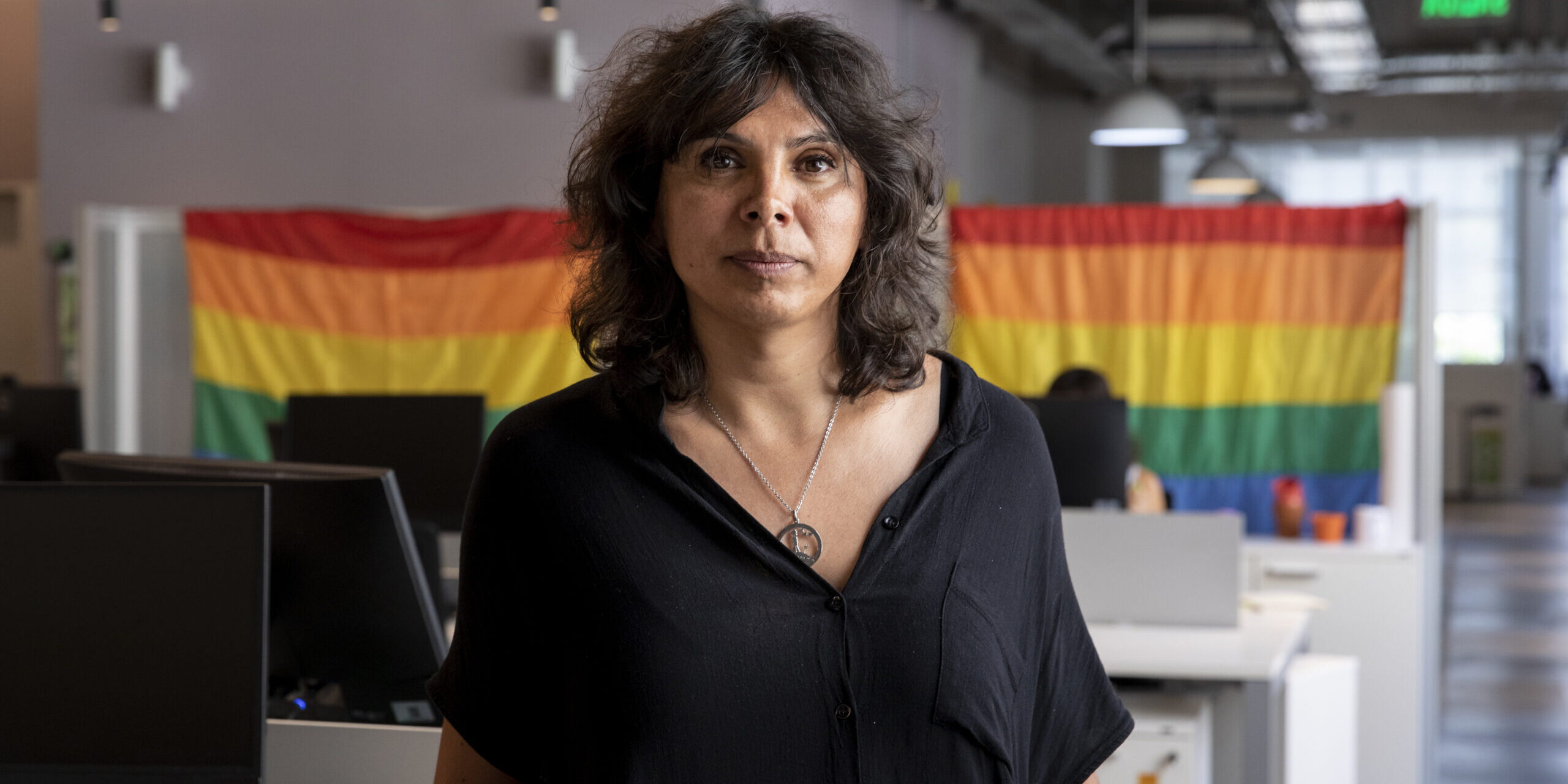
Trans activist Agustina Ponce assumed the position of Undersecretary of Diversity Policies at the Ministry of Women, Gender and Diversity on January 16. Minister Ayelén Mazzina and her team deemed her ideal for the role due to her commitment, activism, and her previous work as Coordinator of Employment Promotion for Transvestite, Transsexual, and Transgender People.
Ponce received the offer after her predecessor, Greta Pena, left the position to head the National Institute Against Discrimination, Xenophobia, and Racism (INADI) . Before her, the position was first held by trans activist Alba Rueda, now the Special Representative on Sexual Orientation and Gender Identity at the Argentine Foreign Ministry .
In a dialogue with Presentes , the newly appointed undersecretary spoke about how the job quota "saves lives," the need for reparations for older transvestites and trans people, and the importance of developing federal policies against discrimination.
Her heart, family, friends, dogs, cats, and activism are in Mar del Plata, the Buenos Aires province town where she lived for many years. Although originally from San Miguel, also in Buenos Aires province, she forged strong ties there and was one of the founders of the Asociación Mundo Igualitario (AMI), where she continues to be involved. Since being appointed by Pena as Employment Promotion Coordinator, she spends her weeks in Buenos Aires, but whenever possible, she returns to Mar del Plata for a few days.
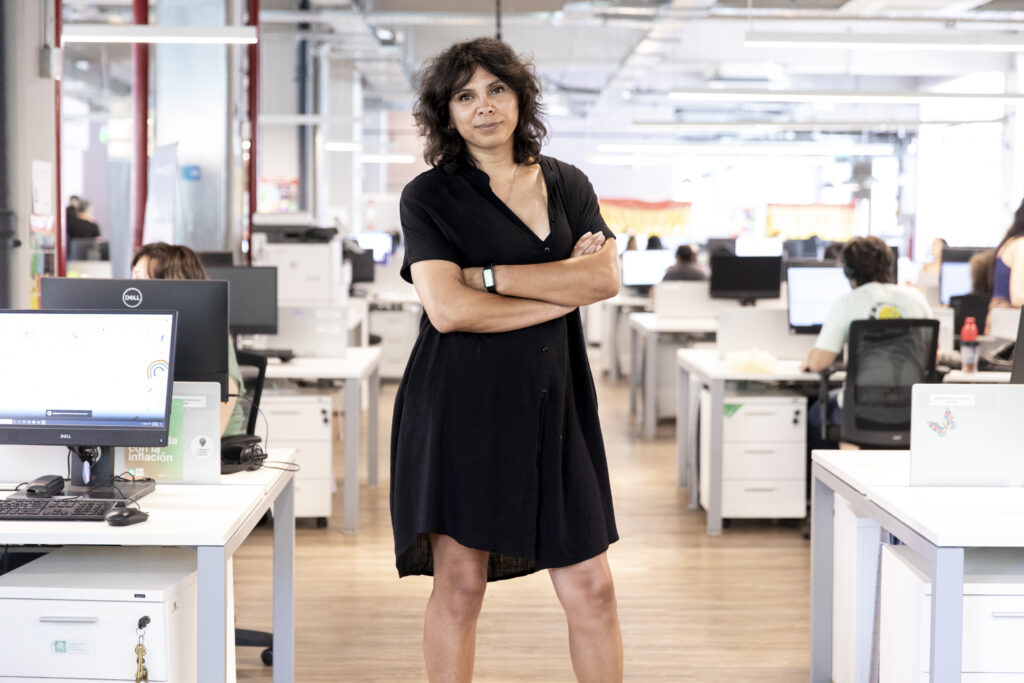
Last Friday she turned 41: within her community, she is a survivor. Like many transvestites and trans people, she was involved in prostitution and was able to leave that work, she says, thanks to collective activism and job placement. In fact, she began her activism in a textile cooperative run by the Atahualpa Movement, which provided support to those who wanted to leave the streets. "The collective and the work give us structure and perspective on life," she told Presentes .
She also taught in the FinEs program and is a firm believer in popular education and the construction of collective knowledge. To "understand some things," she enrolled in Law at the National University of Mar del Plata (UNMdP), becoming one of the first transgender students in the program. However, she considers herself "more pragmatic than theoretical."
-How are you taking on this new role at the head of the Undersecretariat of Diversity Policies?
-I accept this with full responsibility. Knowing that there is still a lot to be done and a long way to go to fully institutionalize diversity policies. Above all, we need to work with society so that it understands what this is all about. While society has made progress, there is still much to be done to achieve true inclusion of the LGBTTBINB+ perspective within the State, in principle, and within society as a whole.
– You've been advocating for trans and travesti inclusion in the workplace for many years. In this regard, you helped create the "Lohana Berkins" chair at the Faculty of Health Sciences and Social Work at UNMdP and later the "Diana Sacayán" chair at the Faculty of Psychology . How important are quotas to you?
Today I find myself on this side, but just yesterday I was on the other, demanding that my comrades be integrated into the formal workforce. Because I was integrated, and I can attest to how work brought order to my life. I went through prostitution, life on the streets, a whole host of things that we all go through. That's why I say I strongly believe in quota policies. I believe that work has saved my life and the lives of those close to me. In fact, of all the comrades I stood with on street corners, those of us who are still alive today are the ones who have collectively become involved in political action, social organizations, and have been able to integrate into the workforce. Collective action and work give us structure and perspective on life.
– How were you able to address it as head of the Employment Promotion area for Transvestite, Transsexual and Transgender People?
– We were able to build upon the wonderful work that María Pía Ceballos (the previous coordinator) had been doing. We worked hard to federalize public policy and focus on issues related to permanence. Trans and travesti populations continue to be a nuisance in those spaces that, in everyday life, are not "validated" by this "responsible" society.
Furthermore, since I took office, hiring has increased by over four hundred percent compared to before. This isn't about me personally; I don't believe in individualism at all. It's about the organized movement of the LGBTQ+ community, and especially of transvestites and trans people, who are demanding compliance with the law. This movement is emerging from the grassroots level.
– What urgent demands from the LGBTIQ+ community will the Undersecretariat be working on?
– First of all, the trans and travesti movement, in particular, is demanding a policy of reparations. There's an emerging issue that needs to be addressed, which has to do with what happens to older trans people. The quota policy primarily addresses the needs of people between 18 and 50 years old, but what about the survivors, who have also been persecuted? It's always said that the State has been absent in the past. That's a fallacy. It was always present; it's just that before, it played a criminalizing role, and that role was the one that older trans and travesti people had to endure.
Another issue clearly involves supporting the intersex community's request for their bill to be recognized and approved by the National Congress. The State must finally take responsibility for this hegemonic medical system that normalizes bodies.
On the other hand, there's the right to sport. Many of us are excluded from sport. In fact, this exclusion is so normalized that it's only now that people are starting to talk about it: we always talk about the right to education, to work, to health, but we never mention the right to sport as something to aspire to.
And finally, the continuation of the transgender employment quota policy. While it's far from meeting the minimum requirements of the national government, this policy has been steadily improving since the decree and subsequent law were passed.
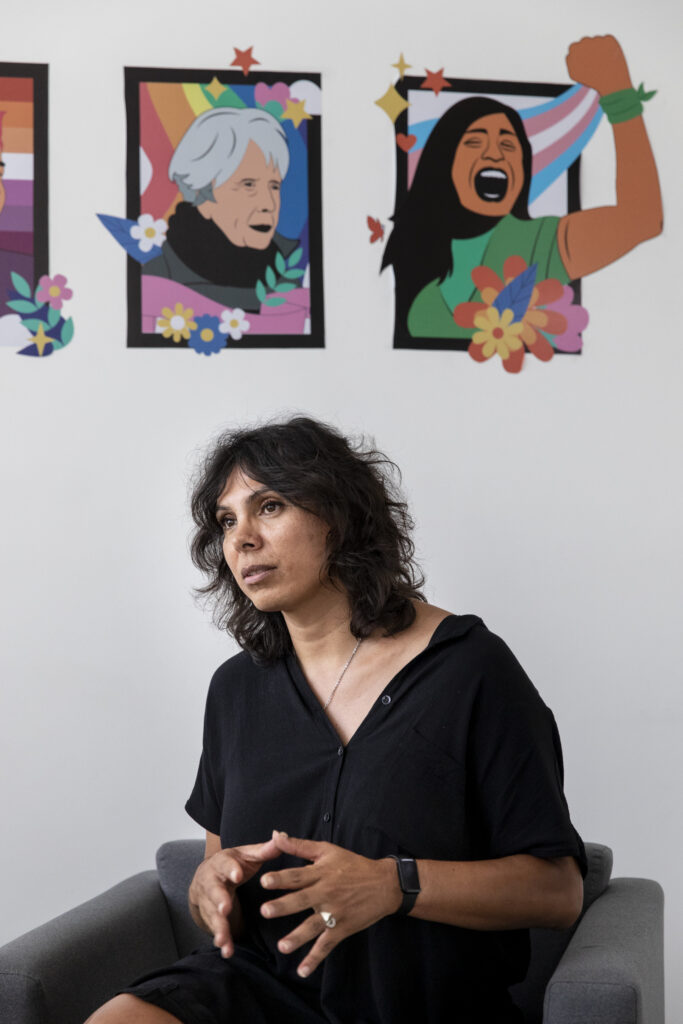
– After a record number of complaints filed with the Ombudsman's Office against opinions expressed on television programs related to feminism, gender violence, and the rights of the LGBTIQ+ population, how can hate speech be addressed?
– We must continue to challenge the prevailing narrative. There's a very retrograde, reactionary perspective on the front lines, constantly fueled by mainstream media, which generally creates a narrative that's detrimental to our growth as a society. It's crucial to address social processes and constantly challenge the discourse that instills hatred towards the poor, gay men, trans people, and anyone who is different. With the creation of this Ministry, the one in the province of Buenos Aires, and its various departments, the State is acknowledging that at some point it looked the other way. Now we must support this progress.
We are present
We are committed to journalism that delves into the territories and conducts thorough investigations, combined with new technologies and narrative formats. We want the protagonists, their stories, and their struggles to be present.
SUPPORT US

FOLLOW US
Related notes

We are present
This and other stories are not usually on the media agenda. Together we can bring them to light.