

Transvestite Trans Logbook: a collective meeting to build theory and memory
Trans leaders and intellectuals come together to speak out and reclaim the history of the community.


Share

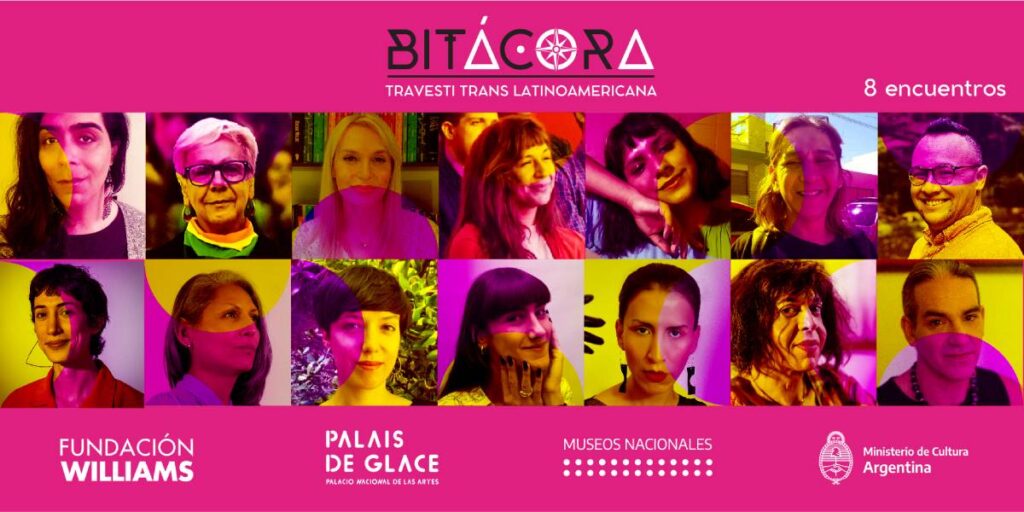
BUENOS AIRES, Argentina. Leading figures from various provinces of Argentina gathered to discuss and contribute to Latin American transvestite theory. They did so over eight virtual meetings convened by the Palais de Glace . “It’s an epistemic journey, against violence and the invisibility of knowledge production,” said artist and activist Marlene Wayar , one of the organizers.
“Latin American Transvestite Trans Logbook” initiative is a project of the Education Department of the National Palace of the Arts “Palais de Glace,” supported by the Williams Foundation . It was conceived and directed by Marlene Wayar and coordinated by art historian Candelaria Carreño. Through various meetings, it gathers knowledge from the trans community with the aim of collectively constructing transvestite and trans theory.
From Argentina to Latin America
The debates featuring prominent members of the group are available on the Palais de Glace YouTube channel . While this edition focused on Argentina, future editions will expand to South, Central, and North America, incorporating the Portuguese language.
“It means becoming, from the transvestite and trans community, actors and actresses of thought, of our own enunciation, of taking the first person. We think of ourselves in relation to academic or scientific fields that have constituted themselves as subjects of knowledge,” Federica Baeza , a researcher specializing in Contemporary Art and director of the Palais de Glace, told Presentes .
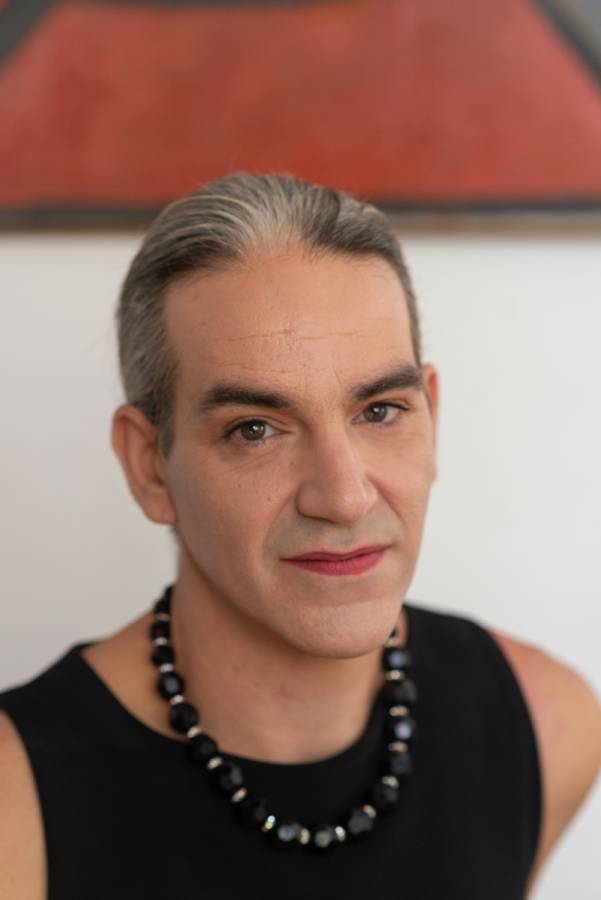
Photo: Mariana Papagni.
She also explained that it is a device that seeks to preserve and record knowledge . “We have a cultural archive rooted in orality, in knowledge that is passed down by word of mouth because it has basically lacked the material conditions for survival in the face of the extermination of our bodies. Our cultural archives are also spaces that are disappearing,” she said.
The discussions at the meetings revolved around hidden archives; the link with the State; equality of rights; technologies and aesthetics of the body; the relationship with science, medicine and psychiatry; and the relationship with feminism and the LGBTI+ community.
Read the absences
Szabine Vollenweider is a multidisciplinary activist and artist who runs the publishing house and art space LaBichaTrava . During the project, she coordinated the meeting “Hidden Cultural Archives: Pre-Columbian Genealogies,” Georgina Colicheo , a representative of the Association of Trans and Sex Workers for Sexual Dissidence .
“We’re talking about hidden archives. Not only in the pre-Columbian Latin American sense, but also in genealogies or past histories. It’s important to emphasize this idea of hidden history. There was an intention on the part of people, generally heterosexual men, but also cisgender women, to hide our existence,” Szabine Presentes
Furthermore, she warned that transvestite and trans bodies are often thought of as "modern, postmodern or recent", when in reality - she says - "our identities are Paleolithic, Mesozoic, Paleozoic".
“We always had to read between the lines, between the texts. What we're looking for is to be able to start reading those absences, those gaps, to name them from the present and to contextualize them ,” he said.
The way to settle a debt
The 7th and 8th meetings of Bitácora Travesti were called “Dissident Movements” and dealt with the relationships and tensions with feminism and the LGBTIQ+ community.
For trans activist and Master in Gender Studies and Politics, Victoria Antola , feminist theory “is heavily colonized and still permeated by the binary and the cis.” She believes that “in this respect, transvestite theory has a significant advantage.” She coordinated the debate alongside communicator Victoria Stéfano .
“I think feminism’s biggest debt is to provide sisterly support to the trans and travesti struggle, whether to create theory, gain ground, or achieve equal representation. We have always stood with and supported our feminist comrades in their historical demands, such as legal abortion, but, for example, we haven’t always received that same support from feminism in marches against the murders of trans people,” Antola, who is also a doctoral candidate in History at the University of Tres de Febrero, Presentes
Meanwhile, she emphasized the need for spaces where they can express their voices. “We seek physical representation in public spaces: we need seats in Congress, spaces in decision-making bodies, and above all, in the places where decisions are made about our lives.”
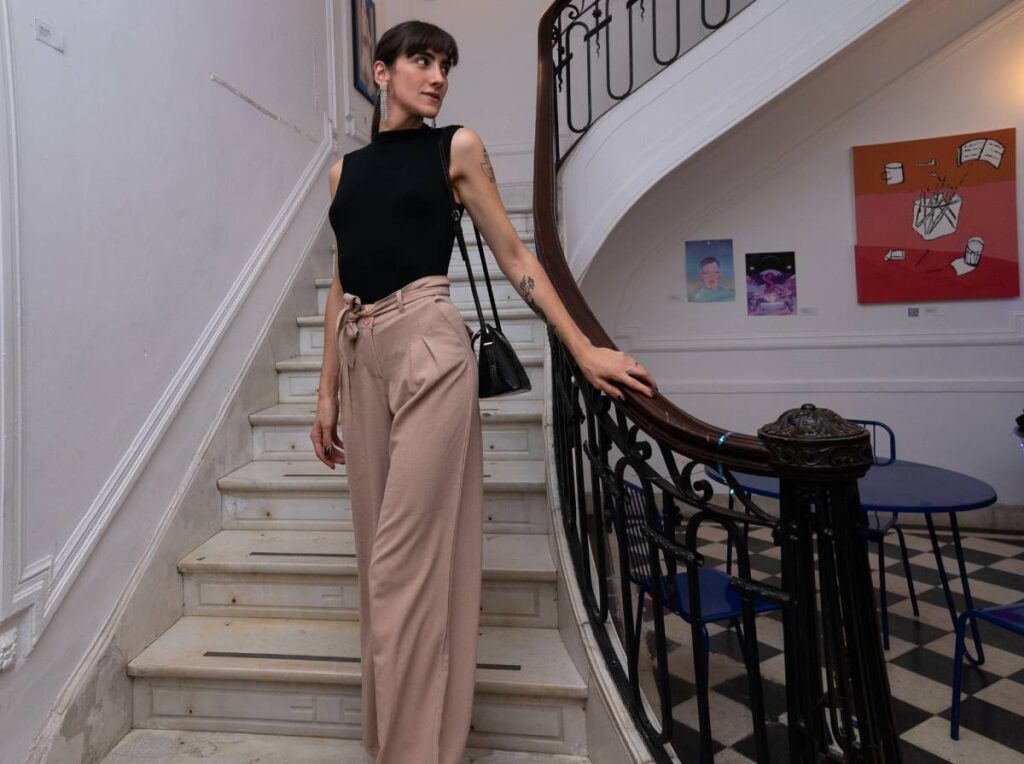
Photo: Juan Salgado.
Chatting with colleagues
During the meetings, Victoria found “transvestite and trans sisterhood.” She also highlighted “the opportunity to chat with fellow trans women without needing intermediaries or having to translate our own slang, our own words, our own experiences for an audience.”
Its participants also highlighted that transvestite and trans theory speaks not only of knowledge in terms of gender, but also of the intersectionality inherent to the collective.
“We are a population marked by many different experiences. A large part of the trans community are migrants from various neighboring countries, but also from the north of the country to the cities. There is also a mark that has to do with being racialized. Many people in our community suffer all these stigmas simultaneously. So it is a voice that speaks of their gender identity, but also speaks more broadly about what it means to be down-classed, to have hierarchical structures, and to have a white, heterosexual order, ” added Baeza, who is also a professor and curator.
“It’s a theory steeped in territory”
Along these lines, Szabine highlighted the “authentic, contextual, territorial and intersectional” way in which they are building knowledge, “outside of places that academic people are used to.”
“It’s a theory born from the mud, with a Cordoban accent, nuanced, colorful, a theory steeped in territory. It’s about standing up against this pseudoscientific or academic idea of sanitizing knowledge as much as possible to strip it down and make it more objective. Transvestites and trans people have that authenticity of showing everything and putting everything up for discussion with epistemic sincerity,” she concluded.
Quimey Sol Ramos, Libertad Aranguez, Ivanna Aguilera, Sofía Díaz, and Romina Soto Mendieta (Miss Romi) also participated in coordinating the meetings. In addition, the debates included "monitors," who were responsible for generating discussion points and questions to guide the discussion. These moderators were Cole Rizki, Rocío Pichon-Rivière, PJ Di Pietro, and Federica Baeza.
We are present
We are committed to journalism that delves into the territories and conducts thorough investigations, combined with new technologies and narrative formats. We want the protagonists, their stories, and their struggles to be present.
SUPPORT US

FOLLOW US
Related notes


We are present
This and other stories are not usually on the media agenda. Together we can bring them to light.