

Lucas Grimson: the agenda of new masculinities and the organized kids
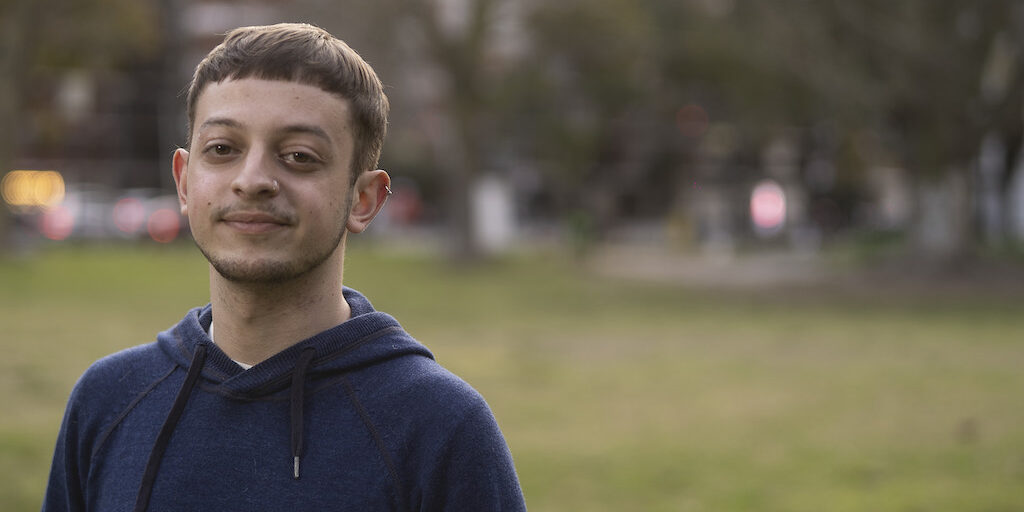
Lucas Grimson bears the marks of the 2001 generation. “We were asking ourselves what place we could have in feminism instead of asking ourselves what place feminism could have in us.” Interview about his book: Disputing the Present.


Share

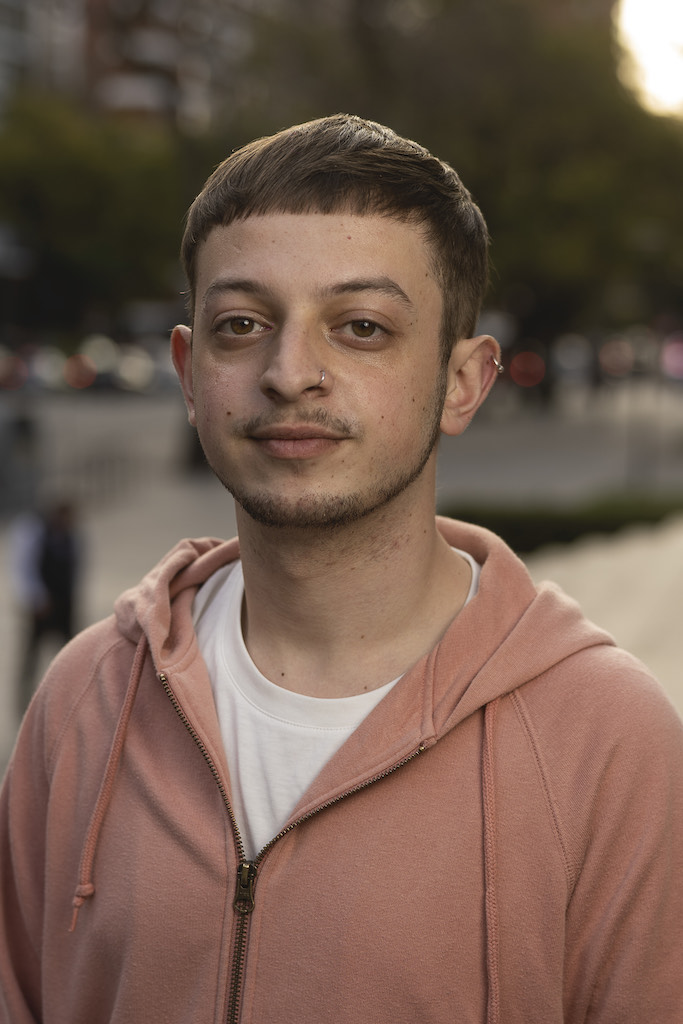
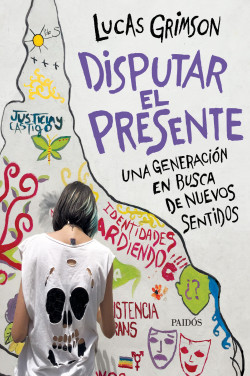
Born in the heat of the 2001 crisis, Lucas Grimson began to get involved in student organizing during the height of the #NiUnaMenos movement, discussing politics, gender, and education in schools. He currently studies Political Science at the University of Buenos Aires and participates in projects related to youth, health, and masculinities. He is active in the Desarmarnos platform and the La Mella student movement. * Disputar el presente* (Challenging the Present ) is his first book and attempts to explore a recurring question today: what are young people up to?
Generation 2001
-How would you define your generation?
When I refer to “my generation,” I mean those of us born a little before or a little after 2001. It's marked by several events that shaped us as political subjects. The first is our collective effort to confront the attacks of Macri's administration as the national government. This contrasts sharply with having grown up during the Kirchner administrations when we started high school. We began to inform ourselves, to debate, and to understand what Macri was doing with education, attacking our rights, and implementing economic austerity measures. All of this profoundly impacted us. A second milestone was June 3, 2015, and the explosion of the feminist movement.
-What impact do you think it had?
-In conjunction with the above, it stirred everything up among young people. Classrooms and hallways were filled with discussions. The ways we connected changed. Thinking about the state of young people today means thinking about all of that, as well as the pandemic and the environmental struggle. It means discussing mental health and having a broader, more sensitive perspective on life.
-What does it mean to think of the kids as political subjects?
-There's often a certain bet placed on the future of youth. Understanding youth as an active political subject means understanding them as a necessary actor with an important place in the present. It means understanding the power we can wield right now and the disputes we face. I can't define my generation without saying it's a generation in conflict, with tensions and many differences. Knowing that we can debate the problems of the present among ourselves and have an impact on them is understanding ourselves as political subjects.
Dispute the present
-What are those current disputes?
-To challenge the present is to understand that young people cannot be the future if we are not building the basic conditions that allow us to improve today. It is to understand the urgency of the fact that practically 50% of adolescents, children, and young people live below the poverty line in the country. That it is very difficult to find work with good conditions. That we are a generation that no longer sees homeownership as a possible goal, but it is also not feasible to think about living alone because rents are unaffordable. To challenge the present is to be able to recognize these emerging problems, as feminism was in its time and as now, in addition to gender, environmentalism or mental health, and to make space to talk about these issues.
-What transformations do you see in cis masculinities as a result of the debates opened by feminism in schools?
It was a very particular phenomenon. It's hard to explain. It was something happening right next to us, changing the way we related to each other. Those years marked a turning point; it was a constant challenge for us as men sharing classrooms, activist spaces, and student centers. We spent too much time asking ourselves what place we could have in feminism instead of asking ourselves what place feminism could have in us. That's where a process began, a gradual but urgent reflection aimed at breaking with the complicity of machismo that constantly existed among groups of boys in schools.
The post-feminist uprising
-If there was a before the feminist explosion, what is the after?
It's important to acknowledge the significant progress that has been made. Today, impunity is no longer an option , and that's crucial. However, we must also avoid falling into the trap of believing that feminism has won everything and that there's now a new progressive dominance. We must also avoid the entrenched narratives of "you can't say anything" or "you can't have sex anymore." There are many achievements that we must continue to build upon. Reality continues to reveal the violence that persists around us, violence that we often fail to question. We must continue working on all of this.
-What consequences do you think come from the "nothing can be said anymore"?
This saying is dangerous because it's based on the idea that feminism is hegemonic. It stifles debate at a time when we should be deepening and opening up conversations, not suppressing them. It aims to push us toward resignation. We become frustrated and angry, when in reality there are much better things to do than remain in that comfortable position of saying, "They won't let me say anything": to propose and collectively think about other solutions to the difficulties we encounter.
«We must give up many privileges«
-What is the main challenge for cis masculinities today?
There's a lack of commitment to sustaining certain changes, certain reflections. It's important that we don't get too comfortable in the mindset of "well, if I screw up, I'll think about it, or if something happens, we'll discuss it and that's it." Clearly, all of that is important to think about and discuss, but we also need to give ourselves the space and time to reflect on things beforehand . To think about how we were raised and shaped, what expectations we carry, and to recognize that we must relinquish many privileges if we truly believe that this transformation is necessary and can allow us all to live more freely.
-In spaces where hegemonic masculinity is problematized, what happens to lesbian, trans, and gay masculinities?
-On the Desarmarnos platform – a space for questioning masculinities that we launched in 2020 – one of our fundamental goals was to explore masculinities from a diverse perspective, including trans, gay, bisexual, and lesbian masculinities. There's a need to deepen the exchange in that sense. I've always maintained that being gay doesn't negate being a man. But at the same time, we continue to find that most of the men who participate in these spaces aren't cisgender, and I think we need to address that so that straight men get more involved and participate . We also generated collective reflections to consider how to contribute to, propose, and discuss masculinities in a context as complex as the one we were in during the pandemic, and to propose public policies from a masculine perspective, just as young women were doing. We create spaces for reflection, training, and proposals, such as Paternar, a citizens' campaign for extended paternity leave, supporting the various bills that have been introduced. Until now, there hadn't been any organized men in this country advocating for an extension of this leave, for example .
Propose alternatives to hate
-How did the pandemic affect young people who were going through such a crucial moment in their lives as high school?
The blow was devastating. In the book, I discuss how, if we were already questioning the ways we connect and relate to others sexually and emotionally, the pandemic challenged that at its most basic and profound level . For example, it changed the role of dating apps in our lives if we wanted to connect sexually and emotionally with new people . It also made us rethink the value of friendship after the pandemic. It's still necessary to reflect on the consequences of that. Furthermore, the quarantine was full of messages targeting young people as if we were responsible for spreading the virus, for the clandestine parties. That was a serious mistake. If there was concern about the well-being of young people, that wasn't the way to address it. We end up being pigeonholed, as if the problems of society in general have nothing to do with young people, and as if the problems of young people aren't related to all the other social problems .
Why do you think they sought an enemy in the young people?
There's a very strong adult-centric bias that's quite widespread. Those who blamed young people for spreading COVID aren't necessarily the ones who are angry today because young people are occupying positions of power. A need to invent certain enemies to vent frustration has become noticeable. When I think of figures like Milei or Patricia Bullrich, I feel they're exploiters of people's anxiety. They take advantage of the fact that we're in a pretty bad situation to deepen it instead of proposing something else. We need to increase discussions and create spaces that allow us to do everything necessary to expose Milei and Bullrich, because ultimately, for them, hatred is a tool to address an existing anger . We have to ask ourselves what's happening with that anger and propose alternatives to hatred.
"We young people are organized"
-Why do you think many young people feel targeted by the right wing or anti-politics?
-There's a segment of young people who are being challenged by Milei and other libertarian figures. Freedom isn't about thinking as if you have no one around you. It's about building life with solidarity and empathy. This raises a crucial question: what's going on with these young people who are being challenged by Milei today?
I truly believe that we are not a generation where any kind of fascist or far-right stance will become widespread. I think many young people are resonating with these discourses because they recognize that there is anger in society, especially among young people. They shout about it, they generate hatred. Yes, we are angry because the situation we are in makes us very angry, and we have to do something about it. We are a generation that speaks out. We have to amplify our voices to demonstrate more forcefully that we must transform this anger into organization to continue expanding rights. Young people are organized. The environmental leaders, the feminist leaders, those who speak about such important issues as mental health, are many young people, and there is a lot of strength there, like what was seen in the last Pride march in Buenos Aires . That is demanding freedom, and it is very far removed from what Milei could propose.
-Is dialogue possible to break through this wall of shouting?
With someone like Milei, a congressman who doesn't do his job, who says outrageous things like people have the right to starve to death, and who votes against fundamental rights, dialogue seems impossible. But there may be many people who feel challenged by Milei's ideas, with whom we not only can but must engage in dialogue and work together to find a much more effective, much more realistic solution, one based on human rights and a consensus that allows us not only to defend our democracy but to strengthen it.
We are present
We are committed to journalism that delves into the territories and conducts thorough investigations, combined with new technologies and narrative formats. We want the protagonists, their stories, and their struggles to be present.
SUPPORT US

FOLLOW US
Related notes

We are present
This and other stories are not usually on the media agenda. Together we can bring them to light.